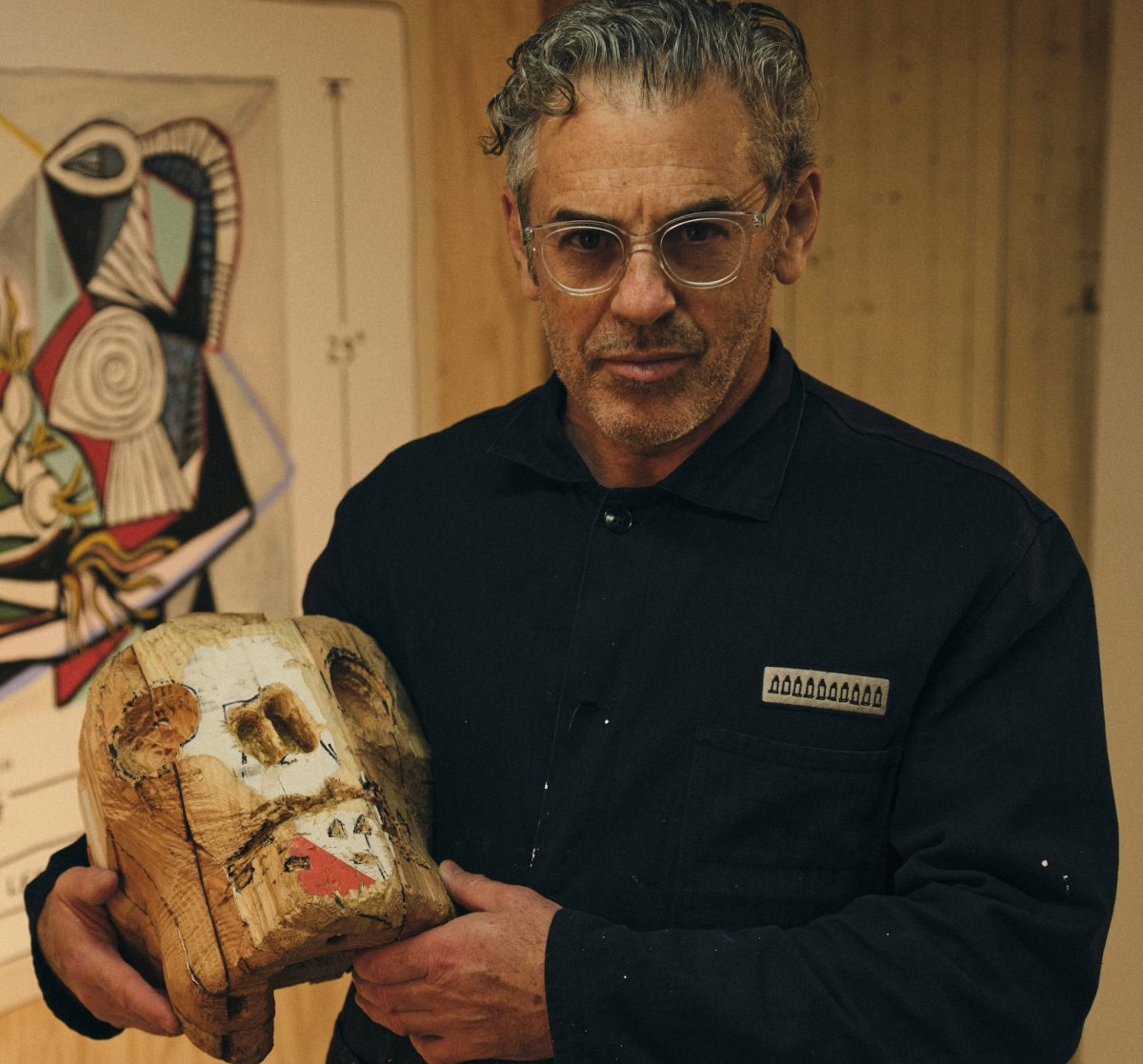
When we spoke, Tom was in a taxi on his way to Heathrow, heading back to New York after the opening of his exhibition “A Good Shelf” at Thaddaeus Ropac, Ely House, London. Between airport traffic and talk of tea bowls, he moved easily from Donald Judd’s chairs to Rosalind Krauss’s Sculpture in the Expanded Field, from the rituals of the Japanese tea ceremony to the engineered faith of NASA.
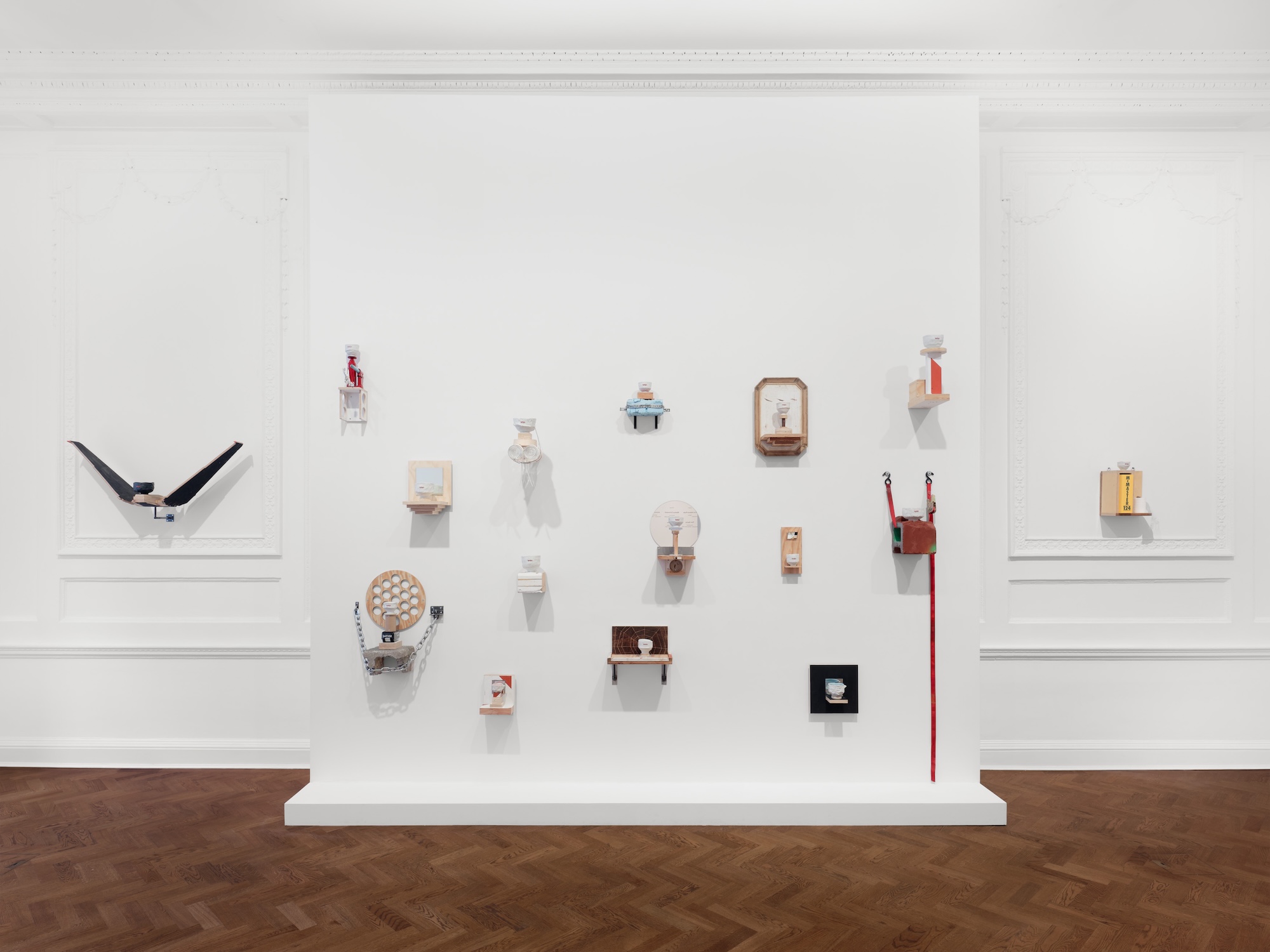
In “A Good Shelf“(14th October – 20th December 2025), Sachs reimagines the vessel as both object and idea — a structure that holds not only water or light, but meaning, memory, and belief. The exhibition brings together hand-thrown ceramic bowls, shelves cast in luminous materials, and a functioning coffee installation that quietly subverts the idea of the tea ceremony. What follows is a conversation about making, faith, and the quiet persistence of things that outlast us.
You began by mentioning Donald Judd’s chairs and Rosalind Krauss’s Sculpture in the Expanded Field. How do those ideas connect for you?
Both Judd and Krauss are trying to make sense of objects once they’ve escaped their traditional categories. Judd wrote about chairs as a way to think about what happens when art becomes furniture, or furniture becomes art. Krauss mapped out sculpture after modernism — when it no longer sits neatly on a plinth.
For me, those ideas are useful because they ask us to think about objects in the most generic sense. Whether it’s a chair, a shelf, or a sculpture that looks like a shelf, the question is: how do we understand it?
If we imagine a hierarchy of objects — just as a thought experiment — a chair sits towards the bottom. What is it? A chair. What do you do with it? You sit on it. Straightforward utility. At the other end might be a painting. What is it? A painting. What do you do with it? You contemplate it, or perhaps you use it to consecrate your wealth. Its function is less clear, more symbolic.
So both Judd and Krauss are trying to unpick those boundaries — to see where an object slips from one field into another.
And where, within that hierarchy, does the tea bowl sit?
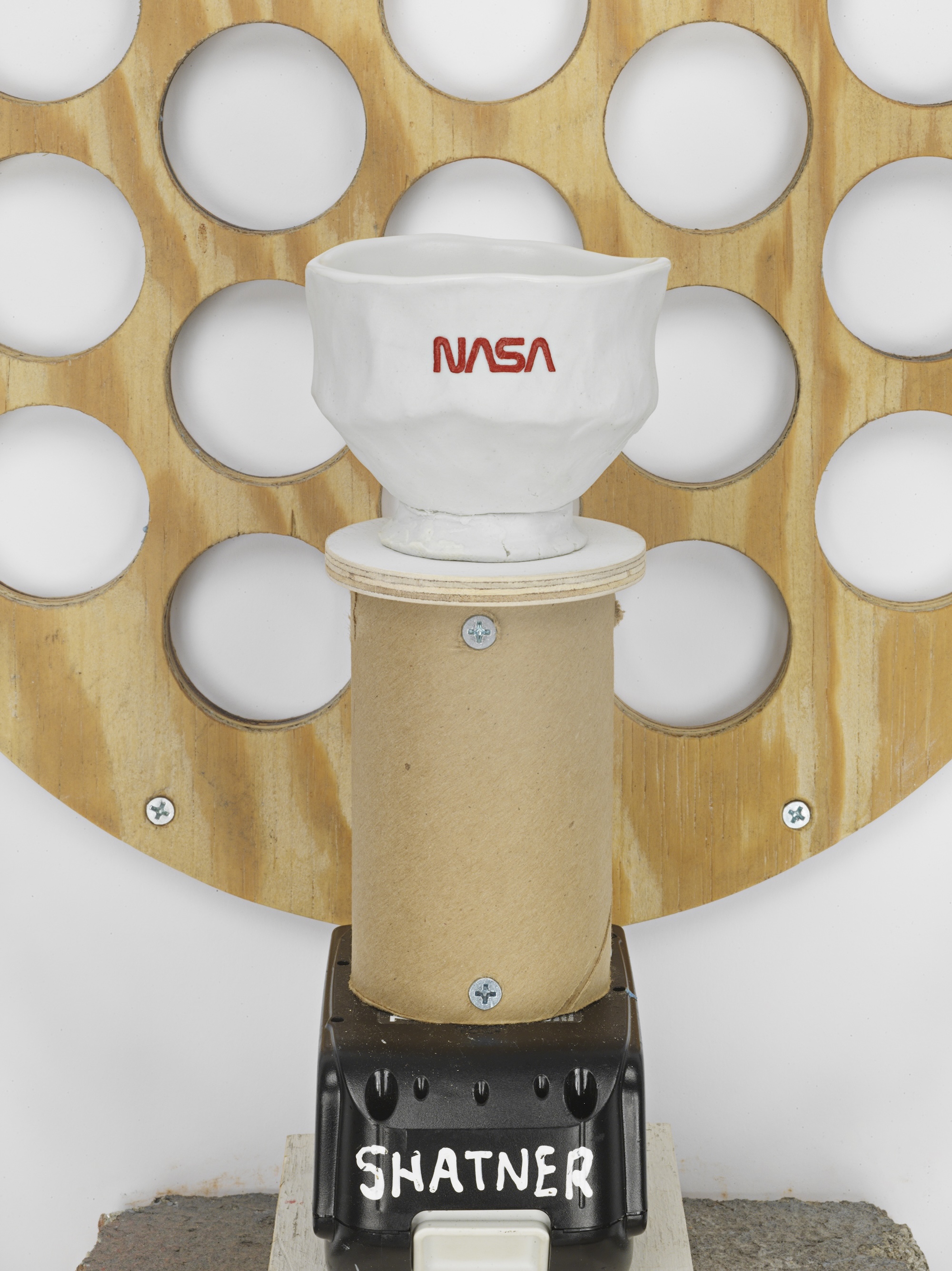
A tea bowl is humble, but also one of the most profound objects you can encounter. It conveys water from the earth to our bodies, and in doing so connects everything — soil, vessel, hand, mouth, life. But it’s also a metaphorical vessel: our bodies are vessels too, carrying genetic code across time. A ship is a vessel that carries us across oceans, and a rocket is a vessel that might carry us across planets. The same logic runs through them all.
In Japan, that’s deeply understood. The tea ceremony is an act of devotion to the everyday. The concept of mitate — re-seeing the ordinary — turns something functional into something sacred. Certain Chojiro bowls are considered so precious they’re forbidden to leave Japan. There’s no price that can be attached to them. They’re treated like living beings.
In the exhibition, the bowls sit on shelves rather than tatami mats. Why?
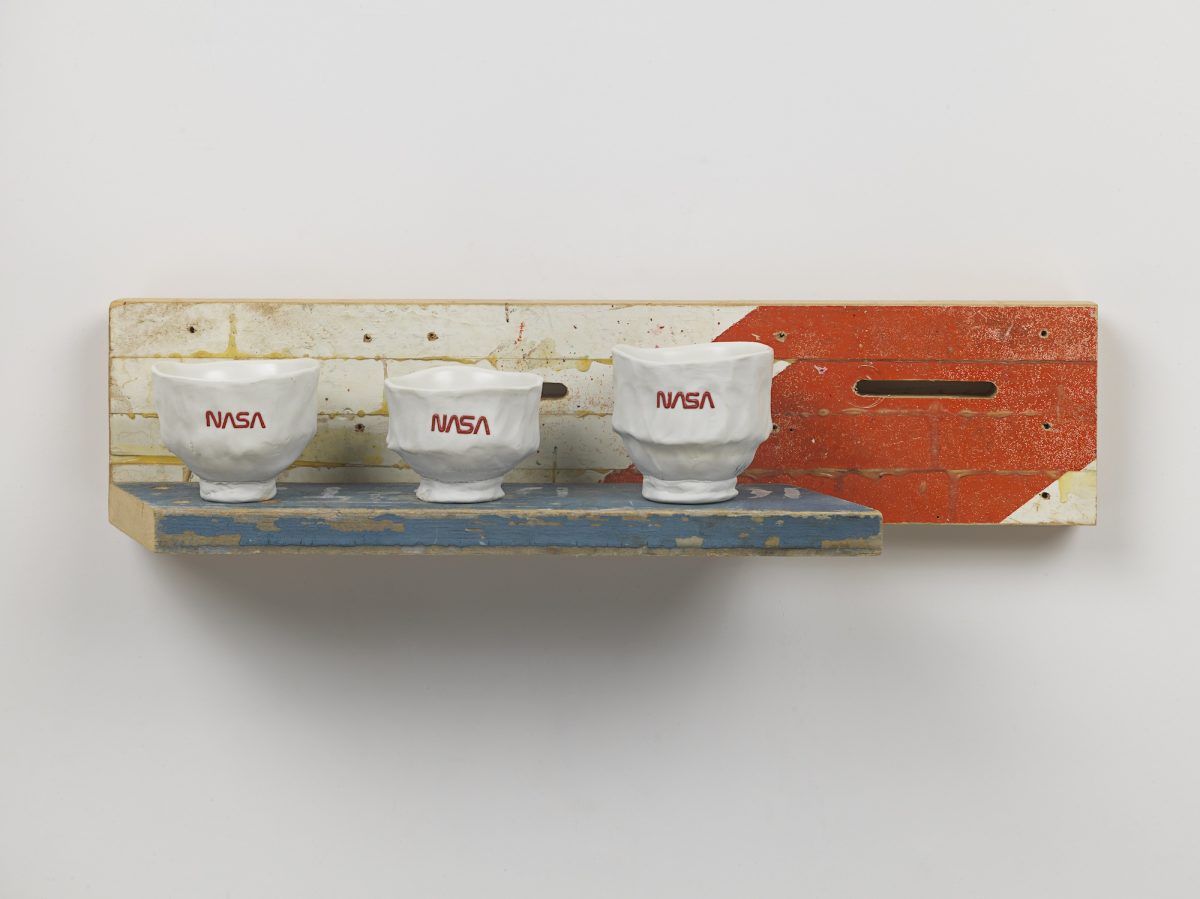
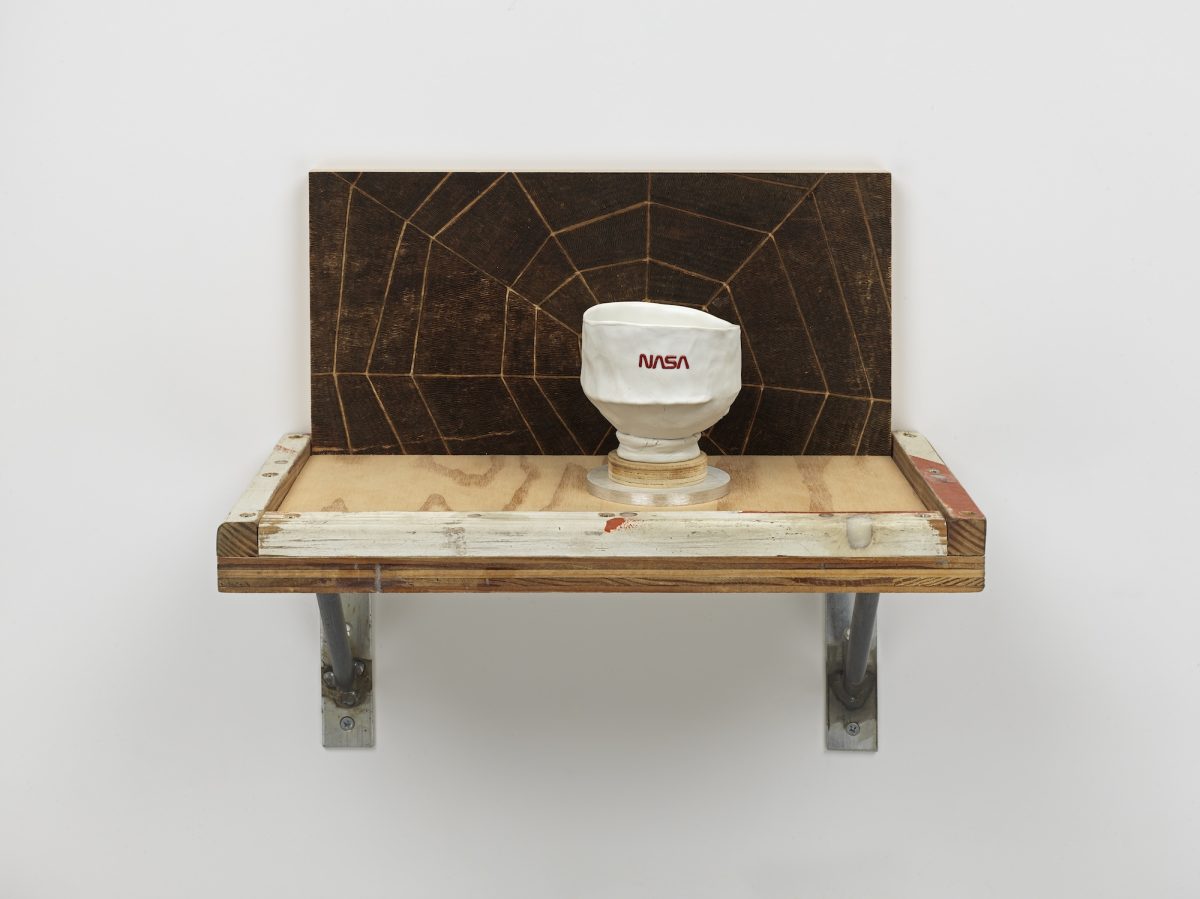
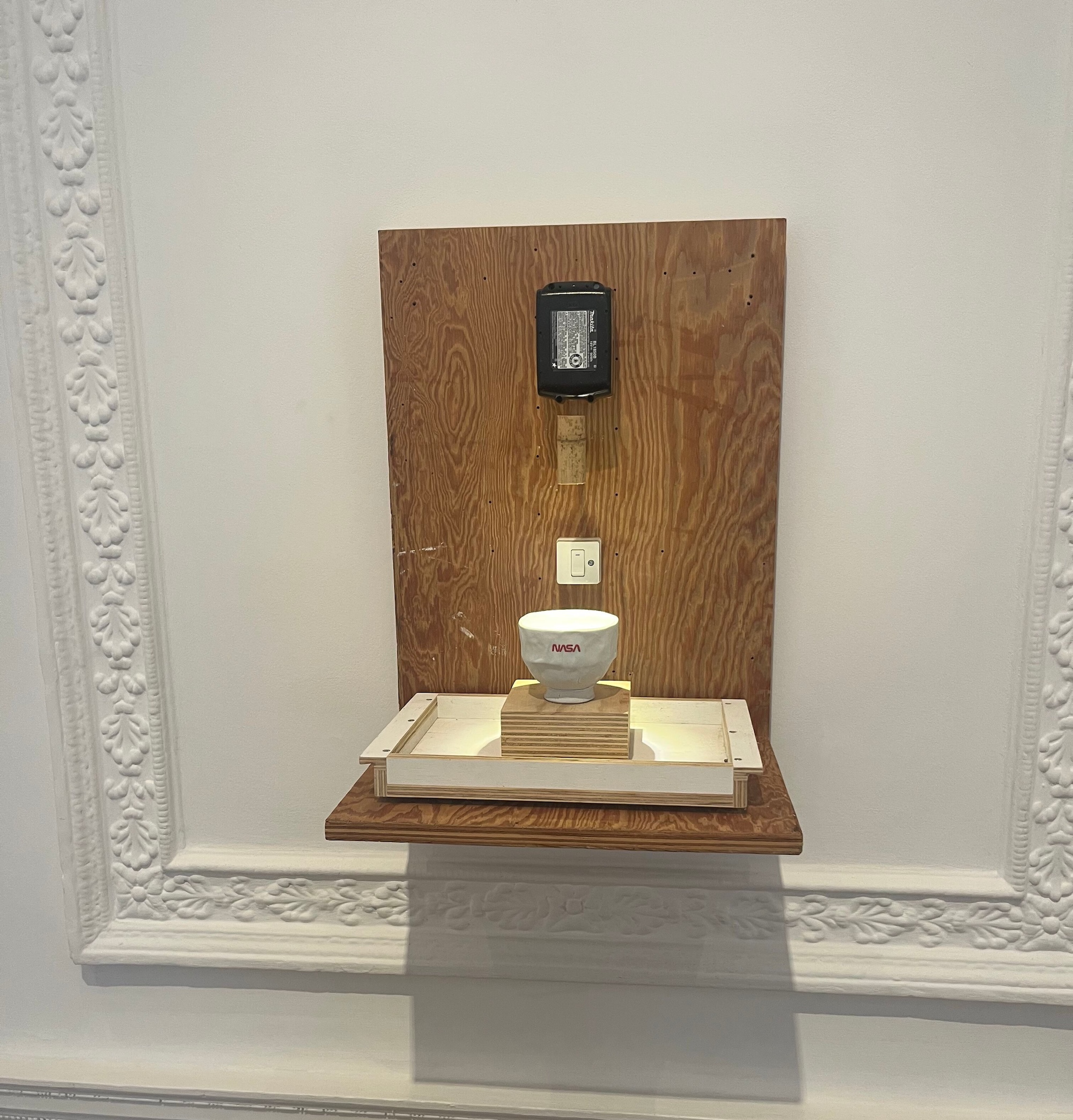
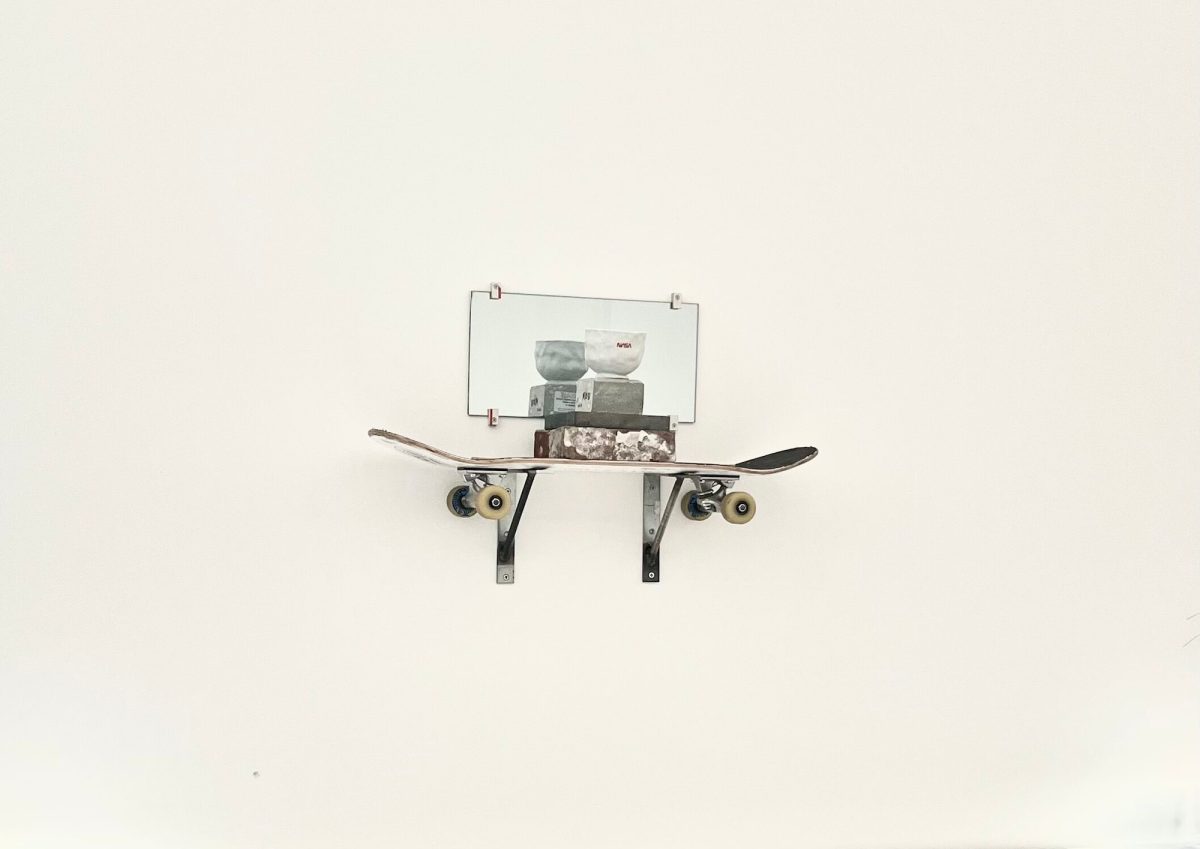
The shelves lift them to eye level. They’re structural, but also conceptual — they let you see the bowl as sculpture, not as utensil. In the studio we often joke that there are only two kinds of forms: phallic and yonic. The bowl, with its inside and outside, its void and volume, is the latter — receptive, generative, containing.
If there’s any utility here, it’s metaphoric: these works are containers of light. One of the pieces literally has a beam of light shining into it — a bit on the nose, perhaps, but it makes the idea visible.
There’s also a light switch on one sculpture. Are people allowed to touch it?
Only if they ask nicely. The gallery prefers that they don’t — and they’re probably right. Once you start pressing buttons, it becomes a science museum, and every button in a science museum is eventually broken. My only objection is practical: if it breaks, I’m not there to fix it.
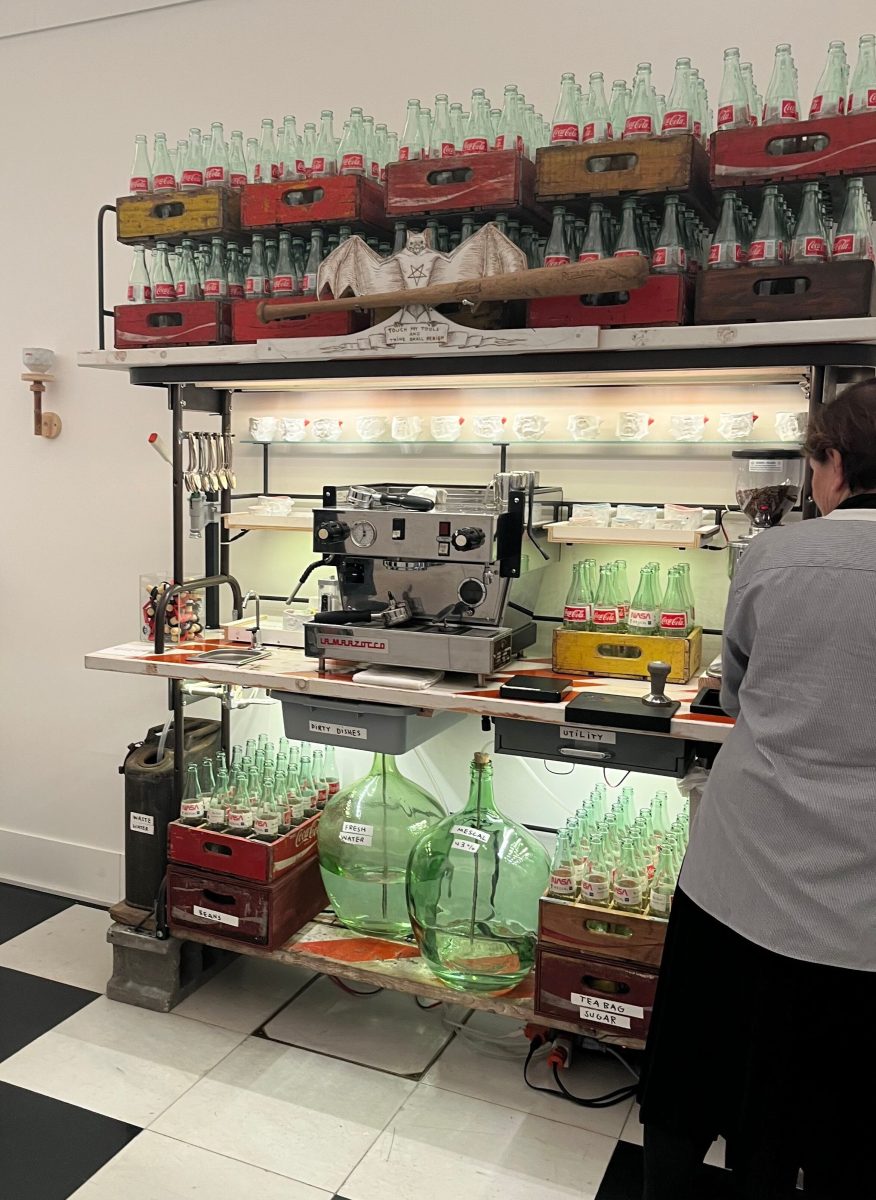
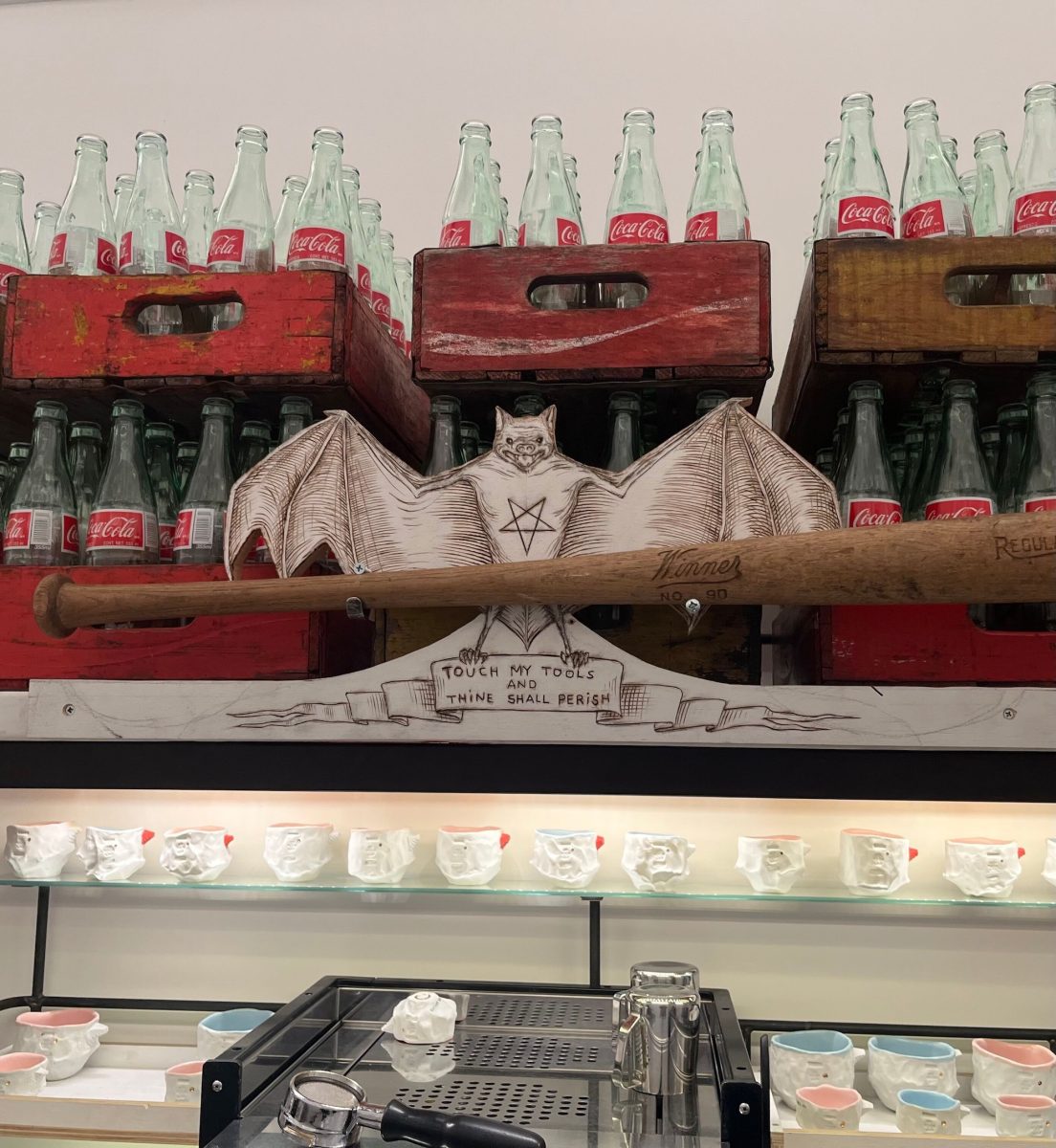
In the exhibition you serve coffee rather than tea, even though the central works are tea bowls. Why that shift?
It’s true — I’m a tea master, but I actually prefer coffee. I love the ritual of the tea ceremony — the sound of the whisk, the smell of tatami, the weight of the bowl — but give me an espresso any day. The colour and scent of matcha are beautiful, but I’m more drawn to the atmosphere around it than the taste itself.
The coffee machine in the exhibition makes that contrast visible. It’s a modern ritual — fast, social, mechanical — set against the slowness and silence of the tea ceremony. I’m interested in that shift: how culture moves from one form of devotion to another.
It’s the same with so many things. In high school I loved the culture around weed, but I didn’t like being high. I don’t love the feeling of alcohol either, but I love the rituals that surround it. The ceremonies are what endure — they’re the art form.
You’ve said there are three reasons we make things: spirituality, sensuality, and stuff. Could you expand on that?
Sure. Spirituality asks the big questions: are we alone, where do we come from? Those are the questions of religion and science alike. Sensuality is about experience — climbing a mountain, smelling cedar, hearing the hush of a cathedral. And stuff is the material manifestation of both: the cathedral itself, the tea bowl, the rocket ship.
I’m a stuff-maker. I’m not James Bond; I’m Q. But you can’t make “stuff” without being in conversation with the rituals and ideas that give it purpose.
Do you still make everything by hand?
Yes. I have a small team — a dozen people who help with firing, glazing, inlay, and gold lustre — but every form starts with my hands. Every fingerprint on those bowls is mine. Each piece is fired at least four times: once with gas, and several times with electricity to build up the surface.
We live in an era of astonishingly well-made things. Nothing is as precisely engineered as an iPhone — it’s a supernatural object. But Apple could never make something that reveals a human presence. The point of those technologies is to erase the trace of the maker. Even AI, in its way, is designed to eliminate the need to think or create — to solve problems on our behalf. That’s its promise, and its threat.
Making by hand is my resistance to that. It’s a way of saying: I’m here. When the city collapses into rubble, the tea bowls will still be there. They’re inert, stable, already stone. They’ll last fifty thousand years. They’re the opposite of phones or sneakers — those are temporary products. These are heirlooms.
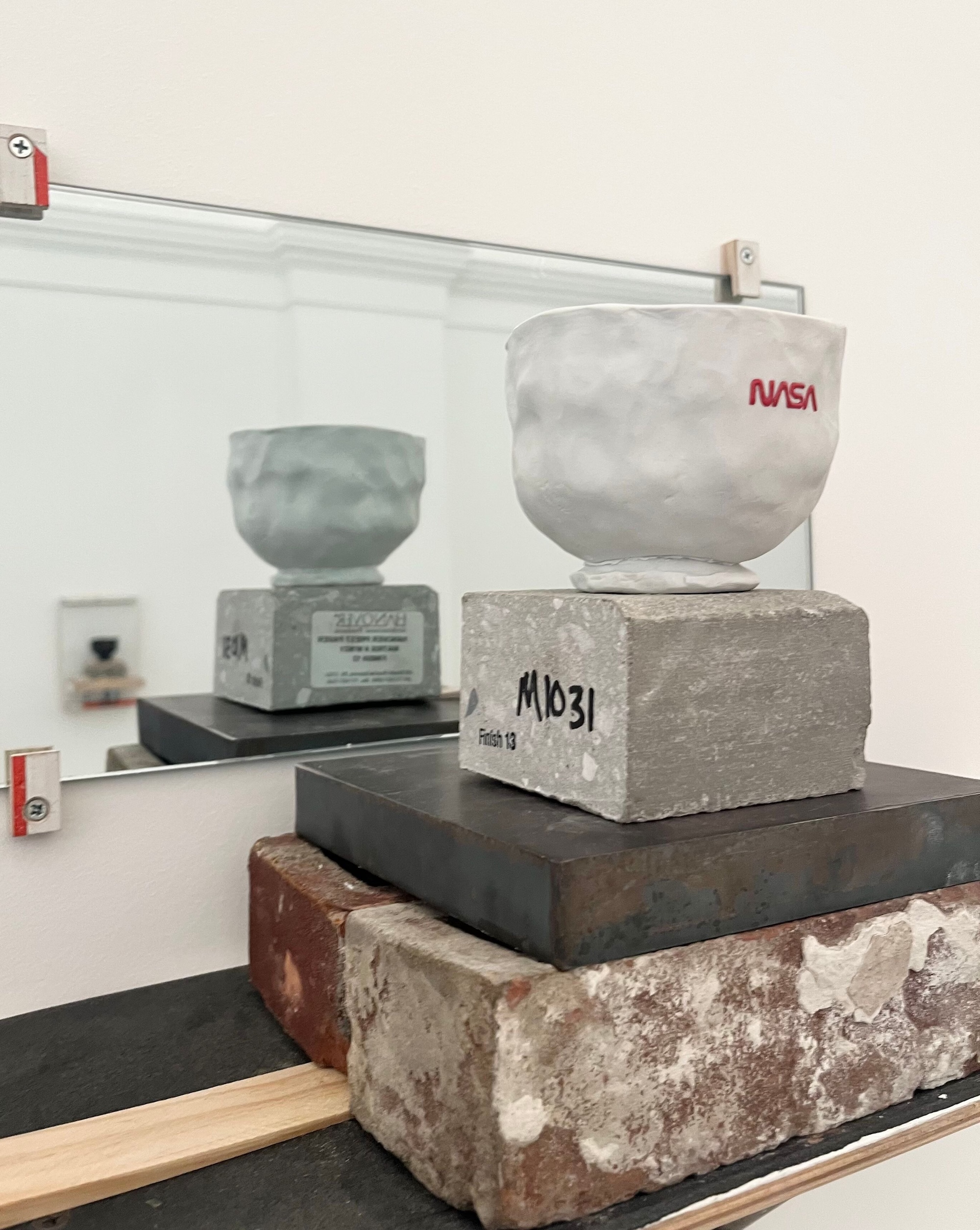
You’ve also spoken about NASA as a recurring motif. Why NASA?
NASA is the ultimate brand of science — the logo of our collective faith in discovery. It represents humanity’s desire to reach beyond itself. Just as a bowl conveys water, or a body conveys genetic code, NASA builds vessels that carry us — or our hopes — into space.
Science, like religion, is a system for understanding the unknown. A telescope and a microscope do the same job: they let us see beyond the limits of the naked eye. NASA is the crucifix of our time — a symbol of belief in progress, curiosity, and possibility.
Of course, that faith is under threat. Budgets shrink, priorities shift, and cynicism grows. But I still think of NASA as a kind of modern spirituality — a belief that we can reach further, look deeper, and keep asking questions.
You’ve lived and worked in New York for a long time. Has that environment shaped how you think about making?
Absolutely, though it’s changed a lot. When I was younger, New York was rough, dangerous, and affordable — which meant artists could live there. It was messy, and that made it exciting. Now it’s sleek, efficient, expensive. It’s still the centre of the art world, but it’s hard to survive as an artist.
Property speculation has made most cities unlivable for makers. But you can’t really blame people for wanting to make money — that’s the system we’re in. What’s lost, though, is friction. When a city’s too safe, too clean, it stops producing the same energy.
If I were starting out now, I’d go to Seoul or Bangkok — cities where you can still feel that pulse of possibility. But if you want to participate in the global conversation, you still need to be somewhere like London or New York, where the mechanisms of communication exist.
And yet your work feels timeless — outside that churn.
That’s intentional. The bowls, the vessels — they’re built to last longer than any of us. Longer than any mayor or president. When Trump is forgotten, the tea bowls will still be here. They’re made to endure, to carry something forward — not just physically, but symbolically.
Objects outlive us. And in that endurance is a kind of hope. The bowl, the vessel, the sculpture — they’re all continuations of the same story. They carry light, memory, and meaning. They remind us that presence — the touch of a hand — still matters.
Tom Sachs, A Good Shelf, 14th October – 20th December 2025. Thaddaeus Ropac, Ely House