In today’s contemporary art world, traditional ink painting is a rare sight, yet the medium still retains its resonance. Landscape painting, too, is becoming less visible at art fairs, but there are moments when we need to turn back to tradition—to pause, to reflect, and to draw sustenance from it. Mengmeng Yu’s art speaks of a younger generation fashioning its own language through traditional materials, reimagined in a new way.
Line up Mengmeng Yu’s works and the first impression is stark: black and white, restrained, almost austere. The surfaces unfold with the quietude of classical Chinese ink painting, yet the landscapes they reveal are often American. At first glance, the compositions recall the grand landscape scrolls of the Song dynasty—expansive, contemplative, serene. Look more closely, and the details begin to shift: the curve of a suspension bridge, a roof washed in red, a moon reduced to a clean geometric arc. Such subtle insertions give Mengmeng Yu’s work its edge. They register a contemporary voice—one that converses with tradition without breaking from it.
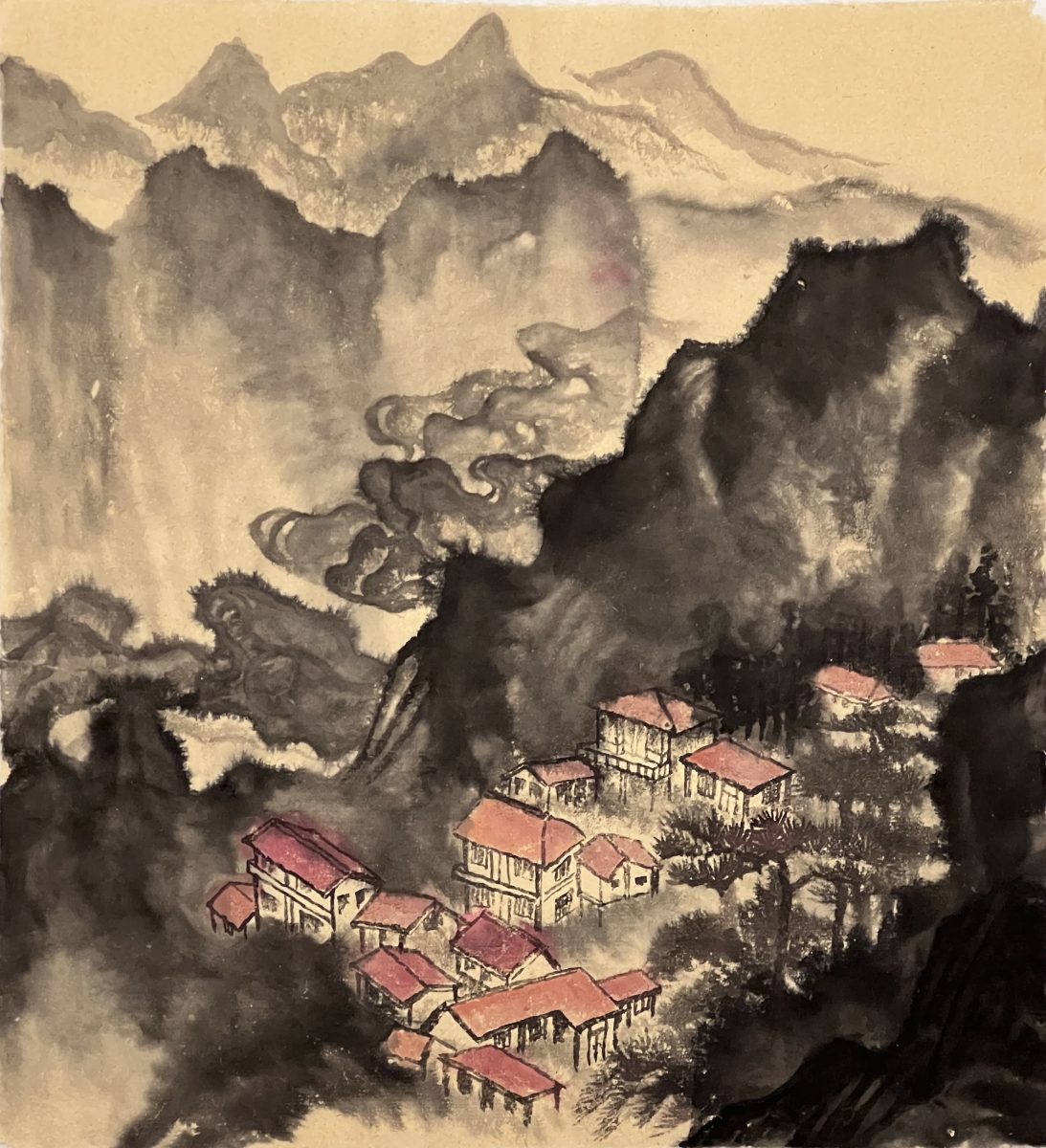
Mengmeng Yu’s practice is deeply shaped by his varied background. His first teacher was his father, from whom he received training in calligraphy and painting. He later studied in Singapore and at the Central Academy of Fine Arts in Beijing, and he now lives in the United States. He has drawn inspiration from masters such as Qi Baishi, yet his art points forward. Ink here is not treated simply as a symbol of cultural heritage, but as an active medium—one that adapts to new contexts and speaks to wider audiences.
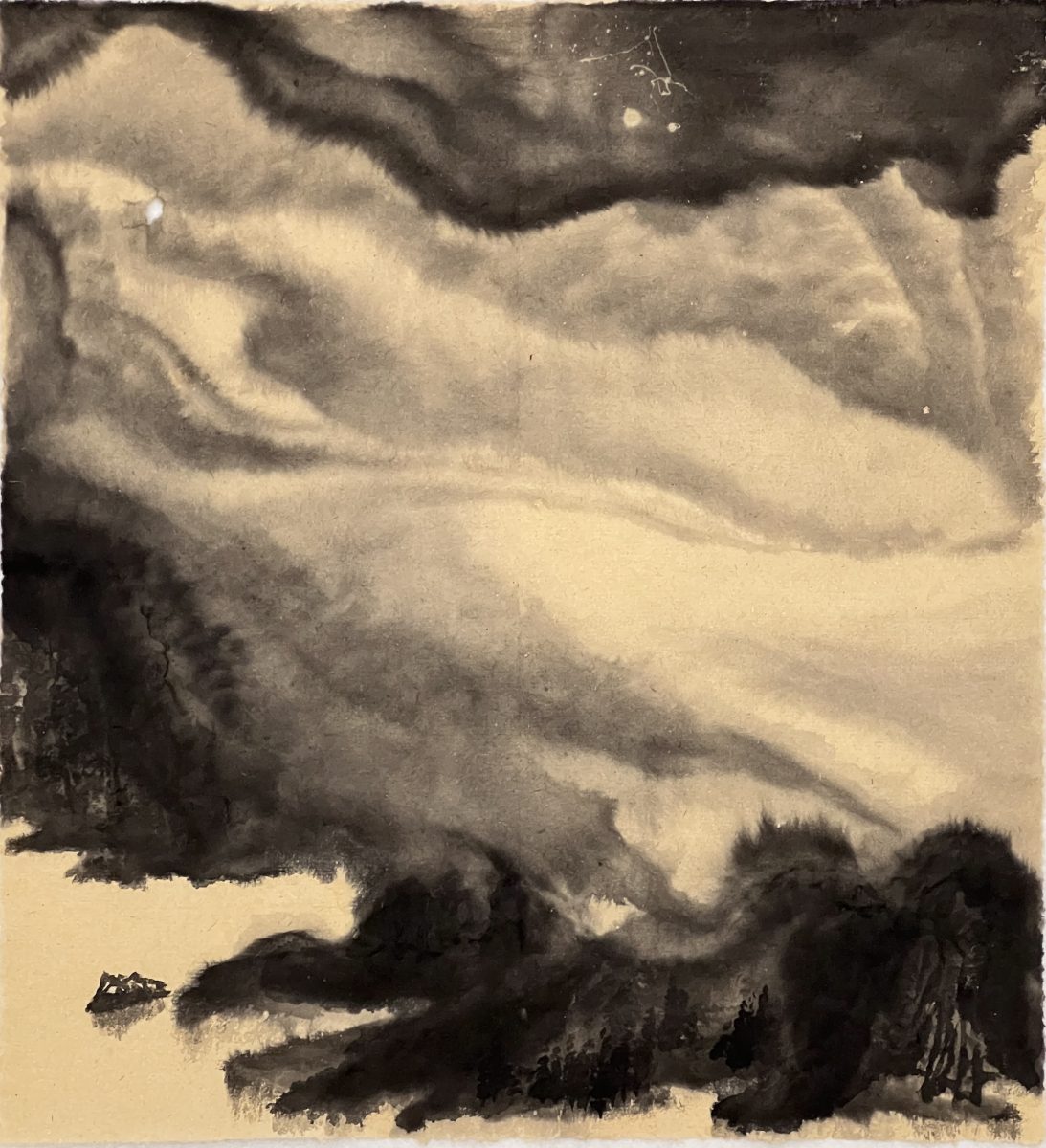
Mengmeng Yu’s landscapes are not a muddle of styles, but rather the careful construction of a shared visual language. They emerge through the brush of shanshui, yet the result is never confused. What he achieves is a translation of one place’s rhythm into the aesthetic framework of another. His paintings preserve the meditative balance of the ink tradition, while still resonating with viewers who may know little of its history.
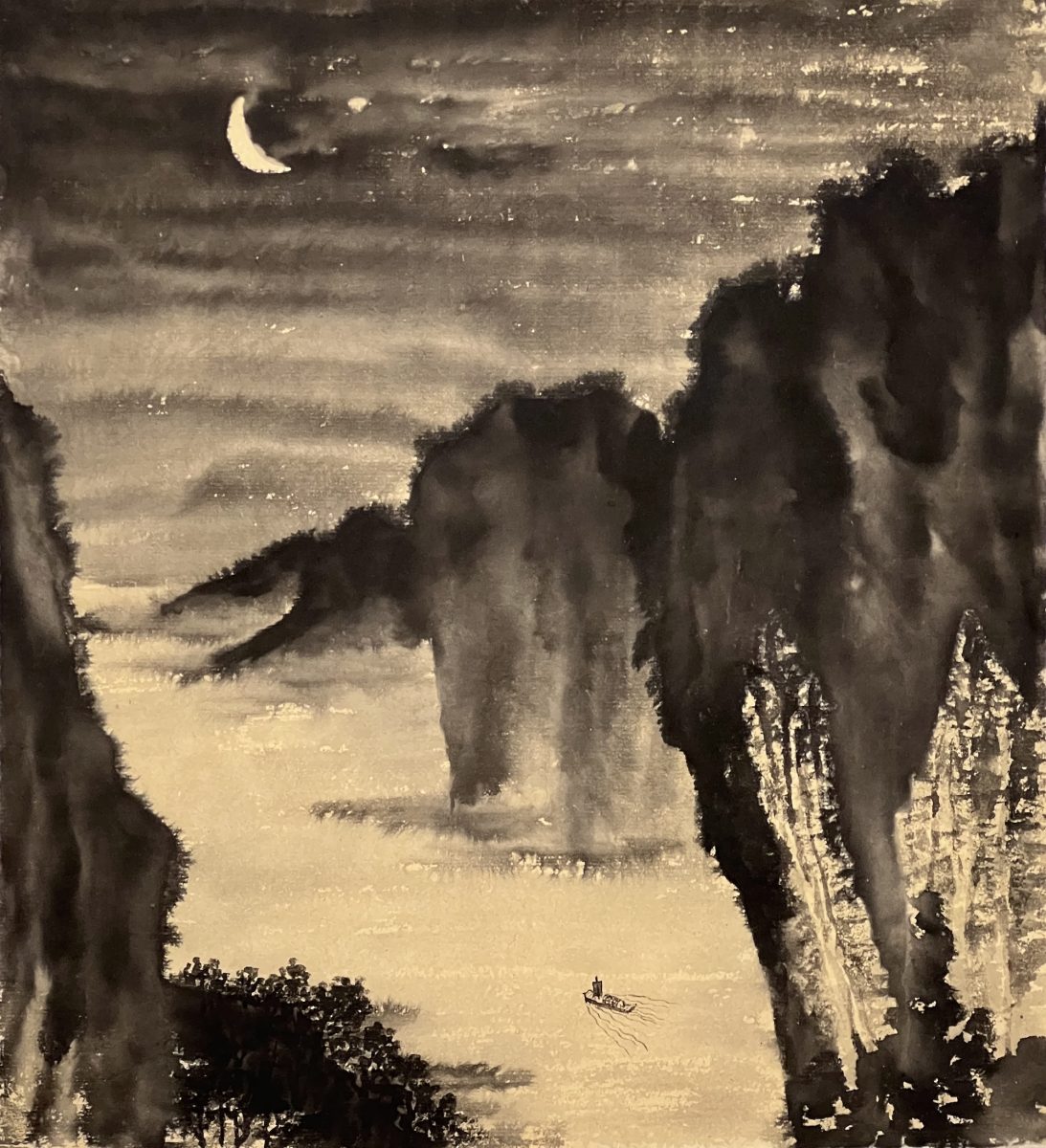
“I paint to express my inner aesthetic ideals,” he once remarked. That phrase captures the measured quality of his practice. His compositions are calm, deliberate, unhurried—qualities seldom encountered at art fairs saturated with spectacle and colour. They carry a self-contained stillness, attuned more to the slow unfolding of space than to any instant punch.
From a visual standpoint, his compositions are deeply considered, and here one can’t help but be reminded of Wu Guanzhong. The use of negative space, at times, feels more generous, more breathable than a surface crowded to the edges, leaving room for the viewer’s imagination to wander.
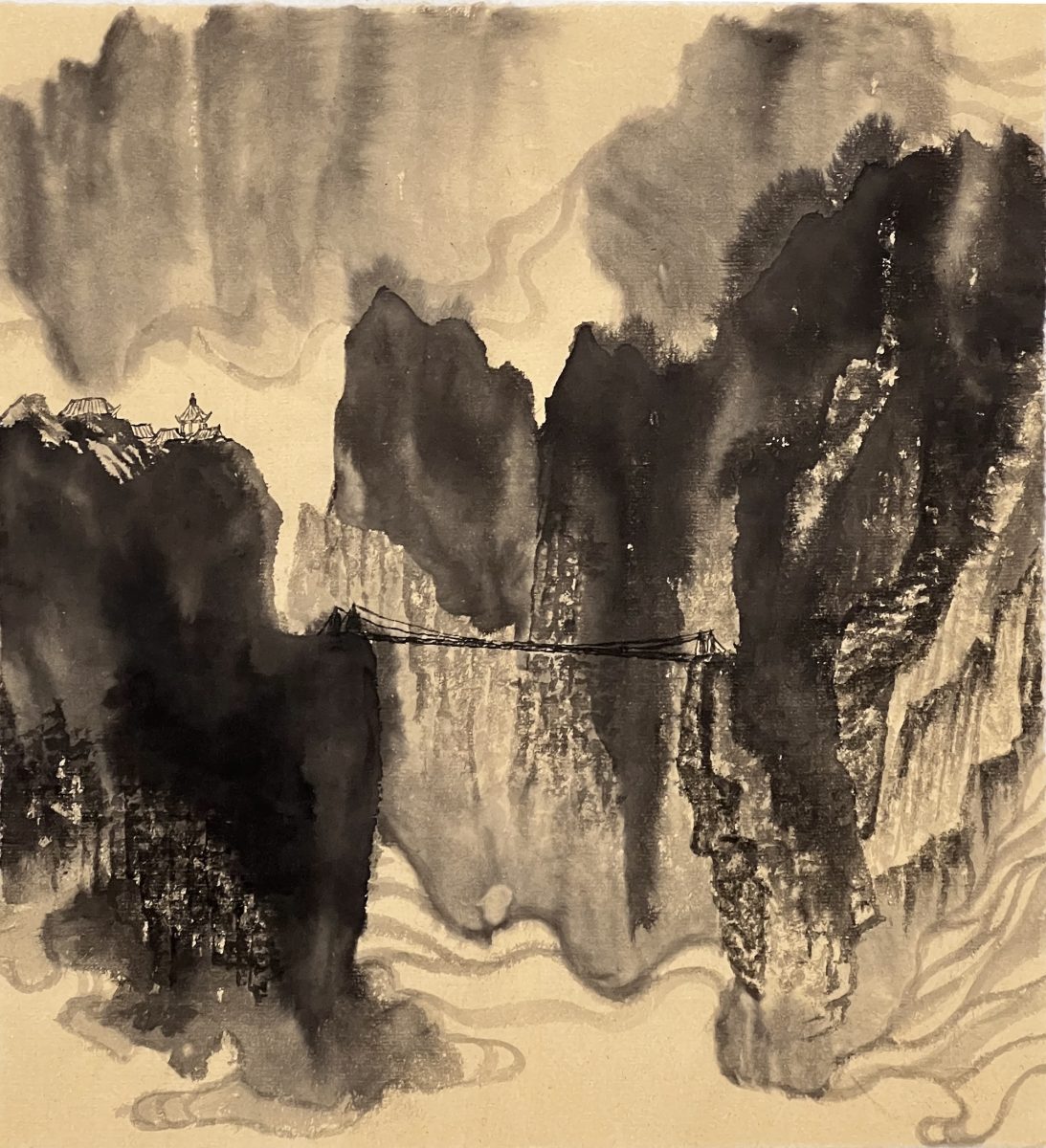
This naturally makes us wonder about the role of ink painting today. Can it step beyond its ties to the “Eastern tradition”? Can it balance heritage with innovation, local roots with global reach? Mengmeng Yu’s art doesn’t settle these questions, but it does point to a way forward: treating ink painting as something alive—holding memory, yet constantly changing.
What makes his practice stand out is not a nostalgic return to the past, but the unmistakable stamp of his own authorship. His ink paintings do not attempt to restore the past. They use the medium as a tool to think about identity, movement, and the shared experience of nature. The result is a series of grounded yet open, grounded yet movable works – located between time and place.
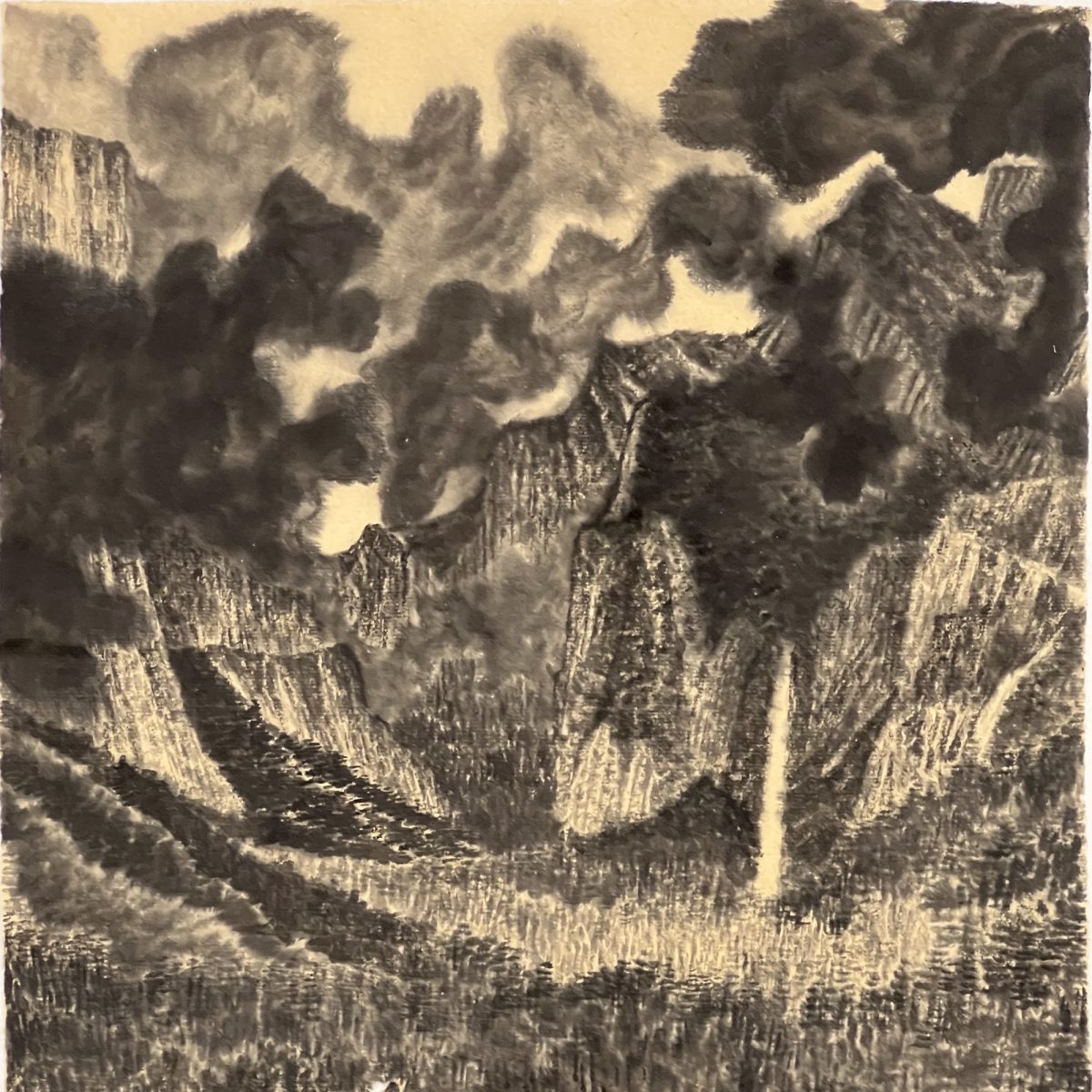
All Images: Mengmeng Yu, Landscape painting, ink on rice paper