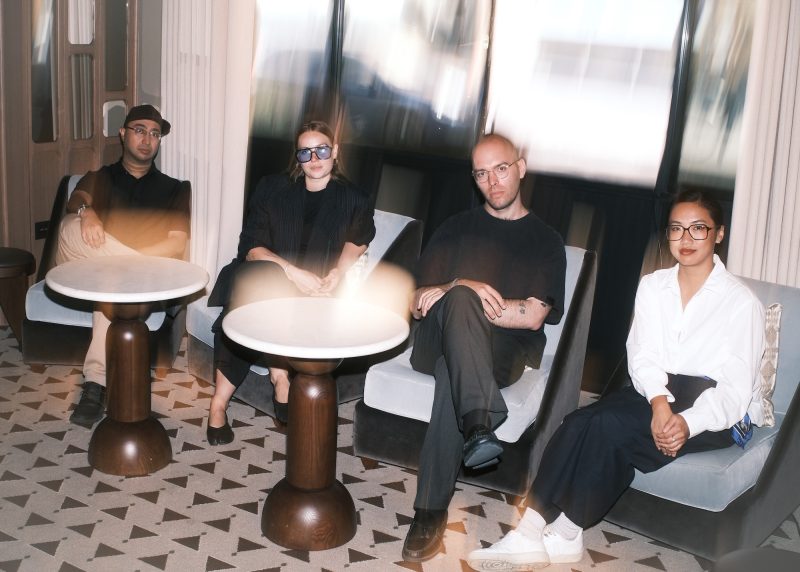
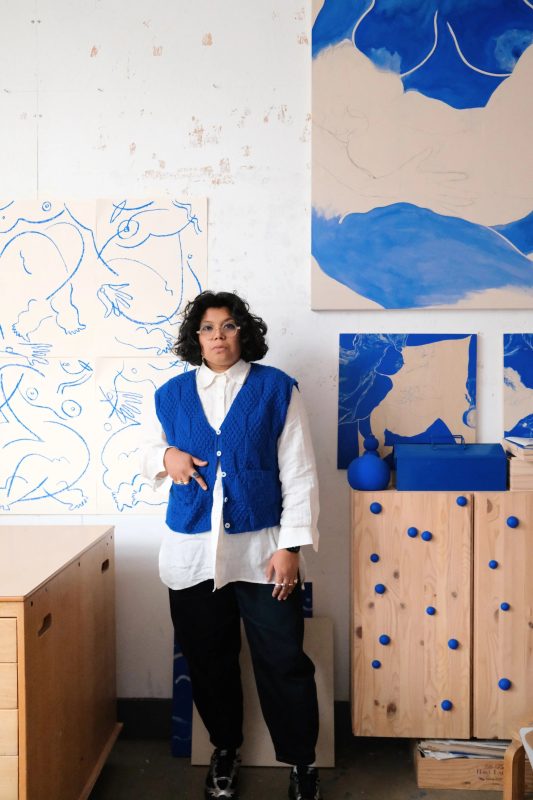
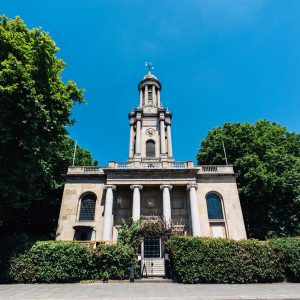
Recently, two artists who grew up by the sea, Afonso Rocha and Simon Linington, joined forces for a fascinating duo exhibition at the Tagli, Where the Land Meets the Sea. Inspired by the coastal environments that shaped their childhoods and artistic sensibilities, the exhibition brings together two distinct yet interconnected approaches to landscape, memory, and place. We sat down with the artists to talk about their work, their relationship with the sea, and the ideas behind this evocative exhibition.
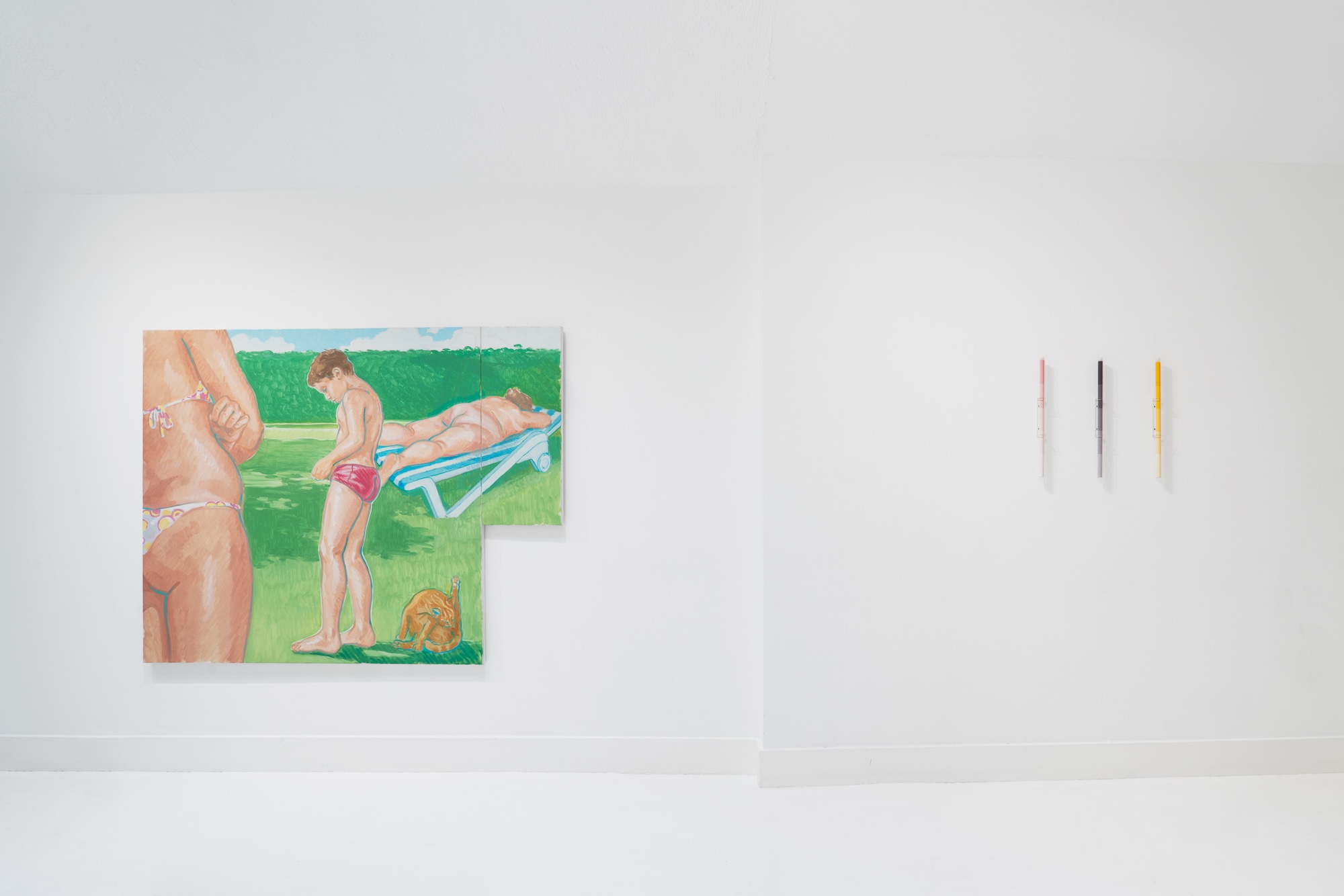
Afonso Rocha
What first led you to start this body of work? Is it connected to your upbringing or personal experiences growing up?
This body of work felt somewhat inevitable to me. It has been almost three years since I moved to London, and recently my practice started to continuously linger around the idea of ‘home’. Home as something that has been left behind, but something I have simultaneously left searching for; something that cannot be precisely located and seems to exist only, perhaps, in the enduring act of longing for. As a result, in this series, I juxtaposed old memories with present concerns as a way of reflecting on my own journey and childhood.
For me, this body of work is maybe less experimental and instead deeper, more nurturing and about the simpler but crucial things in life. It is, to an extent, a cross-examination between my younger self and me.
Many of the figures in your paintings seem to be situated by the sea or around pools, which I find really interesting. Why does this setting appear so frequently in your work?
As someone who grew up by the sea, I never really valued or cared too much about it. Now, every time I go home, the first thing I do is go for a walk along the sea. Well… maybe not every time, even though I would like that. The truth is that water became synonymous with a feeling of home, with being away from daily life and all its struggles. I imagine this is a fairly universal thing… water takes us back to our holidays, to our childhood, to a certain level of calm and a romanticised view of life.
Simultaneously, I wanted to depict the intimacy of private interactions and relationships in an outdoor context, in this sort of strange social or familial setting.
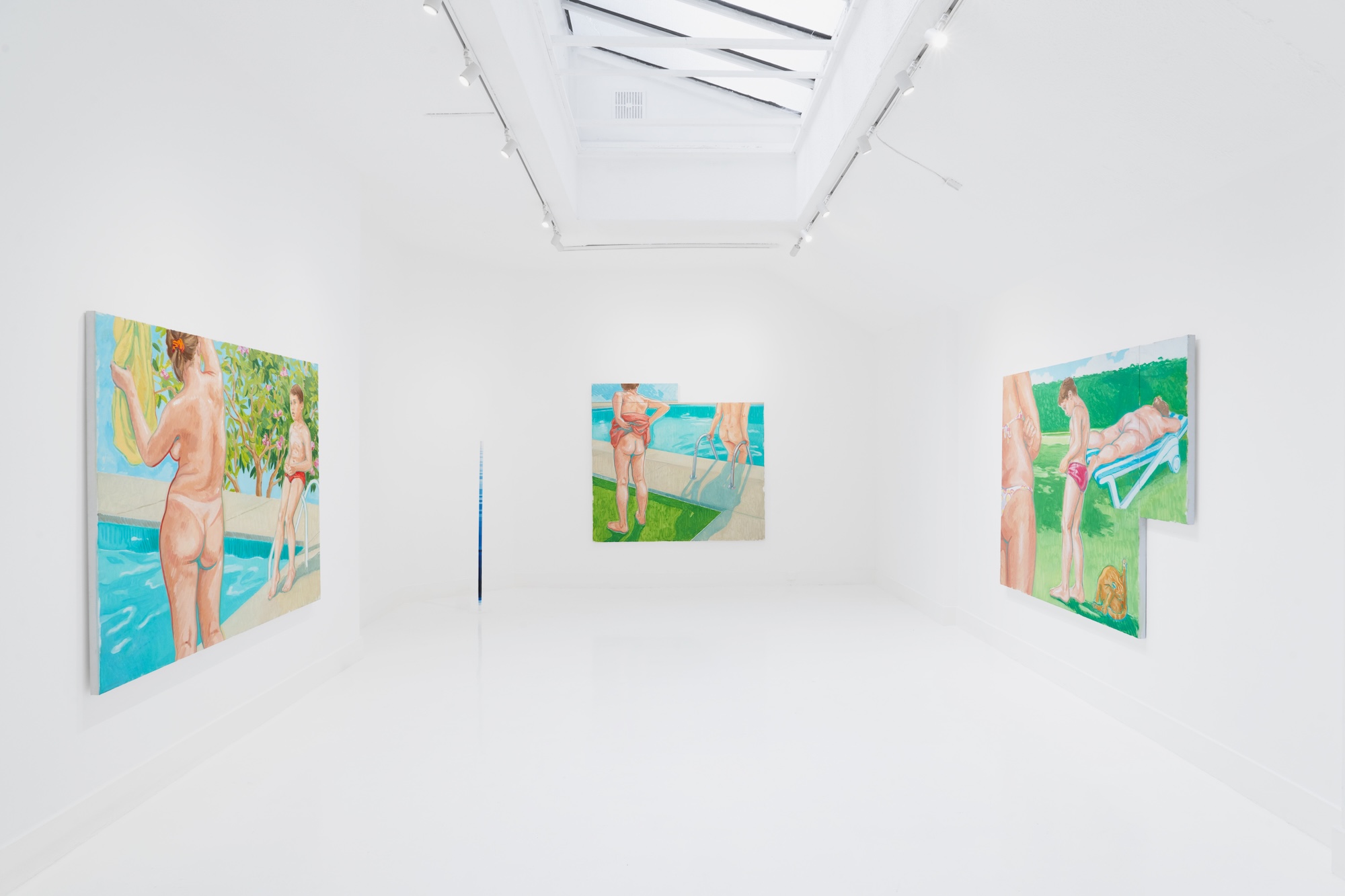
Could you tell me a bit about the people in your paintings? Are they inspired by a fascination with observing people and their relationships?
The people in my paintings are like ‘placeholders’. Even though they are real people, through the paintings they become empty vessels for me, and hopefully the viewer, to project their own self, its own stories and memories.
This being said, most of the figures are people I know. They are my friends, my brothers, my cousins… Others are just people I photograph on the street, at the beach, or even just references I find on social media or that I draw from old photographs, master paintings or sketches.
When the paintings are done, they are simultaneously incredibly personal and also absolute strangers.
Any other things you would like to share with the audience?
Just want to massively thank everyone who made it to the show despite all the strikes and terrible weather. It was really beautiful to see that so many people went out of their way to come to the show.
I have some new exciting projects coming up later this year and in 2027, but it must all remain private for now.
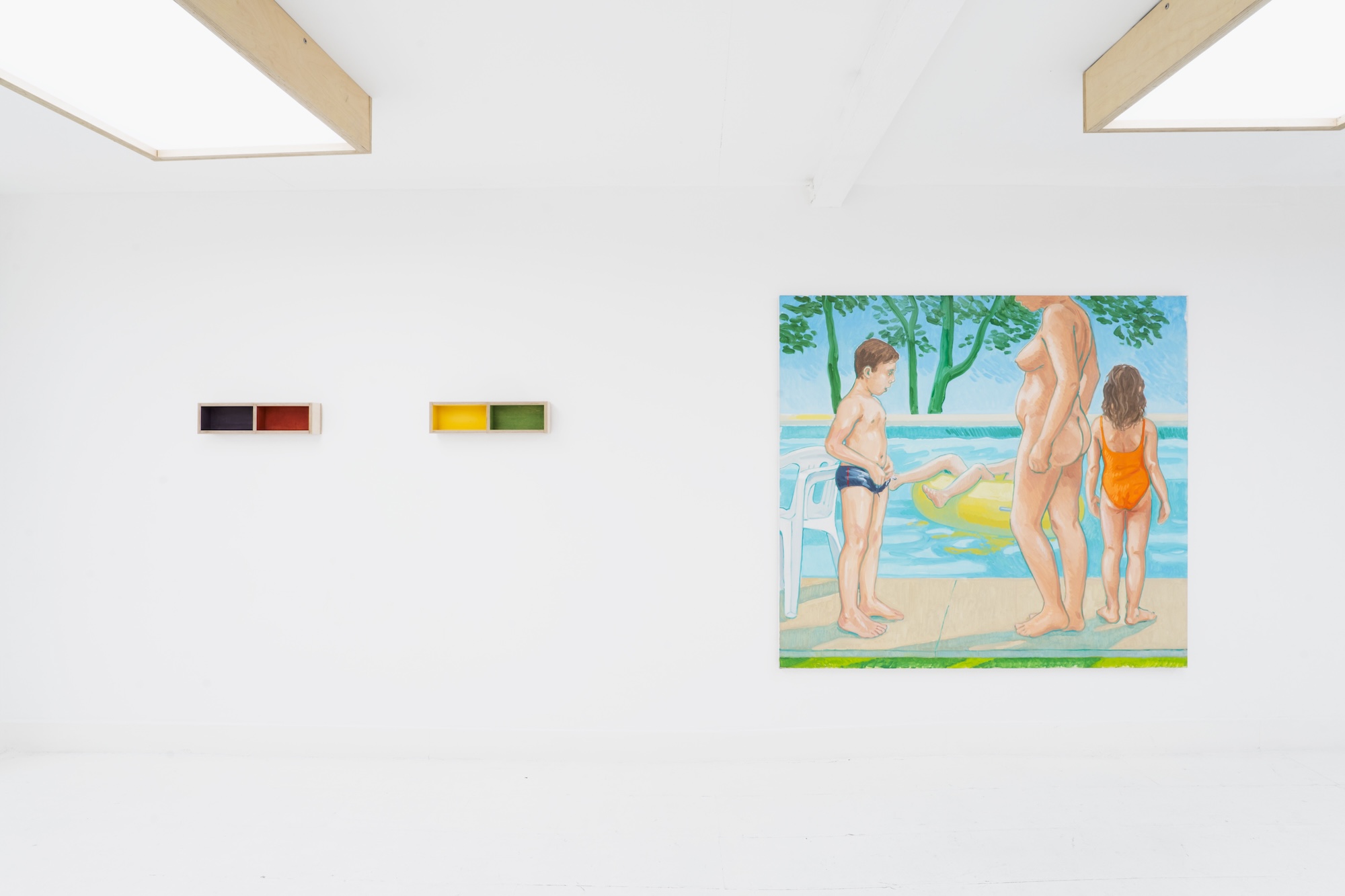
Simon Linington
Could you talk about the initial motivation behind the work? What first inspired you to make them? ?The box seems to play an important role in the work. What does it represent for you??
Maybe because of the 24-hour news cycle, it feels like we’re living in an increasingly chaotic world, but I don’t know if that’s true. I think it’s normal to want to find or make order, and that will mean different things to different people of course, but sometimes I think that by making these sculptures, I get to express some of that desire.
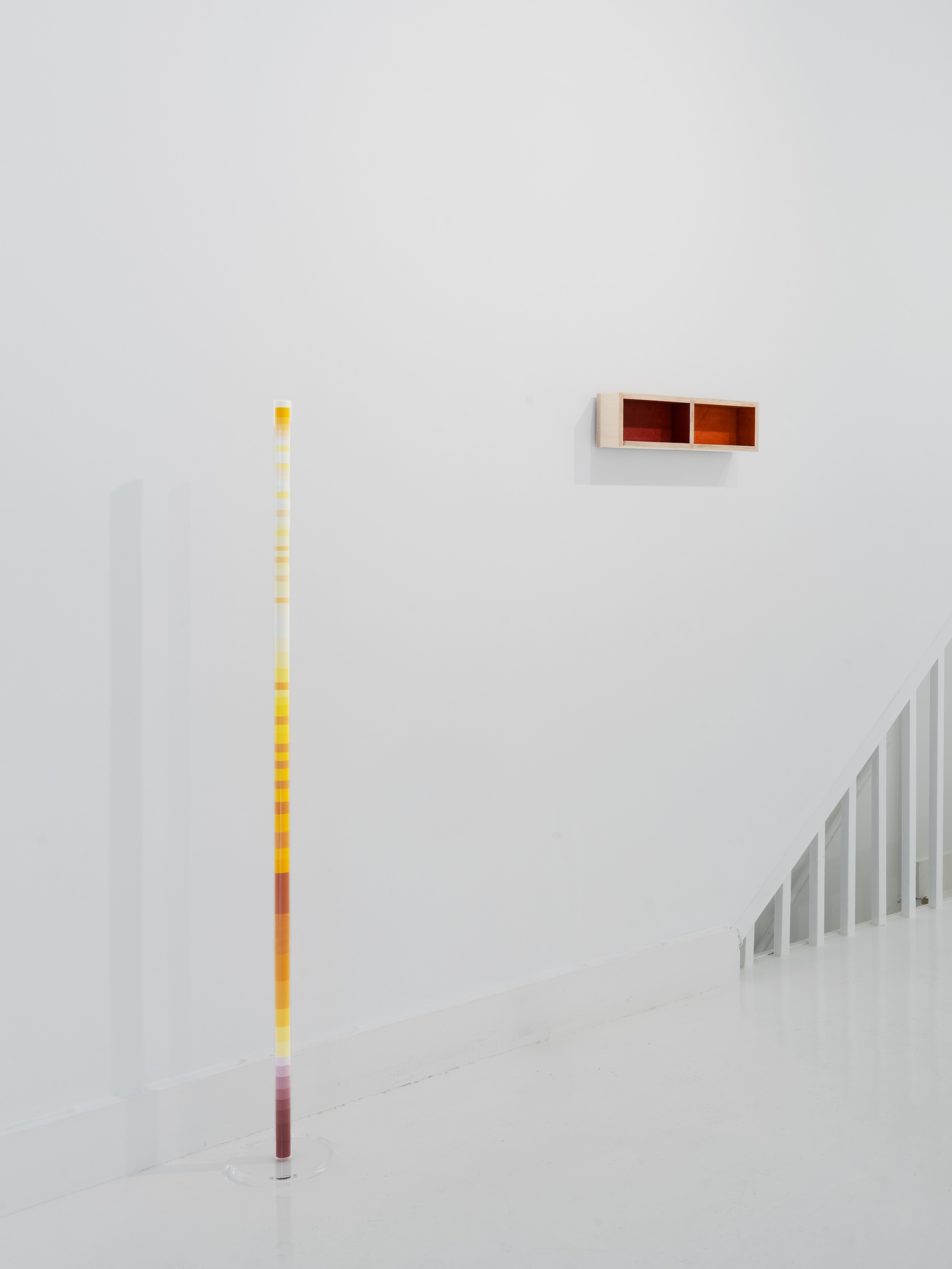
I refer to those sculptures as boxes also, but they aren’t really boxes at all. If you look at them closely, each section shares at least one of its sides with the next, which means they can only function together. Like us, a box or a tube, and many other things, we might say they’re containers, or holding something.
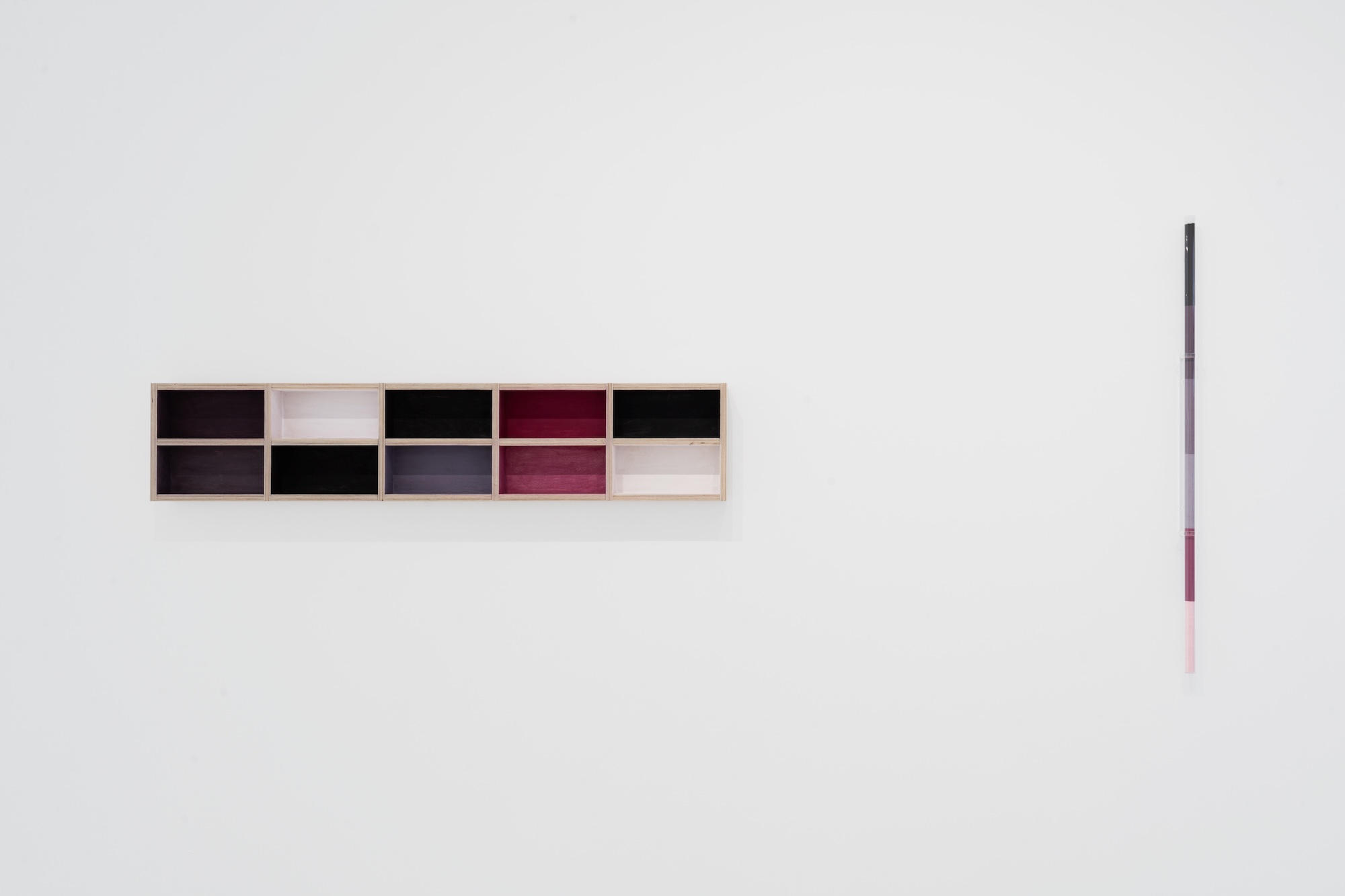
The glass tubes filled with sand are a striking element of the work. How did you first arrive at this idea? Was there a particular experience, memory, or place that inspired it?
They’re inspired by Victorian glass objects filled with colourful sands from Alum Bay on the Isle of Wight. I grew up on the Island, and I’ve always loved these things.
Is there an interesting story behind the making of this work that audiences might not know about?
My family – all the way back from the Victorian period until my childhood made and sold these sand-filled objects; this and photography were the family businesses. I sometimes wonder if I have an instinct to do this, to express myself in this way, and if it’s true, I think that’s something I don’t really understand but can feel. When I’m making a sculpture, I will stand back and look at it, and sometimes I think it’s good, and other times I decide I need to change something, but there are times when I look at it and think it looks just like me, and that’s something I can’t explain. I felt that when I made Dragonfly – the blue/white/yellow/black wall-mounted tube.
How has your childhood and the place where you grew up influenced your artistic practice?
A lot, but maybe what’s sometimes not understood is that I had to be away from that place and this country to start thinking about its influence. I was living abroad during the pandemic, and that’s when I started making these sculptures. So maybe one place is not more important than the other.
MORE: @afonso.m.rocha & @simonlinington
Installation photography by Reliant Imaging, Courtesy of THE TAGLI