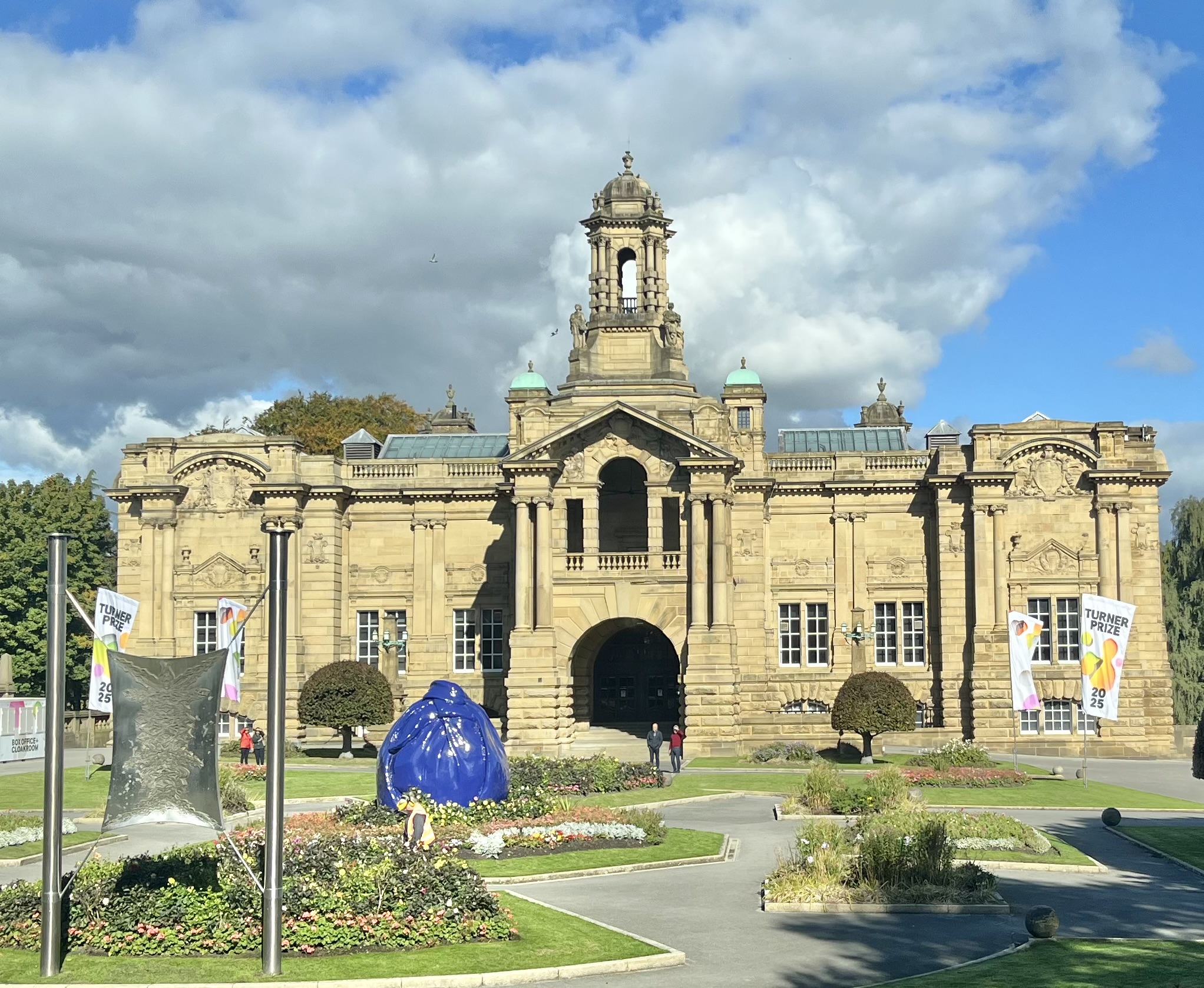
Bradford 2025 UK City of Culture has unveiled an exhibition of works by the four artists who have been shortlisted for this year’s Turner Prize at Cartwright Hall Art Gallery in Bradford: Nnena Kalu, Rene Mati?, Mohammed Sami, and Zadie Xa.
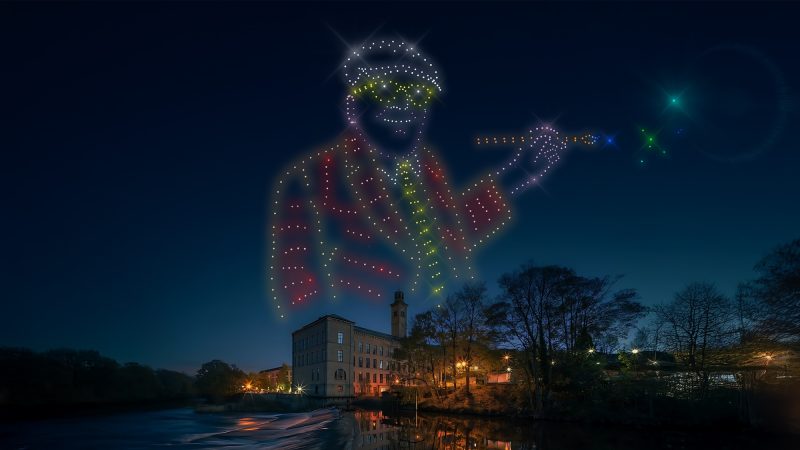
The world’s leading prize for the visual arts, the Turner Prize aims to promote public debate around new developments in contemporary art. The winner will be announced on 9th December 2025 at an award ceremony at Bradford Grammar School. Turner Prize 2025 is a major moment in the Bradford 2025 UK City of Culture celebrations.
Shanaz Gulzar, Creative Director of Bradford 2025 UK City of Culture, said:
“The Turner Prize represents the boldest and most exciting contemporary art, and we are thrilled to welcome it to Bradford during this transformational year. Showcasing world-class creativity in the heart of our city whilst celebrating the most extraordinary artistic voices, the show at the incredible Cartwright Hall Art Gallery will inspire conversation, connection and space for reflection. We’re delighted to be working in partnership with Tate, Bradford Museums & Galleries and Yorkshire Contemporary to bring this prestigious event to the district.”
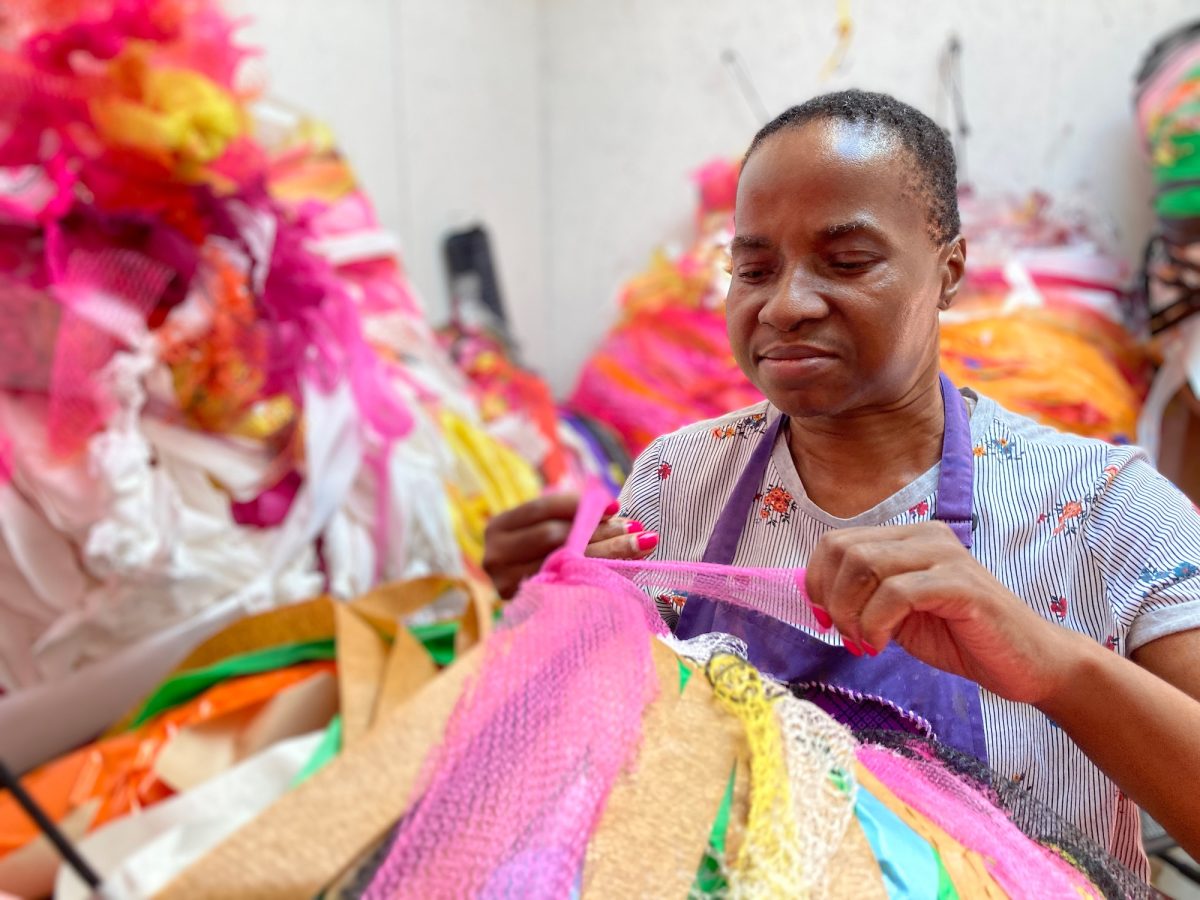
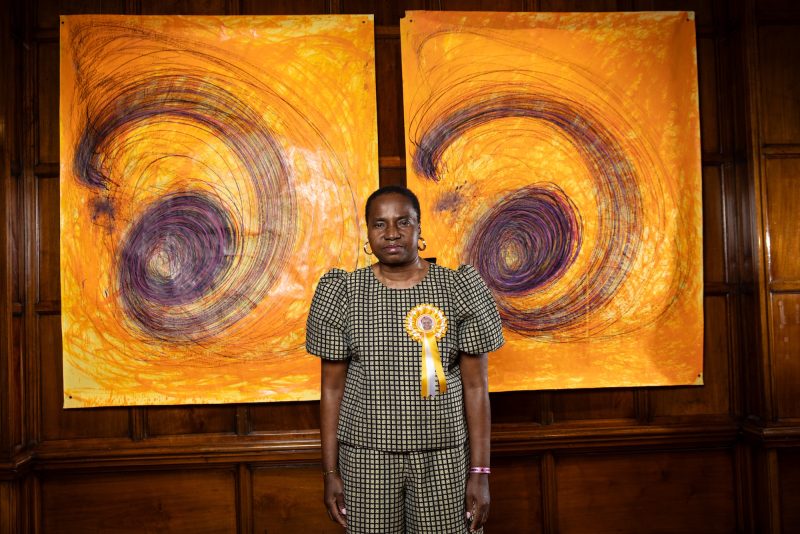
Nnena Kalu creates large-scale abstract drawings and hanging sculptures. Her vividly coloured works are carefully created from repeated lines and wrappings of different materials, making nest or cocoon-like forms. While drawings are made in her studio, sculptures are often finalised on site, with Kalu adapting them to specific spaces.
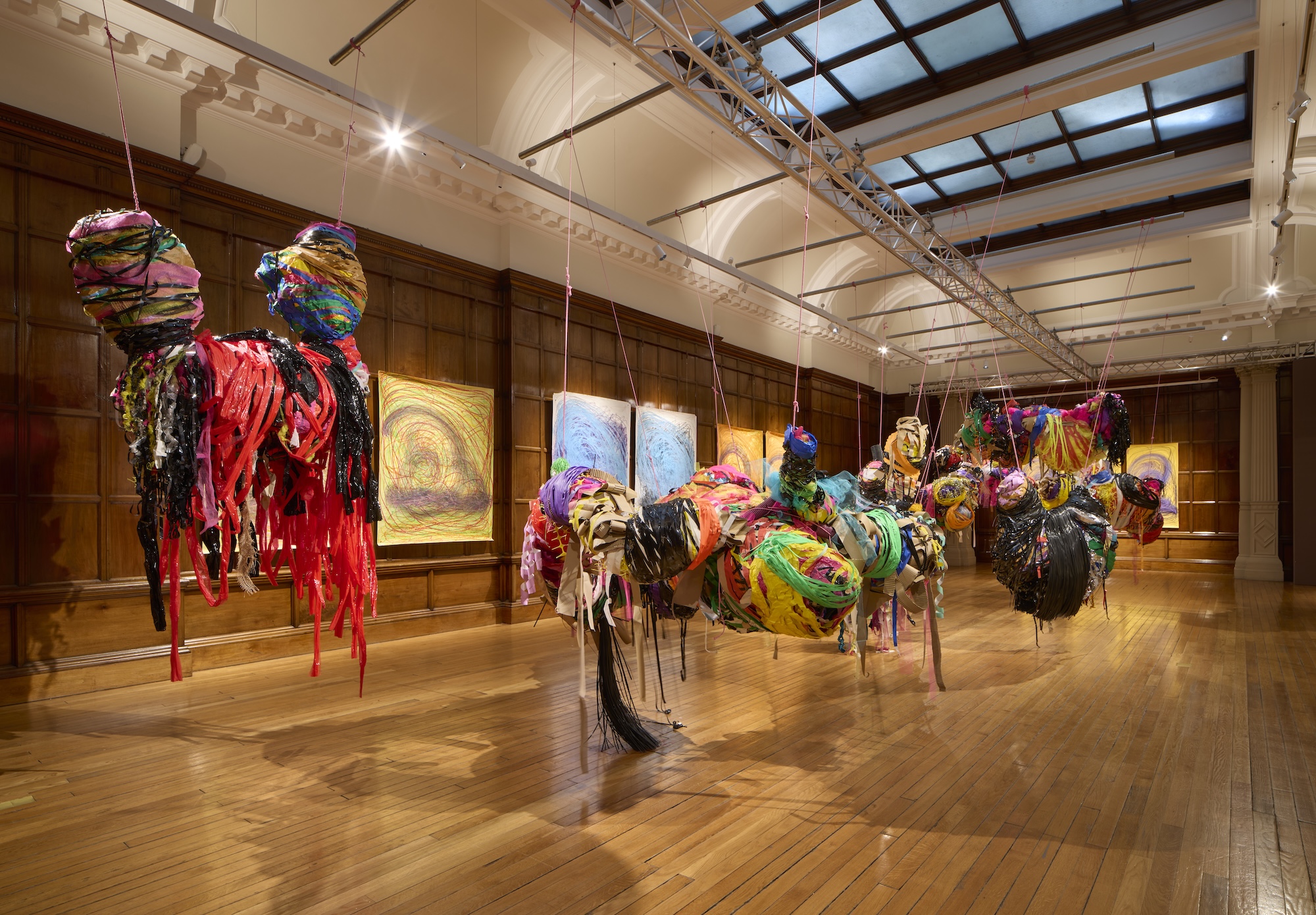
Kalu was nominated for the inclusion of Drawing 21 in the group exhibition Conversations at the Walker Art Gallery, Liverpool and her works Hanging Sculpture 1-10. Barcelona at Manifesta 15. Kalu’s Turner Prize presentation brings together these sculptures which the artist has reworked on site at Cartwright Hall. To create these works, Kalu begins with a loop or structure that forms a base, around which she wraps, folds and knots brightly coloured streams of repurposed fabric, rope, tape, cling film, paper and VHS tape. Alongside are a selection of drawings consisting of powerful vortexes made with swirling, overlapping lines.
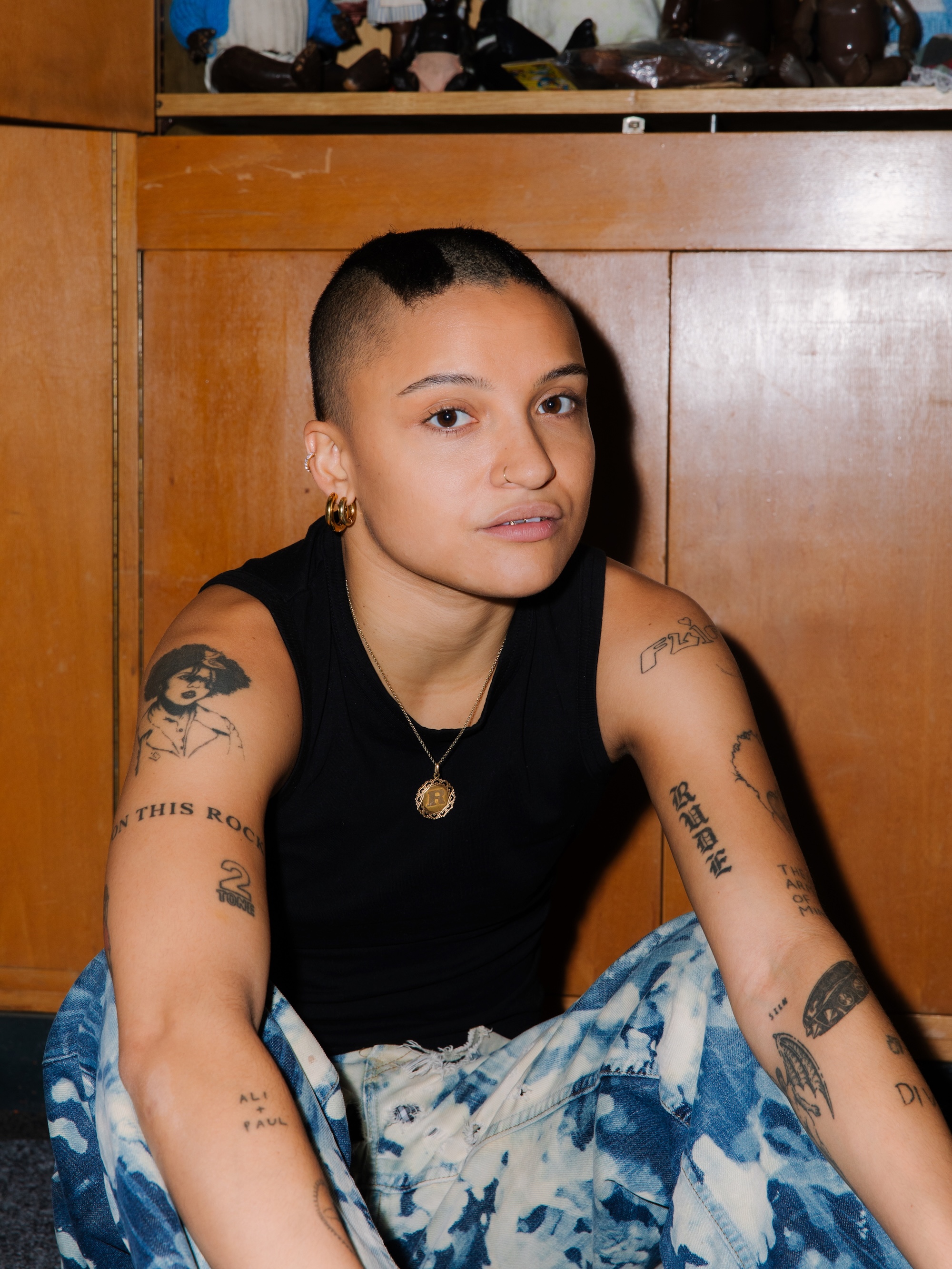
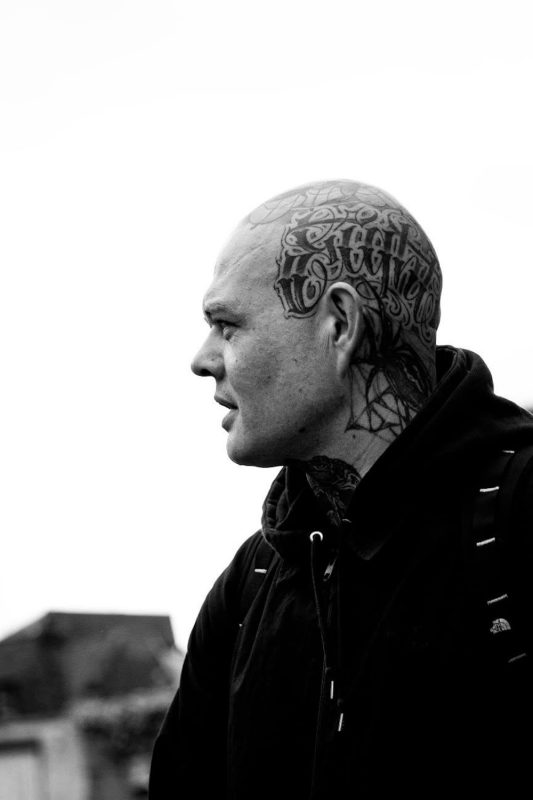
Rene Mati? uses photography along with sculpture, textiles, sound, moving image and writing to reflect on identity, community and love.Their work often captures scenes and snippets from everyday life, subcultures and their own personal background to ask questions about race, gender, class and nationality.
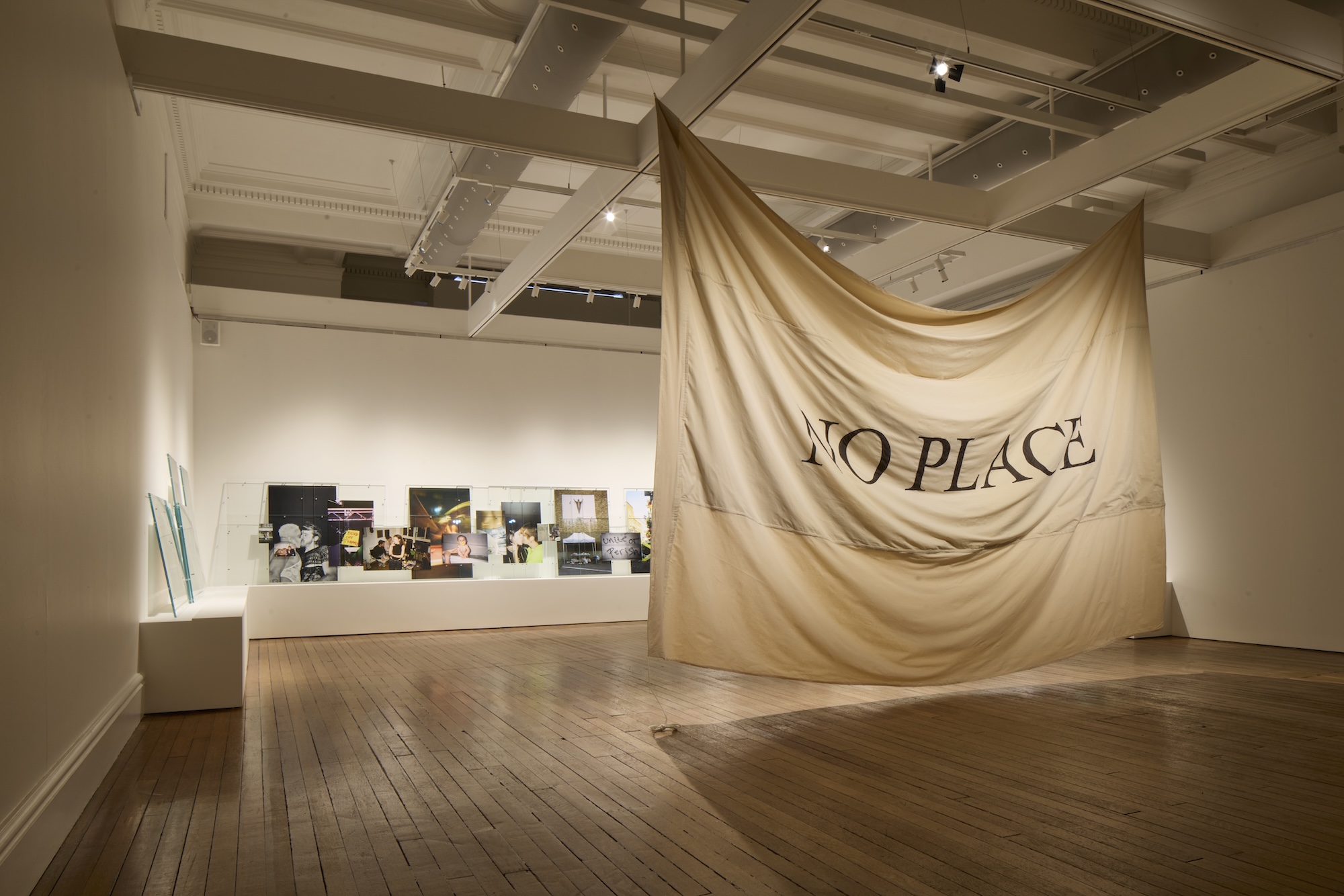
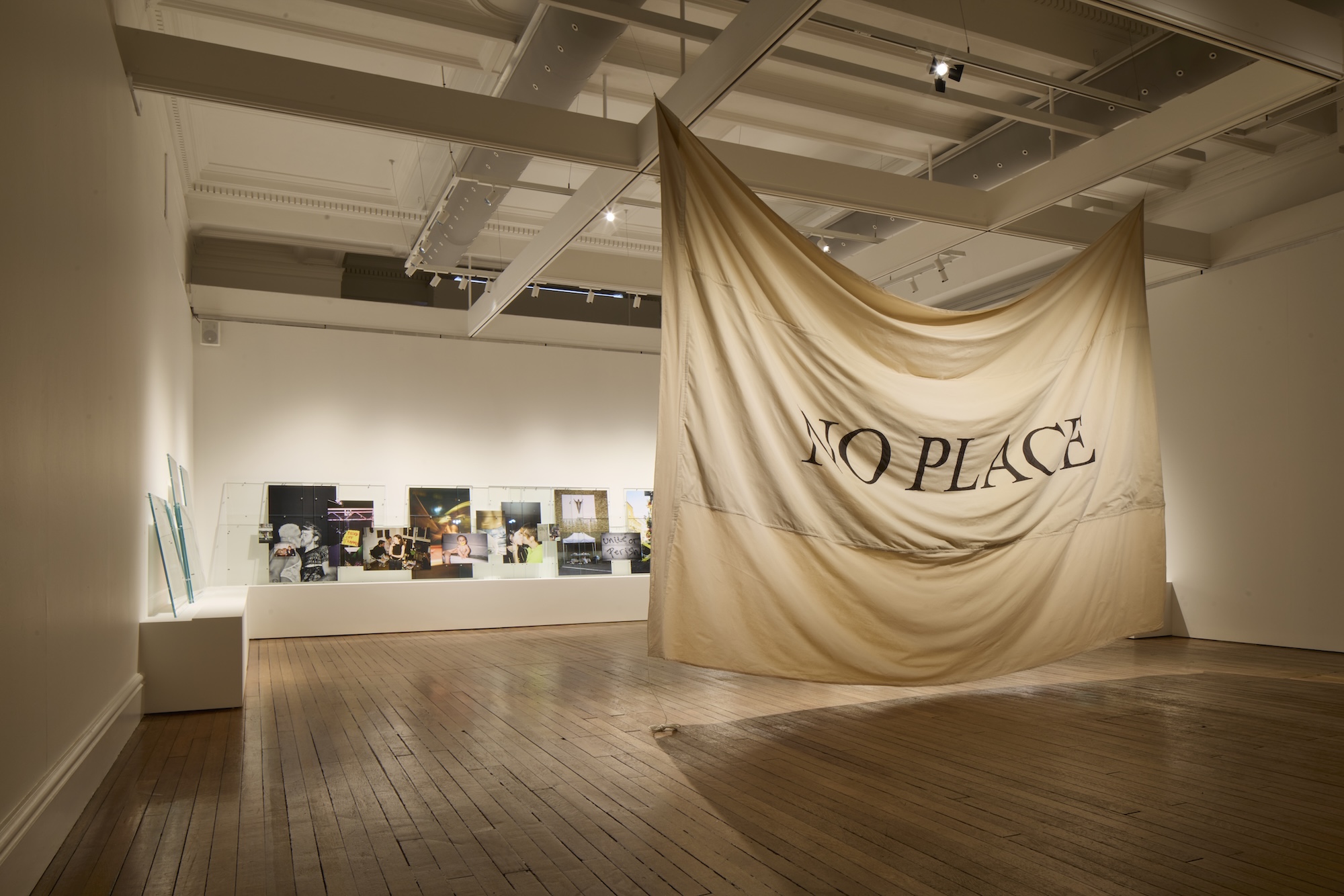
Mati? was nominated for their solo exhibition As Opposed to the Truth at the Center for Contemporary Arts, Berlin. Created amid a backdrop of right-wing populism, violence and political hypocrisy, Mati?’s Turner Prize presentation explores how despite this, people can ‘hold on to one another, care for each other, and learn to live with vulnerability,’ as they explain. In the centre of the room hangs a white flagcontaining the words ‘no place’ and ‘for violence’. The exhibition also features Restoration, a growing collection of antique black dolls salvaged by the artist, as well as the photo series Feelings Wheel and sound installation 365 which bring together overlapping imagery and sounds referencing protest, parties and relationships.
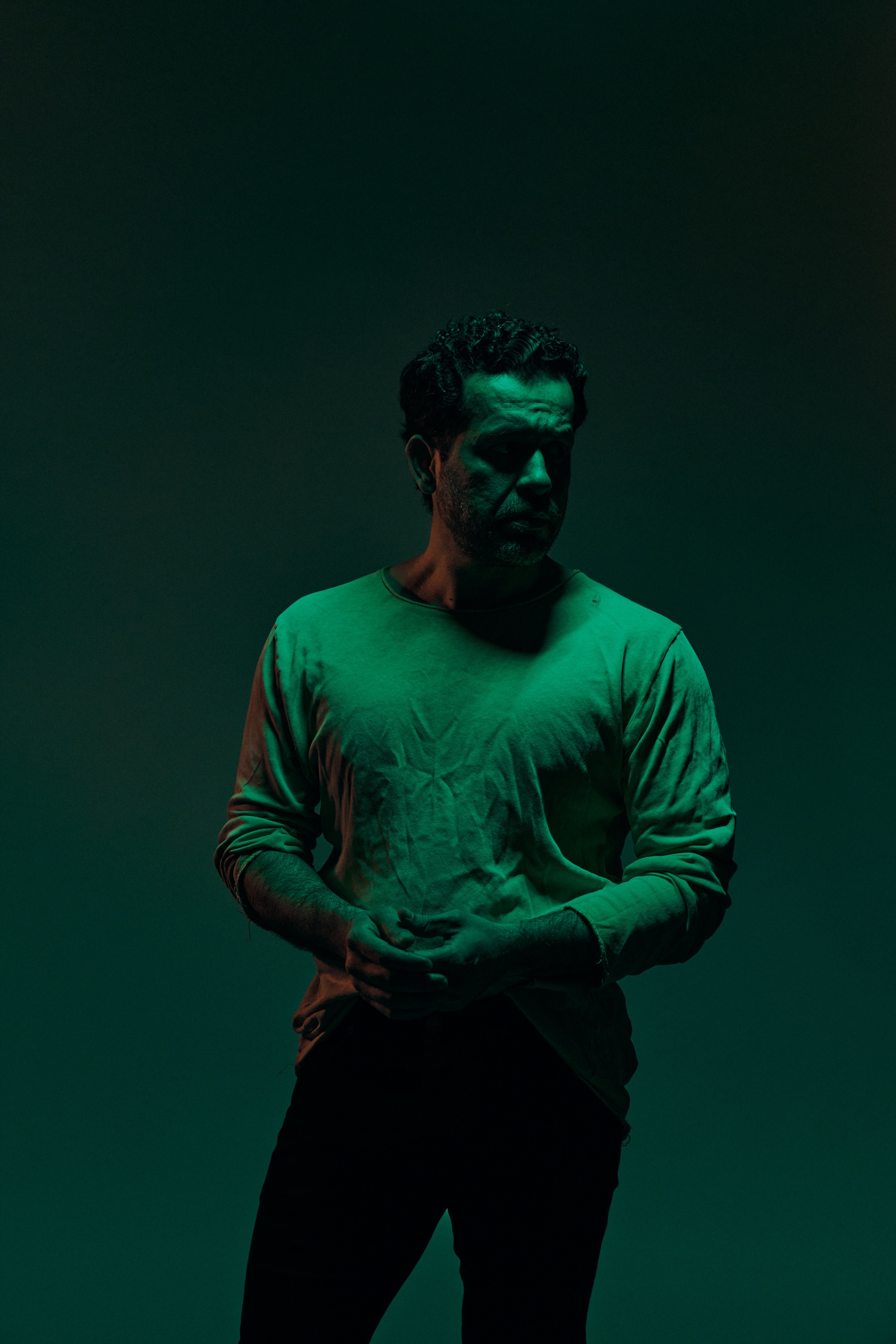
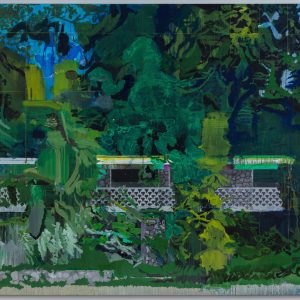
Mohammed Sami’s practice underscores how mnemonic processes often surface belatedly. In his paintings, the relationship between signifier and signified becomes an active agent. By deliberately omitting human figures and focusing instead on landscapes, interiors, and still-lifes, he displaces direct representation of war and conflict, challenging the cliché of memory as if it were replaying like a videotape. Through this strategy, metaphor and ambiguity allow his paintings to articulate conflict without ever depicting it directly.
For his Turner Prize presentation, Sami brings together new paintings that explore the symptoms of war through processes of memory and causality, alongside works from his nominated solo exhibition at Blenheim Palace After the Storm. The setting of that exhibition was significant: built in the eighteenth century in Woodstock, Oxfordshire, to commemorate the military triumphs of the Duke of Marlborough, the palace is adorned with art that glorifies warfare and power, a charged backdrop against which Sami’s work stages absence and muteness.
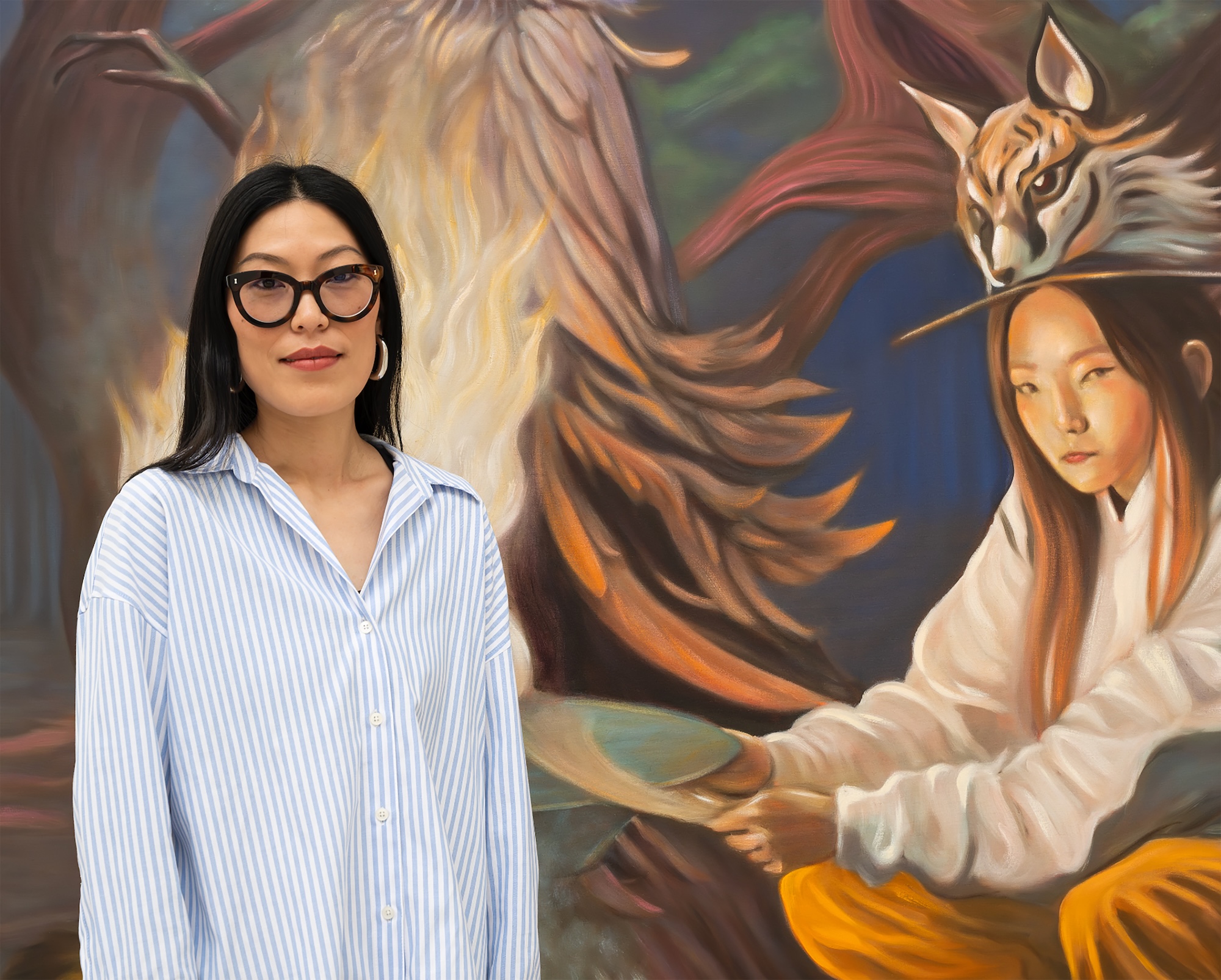
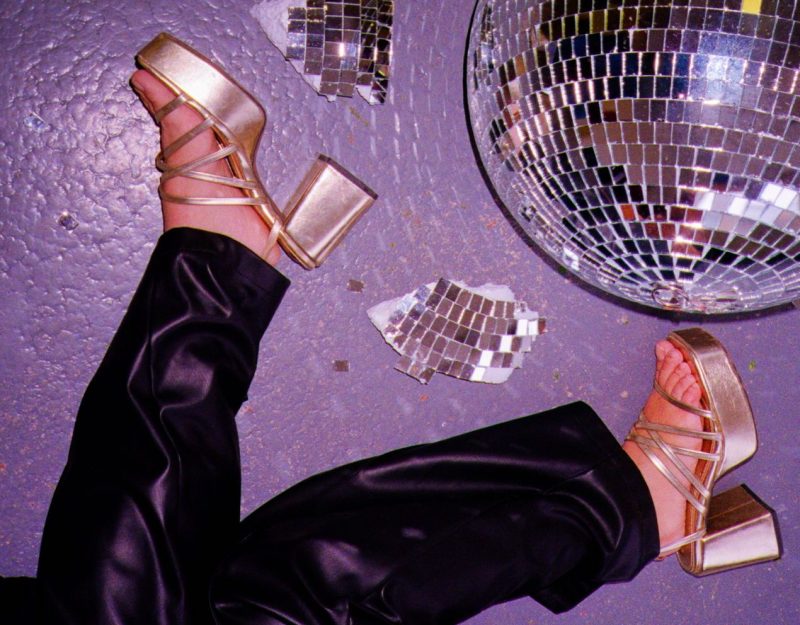
Zadie Xa creates installations that imagine alternative worlds. These immersive environments are conjured from a wide range of sources and research interests, including spirituality, ancestry, and cultural traditions, particularly from her own Korean and Canadian background.
Xa was nominated for her solo presentation Moonlit Confessions Across Deep Sea Echoes: Your Ancestors Are Whales, and Earth Remembers Everything in Sharjah Biennial 16, United Arab Emirates. Her presentation at Carwright Hall Art Gallery uses painting, sound, textiles and sculpture to consider links between ocean life, generational grief, Korean shamanism and ghostly spirits. In the centre of the gallery hundreds of shamanic bells hang forming the outline of a shell. Around the edges of the room four more seashells project a soundscape inspired by nature, confessions and the music of Salpuri, a traditional Korean exorcism dance. The exhibition also includes painted walls depicting a sun and moon in perpetual rise and fall, alongside paintings which echo the Korean practice of bojagi, where scraps of cloth are stitched together to make textiles for wrapping objects, or used in domestic rituals. Scenes of marine life and folk practices appear within these colourful patchworks. Xa’s practice often involves collaboration and she worked closely with artist and longtime collaborator Benito Mayor Vallejo to develop the exhibition design, as well as the mural and sculptural elements of this display.
Alex Farquharson, Director of Tate Britain and Chair of the Turner Prize 2025 jury, said:
“I am delighted that the Turner Prize is held in Bradford this year, the first time it has been hosted in West Yorkshire. A beacon of the most exciting contemporary art being made at this moment, the Turner Prize continues to delight, inspire and provoke debate as it enters its fifth decade. A warm congratulations to the four shortlisted artists for their fantastic presentations, which will be enjoyed by Bradford residents and those across the UK.”
The Turner Prize was established in 1984 and is awarded each year to a British artist for an outstanding exhibition or other presentation of their work. The Turner Prize winner will be awarded £25,000 with £10,000 awarded to the other shortlisted artists.
Cartwright Hall Art Gallery is one of four Bradford District Museums and Galleries venues run by Bradford Council. Found in Lister Park one mile from Bradford city centre, it is home to Bradford district’s own world-class art collection.
Darren Henley, Chief Executive Officer, Arts Council England, said:
“The international arts world will once again be turning its attention towards West Yorkshire with the Turner Prize among the many highlights of Bradford’s year as UK City of Culture. The brilliant Bradford 2025 programme continues to inspire so many people to get creative, so it’s fitting that Cartwright Hall, a place that once inspired a young David Hockney, is hosting The Turner Prize exhibition. I’m looking forward to seeing how amazing works from Nnena Kalu, Rene Mati?, Mohammed Sami, and Zadie Xa will inspire a new generation of visual artists.”
Turner Prize 2025, 27th September 2025 to 22nd February 2026 Cartwright Hall Bradford
The members of the Turner Prize 2025 jury are: Andrew Bonacina, Independent Curator; Sam Lackey, Director, Liverpool Biennial; Priyesh Mistry, Associate Curator of Modern and Contemporary Projects, The National Gallery and Habda Rashid, Senior Curator of Modern and Contemporary Art, Fitzwilliam Museum. The jury is chaired by Alex Farquharson, Director, Tate Britain.
Turner Prize 2025 is co- curated by Jill Iredale, Curator, Cartwright Hall Art Gallery, Michael Richmond, Curator, Yorkshire Contemporary, and Sophie Bullen, Assistant Curator, Yorkshire Contemporary, for Bradford 2025.