News coverage of Donald Trump’s latest exploits is hard to avoid, especially during a controversial state visit. Photos of the Royal banquet popped up everywhere on the preview day for Through a Mirror, Darkly, reports on anti-Trump protests and references to the Epstein files less so.
The release of the film couldn’t have been more perfectly timed. Nor could the choice of location be more fitting. Albany House is a tired looking 70s office block right opposite the Ministry of Justice. Upon entry through a side entrance next to the main rotating doors, visitors are ushered up to the 8th floor in a dark lift and into an even darker cinema room.
It is easy to romanticise the 70s and to feel nostalgic about a simpler life in the good old days of long hair, bell bottoms and psychedelic wallpapers. With his film Naeem Mohaiemen provides a powerful remedy and puts current affairs into painful context.
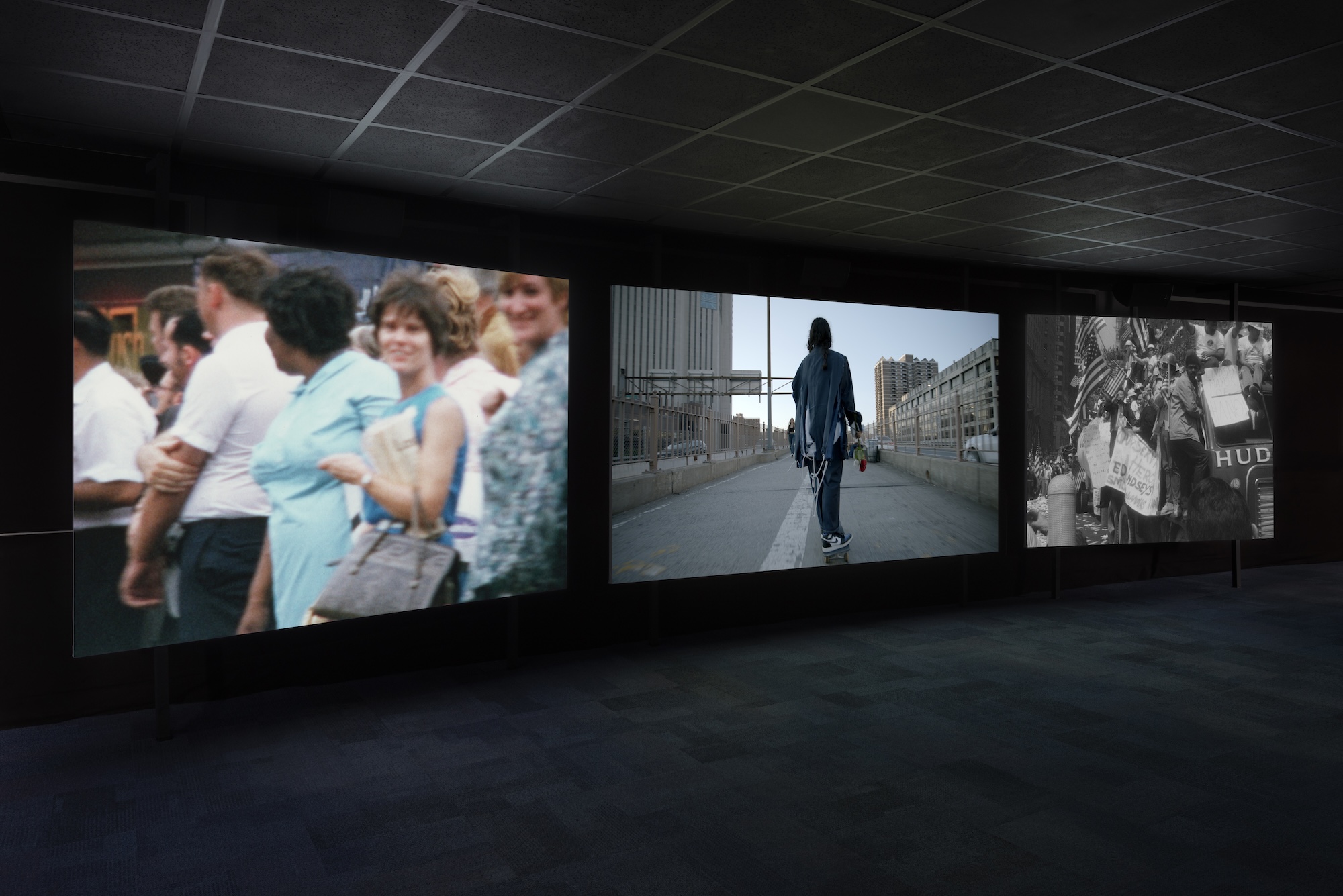
The 3-channel projection starts with the end of a community meeting, showing people leaving their seats just as the audience is settling into theirs. We learn that the on-screen audience is made up of survivors of the Kent State shootings in May 1970 when four unarmed college students were killed and another nine injured by the Ohio National Guard during a protest against the Vietnam War. The parallels to Trump deploying National Guard troops to fight non-existent crime emergencies in 2025 are striking.
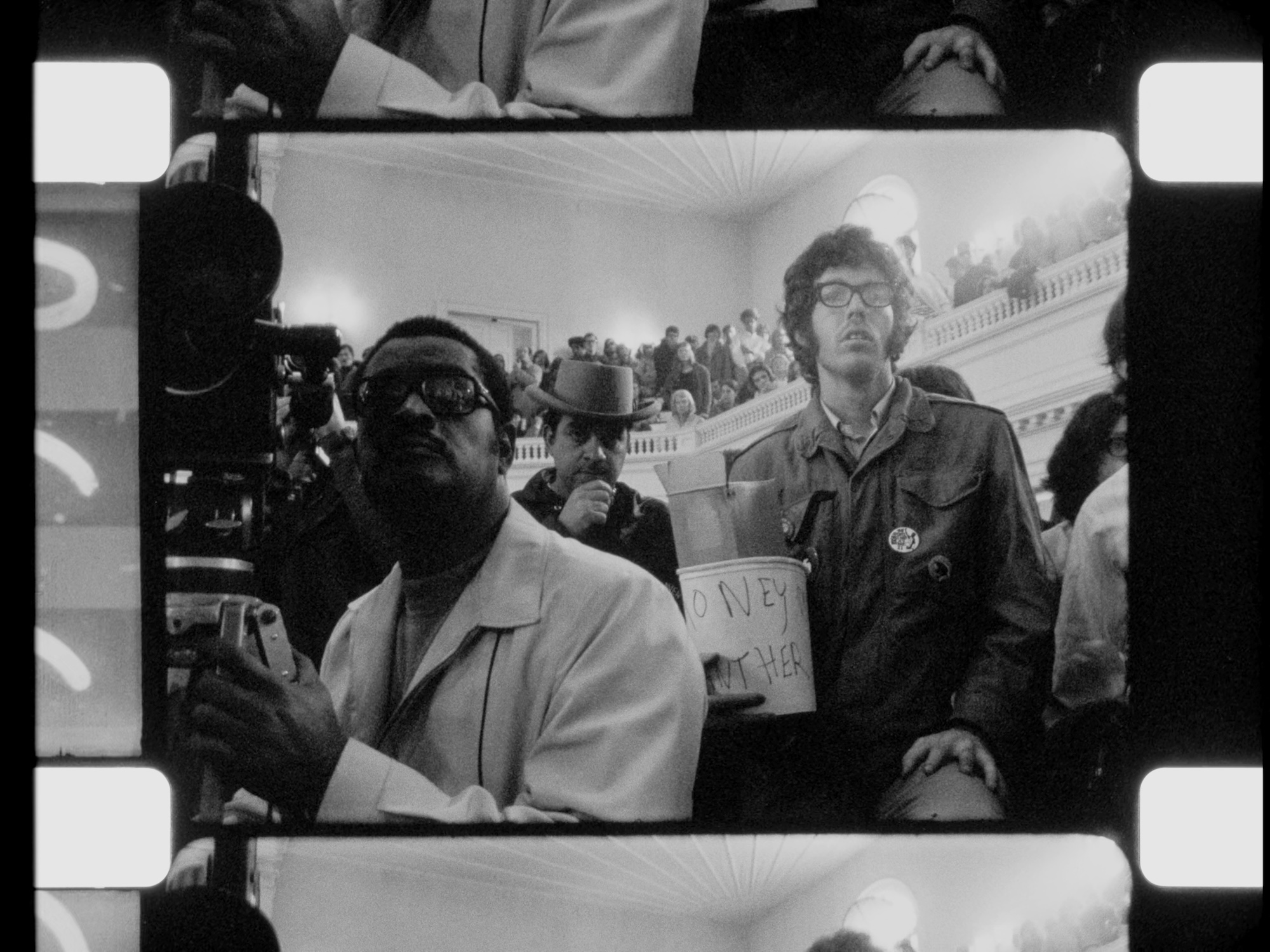
A complex story unfolds over several untitled chapters. There are links to other protest movements of the time, from the Black Panthers to the Hard Hat Riots. Wearing hard hats and carrying American flags, many of the workers involved in the construction of the Twin Towers gathered on Wall Street in a counter-protest to the antiwar demonstrations. With Nixon appealing to the ‘Silent Majority’ of ordinary Americans to support the Vietnam war – referred to in one clip as Nixon’s ‘re-election war’ – the students were considered the enemy within and the bluecollar workers the true patriots.
Archive clips interspersed with more recent footage of memorial services and reunions of Vietnam veterans from different backgrounds, with soundbites and slides containing dates and quotes, give Through a Mirror, Darkly the appearance of a neutral documentary. Yet all blend into each other to create a sense of confusion and anxiety that grows with every example of overt racism, famous scenes from The Deer Hunter, or a soldier describing the effects the army’s genocide training amongst the hardest hitting. Not even the great tunes selected for the soundtrack can provide solace. Neither is learning that suppression of peaceful protest is nothing new. At least modern-day protesters are merely imprisoned and not shot.
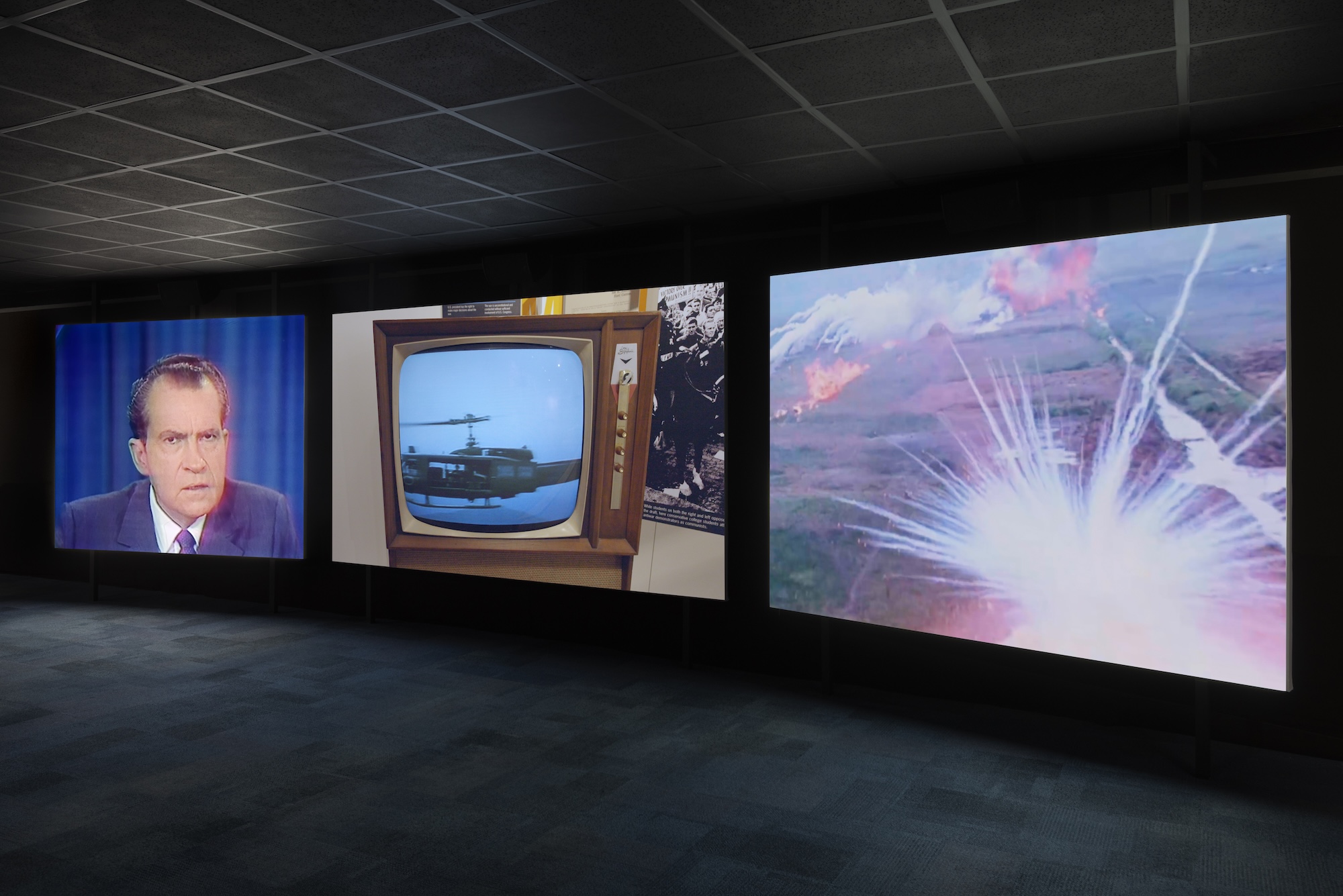
The overall experience is a bit like listening to old folk reminiscing about the past. A reminder perhaps to listen to each other more, across generations, genders and backgrounds. The individual voices of survivors and veterans are put into historical context by famous quotes including Muhammed Ali and Malcolm X. And, of course, Richard Nixon, a few years before being forced to resign over lying to investigators, paying hush money and obstructing justice. Sound familiar?
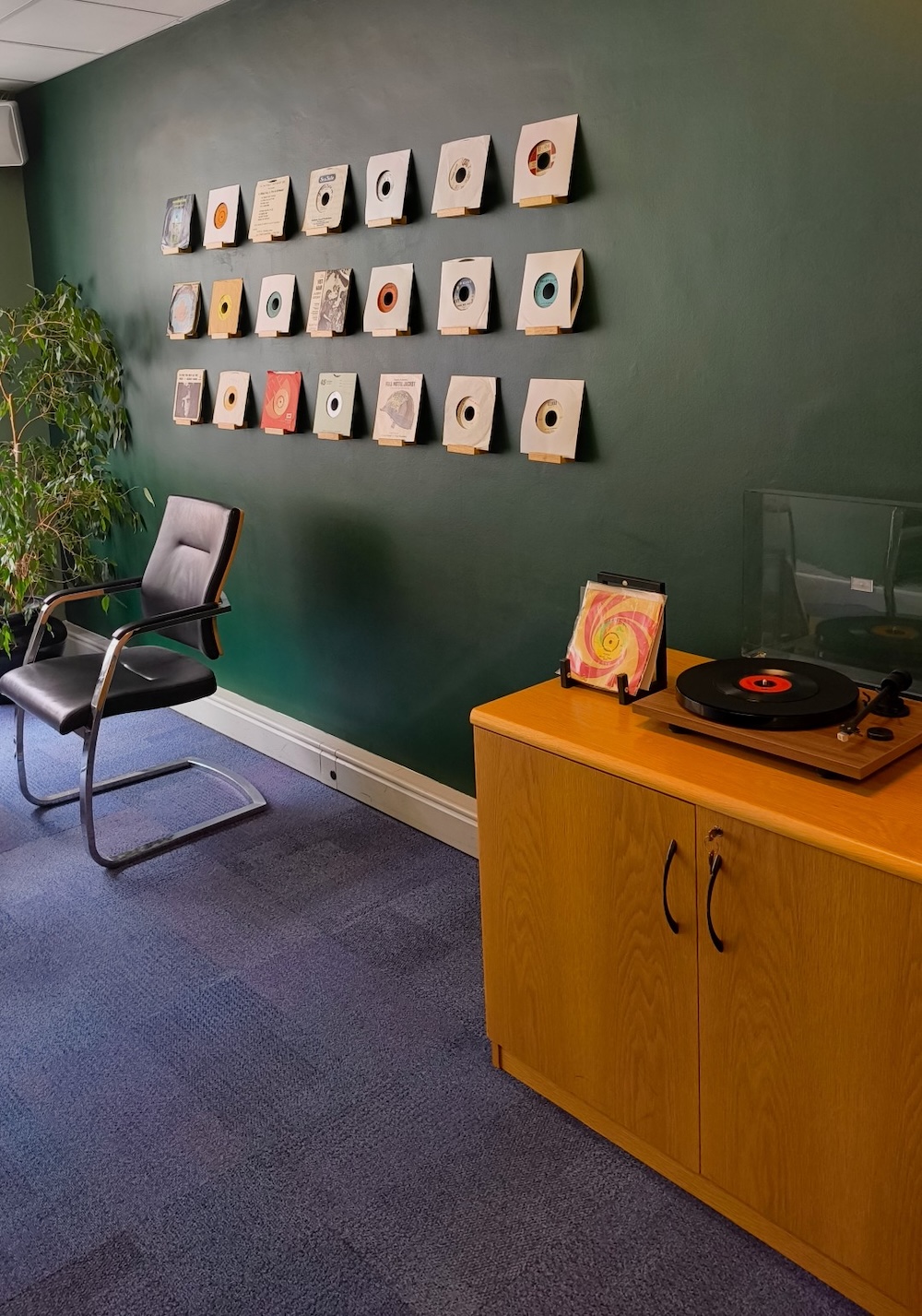
Leaving the auditorium exhausted after a little more than 1 hour, Jimmy Cliff’s Vietnam still reverberting, the invitation to decompress in a room down the corridor, where 7” singles keep the theme going, comes as a welcome relief.
Back in the present and back on street level the mirrored glass door closes to reveal the reflection of people rushing past the government building opposite.
THROUGH A MIRROR, DARKLY by Naeem Mohaiemen 21st September 2025 – 9th November 2025 Albany House, 94-98 Petty France, London SW1H 9EA Booking link: tickets.artangel.org.uk
THROUGH A MIRROR, DARKLY by Naeem Mohaiemen is commissioned and produced by Artangel. @artangel_ldn
About the artist
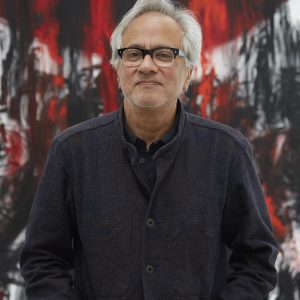
NAEEM MOHAIEMEN (b. 1969) was born in London, UK, grew up in Dhaka, Bangladesh, and currently lives and works in New York, USA. He combines films, photography, drawings, and essays to explore forms of utopia-dystopia within families, borders, architecture, and uprisings—beginning in South Asia and then radiating outward to transnational collisions in the Muslim world after 1945.