
Berlin Art Week is one of those things that has been around so long, we no longer really question where it came from and why it exists in the first place.
The festival used to be centred around the city’s numerous art fairs — that’s before nearly all of them went bust. Whether staged in an airport, a factory, or a department store, the story of Berlin’s Art Week has become one of constant relocation and evolution — a familiar game of musical chairs during the city’s tourist-heavy art season.
The fair scene in Germany began in Cologne in 1967. Its success inspired artists like Joseph Beuys and Wolf Vostell to imagine Berlin as a new centre of the contemporary marketplace. By the 1990s, their influence helped shape Kunstherbst, Berlin’s four-week long autumn of art.
In those years, themes like Art for Everyone (2007), In Union with Art (2005), and Art and the Market (2004) placed artists themselves at the core of production.
From 1996 onward, Art Forum stood as the anchor fair, holding the city’s attention for fifteen years. With the rise of the now defunct Art Berlin Contemporary in 2008, which was born out of the spirit of Berlin Gallery Weekend, competition splintered organisational efforts.
When the two camps failed to reconcile, Art Forum was dissolved in 2011. A year later, Berlin Art Week emerged, and with it the memory of Kunstherbst, Art Forum, and Kunstsalon (the latter cancelled in 2012 following steep budget cuts) also disappeared — leaving behind something called Positions which is always pretty meh to say the least.
Now hosted by a different Berlin institution each year, the Berlin Art Week of today started to become less about fairs and more about gallery/museum events, pushing openings, project spaces, and symposia.
In a moment of beautiful irony, the fact that Berlin’s galleries don’t have the cash to splash out on cheap wine and prosecco means that the problem of gallery hoppers who come for the free booze has been self mitigated for the sheer lack of funds. In an unexpected turn, it now seems to self-select, automatically narrowing down its already niche audience.
This year the festival hosts a symposium titled Shaping the Future of Cultural Spaces and Museums Today, where international guests will discuss the contemporary museum as a social space. Museum professionals from Berlin, London, Amsterdam, Barcelona, and Warsaw will talk about current challenges and social networks of museums for contemporary art.
We hopped around town on opening night and saw five artworks that were worth mentioning.
Sybille Springer taken from afar HOTO Galerie
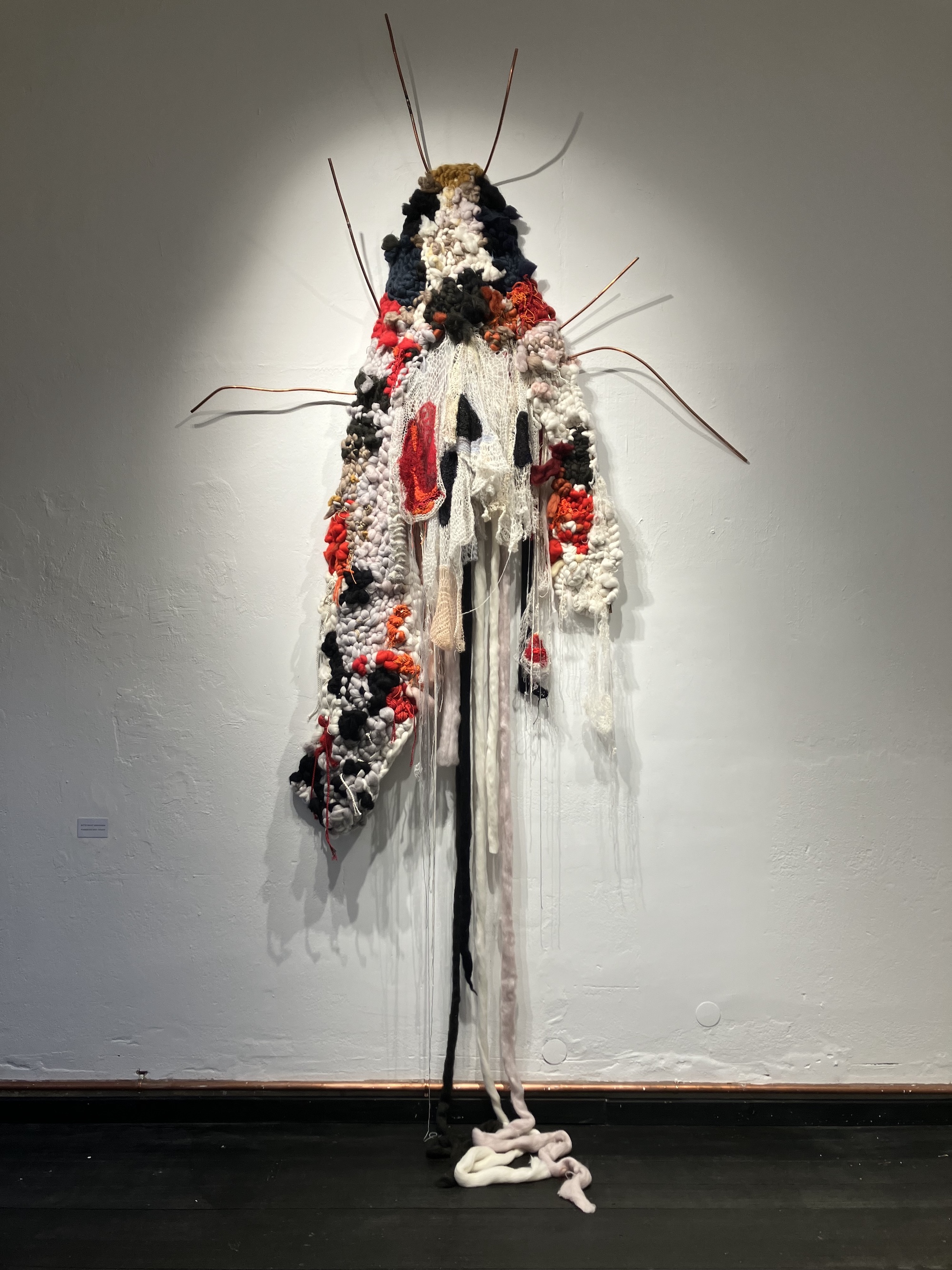
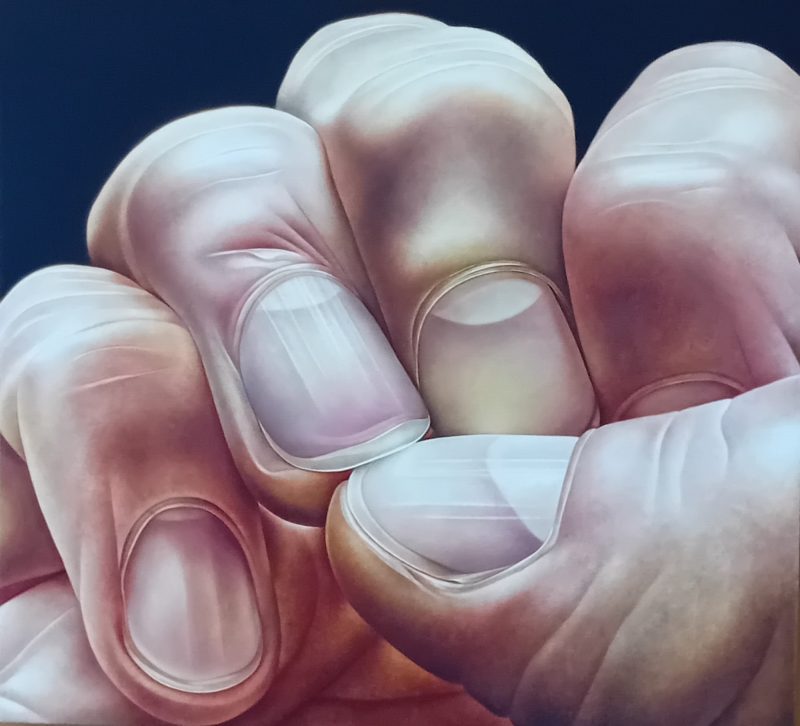
I don’t like moths, and it’s not because they’re not beautiful. Perhaps it’s to do with what the exhibition text refers to as “defiant presence”.
This sculpture captures what is, for me, most unsettling about moths: their prehistoric corpus, a body that feels both dense and meaty, yet dry and fibrous, and a materiality as though it has been preserved from another age.
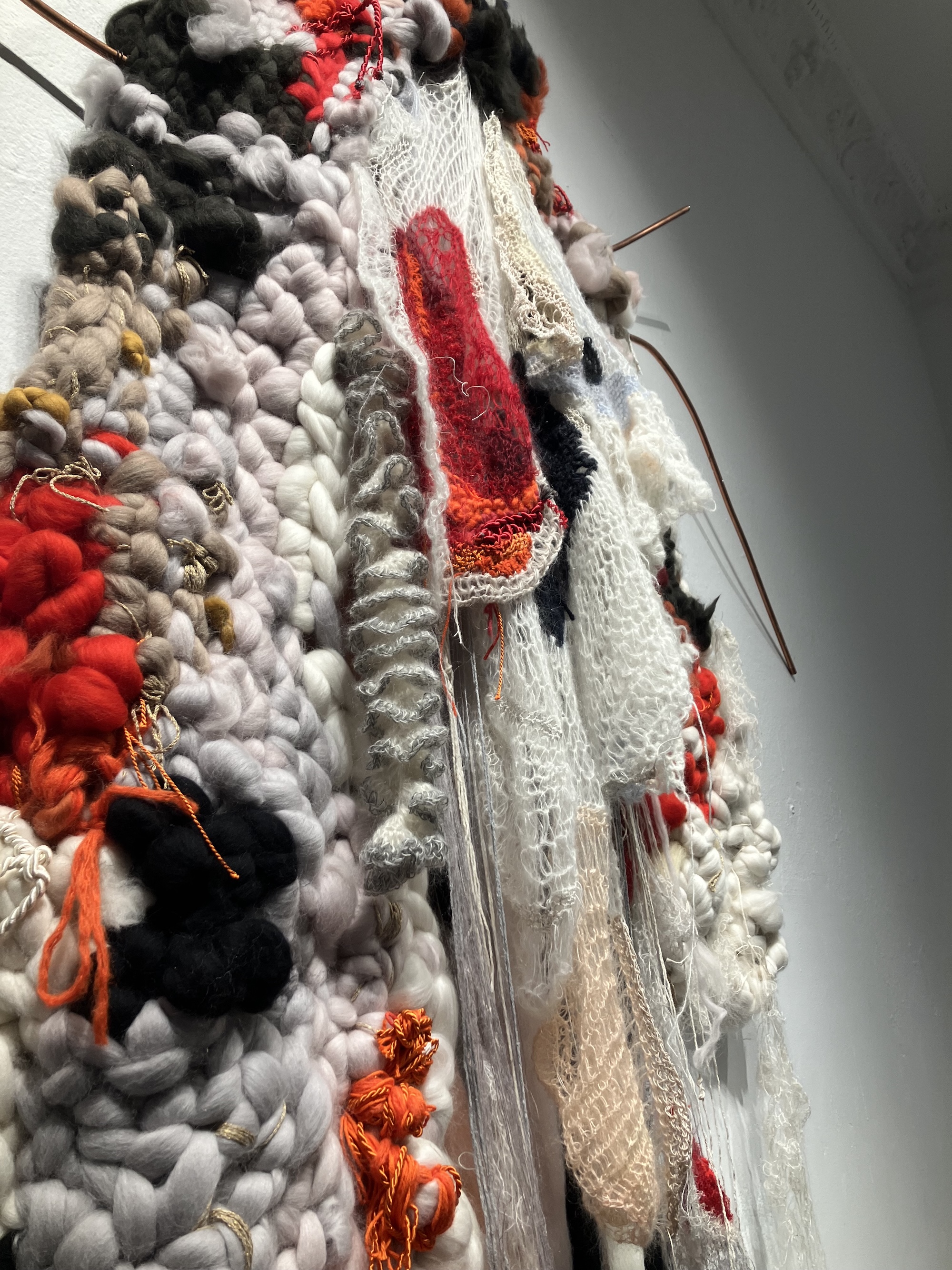
All that’s missing is a frantic personality that makes real moths so unnerving: the way they hurl themselves toward the light as if compelled by some highly urgent, unknown mission (producing a sound far too loud for such fragile wings). Part of what may upset us here is the sheer physicality of the moth, whose body has a surprising weight. Combined with erratic movements, these tiny creatures can easily register as a threat despite any kind of rational logic that says they mean no harm nor are quite capable of it. Darting to and fro, unable to be consoled, they seem incapable of respecting personal space, which disturbs our nervous system.
Here lies the essence of a phobia. It’s not logical nor sensible. It is about deep-seeded automatic fear response that triggers the body. Perhaps the fear isn’t actually that they can hurt us physically, but rather that their intrusive, unpredictable behaviour is ungovernable. Moth phobia, like all phobias, isn’t grounded in actual danger but in discomfort and loss of control. If we can understand this, it may open up broader truths about perception, intrusion, and the invariable incapacity of logic to dissolve fear.
Laurel Nakadate Chewbacca, 2016 Galerie Tanja Wagner
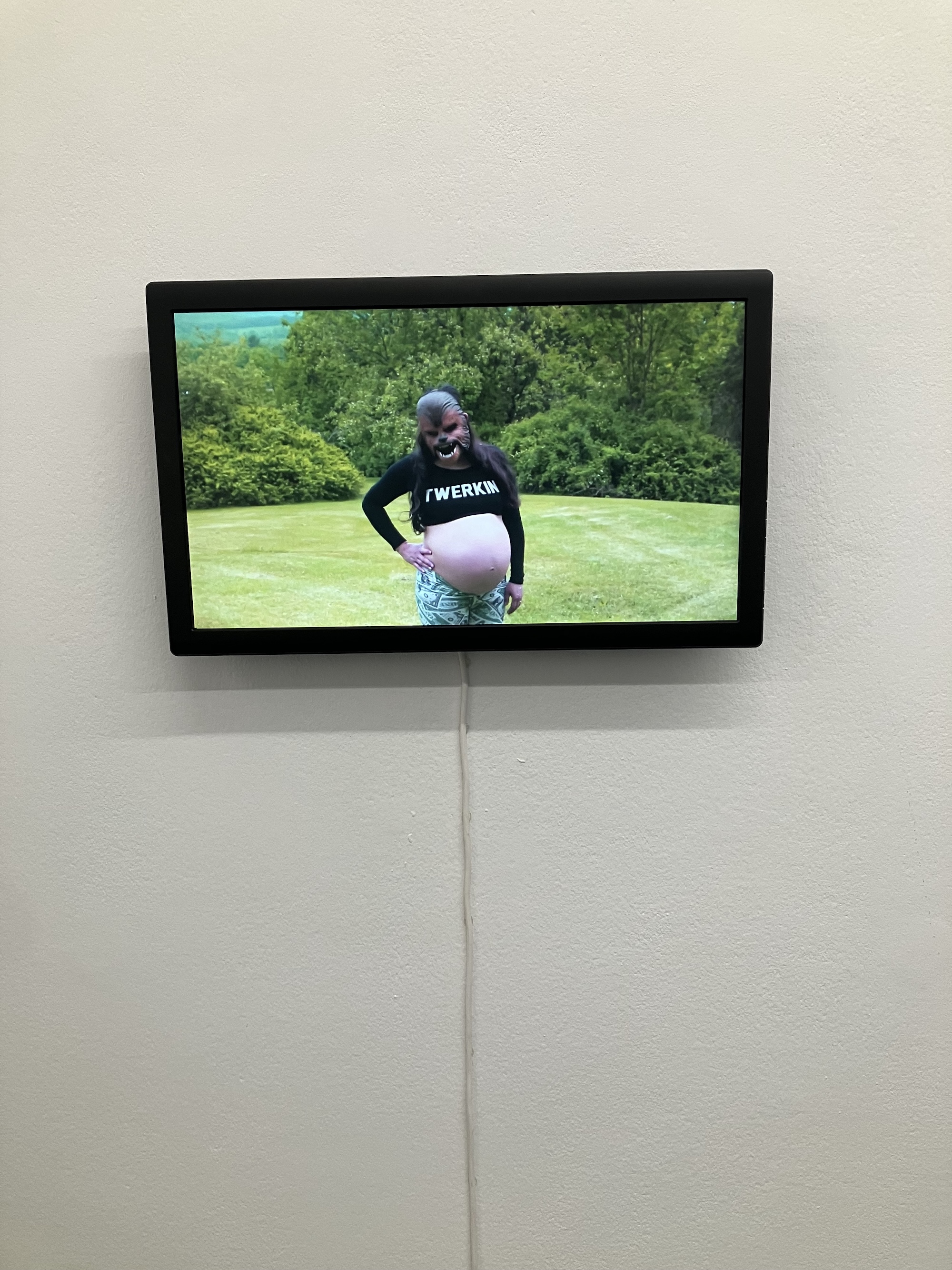
In this video, a visibly pregnant woman wearing a Chewbacca mask howls and dances in the frame. The belly is out and the mask is on. We don’t know who it is, but we are clearly invited to look.
Why are pregnant women so stigmatised, and why do we usually try not to look at them?
Over a decade ago, the internet did what the internet does best and spouted another viral meme: women in labour wearing Chewbacca masks. After one Texas mother who lost a bet with her husband published a video that became a global phenomenon, Michigan mother wore the same mask while giving birth, becoming a viral sensation herself.
Did the mask make it easier for labour to become a socially acceptable event to post to the web? Was it a way to easily and swiftly subvert the policing of women’s bodies and rigid expectations of femininity by using humour as a playful resistance? Is it because Chewbacca is male, and the notion of him giving birth is not only silly but less “real”?
Nakadate says, “in many ways nothing has changed since I made this video, which was a commentary on images of mothers and motherhood in contemporary media made in response to a viral video circulating at the time. I wanted to speak about the discomfort and humour of pregnancy and the worries and fears that can surround the unknown. What has changed in the almost decade since I made this video is that there has been more conversation around issues surrounding motherhood and a path has opened for those conversations. We still have so much work to do though, and that is why this work still feels important and relevant when I visit it now.”
AFAIK collective Höhengleichnis
Talk about an unexpected pairing: in a Princess and the Pea meets hipster dungeon moment, self-proclaimed ‘Mattress Rebel’ bett1 founder Adam Szpyt has invited artists to transform his bed store into a fairytale factory.
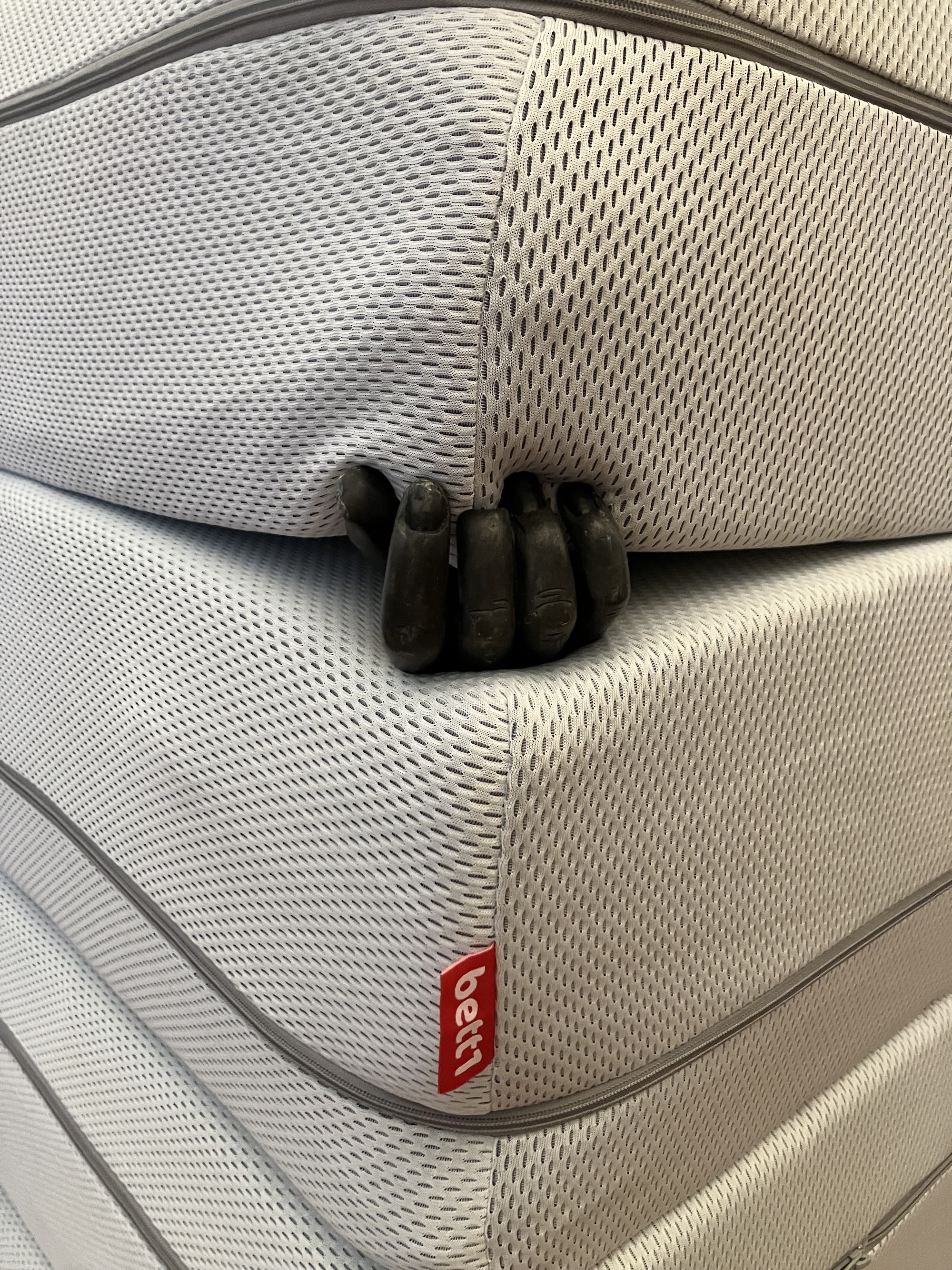
Inspired by the most ‘mysterious’ phase of sleep, “Allegory of the Cave” is an exhibition that uses the bed and its most essential modern element, the mattress, as the architectural basis for an environment that lies somewhere between philosophy and childhood. Using Plato’s cave allegory as its conceptual anchor, the exhibition invites visitors to reflect on perception, projection, and knowledge, not through the Platonic elements of shadow and stone, but through fabric, soft surfaces, and spatial improvisation.
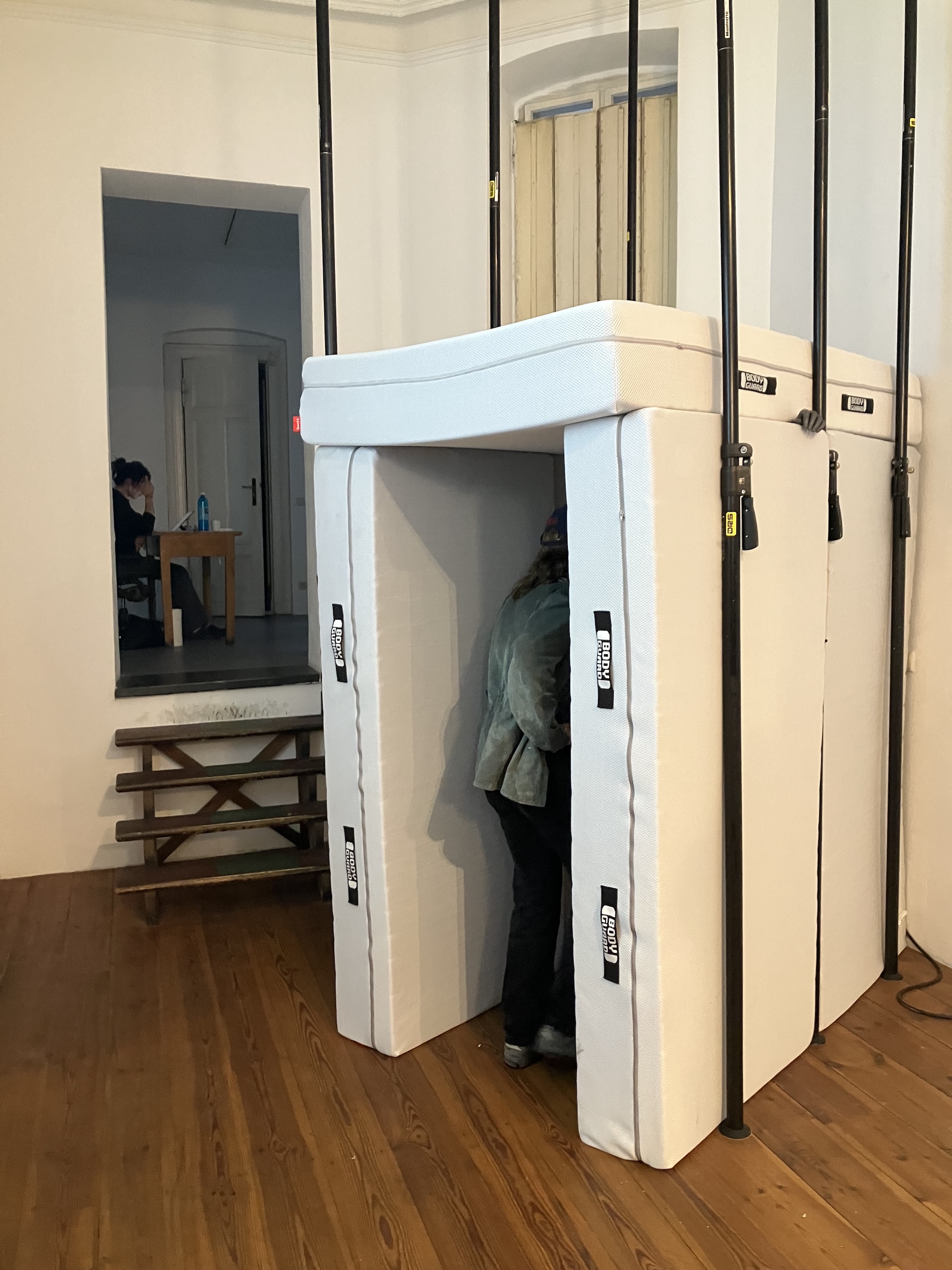
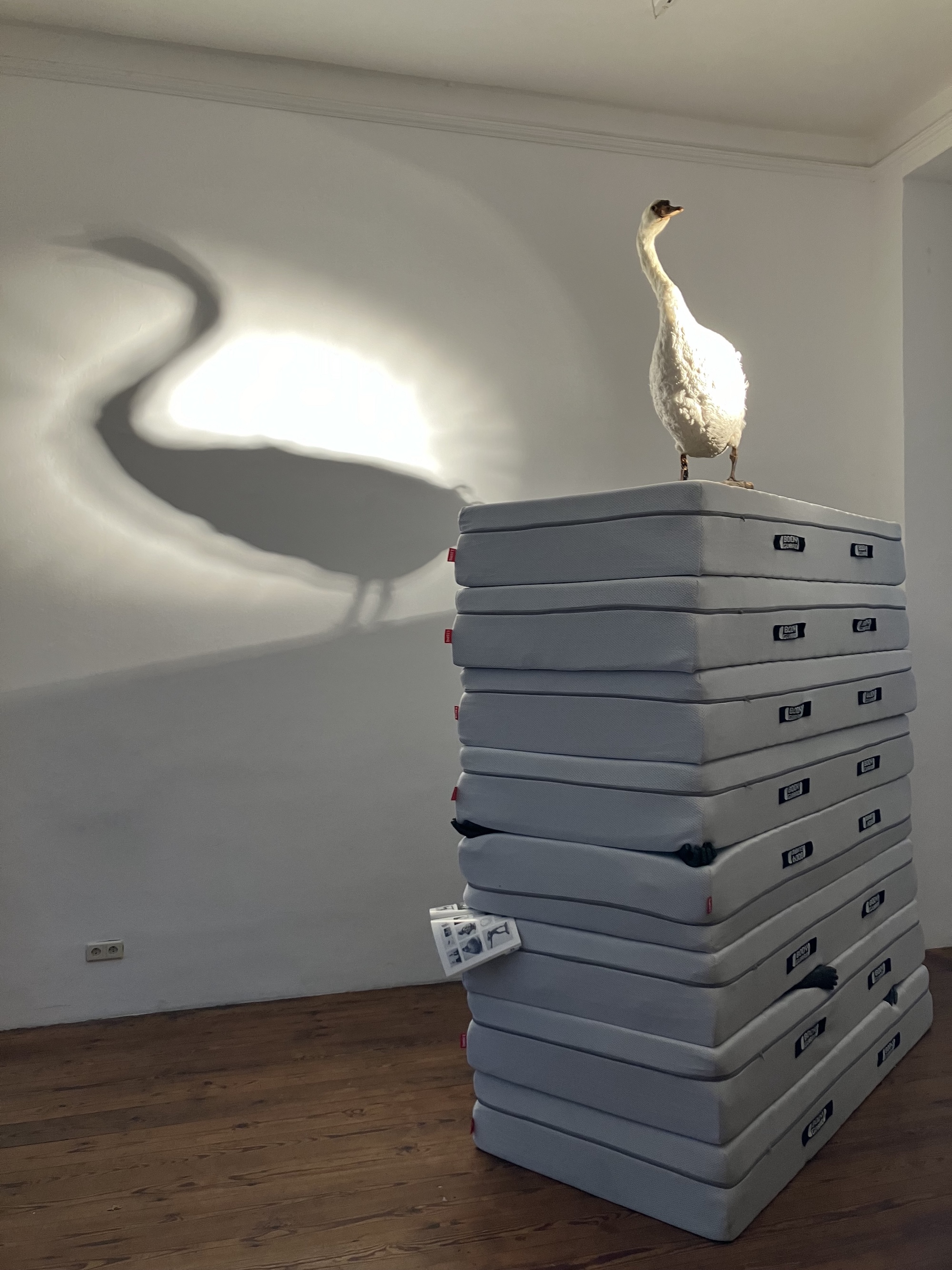
In this context, the cave is less a prison than a sanctuary—a temporary refuge that evokes the blanket forts and makeshift hideouts of childhood, spaces where reality and imagination could coexist without conflict.
Works by Afaik Collective, Lola von der Gracht, Katharina Ruhm, and Wieland Schönfelder enter into dialogue with TADAN’s production
Floraissance Documenta 17
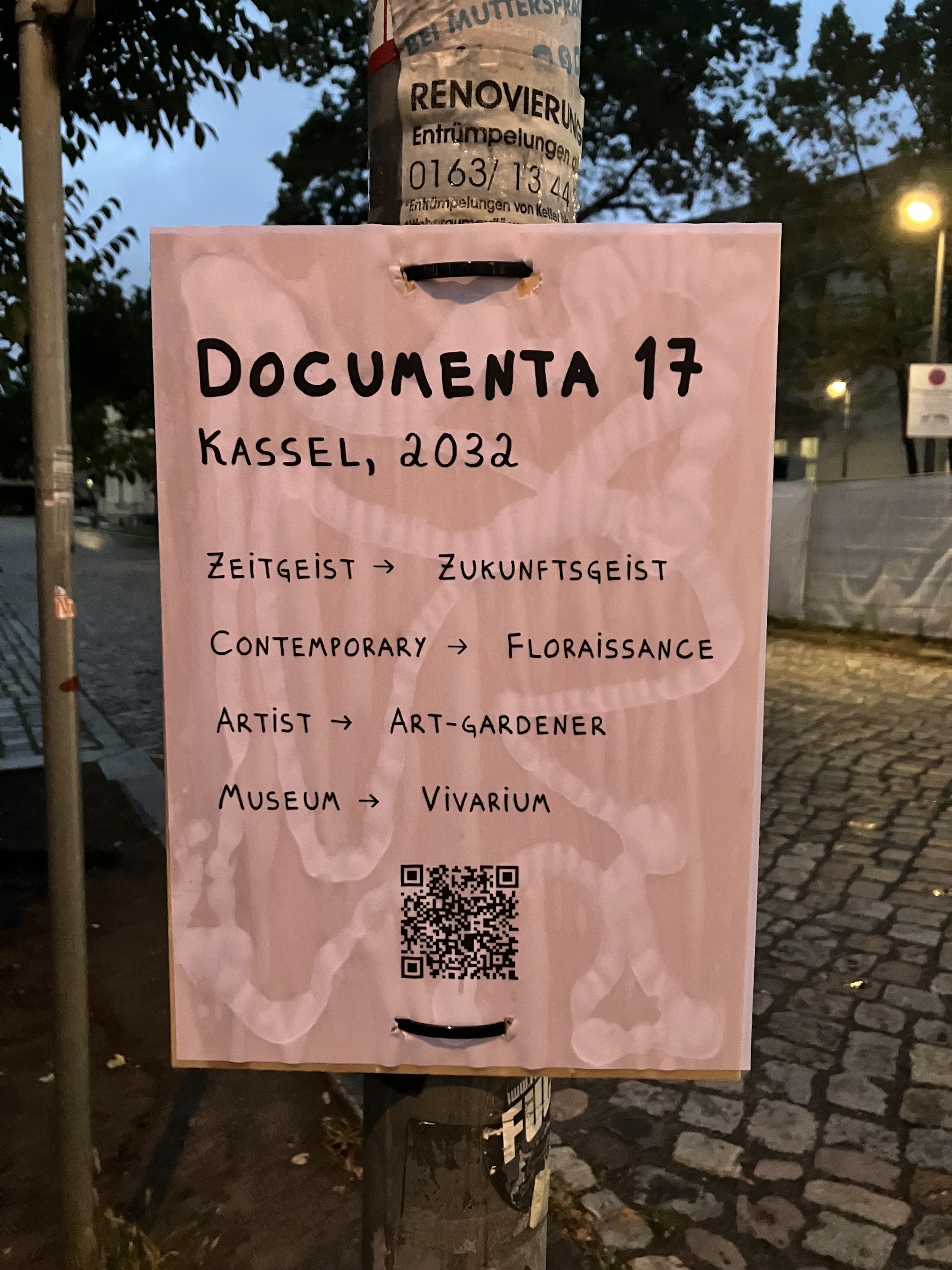
Founded by Brazilian artist André Feliciano, messages from the Floraissance find themselves scrawled across plywood, stenciled onto fences, and propped against scaffolding throughout the cities of major art events — namely the 2022 edition of documenta and now Berlin Art Week 2025 — despite never being officially associated with the programming.
Envisioning a a society re-rooted in nature, the independent, grassroots project proclaims a shift in art’s relationship with time. No longer bound to the spirit of the present, here art alignswith the future. Considering art as a potential for transformation, artists become gardeners and museums evolve into living vivariums of creativity.
As part of the project, Floraissance is gathering both visual and theoretical evidence. This collective endeavour will eventually culminate in a magazine to be shared on June 12, 2027—the opening day of Documenta 16. floraissance.org/Documenta-17
Video Art at Midnight
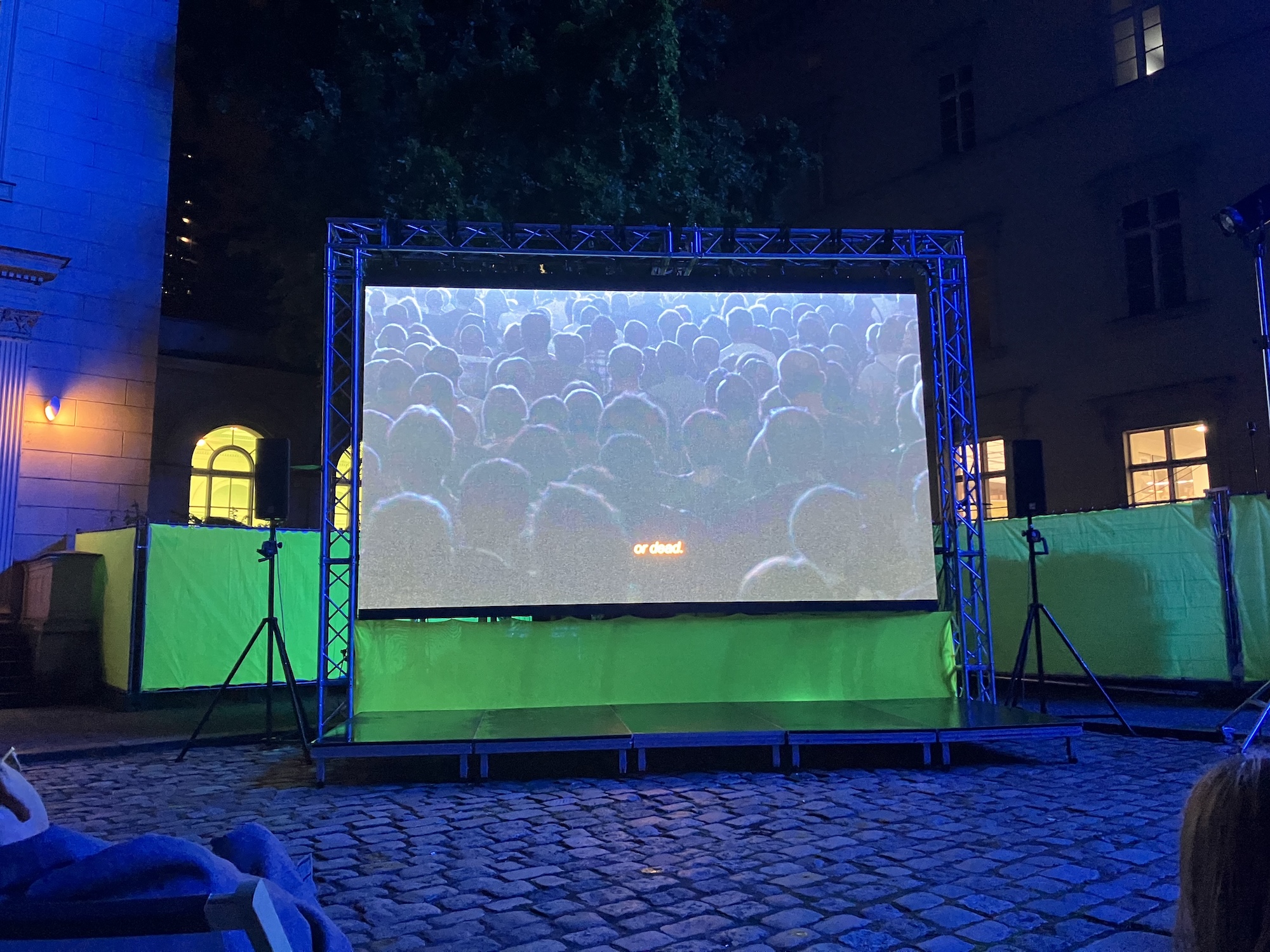
Hands down the most interesting, authentic, and enjoyable part of Berlin Art Week is Video Art at Midnight, curated by Olaf Stüber. While this video programme usually is, as its namesake suggests, at midnight, this bite-sized version of the ‘real thing’ happens each night at 8:30pm for one hour at the festival’s headquarters.
While the usual event is dedicated to one artist, the special BAW editions feature a collection of short video works, which serve as an accessible gateway into the video art series, which otherwise happens once a month at the Babylon. videoart-at-midnight.de
MORE: berlinartweek.de