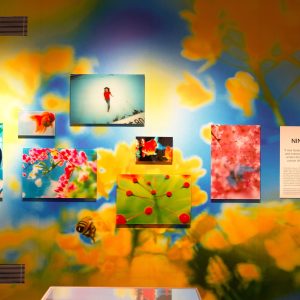
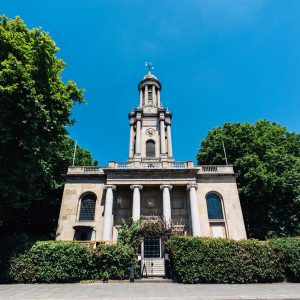
SMAC, the pioneering new arts venue in the heart of Venice, which opened earlier this year, presents its third exhibition, The Quantum Effect, co-curated by Daniel Birnbaum & Jacqui Davies.
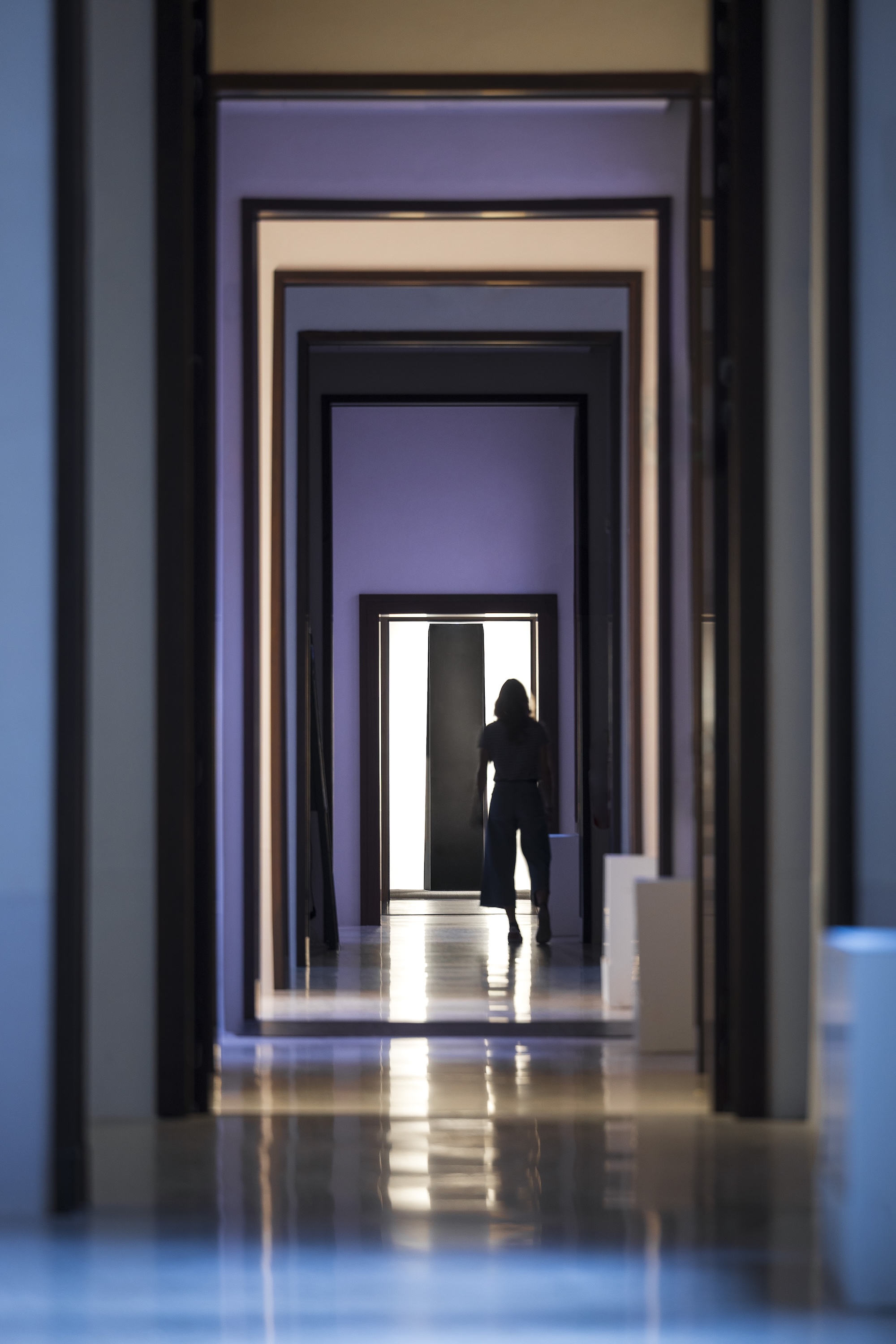
Photo: Enrico Fiores
The Quantum Effect explores spatial and temporal paradoxes and mystery surrounding quantum theory: parallel universes, time travel, teleportation, supersymmetry and dark matter. The exhibition includes works by some of today’s most prominent artists woven into a cinematic narrative using imagery from contemporary science and from the worlds of science fiction and pop culture. SMAC’s exhibition programme is realised in collaboration with world-class institutions and curators, and this exhibition is produced by SMAC and OGR Torino, a culture and innovation hub in a vast former railway repair building.
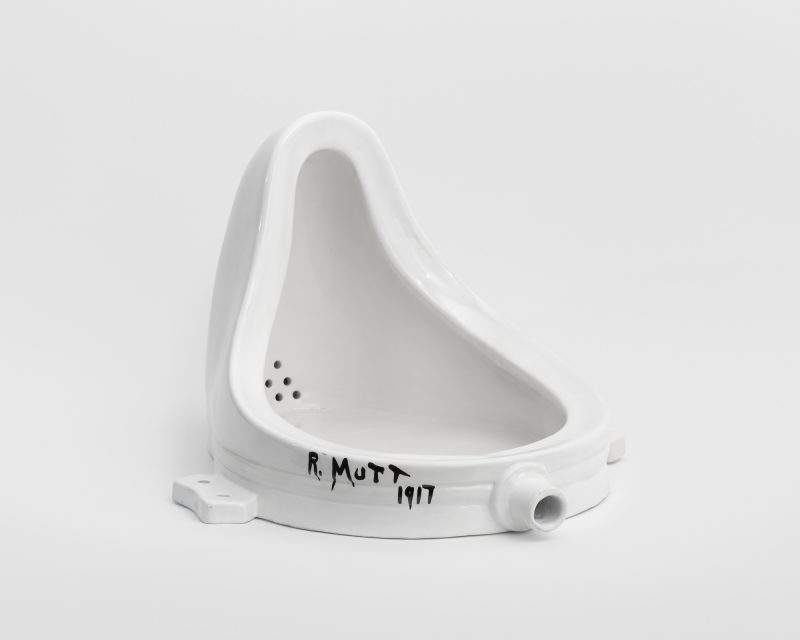
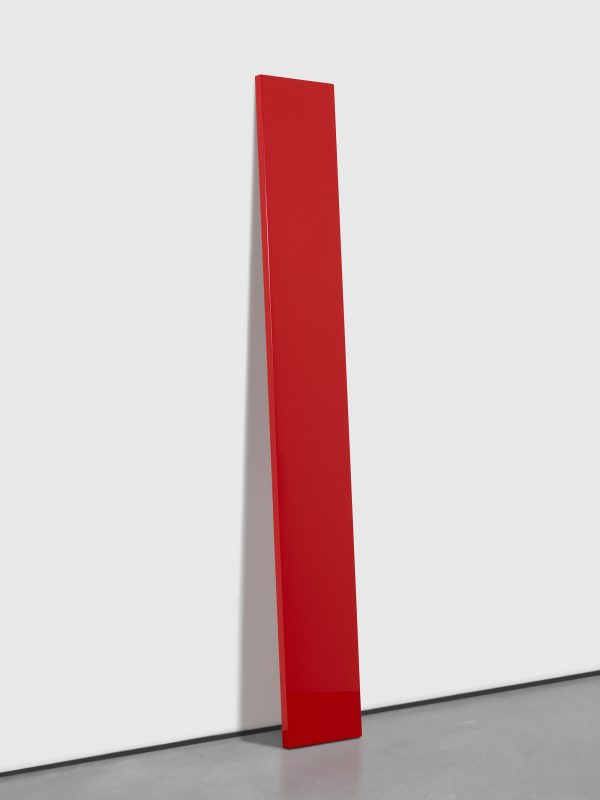
Birnbaum and Davies combine artworks, scientific experiments, quantum mechanical equations, and science fiction to create a total quantum effect across 1,000 sq m of exhibition space. The curation draws conceptually on Raymond Roussel’s seminal 1914 novel Locus Solus with its account of eight miraculous tableaux vivants taking place in a glass architecture. Taking a cue from quantum realities, the exhibition signals new creative possibilities where objects and roles can be both one thing and seemingly incompatible with others. Besides works by artists such as Dara Birnbaum, Isa Genzken, Ilya Khrzhanovskiy, Jeff Koons, John McCracken, Mark Leckey, and Marcel Duchamp/Man Ray, The Quantum Effect displays curator-made elements – “entangled” cinematic collages of puzzling glimpses from the world of quantum theory and computing, as well as “Science Fiction”, an alternative quantum timeline that, true to the show’s theme, questions the notion of linear time and the nature of reality.
SMAC’s exhibition space is comprised of 16 galleries, arranged along a continuous corridor that stretches over 80m. The Quantum Effect centers around Isa Genzken’s mirror room Oil VII (2007).
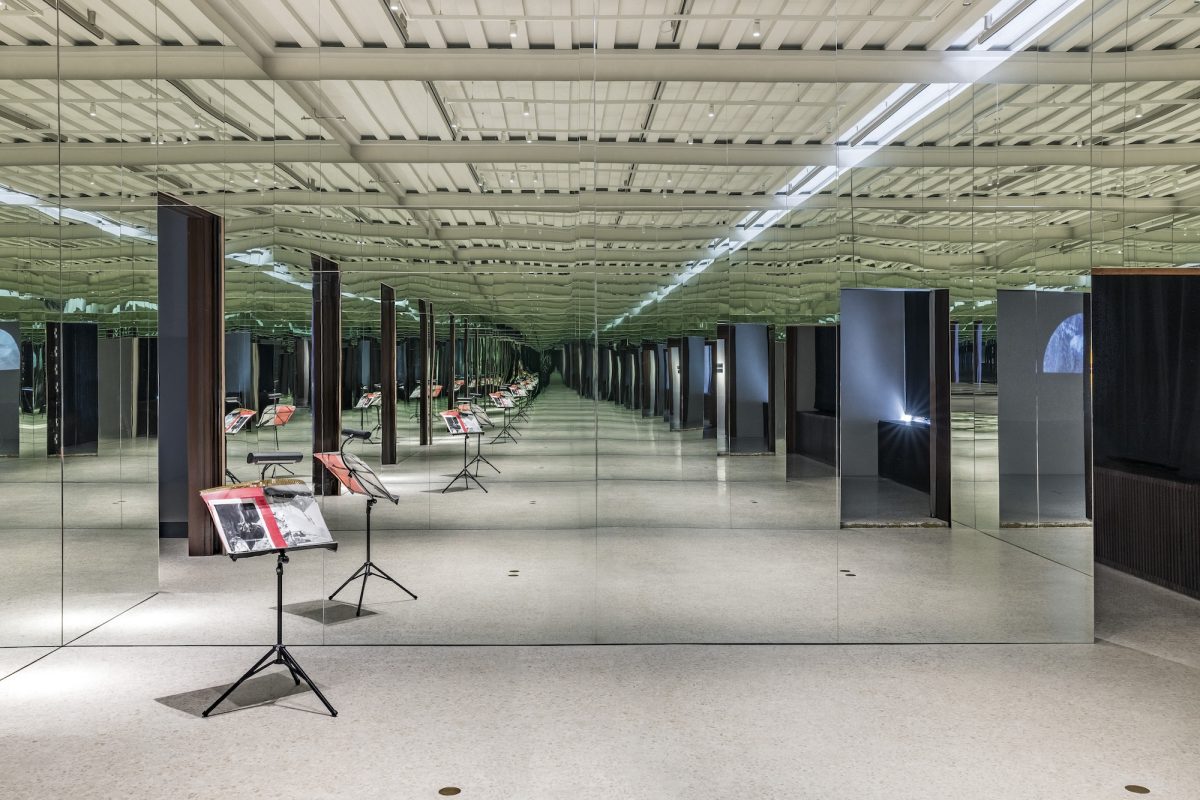
Genzken’s use of glass and mirrors transforms everyday materials into immersive explorations of space, perception, and repetition. By combining reflective surfaces and transparent panels, she creates environments where mirror images multiply endlessly, producing infinite reflection. From this central point, the exhibition unfolds symmetrically, with galleries to the left and right experienced as parallel states, as if the show is happening simultaneously in multiple realities. According to the exhibition’s mirror-like structure, each work will appear with a twin – sometimes an almost identical doppelgänger.
It will in effect become possible for viewers to live in one of many possible worlds as they progress through the exhibition’s “supersymmetrical” layout. Mathematical equations have been applied to each of the rooms within the exhibition, detailing the aspects of quantum theory that each artwork relates to. These have been devised by Ulf Danielsson, Professor of Theoretical Physics and Secretary of the Nobel Committee for Physics, who is the special science advisor for The Quantum Effect.
“Just as the paradoxical nature of quantum disrupts our understanding of reality, we have produced an exhibition which challenges the nature and meaning of things: artworks, films, scientific experiments, quantum theories and their symbolic representations. Even the discreet roles of curator, producer and artist are upended, with curator-conceived experiment-installations and interventions exhibited alongside acclaimed artists’ works. At times, fact and fiction become blended, key quantum protagonists re-animated and traditional timelines become “Science Fiction”. Extraordinarily, in this world, Davies is commissioned as artist, making works which instrumentalise science fiction cinema, popular culture, social media and more, constructing audio-visual portals between the worlds of art, cinema, science, philosophy and magic.”
Daniel Birnbaum & Jacqui Davies, Co-Curators of The Quantum Effect
Artworks, films and scientific experiments with quantum theories and their symbolic representations in the form of key equations have been selected by Professor Ulf Danielsson, professor of theoretical physics and Secretary of the Nobel Committee for Physics.
Professor Ulf Danielsson, professor of theoretical physics and Secretary of the Nobel Committee for Physics:
“The more you are exposed to quantum mechanics and get used to applying equations, developing metaphors and pictures, the more you come to accept that full understanding is elusive. I’m sure that this exhibition will help inform ways to visualise and relate to these abstract ideas, helping us form intuitive connections in our everyday thinking and daily life. Then again, there will always be some kind of gap between us and this strange phenomenon.”
String theory is a theoretical framework in which the point-like particles of particle physics are replaced by one-dimensional objects called strings. String theory describes how these strings propagate through space and interact with each other. Tomás Saraceno works with spider webs reveal the beauty of interconnected systems and the fragile equilibrium of nature. By collaborating with spiders, he creates intricate web installations that exist as both sculpture and living structure. These webs evoke entanglement, showing how life is woven across species, matter, and time.
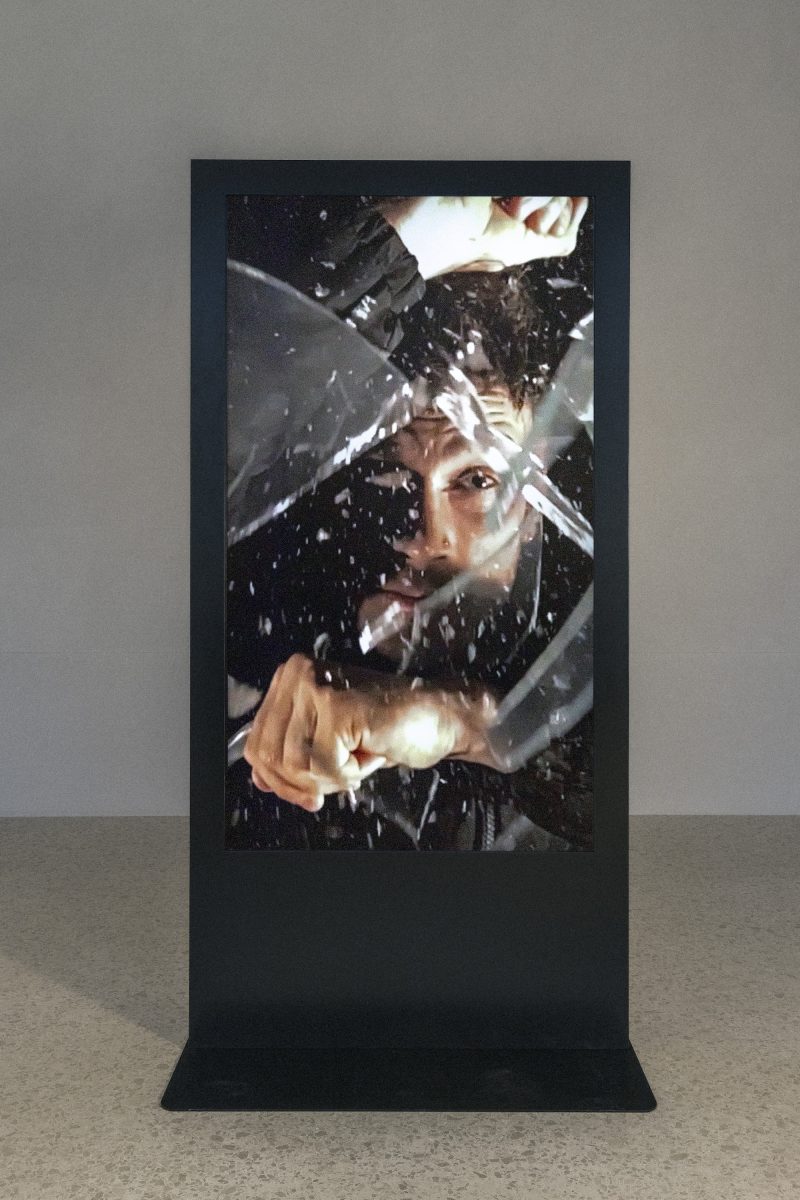
Heisenberg’s equation states that you cannot simultaneously observe the exact position and exact momentum of a particle. It describes how quantum properties change over time within an infinite dimensional state space containing all possible configurations of a system. By replacing classical trajectories with this abstract evolution, it provides one of the core foundations on which the entire structure of quantum mechanics is built. The uncertainty principle is one of the fundamental ideas in quantum mechanics. Mark Leckey’s To the Old World (Thank You for the Use of Your Body) (2021-22) is a film installation that captures its protagonist as they crash through the screen of a bus stop. The glass acts as an invisible membrane through which they transition from one world into another.
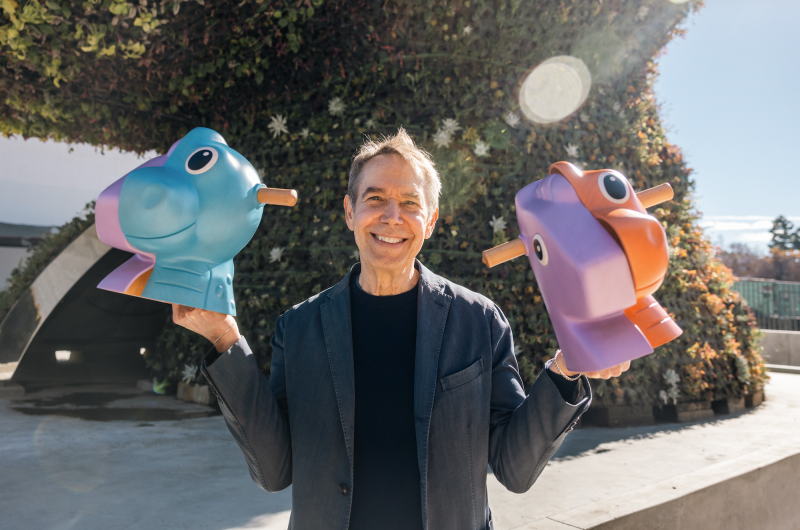
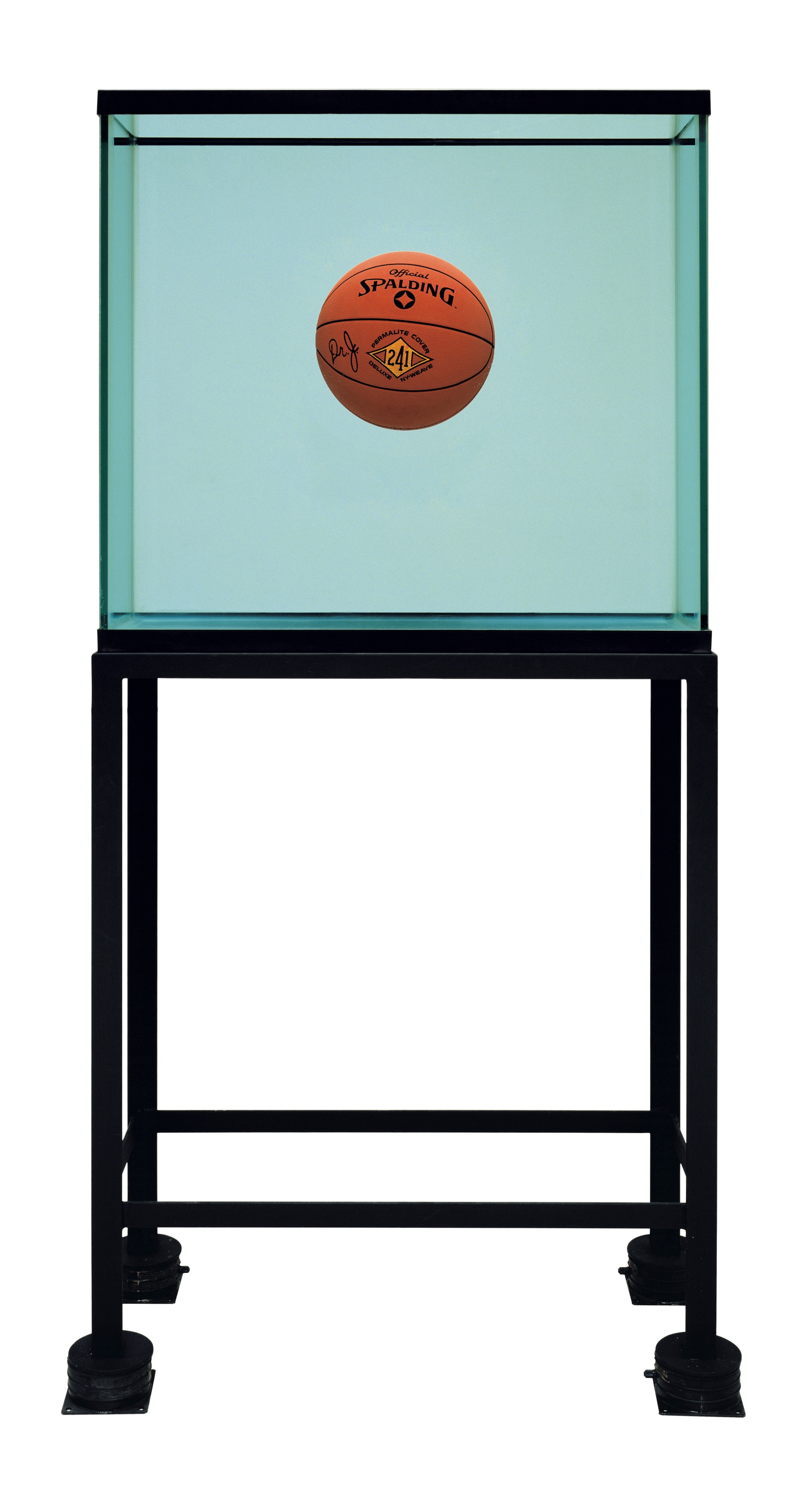
Einstein’s field equation is the foundation of our modern understanding of gravity. It links spacetime curvature to the distribution of matter and energy, showing that gravity is the geometry of the universe itself. In Jeff Koons’ One Ball Total Equilibrium Tank (1985), the artist stages a seemingly gravity-defying basketball floating in an aquarium, suspended between sinking and rising. To realize this stillness, Koons consulted physicist Richard Feynman, who revelled in uncovering hidden patterns in nature.?
Quantum teleportation is a process by which the quantum state of a particle is transmitted from one location to another, without moving the particle itself through space. Rather than physically transporting the particle, the process transfers its quantum information, effectively making it possible to reconstruct the original particle’s state at a distant location. Technology/Transformation: Wonder Woman (1978-79) by Dara Birnbaum deconstructs the superheroine’s television persona through rapid edits, looping gestures, and explosions of light. Central is the moment of Wonder Woman’s transformation: a dazzling spin, followed by sudden displacement.
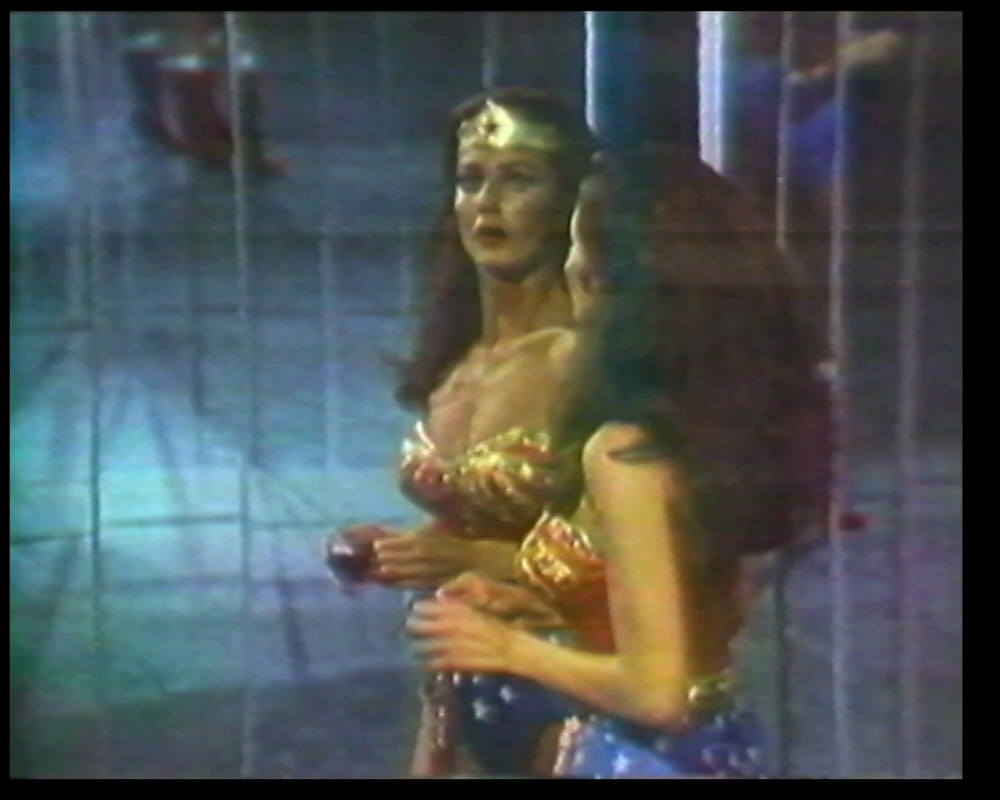
Courtesy of Dara Birnbaum and LUX, London
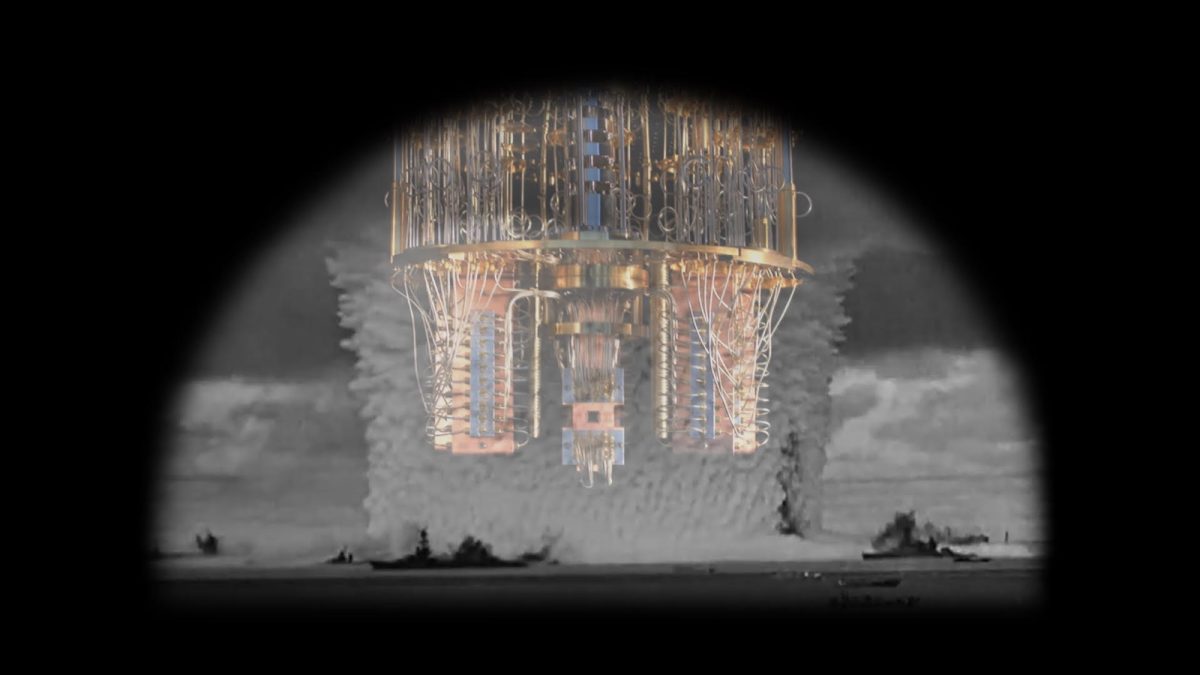
Schrödinger’s cat is a thought experiment that illustrates the concept of superposition. It involves a cat in a sealed box. Until the box is opened, the cat is considered to be in a superposition of both alive and dead states. This highlights the idea that quantum systems can exist in multiple states simultaneously until observed. Man Ray’s marcel duchamp in his studio holding glissière contenant un moulin à eau (en métaux voisins) (glider containing a water mill [in neighboring metals], 1913–15), (1923) attilio codognato collection, venice. Within Jacqui Davies’ in the blink of an eye (2025) Man Ray’s photograph shows Marcel Duchamp behind his first glass object, The Glider (1913–15). Duchamp, inspired by Raymond Roussel’s enigmatic architectures, saw in glass both medium and metaphor – a fragile threshold between dimensions. In Jacqui Davies déjà vu (2025), Duchamp’s first glass object becomes the frame: two cat eye-shaped arcs, through which the entire film is seen.
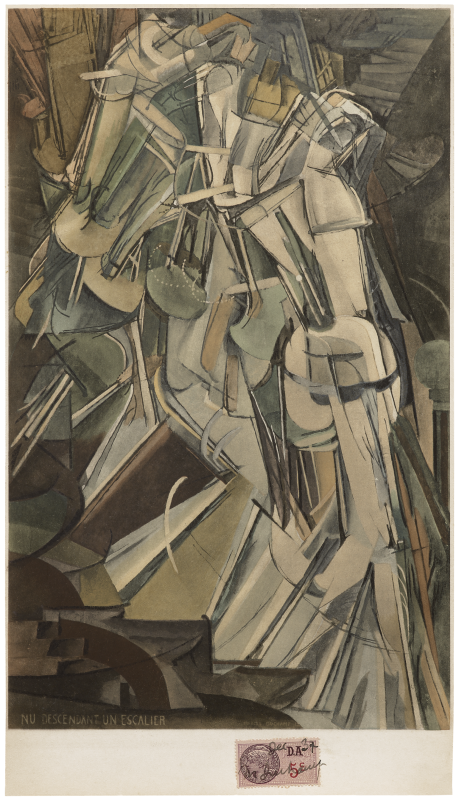
Quantum reflection is a paradoxical mirror: particles bounce back not from a hard wall, but from an attractive force that should pull them in.? Sturtevant’s version of Duchamp’s Nude Descending a Staircase (1992) revisits the iconic exploration of movement, time, and perception. By reinterpreting Duchamp’s legendary painting, she emphasizes the layered nature of motion, creating a visual superposition where multiple positions coexist simultaneously.?
lya Khrzhanovskiy’s DAU (2011) is an experimental cinematic universe blurring reality, performance, and history. Central to its exploration of scientific thought is the figure of quantum physicist Lev Landau, whose presence anchors the narrative in the radical ideas of 20th-century physics. Landau’s theories of quantum mechanics and superposition metaphorically inform the film’s structure, where characters and events overlap, coexist, and interact unpredictably.
Anna Bursaux, David Gramazio and David Hrankovic, Co-Founders, SMAC:
“SMAC’s exhibition programme continues to shed light on the unexpected with The Quantum Effect, which has been conceived by the curators Daniel Birnbaum & Jacqui Davies. Providing a bridge between the worlds of science, art and cinema, The Quantum Effect highlights the research, dialogue and experimentation that define SMAC’s curatorial vision. As with each of the exhibitions at SMAC, The Quantum Effect is realised through a collaborative approach and on this occasion is produced by SMAC and OGR Torino.”
The Quantum Effect, – 23rd November 2025 SMAC San Marco Art Centre
An exhibition co-curated by Daniel Birnbaum and Jacqui Davies and produced by SMAC and OGR Torino
With special thanks to Ulf Danielsson, Professor of Theoretical Physics and Secretary of the Nobel Committee for Physics, who is the special science advisor for The Quantum Effect.
About Daniel Birnbaum & Jacqui Davies
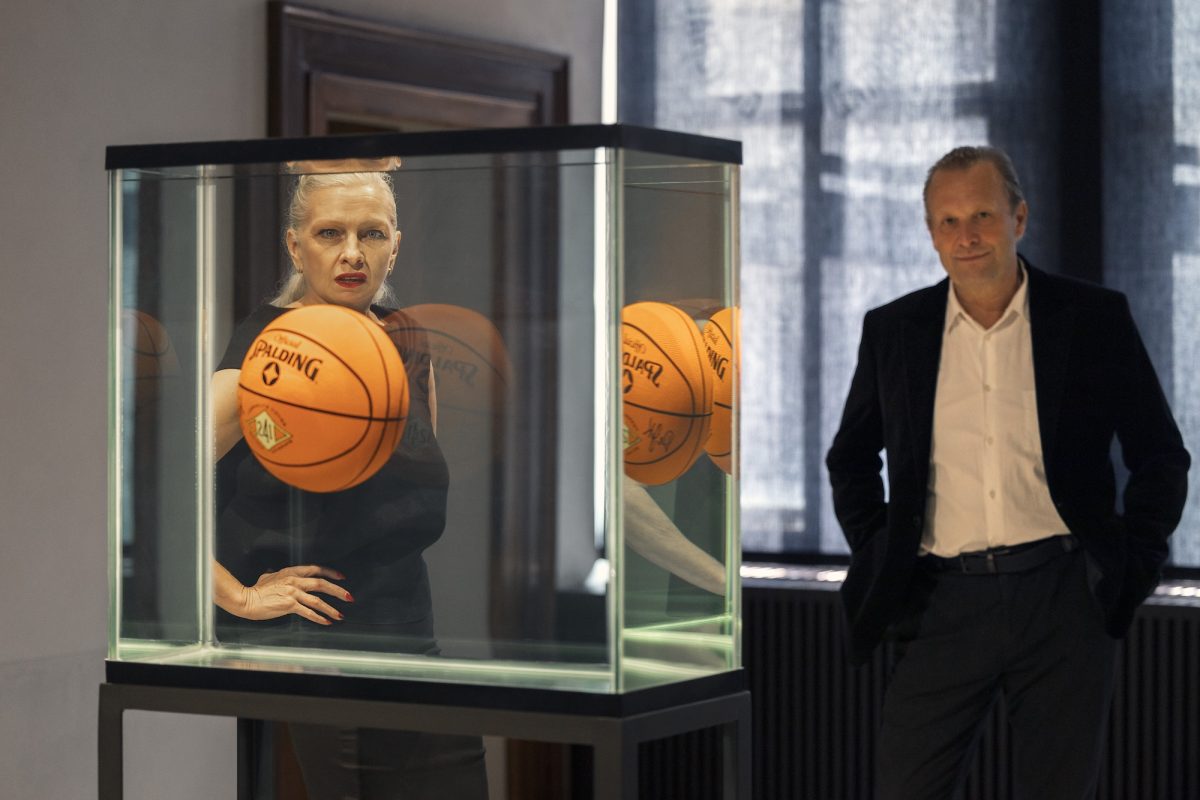
Daniel Birnbaum is a curator and writer based in London. He was the director of Moderna Museet in Stockholm and curator of the 2009 VeniceBiennale. He is currently professor of philosophy at the Städelschule in Frankfurt.
Jacqui Davies is an award-winning producer and curator, working at the intersection of art and cinema, and director of the production companyPrimitive Film, London. She has produced over 80 films and curated across art and cinema, site-specific commissions, stage and television.
Since 2023, Birnbaum and Davies have developed a unique collaborative practice. Their trans-disciplinary methodologies of exhibition production juxtapose historical materials with artworks and elements from cinema, literature, music, science and cutting-edge digital experimentation, including immersive technologies and mixed realities. Presented in a wide variety of institutional contexts, their projects have explored all forms of artistic production, dissemination, and transmission, both ancient and contemporary.