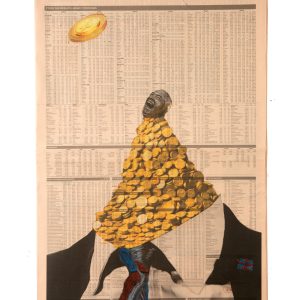
In her art Kseniia Pozdeeva attempts to engage in the deepest questions of human existence. Through her watercolor works, Kseniia explores light and darkness of human souls, good and evil, fear and faith, and everything that is in between. Her paintings might have apocalyptic flair, and at the same time excel tranquility and hope.
The philosophy of art
Pozdeeva’s art is a reflection of higher powers, the downfall of humanity, and the death of individuality. It is so dramatically transparent how Kseniia is obsessed with the everlasting theme of struggles between good and evil, morality and mortality. And how she tries to find possibilities to depict different stages of human existence. She is driven by the power of faith in a divine principle. At the same time, the artist does not seek to intimidate the viewer. Her works rather evoke empathy and a desire to look closely at the work. They lead to reflection on eternal questions and immerse oneself in one’s own feelings.
Pozdeeva takes inspiration from John Martin’s painting Pandemonium (1841). It’s a powerful work where Satan watches the fall of the capital of the Hell. The painting was created as a visualisation of John Milton’s epic poem Paradise Lost and is a powerful philosophical statement about the endless topics of evil power, and the chase of greatness. And how it leads to the downfall of humanity after all.
Artist’s art manner and visual approach
Kseniia’s color palette is influenced by several sources. First of all, the combination of red, orange, and yellow is the inspiration from Martin’s Pandemonium. It can be seen in most of her works. Another effect comes from the aesthetics of Hammer Film Productions and their keen attention to red shades, typical to horror and suspense films.
Comics have their impact on Kseniia’s art as well. Most of them, The Invincible, with its extremely bright and expressive palette. Despite the “hellish” colour scheme, Pozdeeva’s paintings are not at all evil. The watercolor blurred strokes make them soft, attractive, and lack aggression.
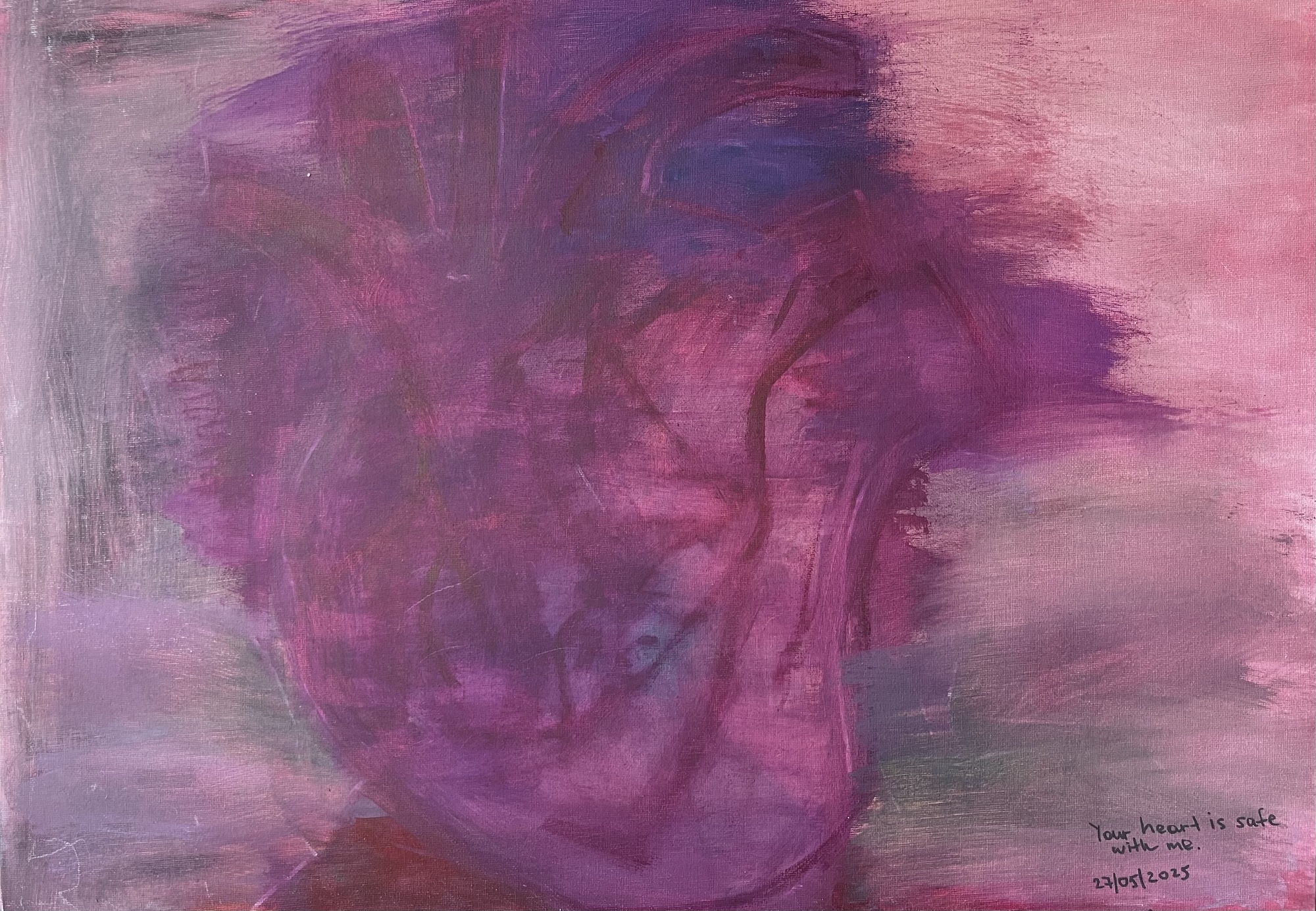
As if covered with a thin veil, unfocused images are a key feature of Pozdeeva’s works. It is difficult to grasp the real figure behind these unfocused forms. And this achieves two important goals: the works express the ephemerality of the so-called objective world and demonstrate the powerlessness of evil, hidden behind a blurred “lens.”
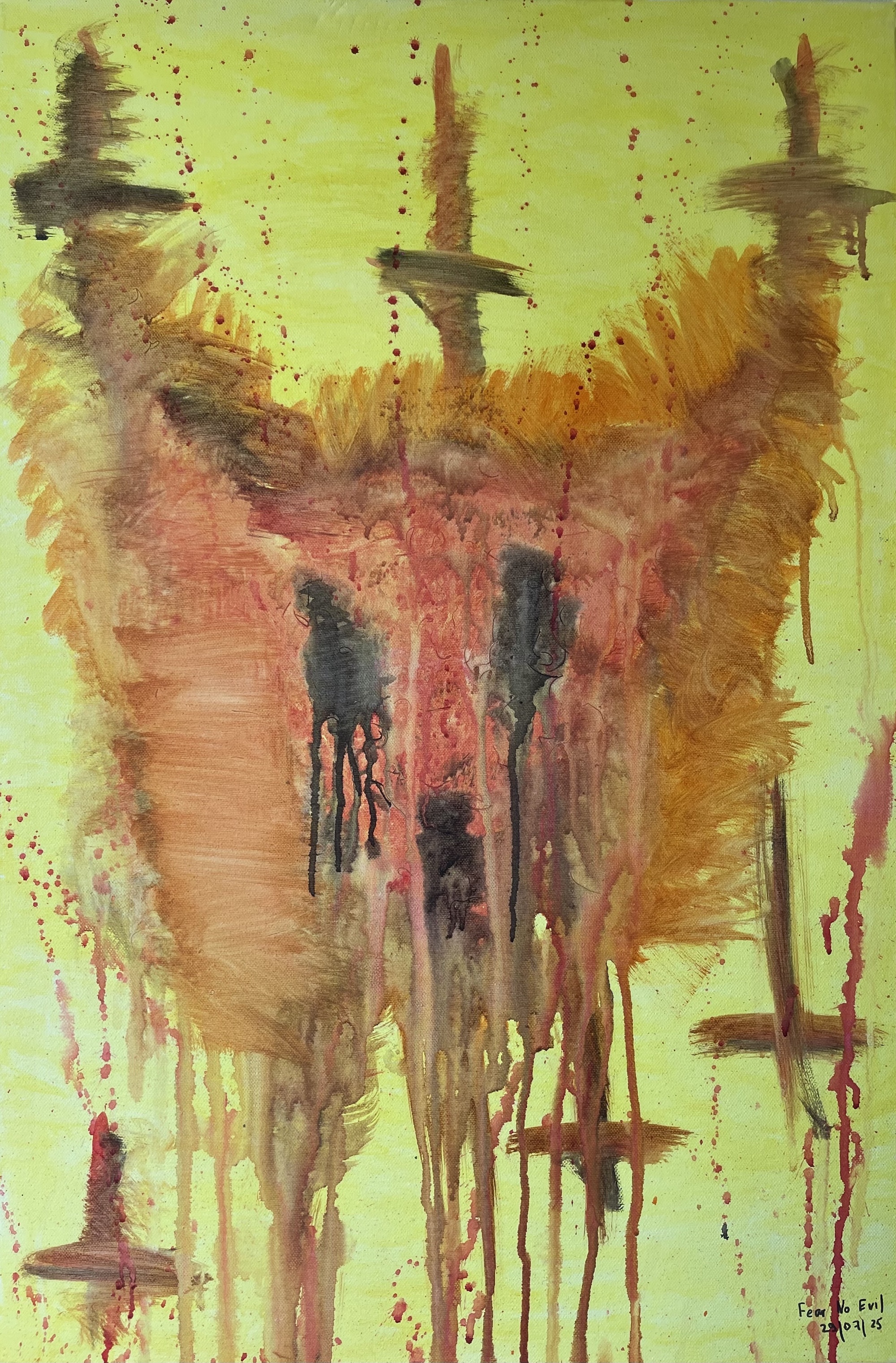
Evil in her interpretation is always soften and harmless – this is an artistic technique that reflects an inner sense of security based on spiritual faith. Even with the dark sides of human nature and society, the artist’s works do not evoke fear or despair. As, for example, in the work Fear No Evil (2025). It’s the central work of the religious cycle. It depicts a devilish face with smeared eyes and mouth (symbolising blindness and muteness, and therefore, inability to harm), and the Christ on the Cross, surrounded by fire. Everything is the artist’s way of expressing confidence in safety through faith in higher power.
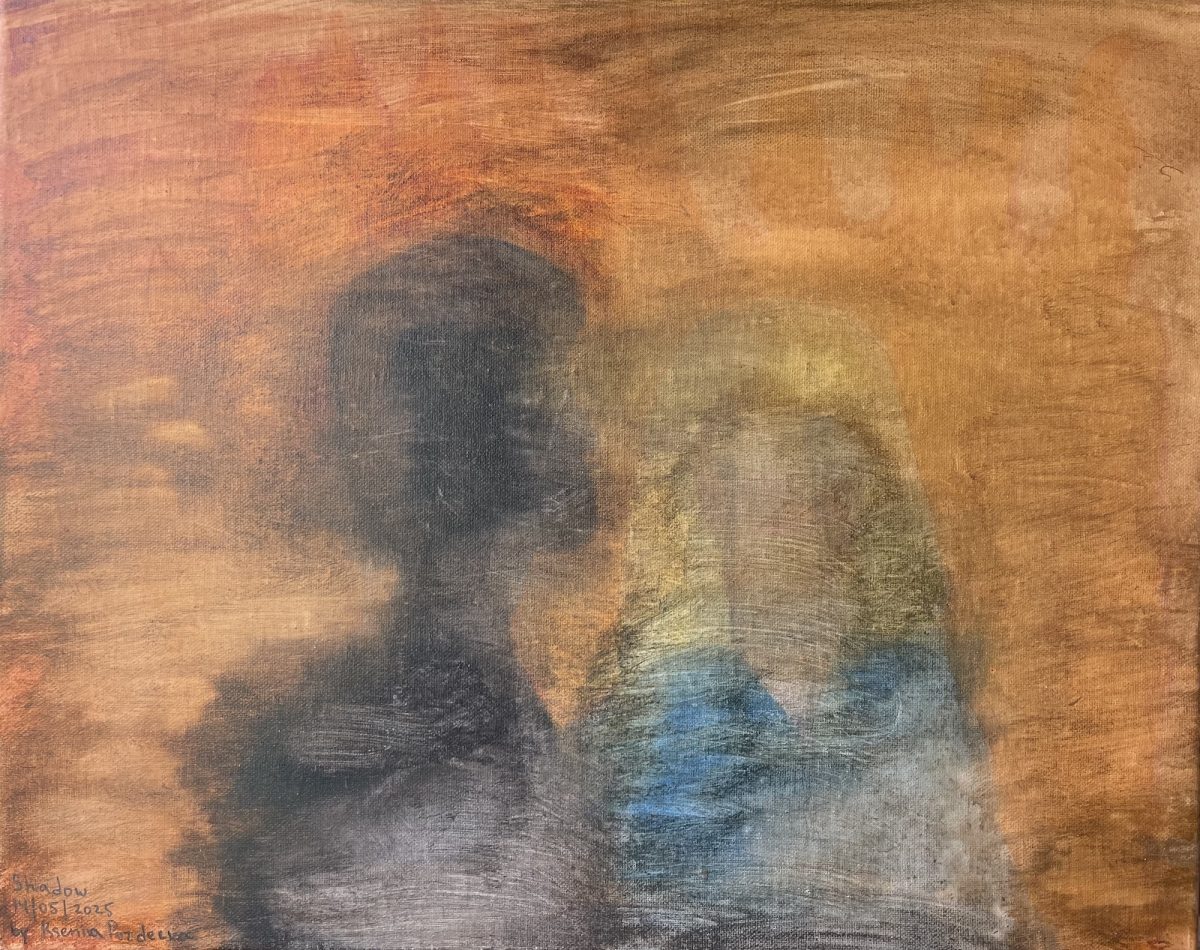
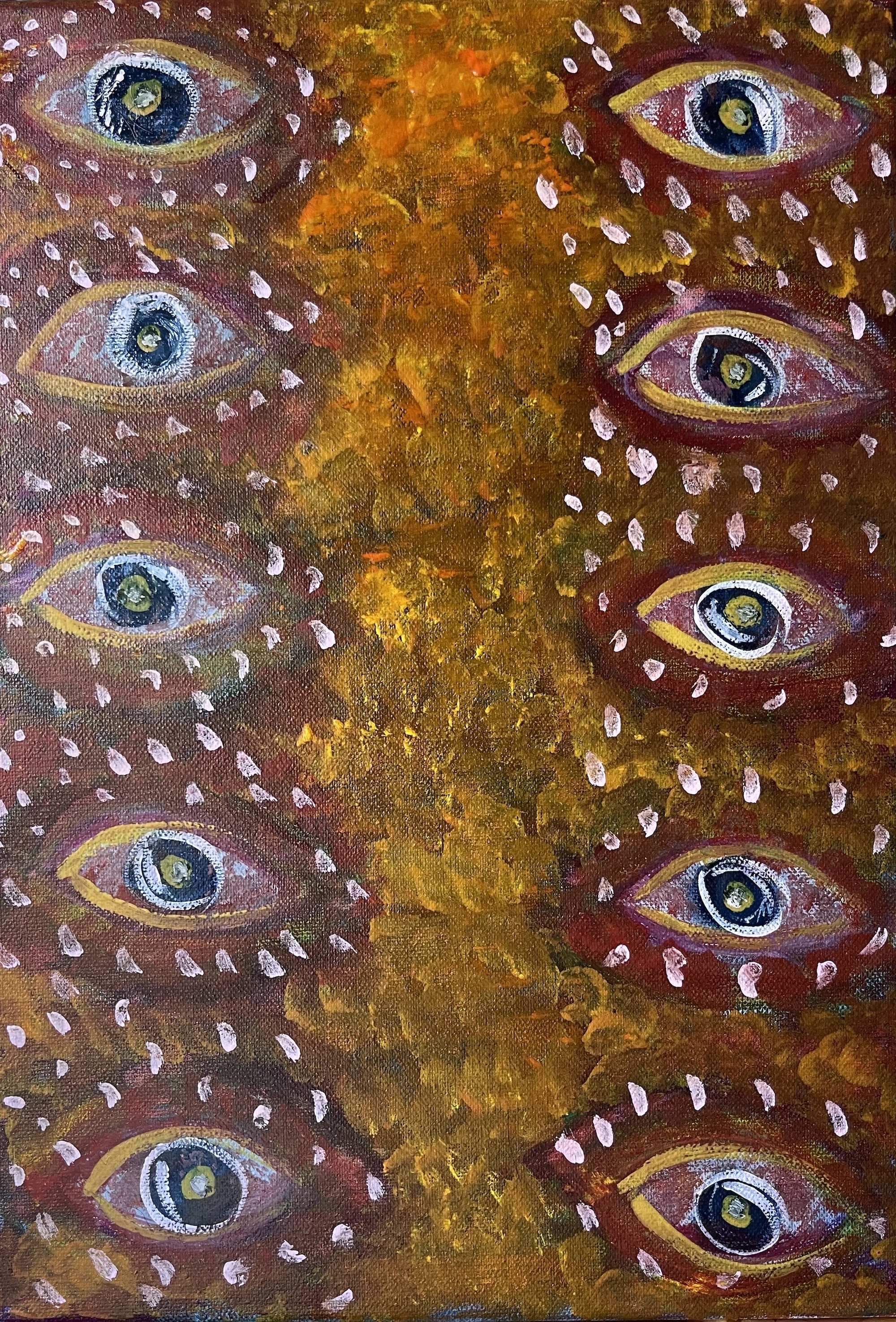
What plays a significant role in Kseniia’s work is drawing personal experiences. Thus, the painting Shadow (2025) has come from the artist’s internal struggle against her own fears and doubts. The shadow here represents the inner conflict, the path to overcoming which lies through acceptance and friendship with the dark side of oneself. The mystical work Watchers (2025) is inspired by one of the artist’s dreams. The multiple eyes state for angels watching over people. In the centre of the composition is fire, which cannot harm what is pure, despite its closeness to the angels.
Art of Pozdeeva has undeniable potential and is valuable in understanding compound questions of identity, faith, and social justice. Her technique forms a recognisable style, and it successfully runs with her philosophical ideas.
She obtains a clear artistic vision, and technical skills. By exploring the dark sides of human experience, Kseniia Pozdeeva shows that there’s always a place for faith, love, and hope in the world.
The work of Kseniia Pozdeeva demonstrates undeniable potential and is valuable in understanding complex and important issues of identity, faith, and social justice. Her blurred technique creates a recognizable artistic style that successfully supports the philosophical content of her works.
The artist possesses a clear artistic vision, technical skills, and a desire to talk about meaningful things. By exploring the dark sides of human experience, Kseniia Pozdeeva finds an opportunity to show that there remains a place for faith, love, and hope in the world.