

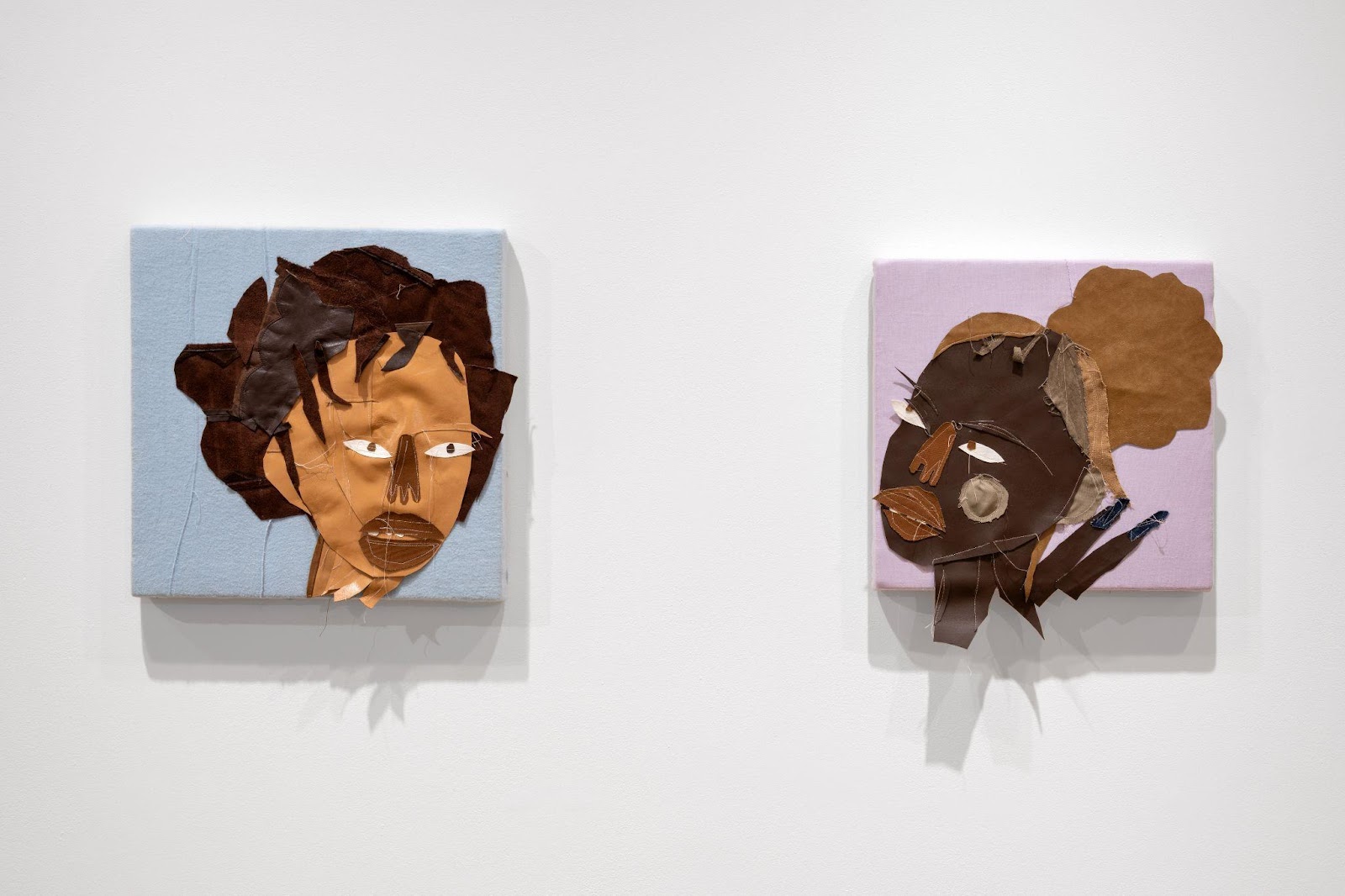
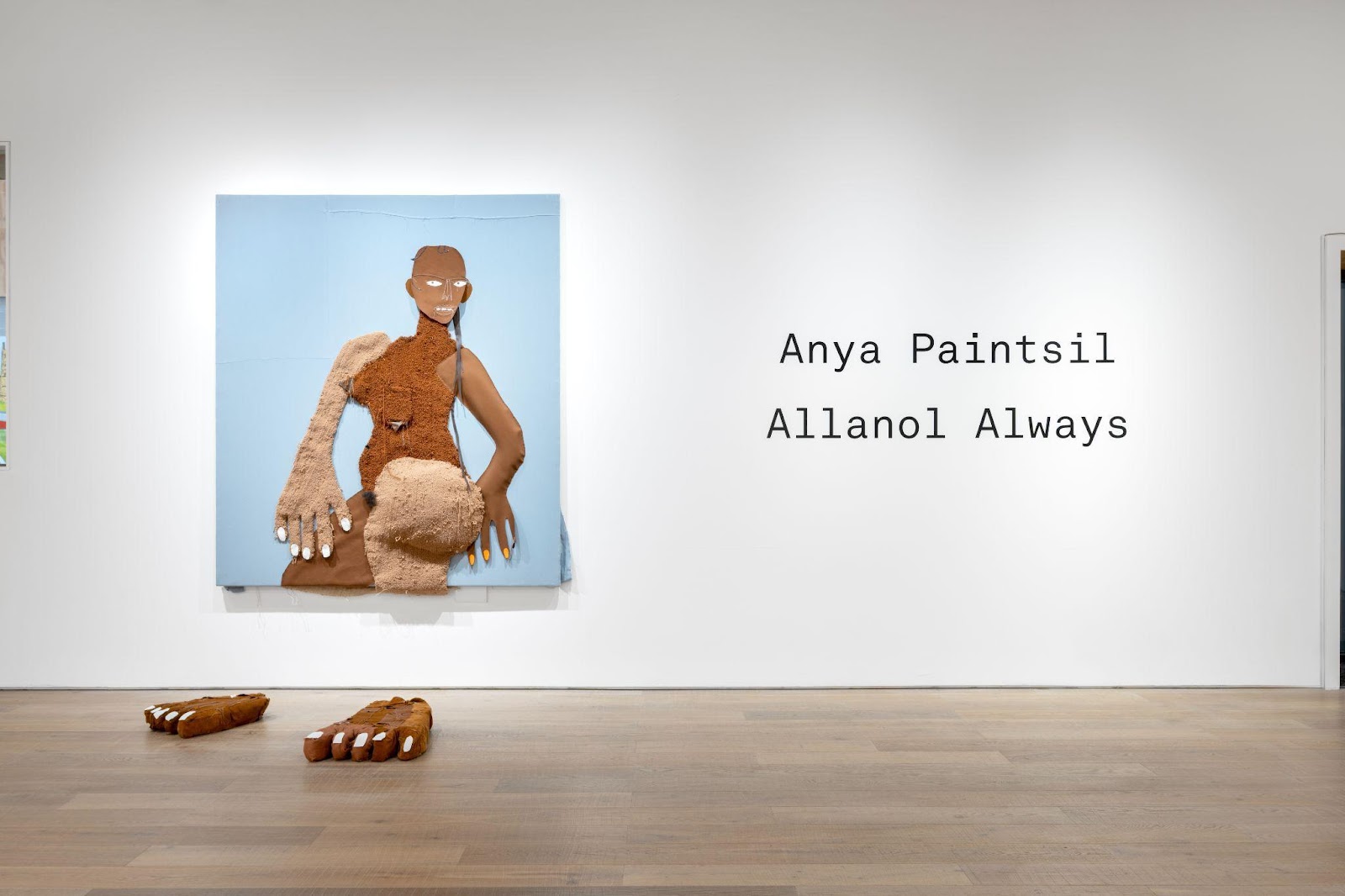
Step into Ty Pawb gallery in Wrexham, and you’ll find yourself under the watchful gaze of towering textile figures, their oversized hands at their sides and in some cases their feet on the floor as if they’ve escaped from the wall. This is Anya Paintsil’s world – a vibrant collision of Ghanaian heritage and North Welsh sensibility that transforms discarded clothes into stories.
The centrepiece draws you in immediately: fabric chairs arranged around a textile well, inviting you to sit and become part of the narrative. It’s impossible not to feel the intimacy of being welcomed into Paintsil’s universe, where every thread carries weight, and you want to know what each figure is thinking.
There is raw honesty woven into every piece. Paintsil, a self-confessed hoarder, has turned her inability to throw things away, a trait she attributes to her Welsh roots, into artworks. Those characters peering down at you? They’re wearing her actual hair extensions – a reflection of not being able to find a salon that could work with her hair, fragments of clothes that once hung in her wardrobe, pieces of a life lived between two worlds.

New life is given to garments that no longer fit, items her mother couldn’t sell on Vinted, old jeans and jackets that most would relegate to charity shops. For Paintsil, they become the medium through which she channels her memories.
The orange self-portrait is a testament to the alienation of growing up mixed-race in North Wales, where finding foundation that matched her skin tone meant settling for something that made her look, in her words, “orange.” It’s a moment of vulnerability that transforms personal frustration into universal commentary on belonging and identity.
Ghanaian Fante fertility dolls inspire some of her figures with their pronounced hips and breasts; they are a nod to her past reimagined through her contemporary eyes. She acknowledges how centuries of appropriation – from Picasso’s “Primitivist” phase to Western art’s colonial gaze – have complicated the act of creating work rooted in African aesthetics, even for Black artists.
There’s humour aplenty threaded through the exhibition. Secret Swear features a figure cursing behind their back, and Gossip Mawr captures the artist with her sister and mother in the universal act of sharing secrets, heads tilted together in conspiratorial intimacy. It’s an everyday family moment immortalised in fabric and thread.
The joy radiating from these works is infectious. Paintsil describes her process as intuitive, not overthinking the outcome, letting the curators worry about how they will be displayed. This playful energy permeates the gallery space, making you want to linger, to discover new details in each piece, to sink deeper into those fabric chairs and hear the stories of her textile characters.
Having recently returned to North Wales from London, Paintsil’s homecoming exhibition feels perfectly timed. The work captures the complexity of a diasporic identity – the push and pull between heritage and homeland, between the place that shaped you and the place that claimed you. It’s a conversation many will recognise, told through a tactile medium that carries memories.
This was my first visit to both Ty Pawb and North Wales, but if future exhibitions match this level of engagement and authenticity, I’ll be making the journey north again. Paintsil has created a space where personal history becomes collective memory, where discarded objects find new purpose, and where you can sit and gossip away.
Anya Paintsil: Allanol Always – 25th October,
Ty Pawb in Wrexham
Entrance is free.
All photographs courtesy of Harry Meadley.