There is no shortage of quality at Photo London’s 10th edition. Here are ten artists that appealed to me from the many spread around 130 galleries and several additional programmes (go to my Instagram to see five of them pictured with their work). There’s enough variety to attract most tastes, but I see that I like a good conceptual process…
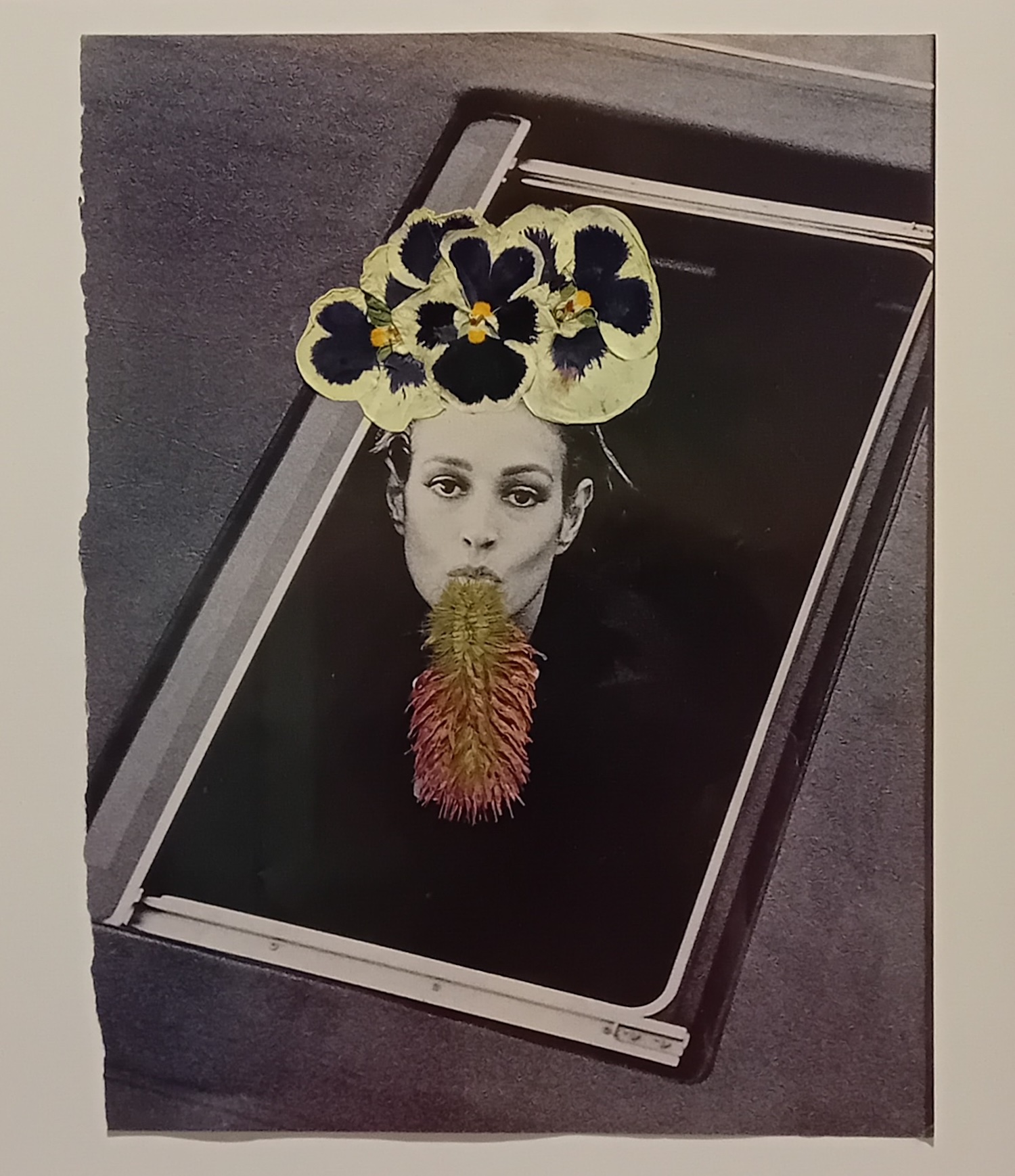
Aikaterini Gegisian: collage from ‘The Goddesses’, 2014-25, in the curated ‘Positions’ section
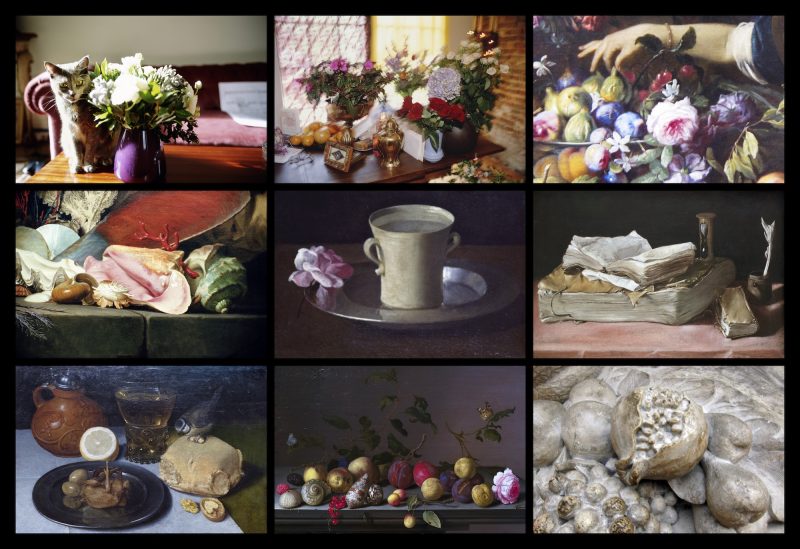
Greek-Armenian Aikaterini Gegisian is one of the unrepresented photographic artists selected by Maria Sukkar for the ‘Positions’ section. Gegisian describes her collages as ‘a feminist re-reading of optic technologies, questioning their role in constructing identities and defining visual pleasure’. She combines several series in her presentation: the goddesses reimagine representations of divine femininity in vernacular cultures, transforming regal, royal, spiritual, and mythical female iconography to envision an alternative universe populated by women drawn from popular publications across diverse geographies and eras. Dried flowers feature consistently, operating here as headdress and provoking tongue, poked out against patriarchy by this earthy and earthly vision of the cosmic.
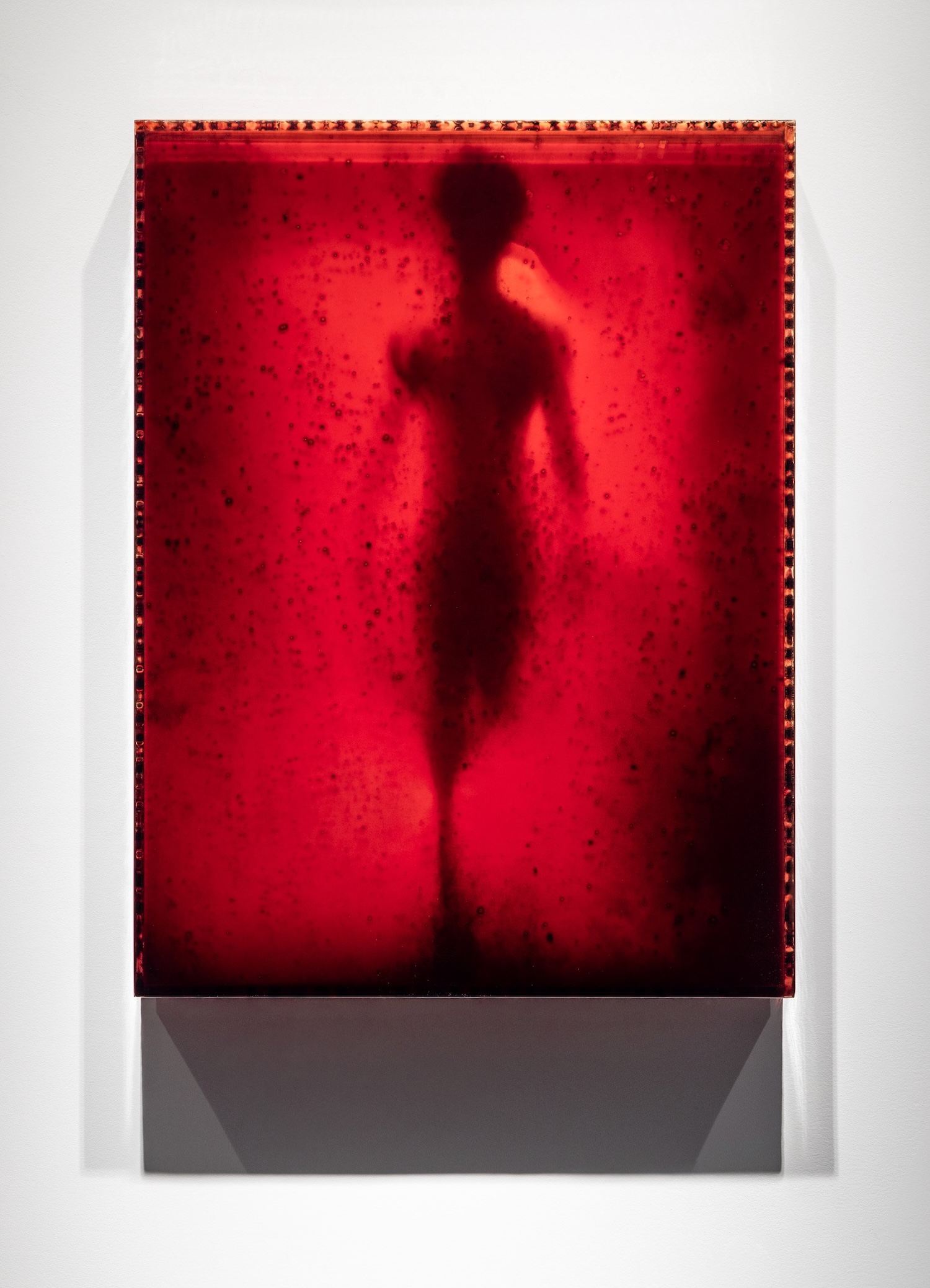
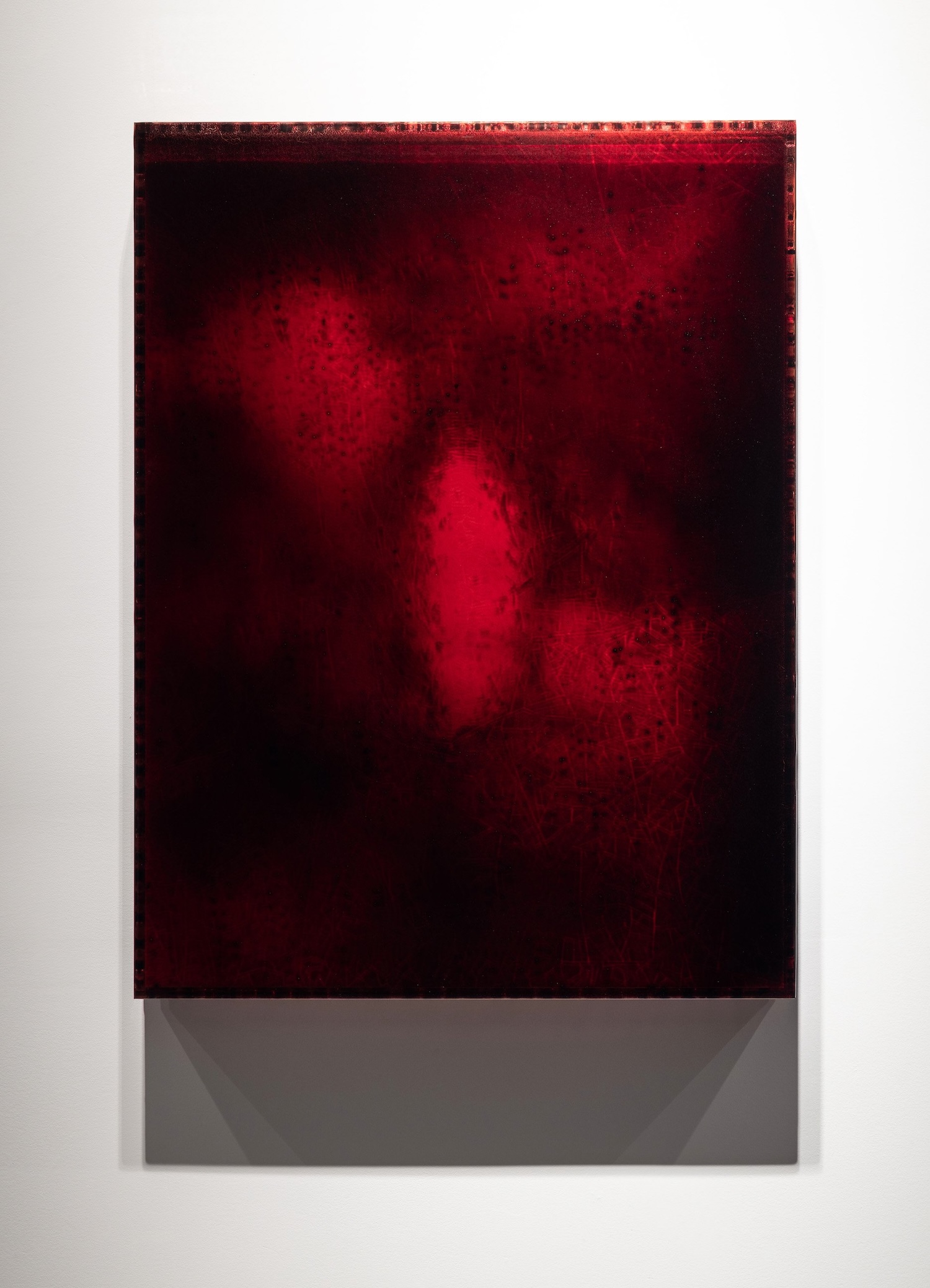
Jordan Eagles: ‘Rare Ongoing Ion’ and ‘Growing Revelation’, 2023, at New Discretions, New York – Discovery Section D01
Since the 1990’s, New York artist Jordan Eagles has been exploring the visual power and cultural uses of blood as a means to address themes of corporeality, spirituality, and regeneration. He uses slaughterhouse blood which he is able to preserve to retain its natural colours, patterns, and textures. At Photo London he showed works from a the ORGN series, in which photographs of the human figure, variously abstracted by their capture through life-sized blood screens, serve as the underpaintings, obscured in turn by translucent layers of blood and resin. The light filters through to generate a darkly visceral beauty with a life force.
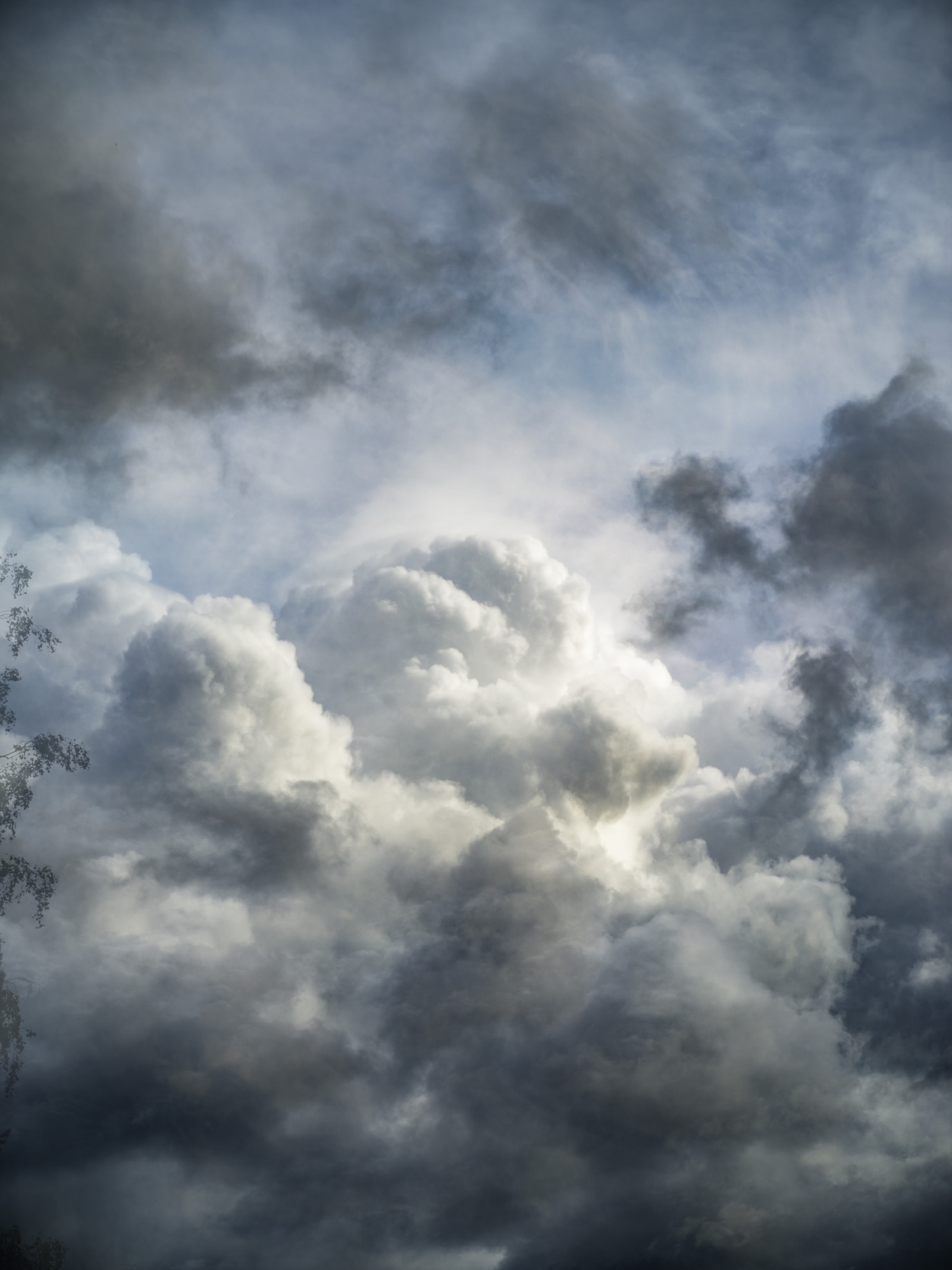
Santeri Tuori: ‘Sky #35’, 2021 at Persons Projects, Berlin – G23
Finnish artist Santeri Tuori, a leading representative of the ‘Helsinki School’ effectively created by gallerist and teacher Timothy Persons, is known for his layering of 2 – 10 landscape photographs, often – as here – combining black and white with colour. His initial focus was on forests, and on the same arboreal views at different times. He sees clouds as less moored to locality, so the five images combined here come from different places as well as different lights and times of year to float free of the ground and make their own suggestion of an alternative landscape above us.
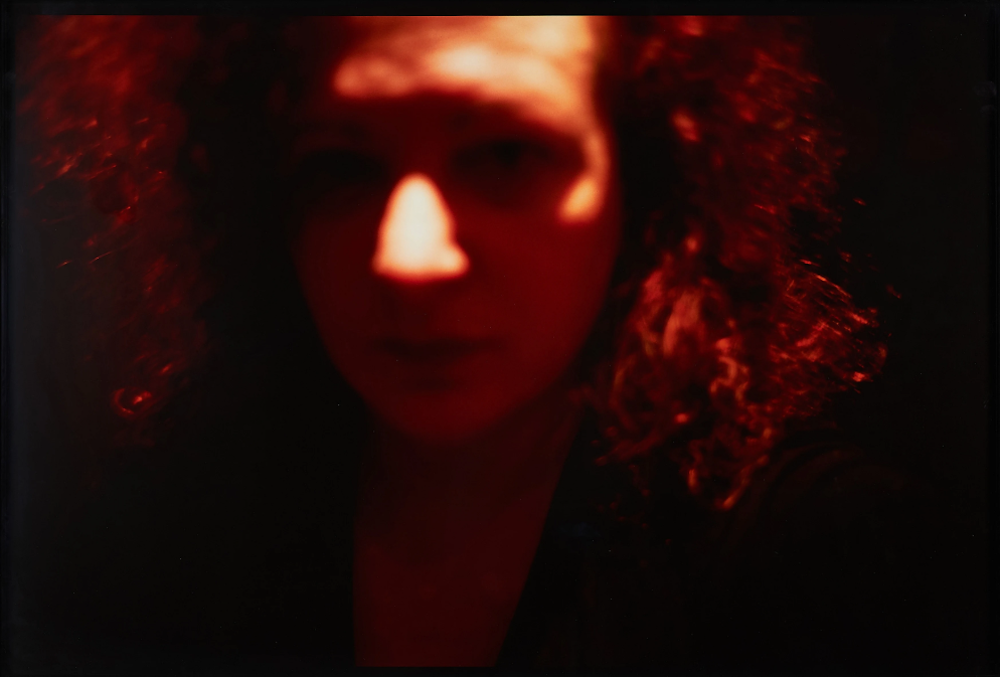
Nan Goldin: ‘Red self-portrait, Zurich’, 2000, at Atlas, London – G20
Nan Goldin’s aesthetic – you might call it intimacy meets the apparently accidental, with the photographer integrated into the community she depicts – has been hugely influential, but no one does it better. Sometimes she turns on herself, here to a lyrical effect that contrasts with her most famous self-portrait, 1984’s ‘Nan One Month After Being Battered’.
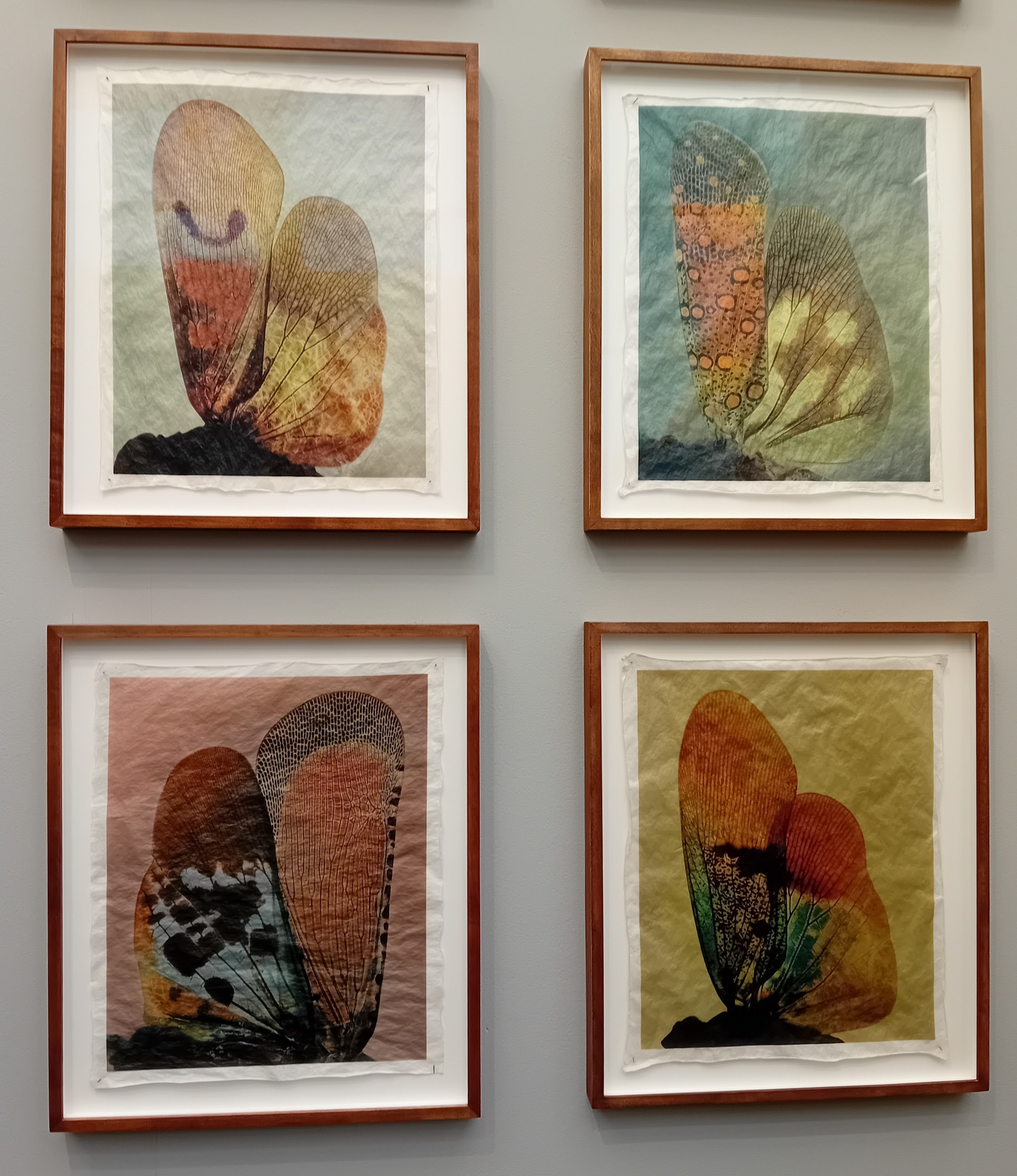
Gregor Törzs: from the series ‘Wing*Wing Couleur’, 2016-17 at Persiehl & Heine, Hamburg – G08
Berlin-based Gregor Törzs, a famed fashion photographer, has concentrated largely on microscopic and underwater images of the natural world since 2010. The frailty of these butterfly wings is evoked by the delicate textures resulting from him printing onto razor-thin Japanese Gampi paper that he then immerses in water, crumples by hand, smooths out, and leaves to dry: both paper and subject, says Törzs, are ‘extremely fragile and awesomely resilient’. The elaborate means of distancing the camera’s originating moment from image, says the gallery, leads to ‘atmospherically dense visual effects’ that ‘trigger an air of melancholy and timelessness’.
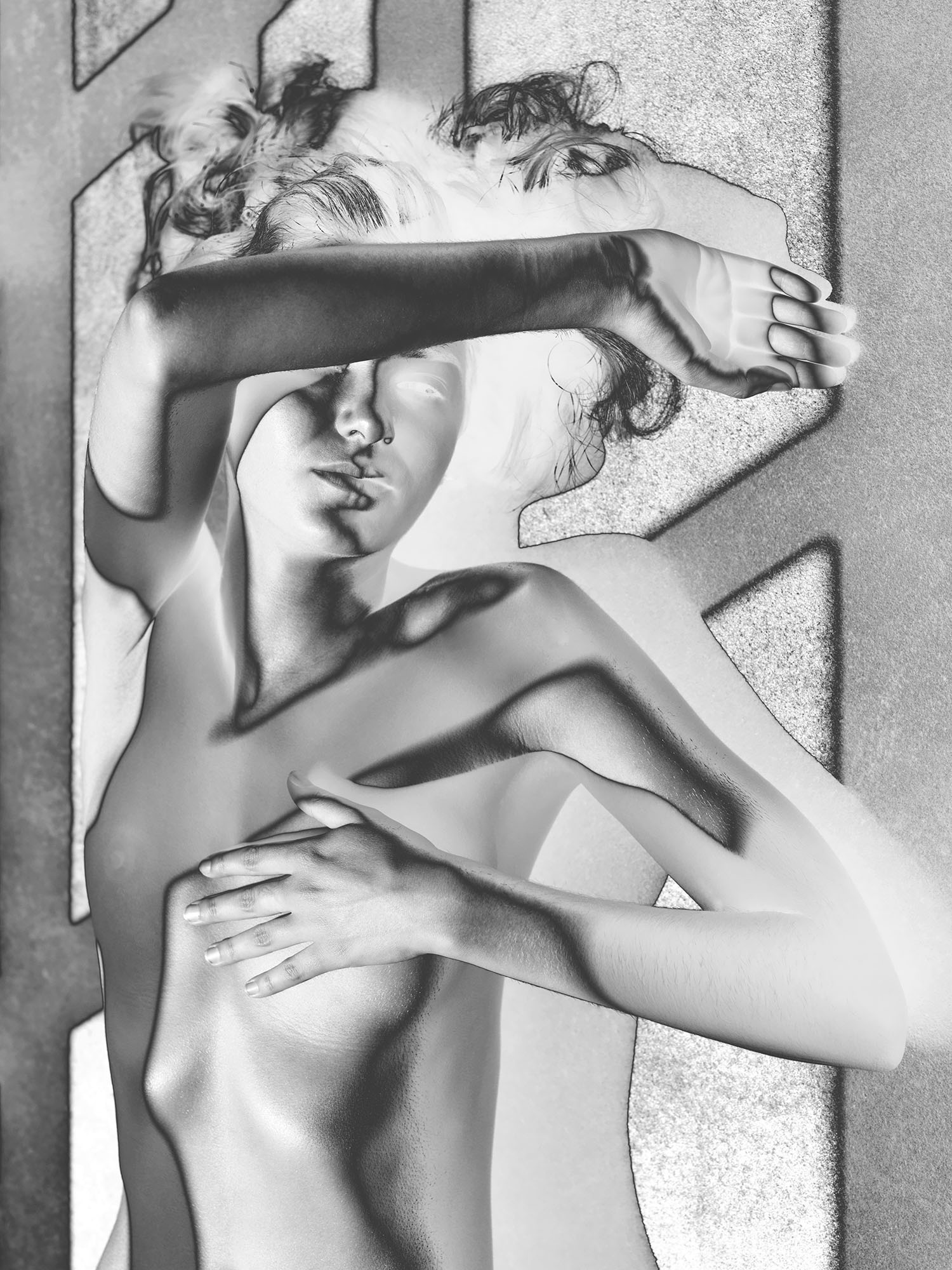
Mona Kuhn: ‘Spectral’ 2022, from the project ‘Kings Road’ at Galerie XII, Paris – A04
The Kings Road here isn’t London’s, but that of a house that the Austrian architect Rudolph M. Schindler built for his family in Hollywood in 1922. It became an avant-garde hub for intellectuals and artists. Mona Kuhn had access to Schindler’s private archives, where she found a break-up letter to an unknown woman, Schindler writing ‘I am married – have children – and could not answer your call’. Kuhn set out to reintroduce her enigmatic presence to the house, interacting with the space and light in the manner characteristic of her well-established colour photography – but in black and white: specifically, the solarized silver gelatin prints favoured contemporaneously by the Surrealists. That, says Kuhn, ‘crosses the realm of time’, and the darkroom technique splits the images appropriately between the realistic recording and fictional fantasy aspects of photography.
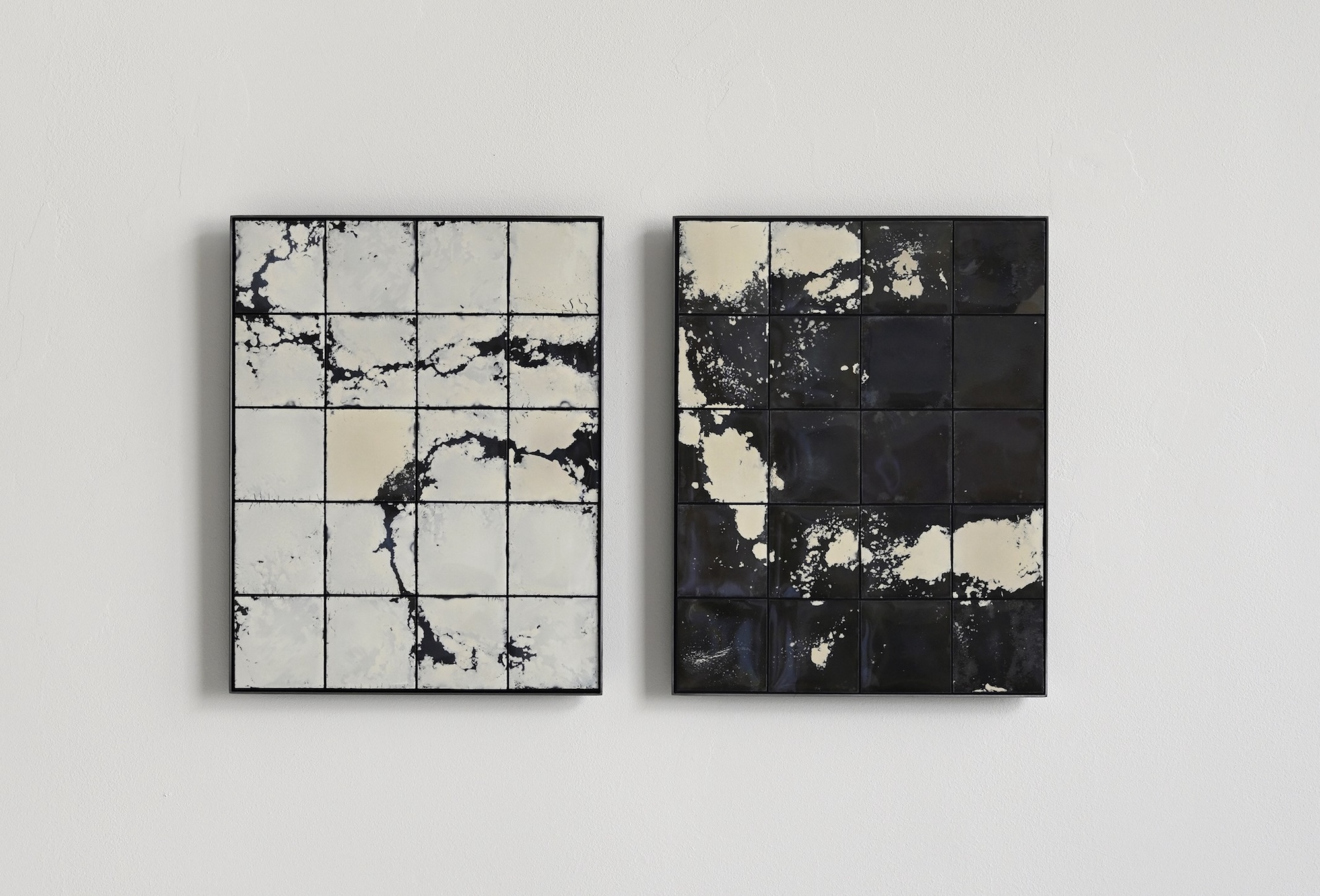
Tjitske Oosterhout: ‘The rhythms that surround us’, 2024, from the series ‘A Continual Unfolding’ at Contour Gallery, Rotterdam – Discovery Section D15
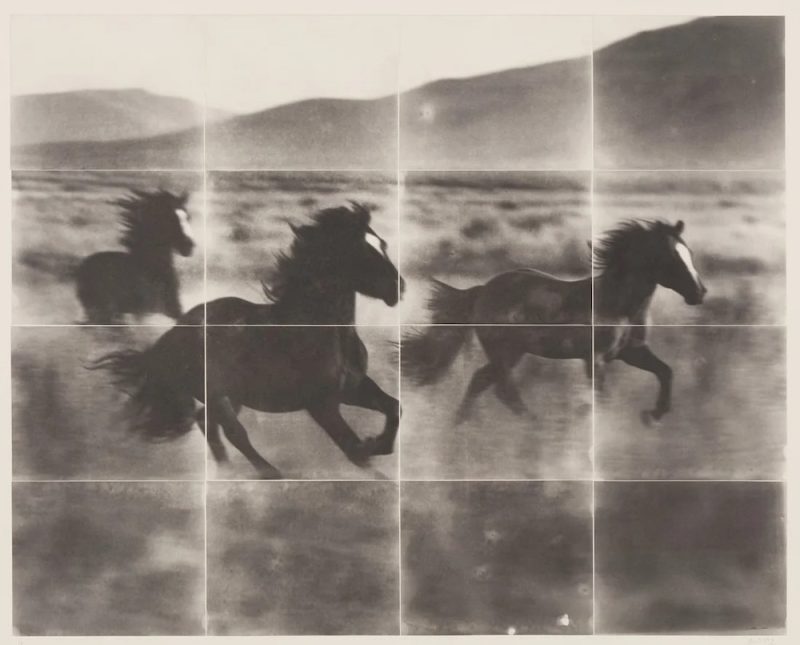
I like the way Dutch artist Tjitske Oosterhout allows material interactions to take apparent charge. For this series she takes hundreds of Polaroids of a blank white wall (apparently there is still a good supply of Polaroid film in the Netherlands), peels the paper off prematurely and dips it in liquid, followed by a slow drying. Oosterhout takes one of the disrupted abstract results as a starting point to search among the others to build a combination that makes sense as a landscape of sorts. The Polaroid grids are then made more tile-like in effect by heavyweight steel frames.
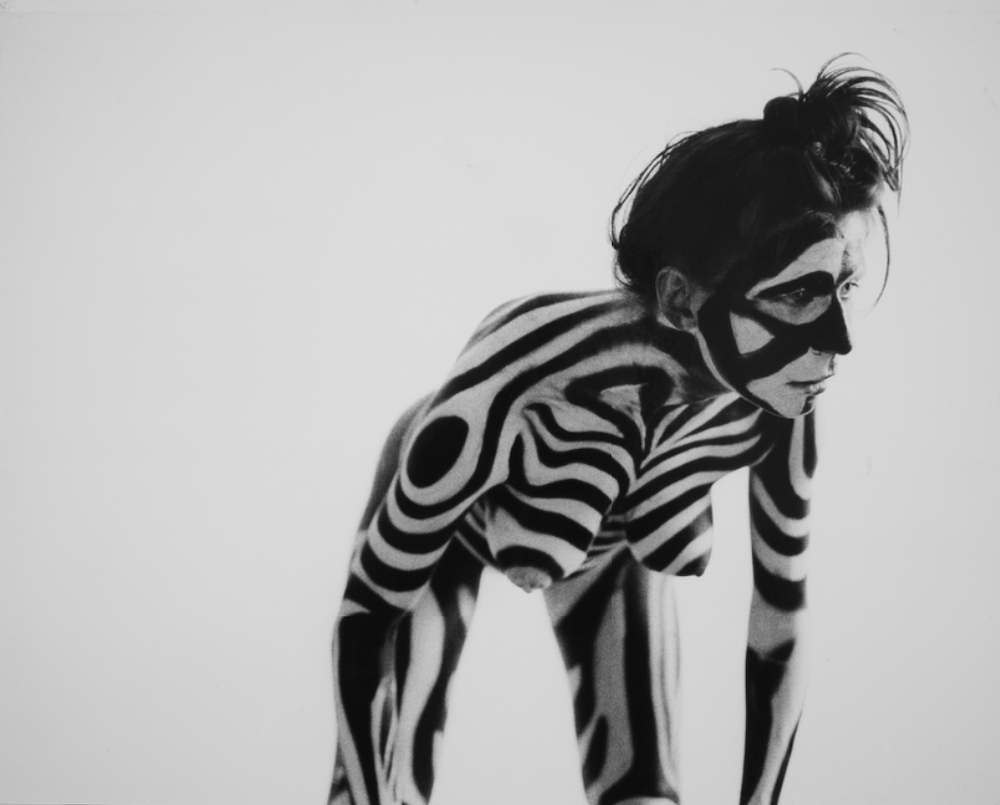
Hannah O’Shea: Still from ‘A Visual Time Span’ (A Visual Diary)’, 1975 / 2025 at England & Co, London – W07
This work, reproduced on the cover of the feminist magazine ‘Spare Rib‘ in 1977, has gained recent attention through its inclusion in ‘Women in Revolt!’, currently on tour from Tate Britain to the Whitworth in Manchester. The photograph came out of O’Shea’s Super-8 film and live art work, a film collage of performances mixed with women’s and gay rights demonstrations. O’Shea painted the performer’s body with animal markings and then photographed and filmed her. Jane England has collaborated with O’Shea – now in her mid-eighties – to produce an edition of 20 at an affordable price, a nice way of building on the artist’s renewed visibility.
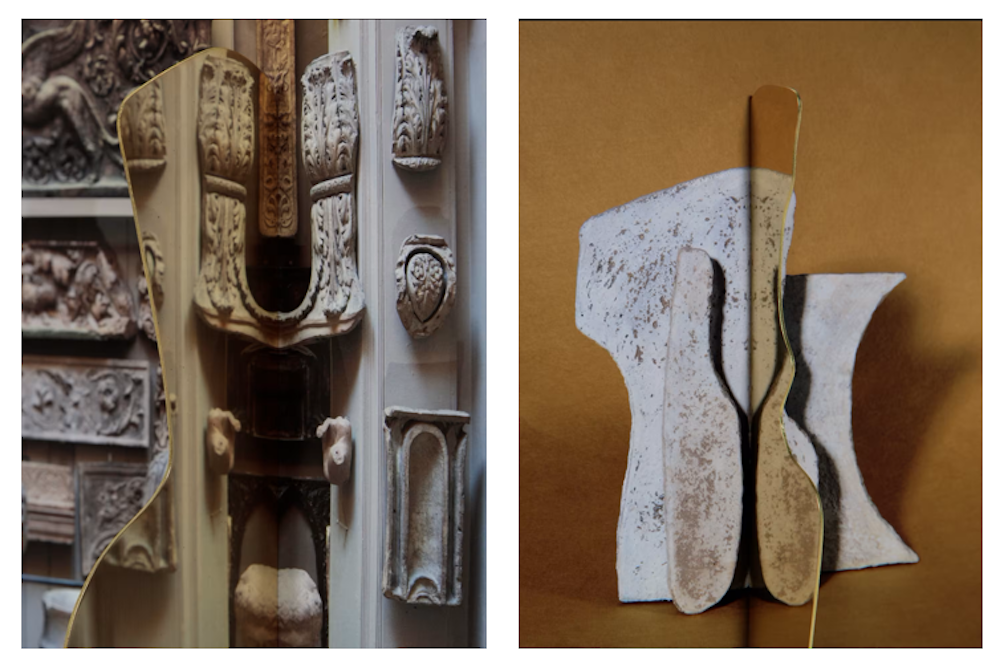
Hannah Hughes: ‘Cardo II (after Soane)’ and ‘Mezzo (after Soane)’, 2025, in the ‘Soul of a City: London Lives’ special exhibition
This year’s special exhibition presents compellingly varied visions of London from 30 photographis artists. Hannah Hughes chose Sir John Soane’s Museum as her starting point, taken particularly by the arrangement of archaeological fragments, plaster casts and models. Soane called them ‘studies for my own mind’ – so much so that he instructed that they be left exactly where he had placed them. Their arrangement sets up negative, as well as positive, spaces, well suited to Hughes’ core method of using images of the empty areas between objects in her collages. Here, she explains, ‘these negative spaces were produced in clay and reflective polished brass, assembled and photographed in dialogue with the objects in the collection. In these mirror images, the void spaces have become solid to offer new material encounters.’ Some of the series of six are recognisably Soane, while others push further into abstraction.
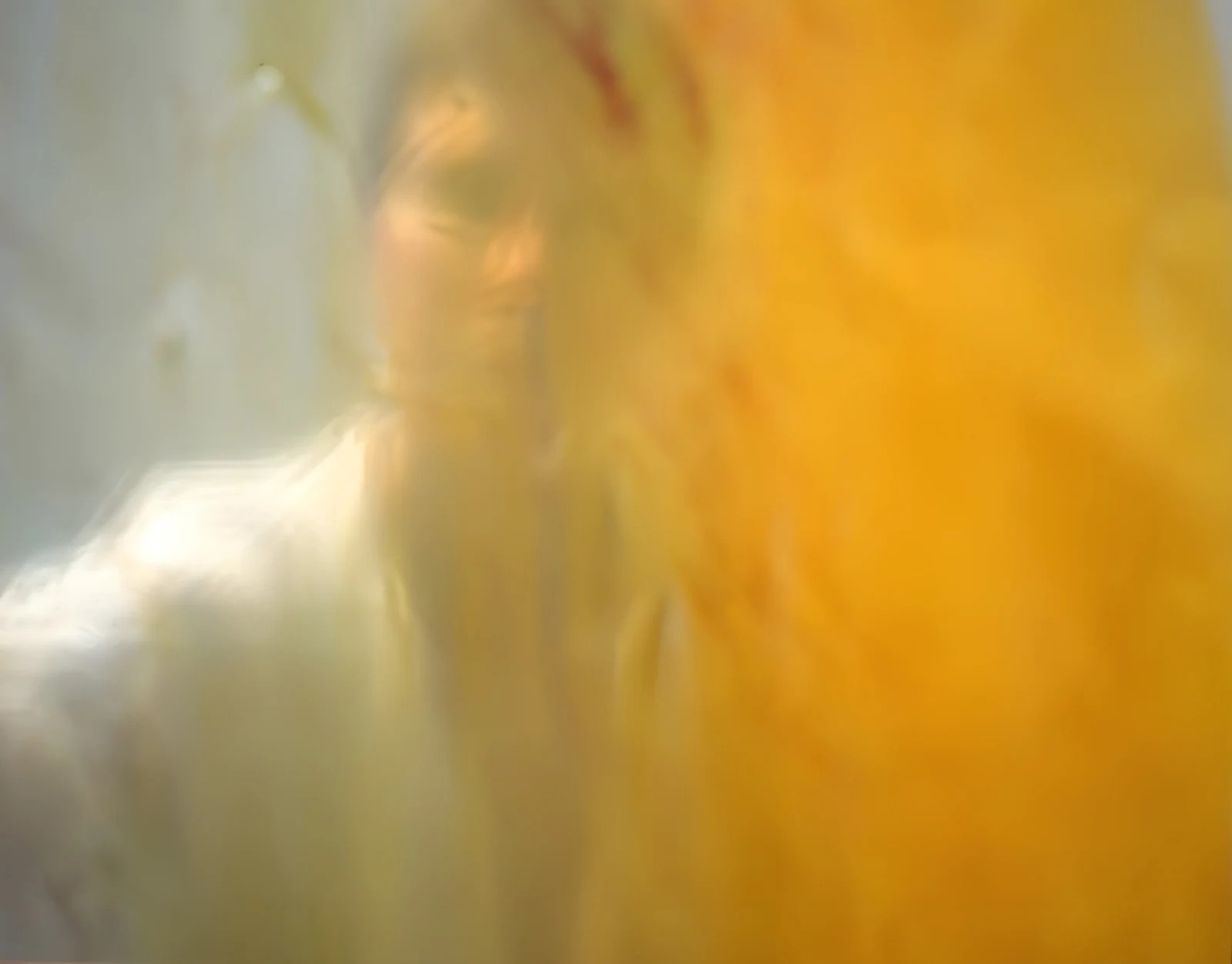
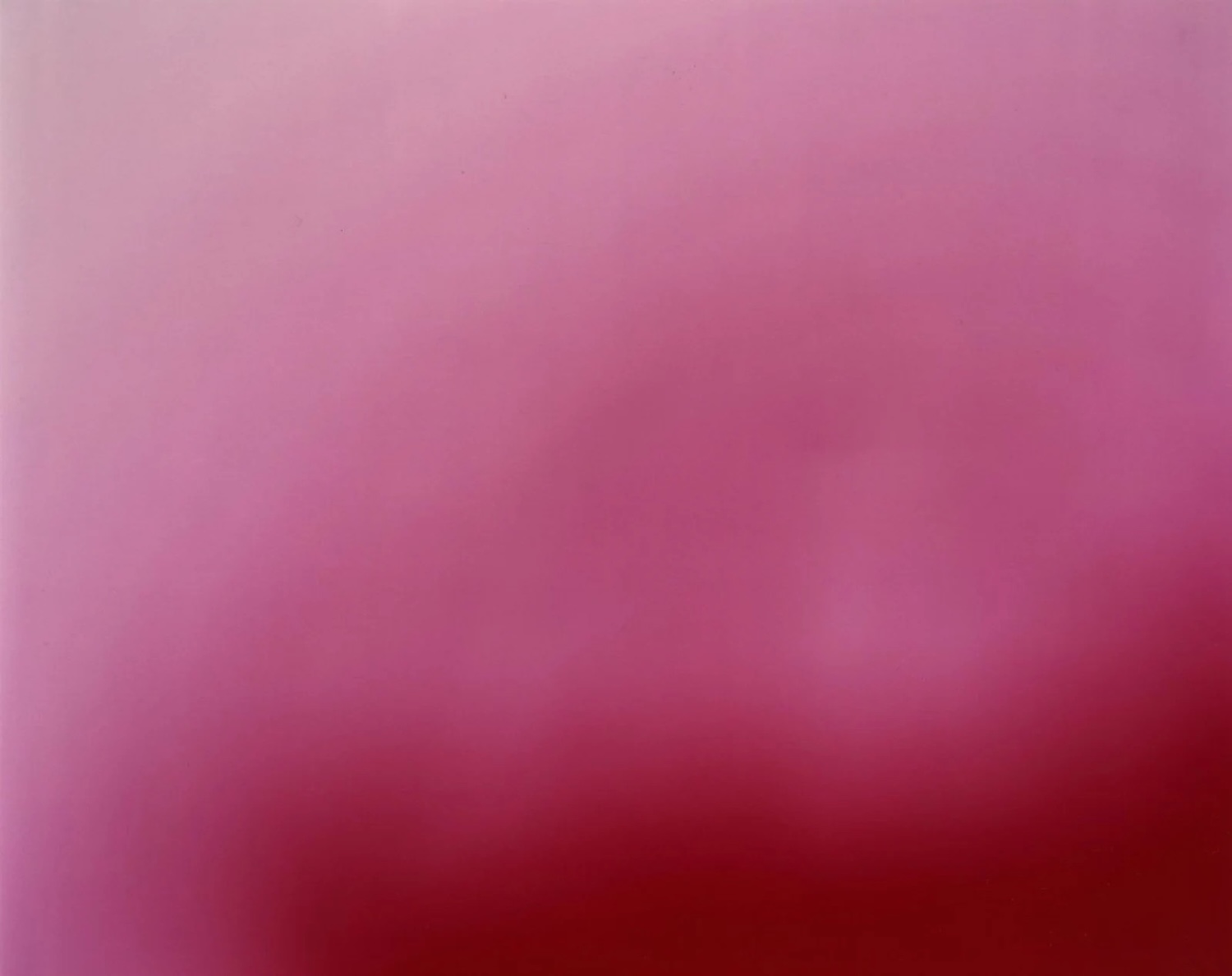
Anna Mossman: ‘Yellow Throw’, 1996 and ‘Ribbed for Pleasure’, 1997, at Close Gallery, Somerset – W03
Anna Mossman is known nowadays for her finely-wrought drawings, but they emerged out of a radical photographic practice, and she showed large Cibachrome photographs from the early 1990s at Photo London. They focus on the collapsing of time, space and activity into the two-dimensional picture. In the ‘Throw’ series Mossman faces the camera directly, armed with various paints. In reversal of the artist portrait she fuses the activity of painting with its documentation, throwing colours at the camera, obscuring and largely replacing her own image with a saturated chromatic field. The combination of protection and vulnerability in that are made more explicit in ‘Ribbed for Pleasure’, in which it is hard to see anything beyond the pink condom used as a filter over the camera lens.
Photo London, 15th-18th May 2025, Somerset House photolondon.org