
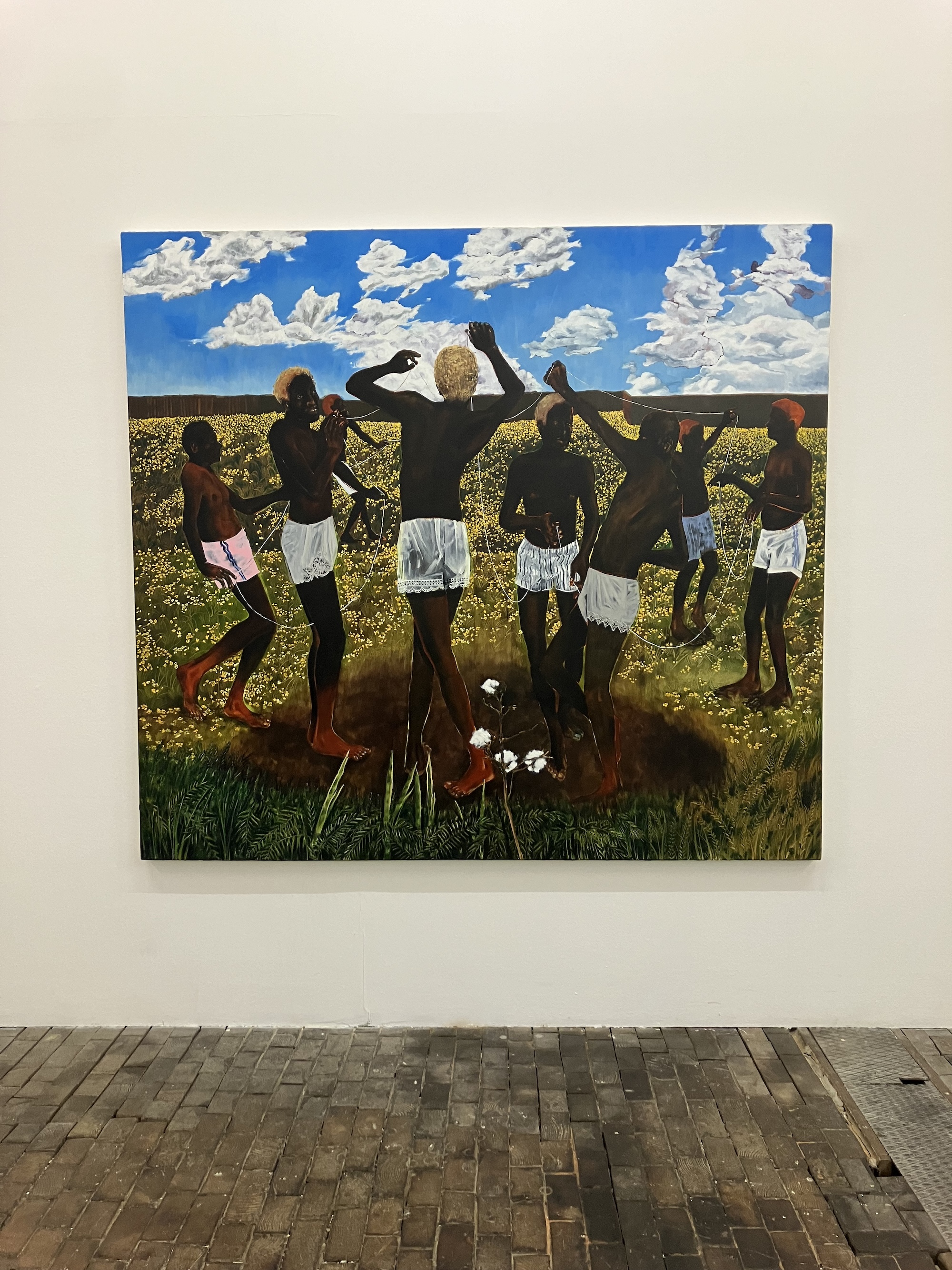
Eight boys rejoice against blue skies and cotton clouds. Behind them; a field of yellow blossoms. In front of them; a single, un-plucked cotton flower. A circle of earth beneath their naked feet shows how their dancing has worn the ground bare.
Their skin is darker than the forest on the horizon, darker than the dirt, and pops against the sun-washed yellow of the Pinto peanut: a flowering forage plant native to Brazil. Its cheery yellow hue is reminiscent of happiness, while its intractable tenacity to cover the ground and thrive, against all odds, symbolises resilience and steadfastness.
A strand of cotton passes through their hands; a thread that ties the boys’ dancing to what is perhaps the most peculiar detail of all: their Chantilly-laced knickers.
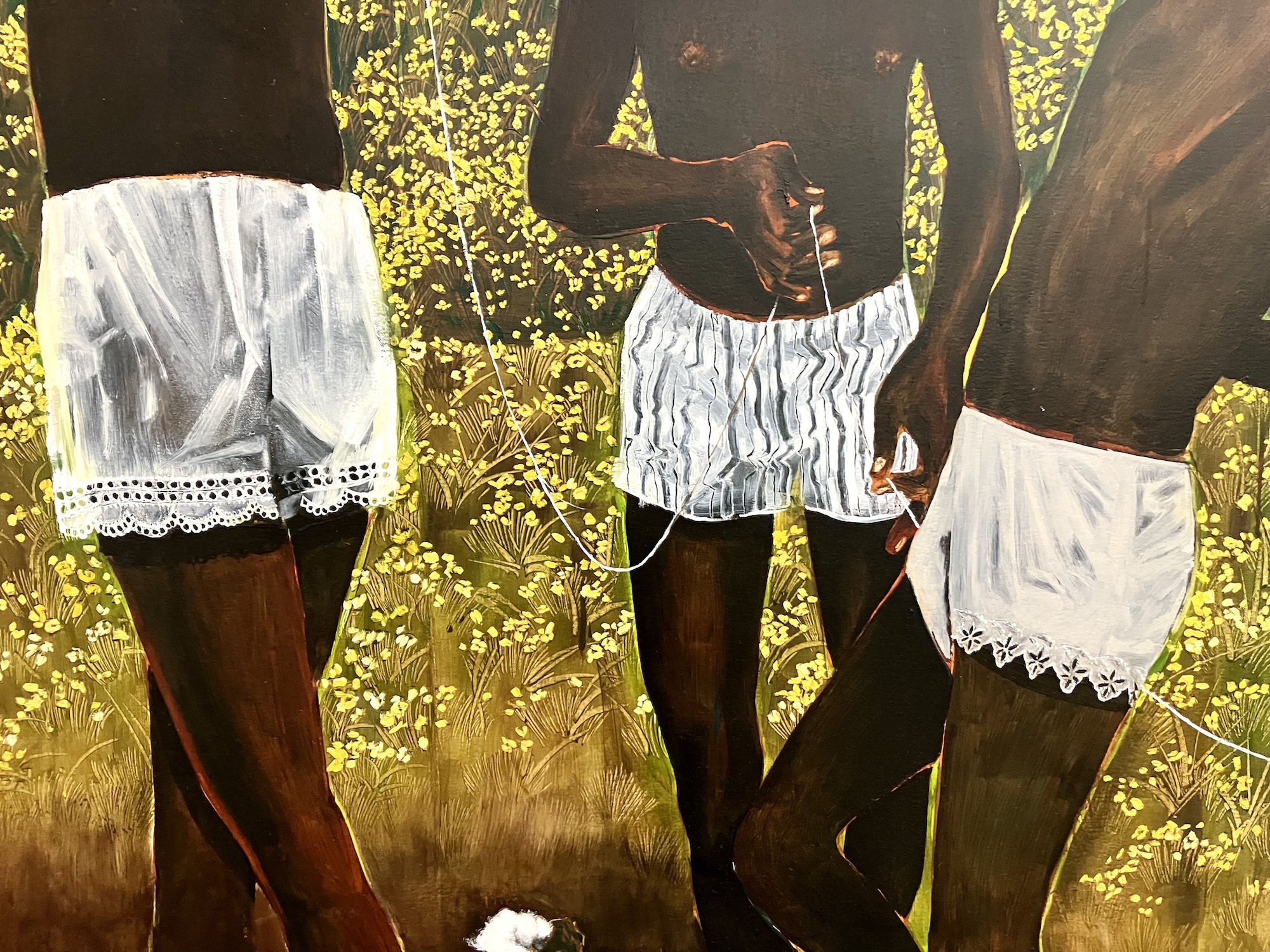
Each boy sports a pair, each bespoke, with its own detailing and delicate finishes. Inspired by a music video and song by Milton Nascimento, the painting Dança dos meninos (2021) by Antonio Obá — exhibited in his first European survey at the Centre d’Art Contemporain in Geneva — features Black Brazilian boys dancing on the land of Minas Gerais wearing luxurious underwear that resemble bloomers worn by pilgrims.
Today Brazil is the world’s second leading source of cotton, seemingly reprising the violent role it played in early 19th century slavery. In this case, the joy and resilience of the boys bridges Obá’s two main subject’s: colonial and contemporary Brazil and their subjugation of the Black body.
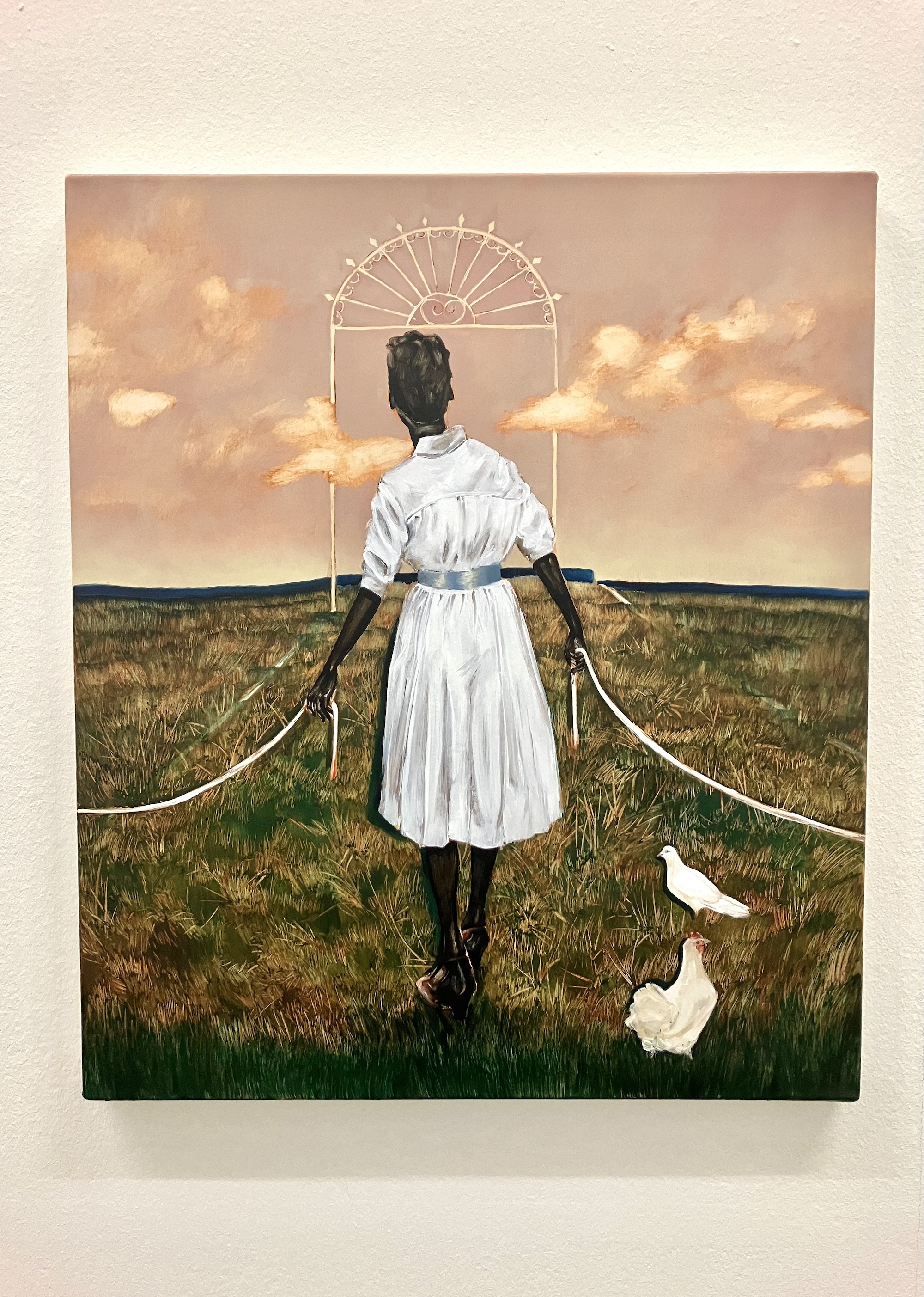
A smaller canvas portrays Algeria à cerca da fertilifade I (2024), a woman seen from behind who seems to be contemplating the horizon at dusk. It was created using an image originally from the 1950s. She clutches ropes in her hands as if having just untied a noose. The knot turns into a reign, over which she has full control. Guiding whomever is behind her she opens the passage to a path previously unexplored.
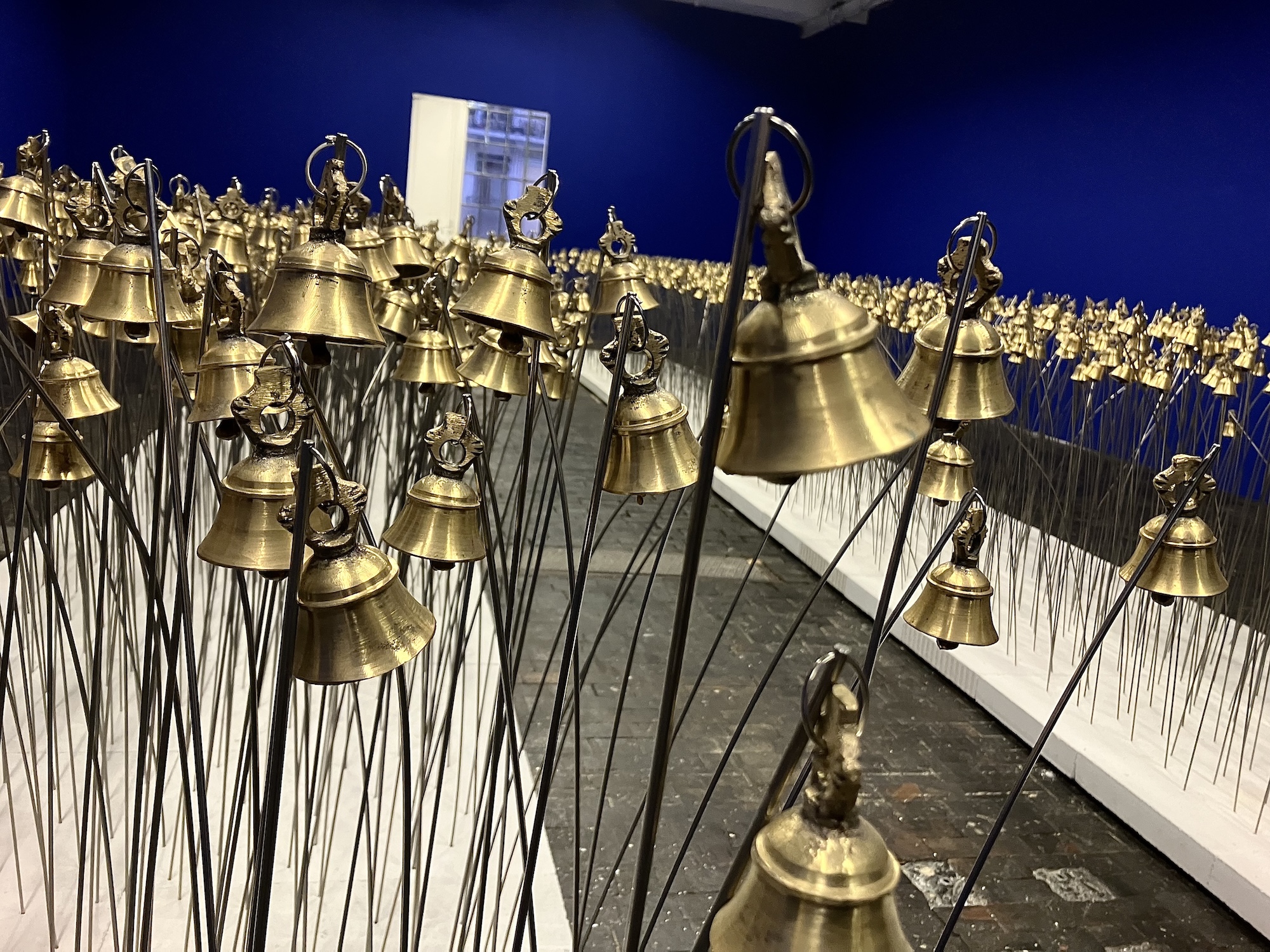
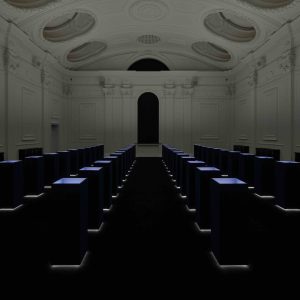
Employing large-scale installation, Jardim (2022), meaning ‘garden’ in Portuguese, invites visitors to follow a pathway through a dense assembly of brass bells. Visually striking on its own, passing through the ten metre corridor activates the environment, triggering a startlingly sound that pierces through the otherwise silent air of the gallery.
This interactive installation simulates both a hunting and hideout environment – the bells acting as bait which calls out to be touched. By succumbing to the irresistible invitation, we sound the alarm and give away our presence and location. The artist wants us to hunt and be hunted — underscoring the pent up energy inside the objects and the power of participation — whether that be as an aggressor or an observer.
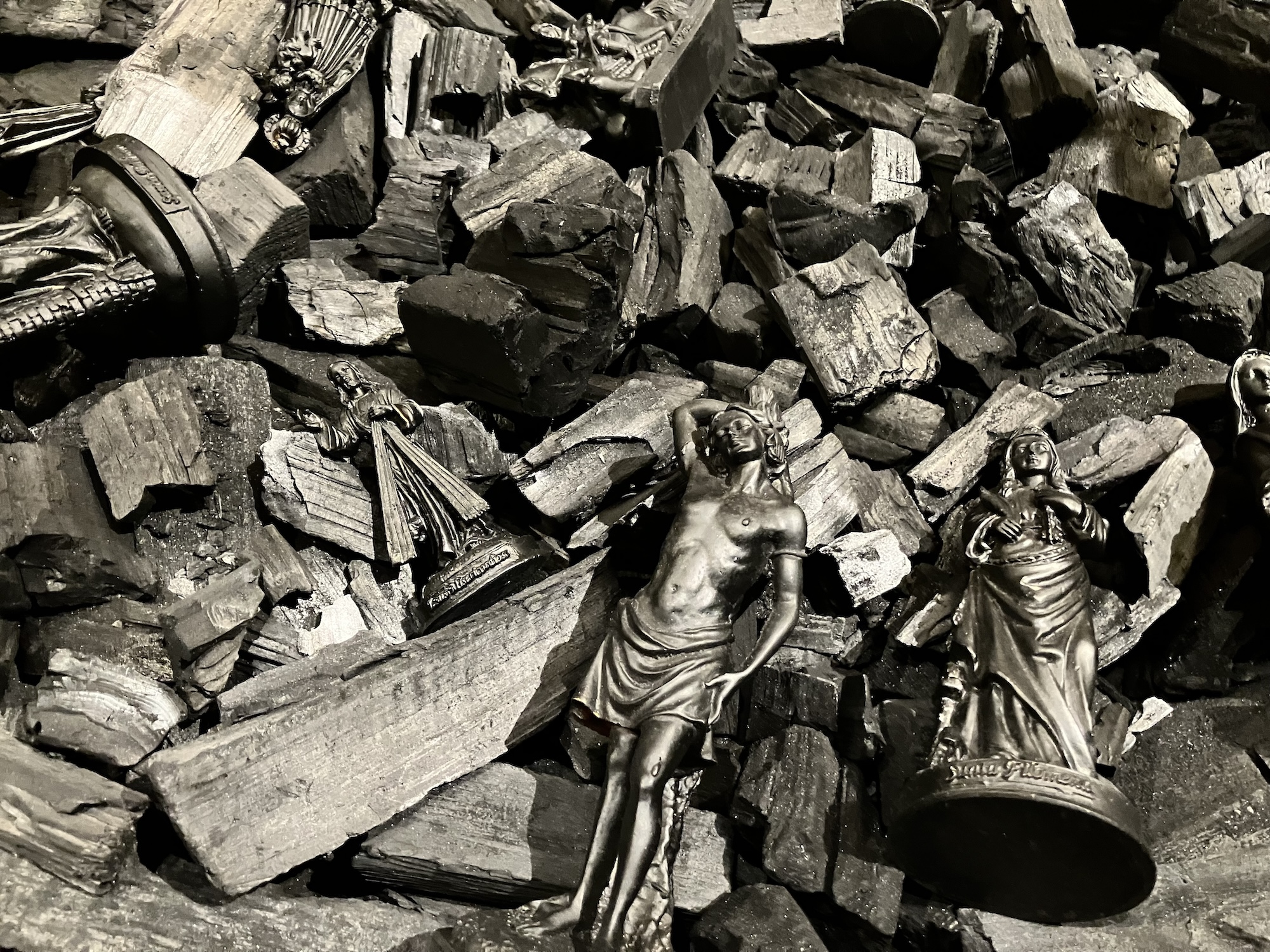
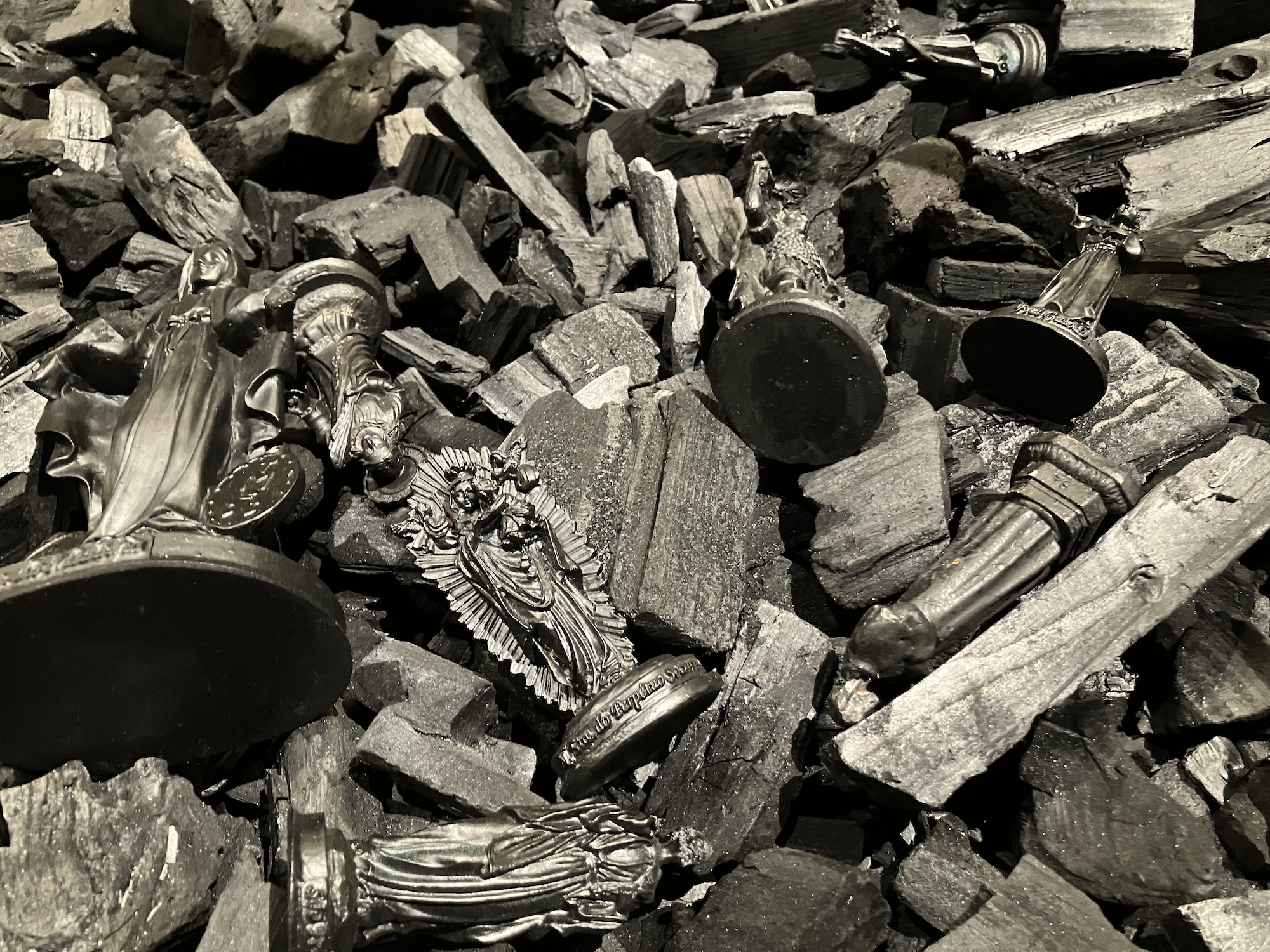
In another room, the floor is covered with statues of saints and Orishas mixed in with bits of charcoal: almost invisible unless you bend down and look closely. As part of a larger installation, these small components represent the artist’s subversion of Black erasure.
If not erased, in much of Brazilian art Black bodies have been deprioritised, dehumanised, and conveyed in positions of humiliation. Obá chooses instead to revive, revoke, and celebrate. He brings to contemporary Brazilian painting what he calls ‘an enquiry, a certain historical revisionism in the sense of an understanding, albeit brief, of a personal, national, human identity’.
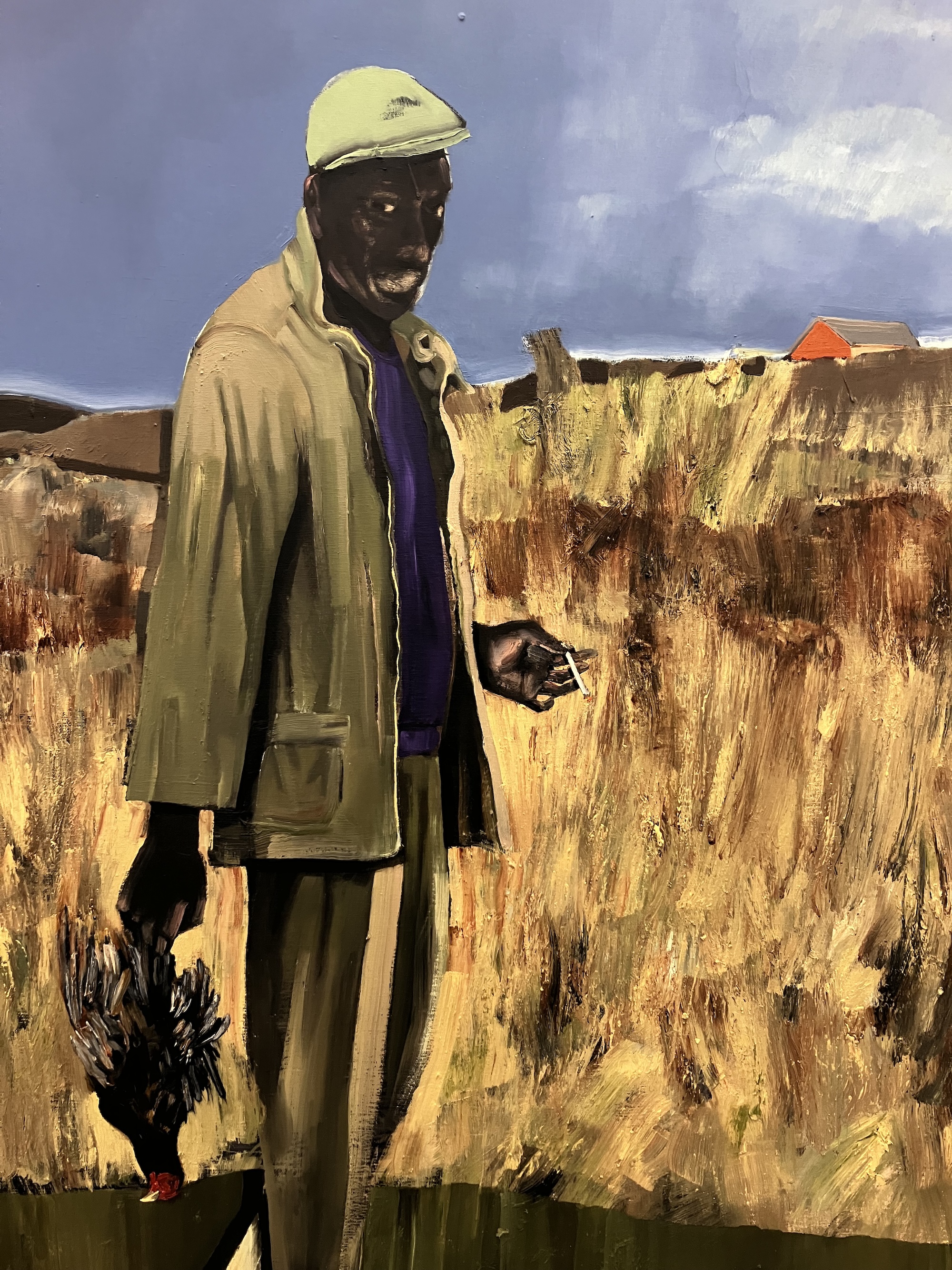
Working with images taken from archives, popular culture, and family albums, Obá’s work is a composite that he creates in order to close the narrative of each story or event; an endeavour to reclaim heritage within a societal framework that has diluted Black culture.
Encompassing painting, sculpture, photography, installation, performance, and video, Obá’s work confronts the brutality inflicted over centuries upon African-Brazilian traditions and communities through symbolic constructions and re-imagination. Playing with retroactive correction of historical representations, the work neither ignores nor mourns. It heals.
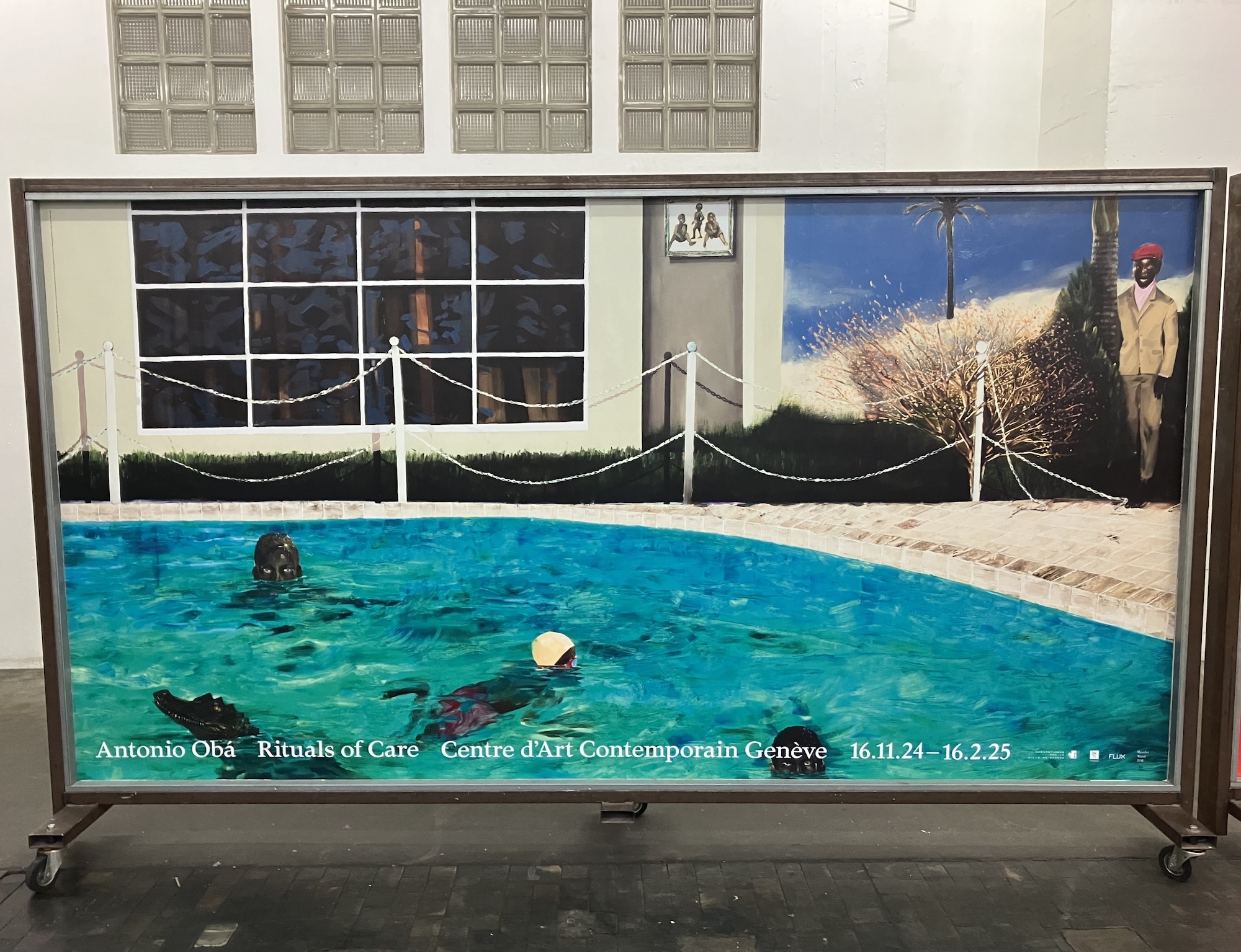
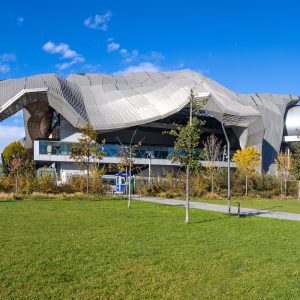
Antonio Obá, Rituals of Care –?16th February 2025, The Centre d’Art Contemporain