Serpentine to present The Call, the first UK solo exhibition of Berlin-based artists and musicians Holly Herndon and Mat Dryhurst, two of the most influential artists working with artificial intelligence today.
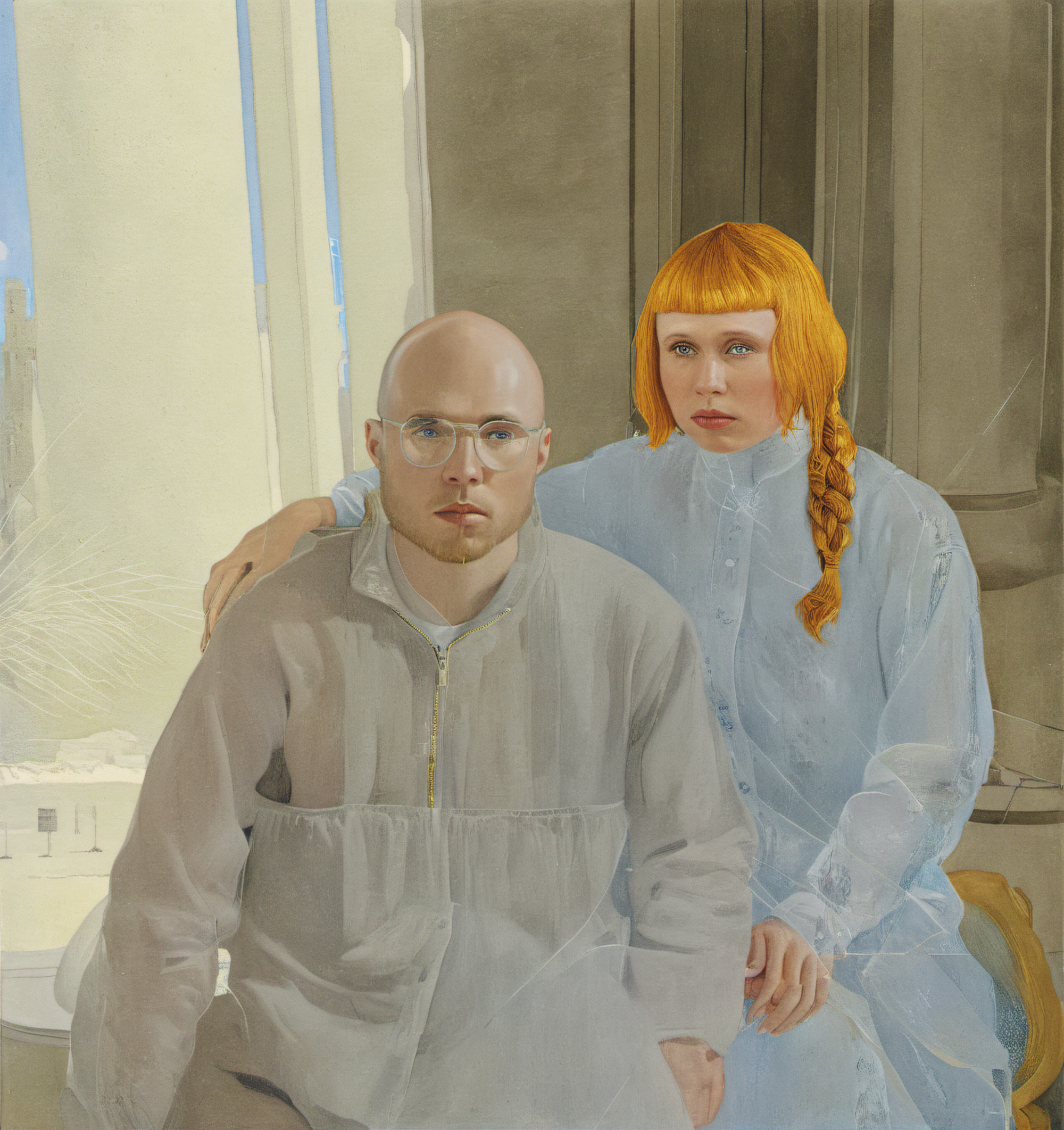
The exhibition will address current societal concerns with AI, and platform musical ensembles from across the UK in a participatory experience for the public.
The year of programmes dedicated to exploring how artists work with artificial intelligence culminates with Holly Herndon and Mat Dryhurst’s exhibition this Autumn. This year also marks the 10th anniversary of Serpentine Arts Technologies programme. The Call is an audio-visual installation that merges poetry, music, and collective responses from audiences in ways that test the creative limits of machine learning models and data training. The role of art is to make the invisible visible and Herndon and Dryhurst represent a bridge to a future horizon where artists retain a seat at the table and where critical technological conversations shape the future of society.
Bettina Korek, CEO, Serpentine, and Hans Ulrich Obrist, Artistic Director, Serpentine,
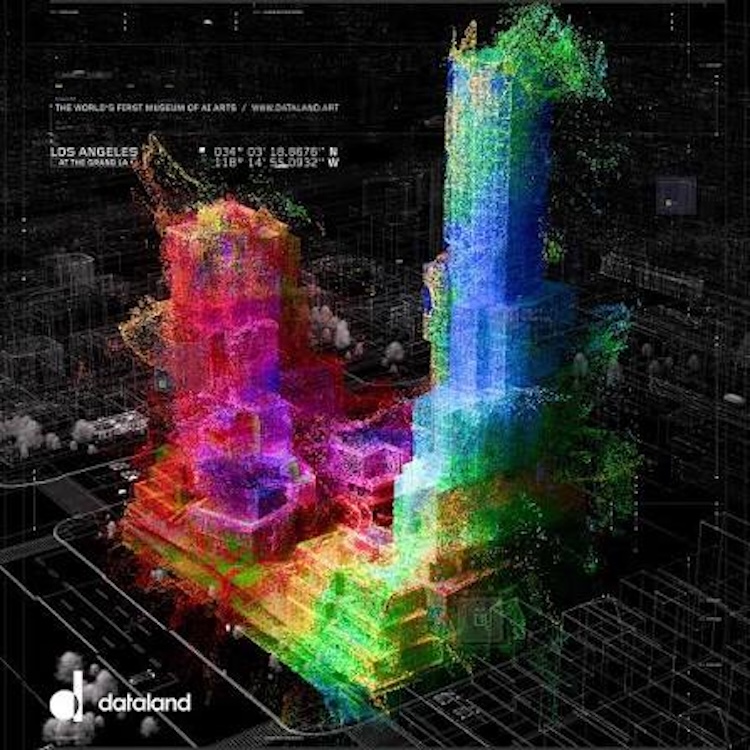
Serpentine Arts Technologies’ commitment to understanding the ways in which artists interrogate and experiment with AI systems has been integral since the department’s inception in 2014. Major AI projects that have emerged from the programme include Cécile B Evans (2014-2019), Ian Cheng (2018), James Bridle (2016 – 2021), Jenna Sutela (2019), Pierre Huyghe (2018 – 2019), Hito Steyerl (2019), Daisy Ginsberg (2022 – 2024) and Refik Anadol (2024). All these pioneering projects have bridged the virtual with the physical worlds.
Centred on the collective creation of new vocal datasets, governance frameworks and polyphonic AI models, The Call positions the process of data collection and AI model-training as artmaking. This results in an experience of human and machine voices in which the audience becomes entwined with, and at times part of, the choir.
For Herndon and Dryhurst, AI is to be approached as a ‘coordination technology’. For millennia, group singing and its associated techniques, such as call and response, have been rituals for mass communication, enabling us to build spaces and structures for gathering, processing, transmitting information, and creating meaning in social and civic life.
Navigating today’s AI systems requires similar coordination. A central component of the exhibition are newly commissioned choral AI models trained in collaboration with choirs throughout the UK. To train the AI models, Herndon and Dryhurst composed a songbook of hymns and singing exercises which were sung by fifteen ensembles and captured by a multi-channel recording protocol as part of a choral dataset tour in Spring 2024, from Belfast to Leeds, from Bristol to Beith, and many other cities.
The Call will both show how AI can enhance the power and artistry of the voice, and envisage new cultural, legal, and technical methods necessary to build AI systems collaboratively and ethically.
With The Call, we’re offering a beautiful way to make AI. We’re thinking of the creation of the data, the training of the model, and its output all as works of art.
Holly Herndon
It’s pretty special that a public arts institution would facilitate research and participation in bleeding edge AI.
Mat Dryhurst
The Call will also feature a new installation designed by sub, the architecture studio led by Niklas Bildstein Zaar best known as the talent behind the Balenciaga Architecture Programme. Its form and function, designed by the artists and sub, conceptualise these processes as new rituals for training AI.
The exhibition will feature new sound work composed with the resulting AI models presented as a spatial audio installation alongside field recordings of the UK choral dataset as an immersive experience. Visitors will have an opportunity to interact with the models, becoming part of the choir and encountering a new series of objects that represent the AI training processes.
A chandelier-like object featured in the South Powder Room will represent the recording protocol and allow visitors to listen to the configured audio from the dataset. In another room, visitors can demo one of the models hearing their own inputs returned as choral harmonies.
In the main exterior loop of the gallery, a new instrument, part organ, part GPU fan, will take its shape from the layers of neural network architecture.
Herndon and Dryhurst have been associated with Serpentine’s Future Art Ecosystems (FAE) since 2020, contributing to its first ever report on Art x Advanced Techologies. Now part of an expanded programme that researches, prototypes and builds the cultural infrastructure required to support art and advanced technologies for the public good, a collaboration with the Centre for Data Futures at King’s College London and RadicalxChange provided the legal and stewardship infrastructure to allow for contributing choristers to be part of an experimental Data Trust that distributes power between those included in the dataset and those who use it.
HOLLY HERNDON AND MAT DRYHURST THE CALL 4th October – 2nd February 2025
Serpentine North
Participating choirs:
Blackburn People’s Choir, Blackburn, England
Carnoustie Choir, Carnoustie, Scotland
Cunninghame Choir, Beith, Scotland
The Fitzhardinge Consort, Bristol, England
The Fourth Choir, London, England
HIVE Choir, Belfast, Northern Ireland
Leeds Vocal Movement, Leeds, England
London Contemporary Voices, London, England
Musarc, London, England
New London Chamber Choir, London, England
Open Arts Community Choir, Belfast, Northern Ireland
Ordsall Acappella Singers, Salford, England
Ravenswood Singers, Newcastle, England
South Lakes A Cappella, Windermere, England
Spectrum Singers, Penarth, Wales
The Call is an exhibition and project commissioned and produced by Serpentine Arts Technologies, led by Kay Watson, Head of Arts Technologies. This project is curated and led by Eva Jäger, Arts Technologies Curator and Creative AI Lead, with Ruth Waters, Arts Technologies Producer; R&D by Serpentine’s Future Art Ecosystems project led by Victoria Ivanova, R&D Strategic Lead.
About Holly Herndon and Mat Dryhurst
Known for their pioneering work in music, machine learning, and ‘protocol development,’ Berlin-based artists Holly Herndon (US) and Mat Dryhurst’s (UK) expansive practice has led to precedent-setting projects where the technical systems that underwrite creative output are artworks unto themselves. Holly+ (2021), an AI clone of Herndon’s voice which can be used by anyone, has acted as a counter narrative to AI extractivism, offering artists a way forward in the wake of generative AI. Herndon and Dryhurst’s critically acclaimed musical works including Platform (2015) and PROTO (2019), released through 4AD, have toured major venues like Barbican, London and Volkbühne, Berlin. Their image making practice including NFT series Infinite Images (2021/22) and Classified (2021) were among the earliest experiments with embeddings in foundational image models. Herndon and Dryhurst most recently exhibited at the 2024 Whitney Biennial, presenting xHairyMutantx (2024), an interactive text-to-image model.
Since 2021, Herndon and Dryhurst have hosted the Interdependence podcast where they share their ongoing conversations with a network of artists and technologists working with music, AI and crypto. In 2022, the duo co-founded Spawning, an organisation building a consent layer for AI, including tools for artists such as haveibeentrained.com, Kudurru and Source.Plus.
This year Herndon and Dryhust were named ‘100 most influential voices in AI’ by TIME Magazine and received the first-ever Digital Human Rights Award from the Austrian Foreign Minister for their work on data empowerment. They have been included in ArtReview’s Power 100 list since 2021.
Holly Herndon is a fellow at Berlin Artistic Research Programme 2024/25.