Most national coins feature serious faces, stern rulers, solemn statesmen, or allegorical figures who look like they’ve never cracked a smile. Switzerland went another direction. Its classic gold coin shows a young woman with braided hair, framed by snowy mountain peaks.
She looks less like a monument and more like someone from a village down the valley. That warmth is a big part of her charm. People across Switzerland grew so fond of her that they gave her a nickname, and it stuck for generations.
Today, she’s among the most recognizable faces in European gold coinage. Her portrait blends national pride, Alpine scenery, and a touch of romance, and the coin carrying it has traveled far beyond Swiss borders. Her backstory is just as appealing as her expression.
Who Is the Woman Known as Vreneli?
Officially, she represents Helvetia, the female figure who personifies Switzerland, much as Lady Liberty does for the United States. Designer Fritz Landry gave Helvetia a youthful, approachable look, complete with braids and a garland of edelweiss, rather than a stiff classical pose.
The Swiss public quickly took her to heart and started calling her Vreneli, an affectionate Swiss German form of the name Verena. Accounts differ over who modeled for the portrait, and that bit of mystery has only added to her appeal.
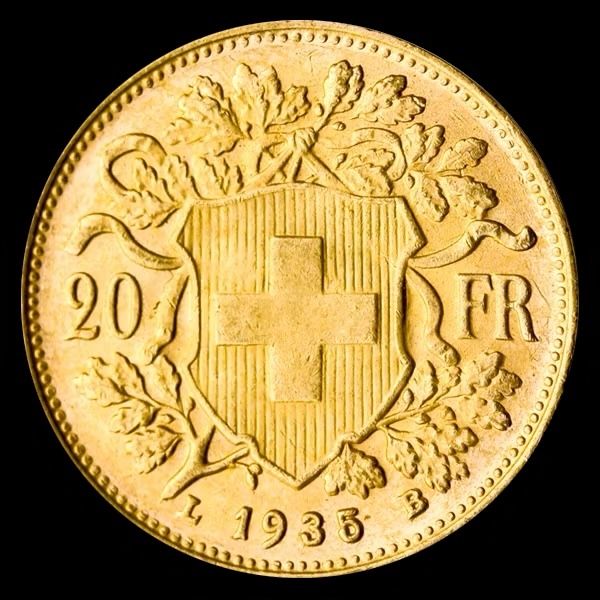
The Swiss gold 20 franc piece became so closely tied to the nickname that many people simply call the coin a Vreneli. Its reverse carries a Swiss cross on a shield with an oak branch, the denomination, and the date, keeping things clean and dignified.
Why the Swiss Alps Became Part of the Coin’s Identity
The mountains behind Vreneli aren’t just scenery. The Alps have shaped Swiss life for centuries, isolating valleys, defining trade routes, and fostering a tough, independent spirit. Putting them on the national gold coin was a quiet statement about who the Swiss are.
That rugged terrain also connects to the country’s long tradition of independence and neutrality. Steep peaks made Switzerland hard to conquer and easy to defend, and placing Helvetia before those slopes suggests a nation rooted firmly in its own ground.
Her braids and edelweiss add another layer. Edelweiss grows high in the mountains and has long been a beloved symbol of the Alps. Paired with a traditional hairstyle, those details give the coin a homegrown feel instead of borrowed classical grandeur.
How a Small Country Built an International Reputation Around Gold
Switzerland helped found the Latin Monetary Union in 1865, an arrangement with France, Belgium, and Italy that standardized gold and silver coins. A Swiss 20-franc piece matched the weight and fineness of its French counterpart, so it was accepted widely across member countries.
That compatibility made the Vreneli a practical coin for travel and trade, not just a domestic token. It circulated during a period when gold coins were ordinary money across much of Europe, long before paper and digital payments took over.
Over time, Switzerland’s reputation for stable money and careful banking grew alongside its coinage. The Vreneli fit that image perfectly, a sound, precisely made coin from a country known for reliability, and that association still shapes how people see Swiss gold.
The Journey From Everyday Currency to Historical Gold Coin
Regular production of the Vreneli ran from 1897 to 1936. Each coin weighs 6.45 grams and is 90% gold, holding a little under a fifth of an ounce of pure gold. Its original job was simple, serving as everyday money in Swiss pockets.
Gold coins faded from daily use as the twentieth century unfolded, but the Vreneli wasn’t finished. Switzerland struck additional coins in the 1940s, including restrikes bearing an earlier date, and these were used largely as a store of value.
Collectors today pay attention to dates, mintages, and condition, since some years are far scarcer than others. Plenty of buyers simply appreciate a small, recognizable gold coin with a great story, which helps explain the Vreneli’s popularity well outside Switzerland.
Conclusion
The Vreneli shows how much personality can fit on a small gold coin. Her braids, edelweiss, and mountain backdrop turned a symbol of the nation into someone people felt they knew, which is why her nickname has outlasted generations of everyday use.
Behind that friendly face sits a serious history of Alpine independence, European monetary cooperation, and a country that built a reputation for dependable money. The coin carried all of that across borders during an era when gold still served as ordinary currency.
Today, it’s a little piece of Switzerland that travels easily and tells its story well. Between the artistry, the history, and the lasting appeal of gold, it’s no surprise the mountain girl still wins admirers far from home.