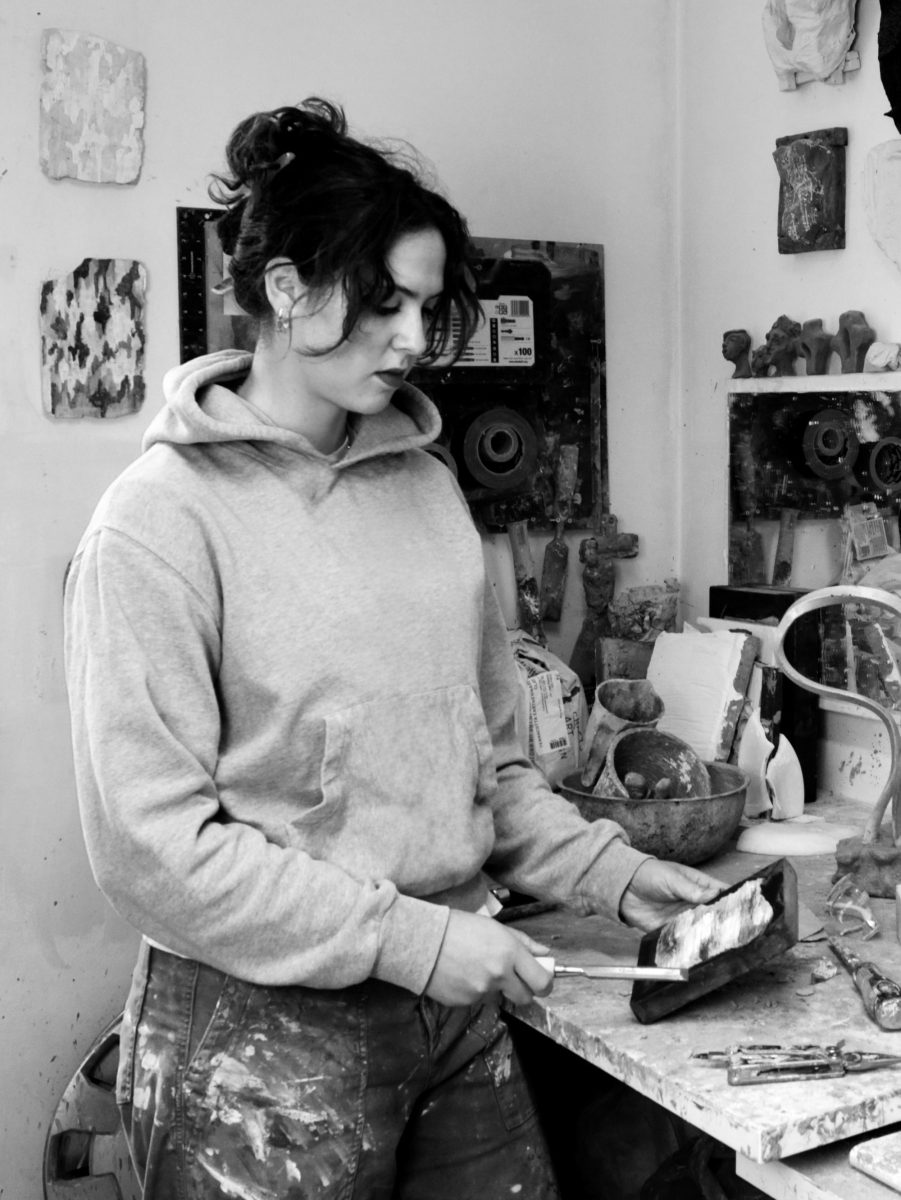
Tabish Khan sits down with Ashley Cluer to talk about making the world’s first evoZero sculpture for this year’s Clerkenwell Design Week, and her wider practice.
Tell us about your practice and how you came to make sculptures primarily from industrial materials, such as cement, plaster, and timber.
Growing up in London, I was surrounded by industrial materials, things that are overlooked, considered ugly or without value. I think I identified with that. I’ve always felt a bit outside of things, didn’t really fit in at school, and still find it hard. I’m also stubborn, and I think those feelings found their release in sculpture. Sculptures that shouldn’t work, made from materials excluded from canonical tradition or respect. They’re unconventional, but imbued with excitement and charged with potential because they shouldn’t exist, but I’ve somehow willed them into being. I’ve always liked making things and working with my hands.
There’s also something that comes from art school. We’re so often told to make things a certain way, and because of the power dynamic with tutors, we feel we can’t question it. Part of what drives me is a desire to challenge convention and encourage others to think differently. That same spirit of kinship is actually what led to my commission for Heidelberg.
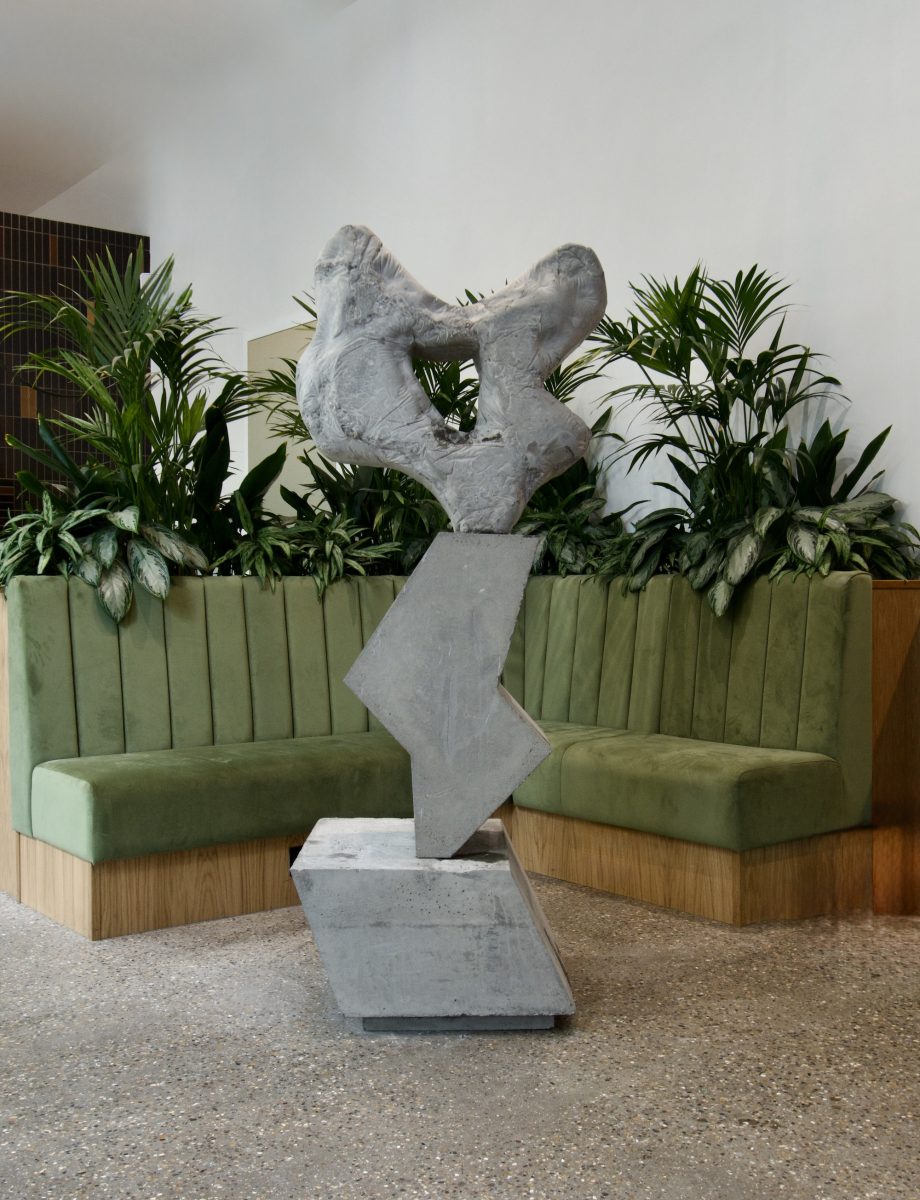
How did your collaboration to make a sculpture out of evoZero – the world’s first near-zero carbon captured cement – come about?
It’s clear to my friends and family, and I suppose now some of the art world, that I’m a little obsessed with cement. It’s a remarkable material; it has supported the infrastructure of human life for centuries, essential and yet often taken for granted. It also has some well-documented issues, which is why reading about Heidelberg Materials and their evoZero product last year caught my attention.
This is what Heidelberg Materials has to say about it: ‘We’re taking the lead in the decarbonisation of our sector. With our Carbon Capture and Storage (CCS) project, we’re pioneering carbon capture and storage in our industry at scale. Our new evoZero range makes us the first company in the world to offer carbon-captured near-zero cement through the application of CCS technology in Brevik, Norway – and without using offsetting with credits generated outside our value chain.’
In short, near-zero means exactly that: cement produced with carbon capture technology at source, not offset elsewhere. It’s genuinely pioneering. They were going against the grain of their entire industry and putting enormous resources into making something better. I reached out to learn more and to see if I could get my hands on some. About a year later, they commissioned me to make the world’s first evoZero Sculpture.
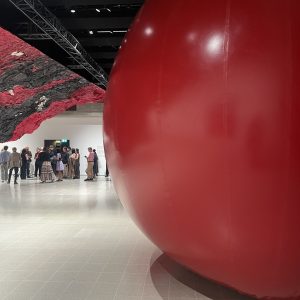
The support and enthusiasm from their whole team were inspiring. To have the opportunity to make something so cutting-edge and, quite frankly, massive and heavy was phenomenal. The work was commissioned specifically for Clerkenwell Design Week 2026, to help bring a broader audience into understanding the range of applications for cement and why evoZero is the superior choice. So it felt right to design something that is ‘A Conversation Starter’. The material does the talking, but the form is bizarre. It shouldn’t stand, and yet it does. I want people to think how on earth a young woman has made this?
From concept to execution, Heidelberg facilitated this dream. From the technical support of using a cement truck on-site at their King’s Cross facility to fill the moulds to their technical team at Battersea showing me different variations of mixes in their test lab. Sarah, Dr James Branch and the whole team were so knowledgeable, and I’ve learned an enormous amount. Heidelberg has since acquired the sculpture for their permanent collection. It is currently on show at Techspace, 140 Goswell Road, until the end of June, before moving to its permanent home at one of their London sites.
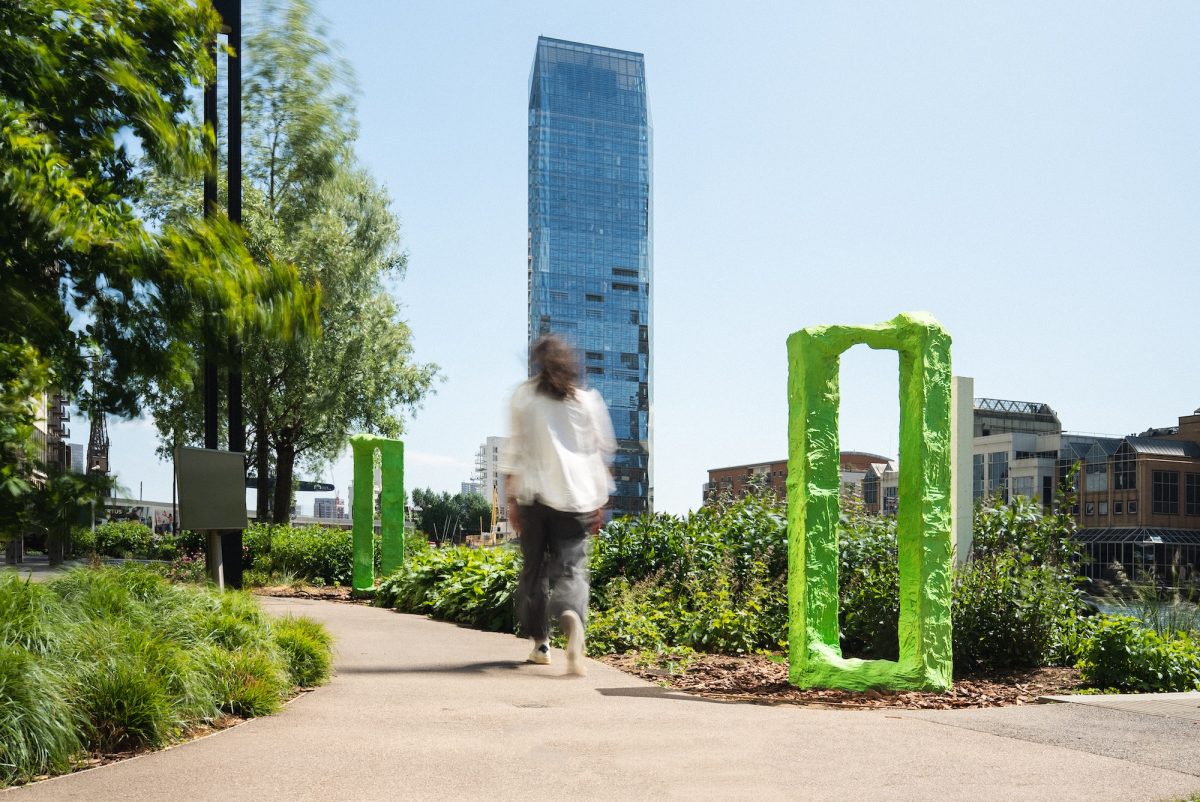
You also have a public work in Canary Wharf. What can you tell us about that work?
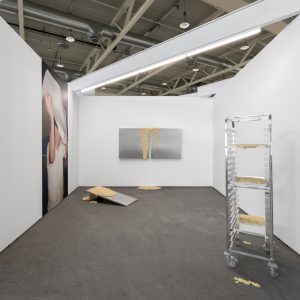
An Ode to Never Fitting In was acquired by the Canary Wharf Estate in 2024 and has been permanently displayed in Harbour Quay Gardens since that October. Again, huge thanks are owed to The Koppel Project and Canary Wharf for making that possible.
The works are also made of cement, but are totally different in their aesthetics. I painted them bright green to at once fit in with the park landscape but also, strangely, stand out. That tension is very much in keeping with my practice and the concepts I’m constantly investigating.
The works are like portals. They ask for interaction, sometimes a little too much! But that’s the point. They’re designed to stand out in a way that might allow others to feel comfortable existing outside of convention, too.
I love public work. It’s right there; you have to engage with it. Especially in the current climate, with arts funding being cut so drastically, accessibility feels more important than ever. Public sculpture is one of the most direct ways to re-engage people with the importance and power of art in everyday life. What a boring world it would be without it.
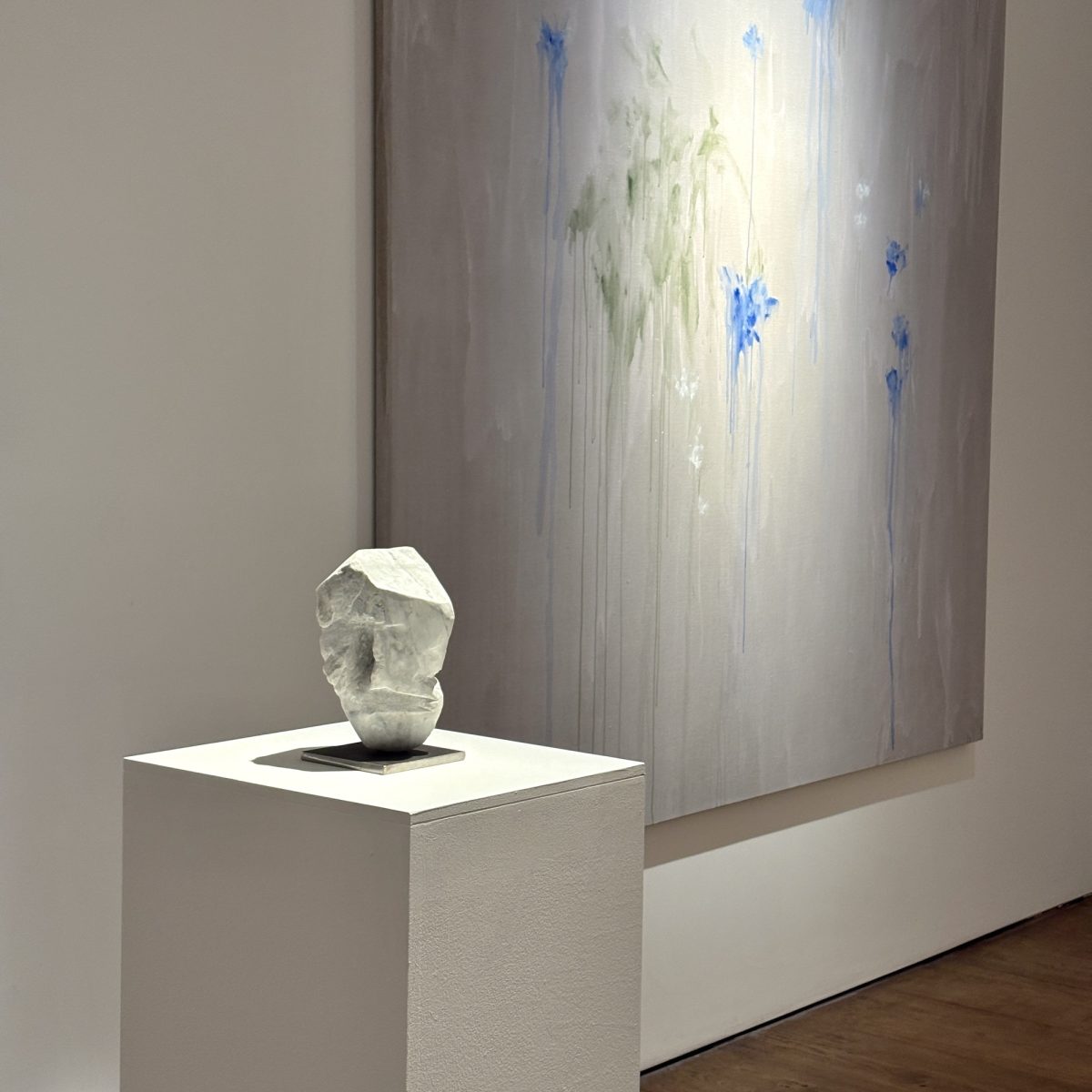
What message, if any, do you want people to take away from your sculptures?
Think, challenge, adapt, learn and be determined. If you want to make something, just do it. Play, get it wrong, keep asking questions, keep developing. Work with others. Collaboration is great for creativity — that was my biggest takeaway from working with Heidelberg.
What do you have coming up next?
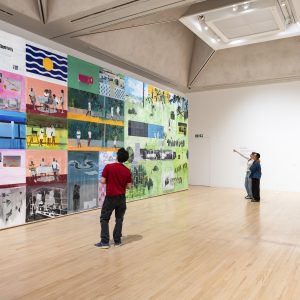
From June, I’ll be showing a Carrara marble sculpture downstairs at Flowers Gallery on Cork Street. It’s my first marble sculpture, carved during a residency in Italy last December, which makes it a real milestone. Flowers was also the first London gallery I ever showed work at, so bringing this particular piece there feels like a full-circle moment. I couldn’t have imagined a better fit. I’m really excited for people to see it.
All images are copyrighted and courtesy of Ashley Cluer. The second image is of the EvoZero sculpture, the third is of her work at Canary Wharf, and the fourth is of her work at Flowers Gallery.