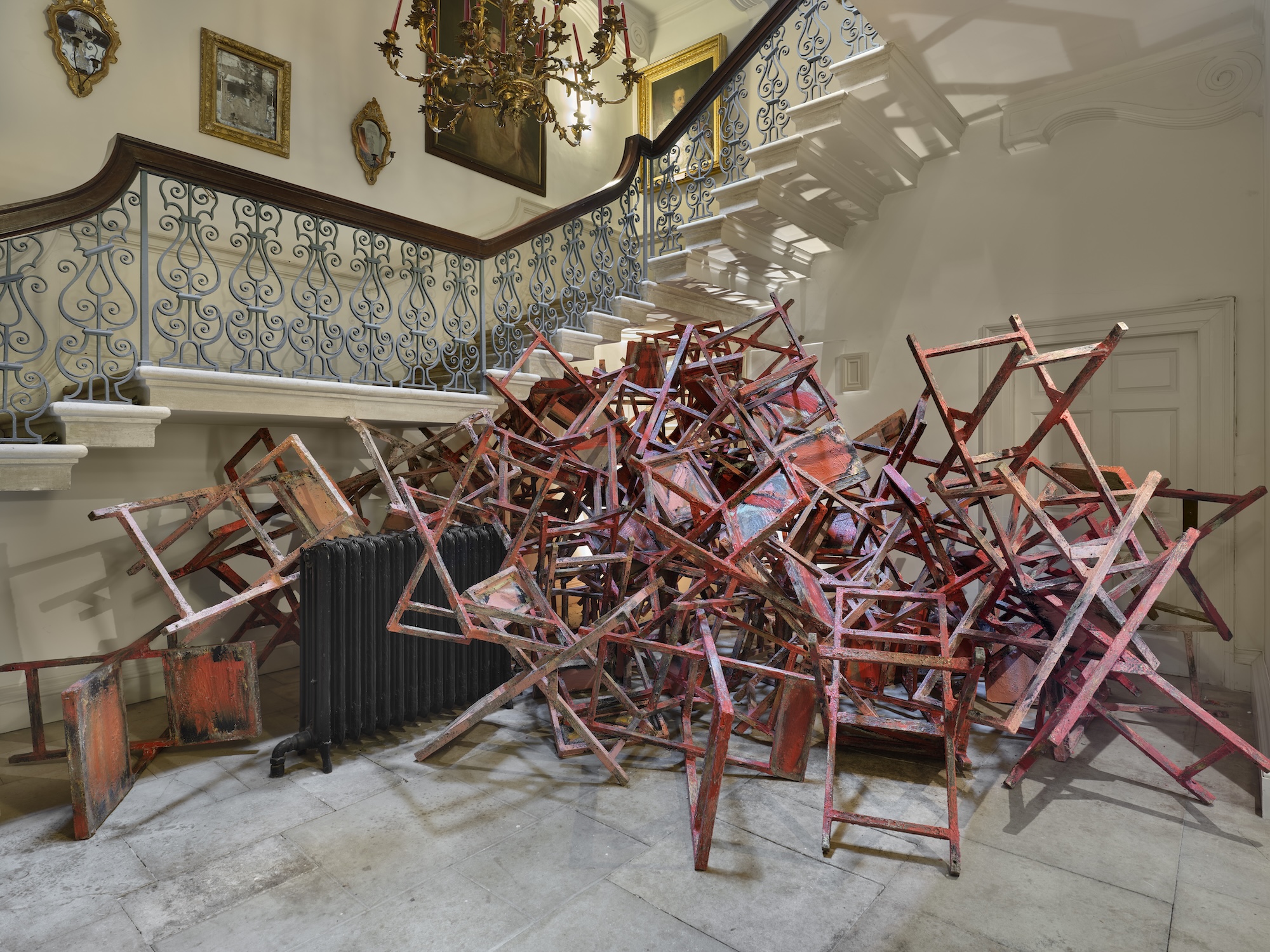
A stack of chairs inside a stately home may not feel that amiss if they were neatly stacked to the side after a major event. However, you won’t find that in Wolterton in Norfolk, where a jumbled mass of red chairs is placed in the hallway. It’s blocking access to a door, and it feels as though a sharp nudge could send the whole pile tumbling. It’s a work by the late Phyllida Barlow for the second set of exhibitions at Wolterton, which also includes the works of artist Daisy Parris.
Wolterton is very much the new kid on the block when it comes to art in Norfolk stately homes, with nearby Houghton Hall hosting a strong programme of contemporary art for over a decade. In fact, the two halls originally belonged to brothers Horatio and Robert Walpole, the latter of whom was Great Britain’s first Prime Minister. Wolterton’s debut exhibition paired the works of Maggi Hambling and Ro Robertson, and this is only their second set of exhibitions.
The installation of chairs fits in with Barlow’s style of sculptures that look ready to topple and are out of balance, making us nervous about getting close, as the vibration of our footsteps may disturb them, or, in the case of her large sculpture on the grounds, topple it.
Barlow’s installation also subverts what we expect from the setting of a stately home, that everything will be neatly ordered, nothing out of place. It’s why I’ve always found Barlow’s works perfectly suited for grand venues, such as her Duveen Galleries installation at Tate Britain in 2014, and here at Wolterton.
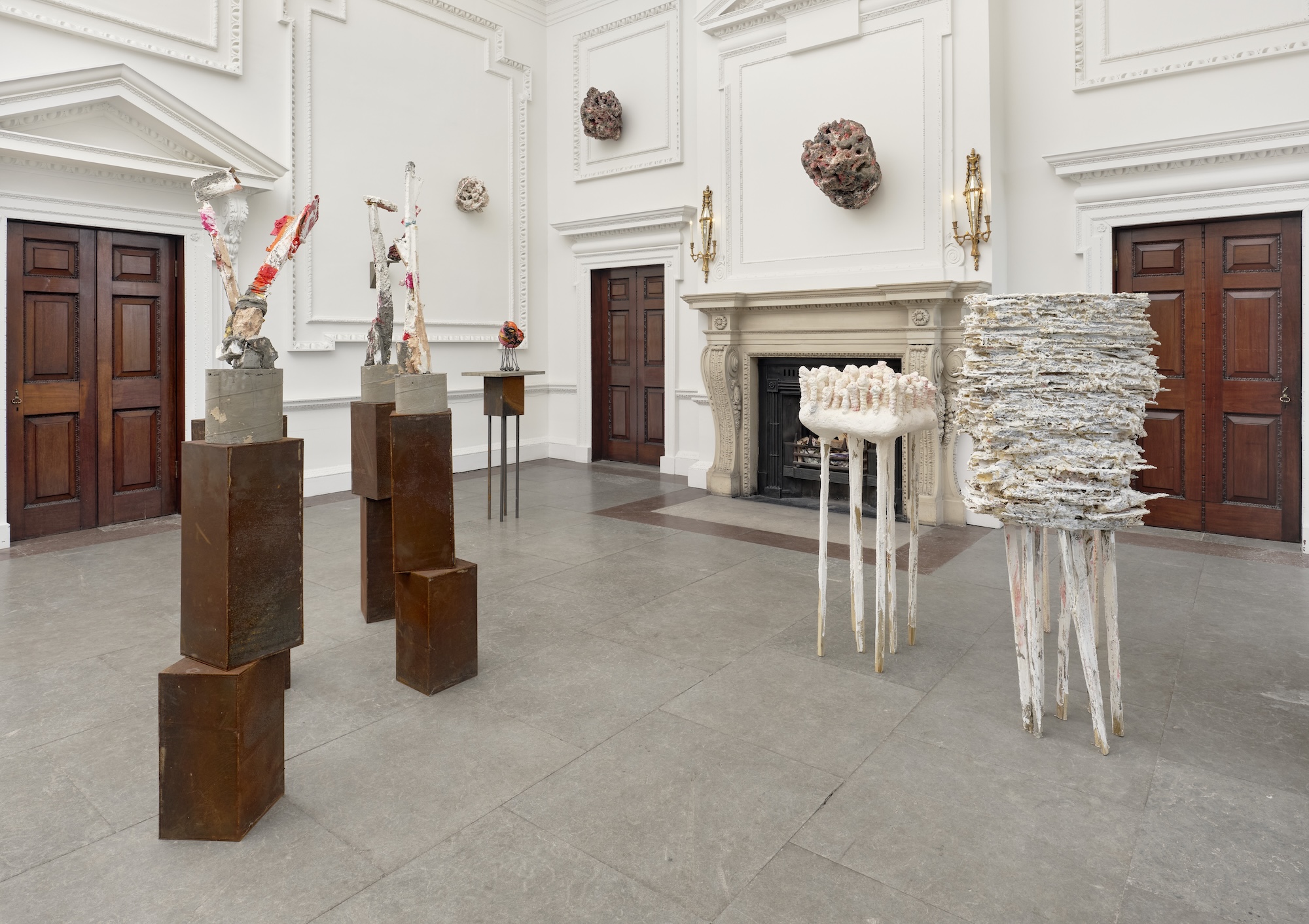
Upstairs in the marble hall is an assortment of sculptures, on plinths and hanging off the walls. It’s like the artist has assembled a cast of characters, some slender, others bulbous, some teetering on the edge, others rigid. If we can imagine this room as hosting a reception, each of these works brings its own personality to the milieu.
It also feels like they poke fun at the usual trappings you may find in such a home. Where we would find trophy animal heads from hunts, we now have rounded sculptures, the plinths that would have a classical bust have a far more rickety assemblage in their place.
The last section is devoted to works on paper, and normally I’m not a fan of works on paper by sculptors — they can feel like a marginal part of the practice. Here, though, the hang transforms them; they are displayed in a salon-style hanging directly on the raw walls in a room with no wallpaper or silk hangings. It gives the set-up an artist’s studio vibe, and the way they are hung works well for this specific room.
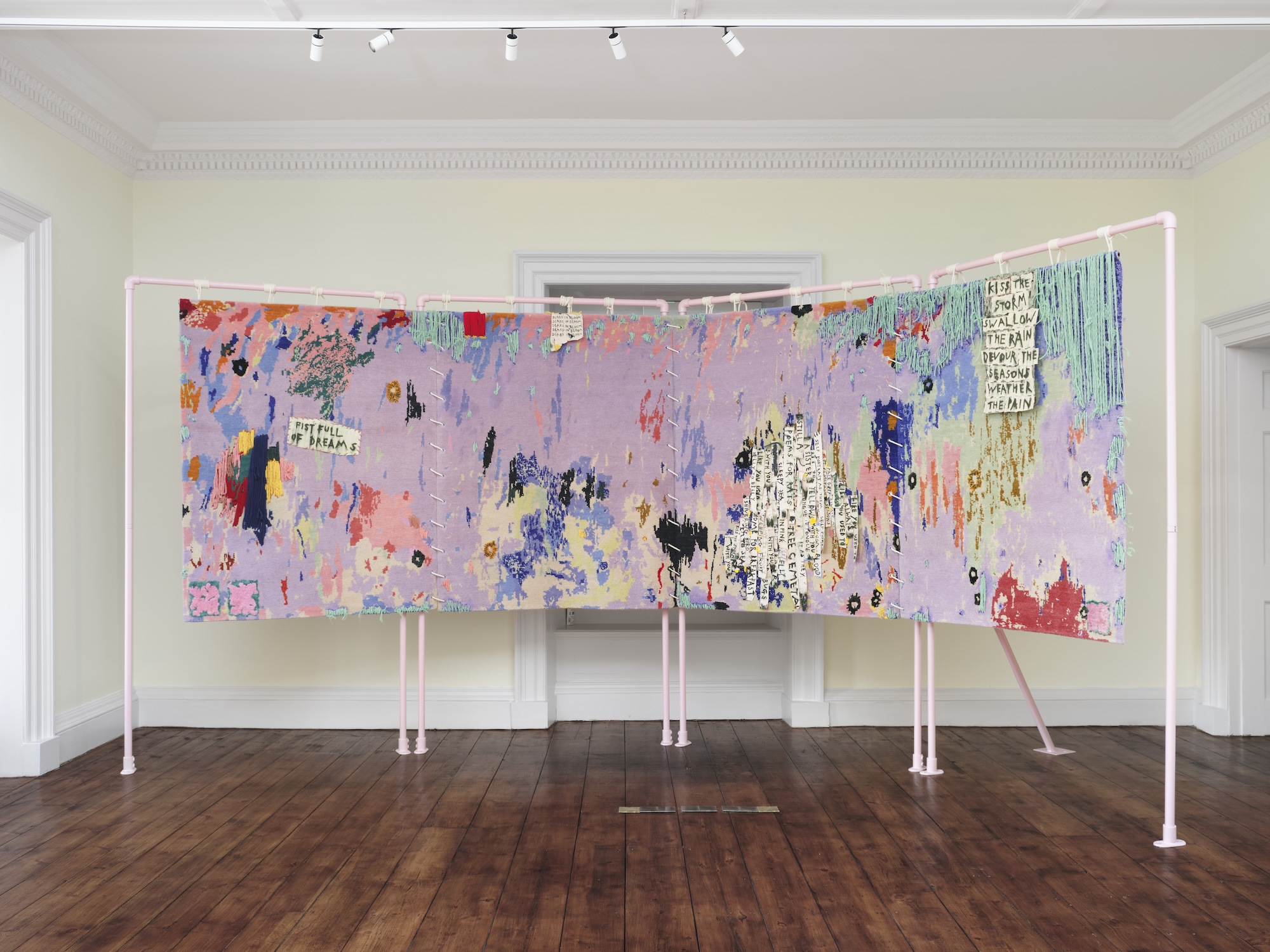
Alongside Barlow’s works are those of young painter Daisy Parris. Parris is best known for their abstract paintings, but this one-room display is dominated by a multi-panel textile piece. The work links to, and is inspired by, the landscape outside, and it’s great that we can catch glimpses of it through the windows. This link is made clear from the poetry stitched into the largest work: “Kiss the storm, swallow the rain, devour the seasons, weather the pain”.
Emotional vulnerability connects to the climate through these works and, for me, reflects on how the weather can alter our mood. It’s my first time seeing Parris’ textile work, and it’s a direction I’d like the work to follow, given how it ties into the history of labour in textiles.
This was my first visit to Wolterton, and given the quality of the exhibition, I’m keen to see what next year’s programme brings.
Wolterton Arts & Culture programme 2026: Phyllida Barlow and Daisy Parris is on until 31st October.
Entrance is free and ticketed.
First two images: Photo: Eva Herzog. Courtesy of Wolterton. © Phyllida Barlow Estate. Final image: Photo: Eva Herzog. Courtesy of Wolterton. © Daisy Parris / Sim Smith