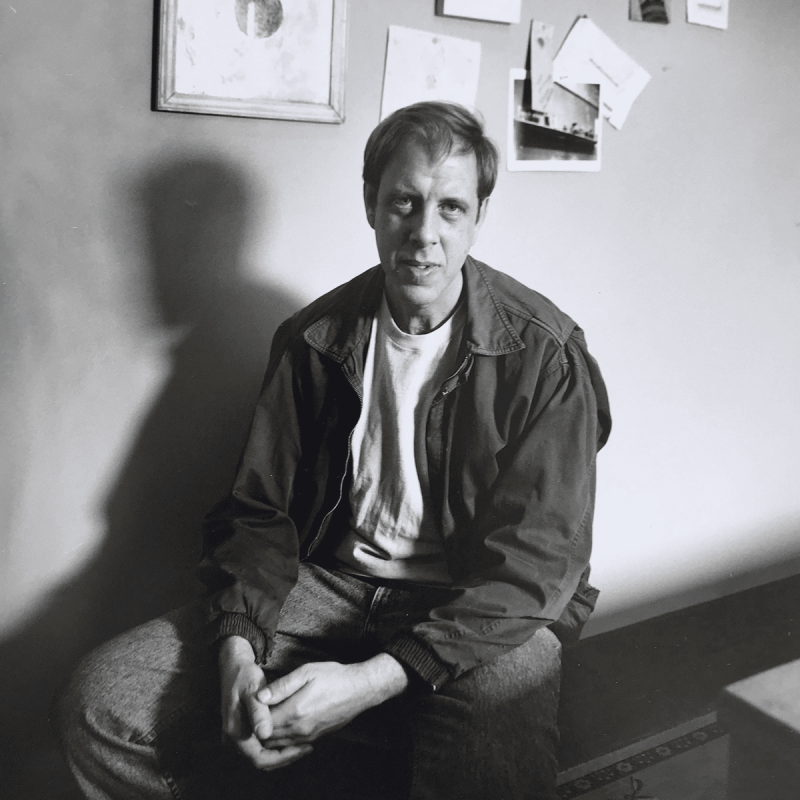
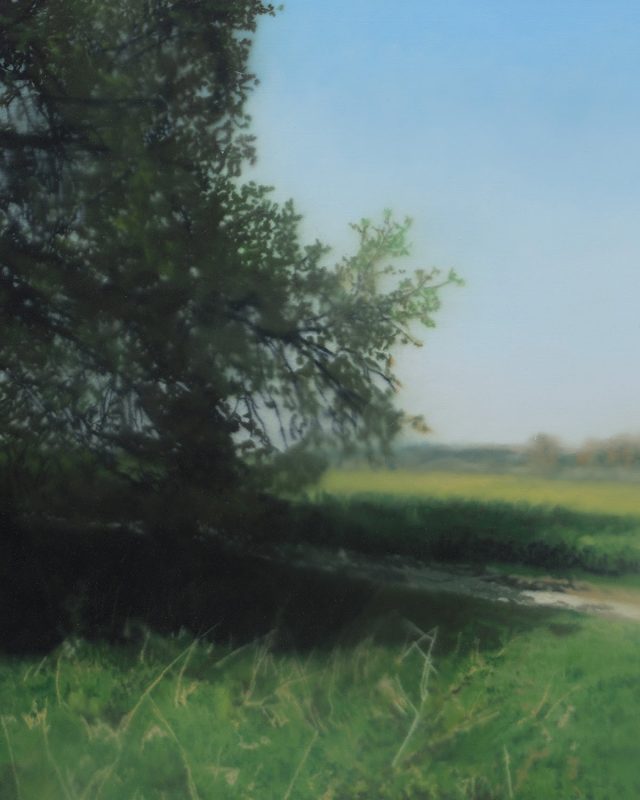
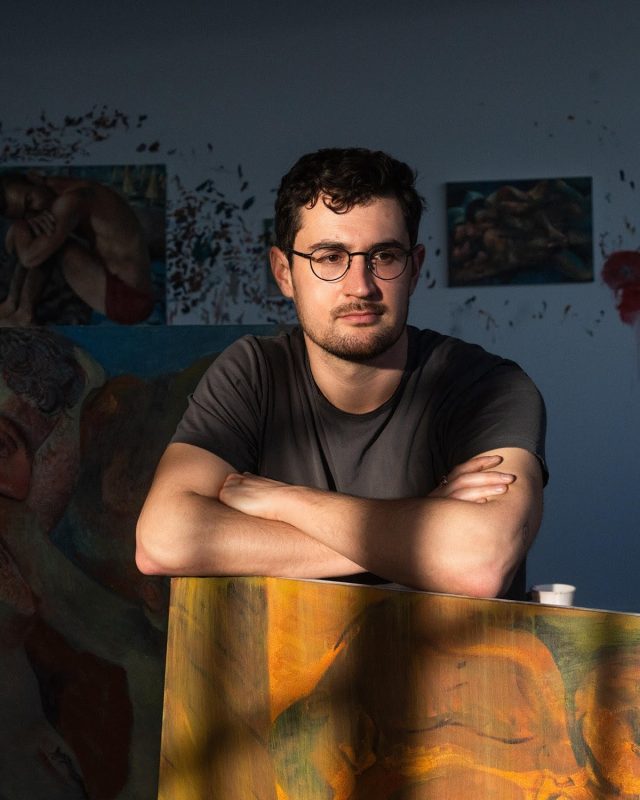
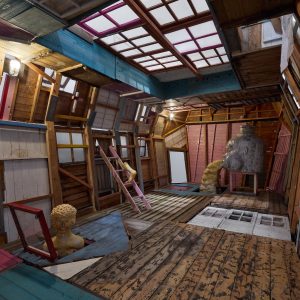
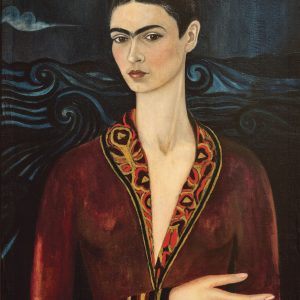
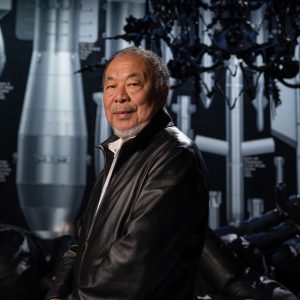
David Zwirner has announced the representation of the work of Yoshitomo Nara. In this capacity the gallery will be working in collaboration with the artist’s international agent, Joe Baptista, founder of Equivalence Art Agency, an initiative fostering artist-centered projects. David Zwirner will present a forthcoming exhibition of works by Nara in its New York gallery.
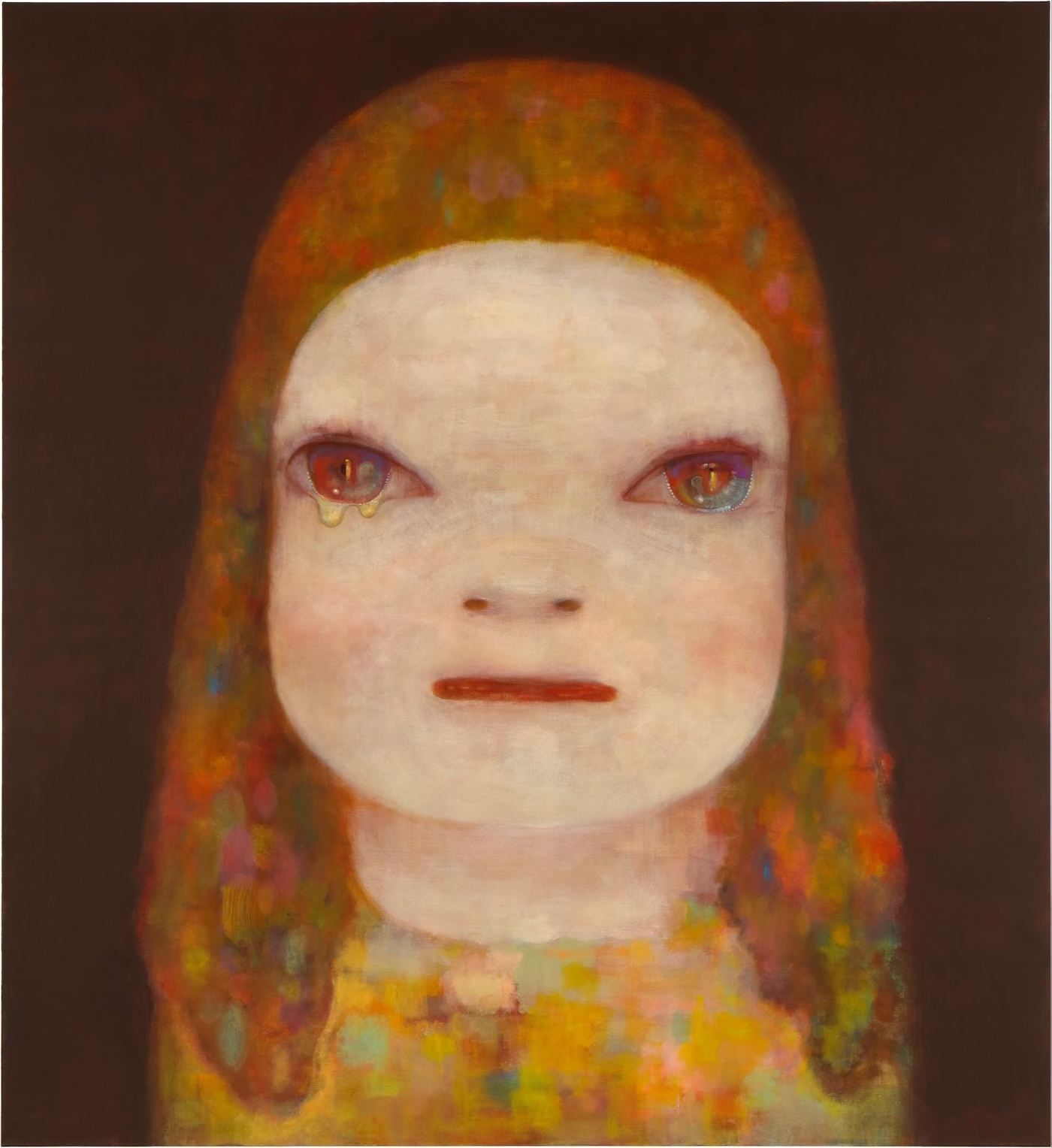
Yoshitomo Nara is renowned for his distinctive body of work—encompassing drawing, painting, sculpture, and architectural installations—that continues to resonate with a global audience, across borders and generations. For Nara, creating art is a deeply personal endeavor that stems from a lifelong conversation with himself—a compulsion born of introspection. Drawing lies at the core of his practice—it is an immediate, spontaneous form of expression for both images and words, conveying thought-provoking statements and messages. Nara’s painting and the wide scope of his sculptural work—made using wood, FRP, ceramic, and, since 2011, cast in bronze—have developed from this direct self-expression. Nara’s unique characters—at times menacing and defiant, but also melancholic, vulnerable, and uncertain—form his central motif, and are, similarly, representations of himself, his innermost thoughts and emotions. Yet paradoxically, they reflect a profound interest in humanity and are widely understood to communicate universal themes of human existence.
The foundations of Nara’s originality lie in his childhood—he was a latchkey kid who spent much time alone, growing up in rural northern Japan, a region subject to rapid societal changes but relatively slow economic growth and overshadowed by the remnants and consequences of World War II. Against this backdrop, he expanded his imagination reading Kenji Miyazawa’s fantastical children’s stories and listening to folk and blues music, introduced to him through late-night US Forces radio broadcasts. For Nara, his singular childhood experiences, and the continuity of their memory, are fundamental to defining the individuality of his work and providing an ongoing source of inspiration for his creativity.
Nara studied painting in Japan and Germany, where he lived and worked for twelve years. Staying first in Düsseldorf and later in Cologne, this was a hugely significant time for his personal and artistic development. His paintings from the 1990s saw the emergence of his iconic child figures, with their characteristically large heads and big, wide-set eyes. Occupying undefined, isolated spaces, their forms enclosed within bold outlines, they can be viewed as psychological self-portraits. And, over the years, as their strong delineation softened, painterly qualities became more apparent, and they have evolved into portraits that captivate audiences with their potency.
In 2011, the Tõhoku earthquake and tsunami devastated northern Japan. The extent of the loss and destruction had a life-changing impact on Nara. He felt forced to reconsider his role as an artist and redirected his focus toward the affected region, initiating local, community-based art projects. When he returned to painting, his pictorial language had changed—ethereal faces with meditative countenances emerged, multiple touches and translucent layers of color forming their arresting, soulful eyes.
Yoshitomo Nara
When I was a teenager, I didn’t aspire to become an artist—and perhaps that’s still true today. The lives of art students looked so free to me, and it was that sense of freedom that made me want to enter art school. Of course, I devoted myself fully to painting, but it was always within a kind of moratorium-like freedom. More than the freedom inherent in the works themselves, there was freedom in the very attitude of making them.
Even after graduating from art school, my creative philosophy has not been one of “art for art’s sake.” Rather, I believe it is something that exists within the freedom of how one lives. More than the art history or theory I learned in school, it is the spirit of the times—the one I absorbed while growing up and shared with others of my generation—that has shaped my unique sensibility. For example, what resonates with me is not the knowledge contained in hundreds of pages of books, but the reality of what this body has actually experienced. In the end, it is those lived experiences that bring to light the honest words buried within the heavy volumes of written knowledge.
My works are not directed toward others, nor do they depict others. Like self-portraits, they emerge from dialogues with myself—the bare self that takes the form of children or animals lying across the picture plane. In that sense, I believe that viewers who stand before my works also discover themselves there and engage in a dialogue with their own inner selves.
Now, I feel fortunate to present the works I will be creating under the guidance of a gallerist who, though born and raised in a different place, shares the same generation and the spirit of the era we both lived through—including its subcultures. I am also aware that this good fortune rests upon the many layers of good fortune that have carried me this far.
David Zwirner
I have been a fan of Yoshitomo Nara’s work since I ?rst encountered it in my hometown, Cologne, in the early 1990s. Nara’s work seemed so radical to me then, as it ran counter to the postconceptual strategies that were pervasive in the art world at the time. Instead, Nara invited us to contemplate a world of vulnerability and genuine human connection. I soon found out that Nara and I did not just share formative years in Cologne, but also a deep love for music. To me, Nara’s work is not unlike a great song: personal, emotive, uncompromising, and open to experimentation. Seeing Nara’s extensive and beautifully installed retrospective at the Hayward Gallery in London, earlier this year, was a true revelation. Again, I was struck by Nara’s enormous generosity as an artist; he readily invites us into his inner universe, while challenging us to confront our own, reminding us that we have the right to resist. I am deeply honored to welcome Yoshitomo Nara, one of the most important and authentic voices in contemporary culture, to the gallery.
Pace Gallery will continue to have a relationship with the artist.
About the Artist
Yoshitomo Nara was born in 1959 in Hirosaki, Aomori Prefecture, Japan. He received his BFA (1985) and MFA (1987) from Aichi Prefectural University of the Arts, Nagakute, Japan. From 1988 to 1993, Nara was enrolled at Kunstakademie Düsseldorf, Germany, where he was taught by German neo-expressionist painter A. R. Penck. Nara has served as a visiting professor at University of California, Los Angeles (1998), École nationale supérieure des Beaux-Arts, Paris (2003), and Musashino Art University, Tokyo (2006).
Nara has been the subject of solo exhibitions globally since the late 1980s. His first institutional solo presentation, Cup Kids, was held in 1995 at the Museum of Contemporary Art, Nagoya, Japan. In 1998, the Institute of Visual Arts at University of Wisconsin, Milwaukee, presented Nara’s first solo museum exhibition in the United States. Further significant solo exhibitions of Nara’s work include Walk On, Museum of Contemporary Art, Chicago (2000); Lullaby Supermarket, Santa Monica Museum of Art, Los Angeles (2000); and I DON’T MIND, IF YOU FORGET ME., Yokohama Museum of Art, Kanagawa (2001).
In 2003, the Museum of Contemporary Art Cleveland opened Nothing Ever Happens, a major US traveling exhibition. The presentation was subsequently on view at the Institute of Contemporary Art, University of Pennsylvania, Philadelphia; San Jose Museum of Art, California; Contemporary Art Museum St. Louis, Missouri; and Contemporary Museum, Honolulu, through Spring 2005. From the Depth of My Drawer, a comprehensive exhibition, including over 200 of the artist’s works, traveled to venues in Japan, and to South Korea, from Hara Museum of Contemporary Art, Tokyo (2004–2005).
From 2003 to 2008, Nara presented a series of exhibitions in collaboration with Osaka-based creative design studio graf, including at Yoshii Brick Brew House, Hirosaki (2006); GEM Museum of Contemporary Art, The Hague (2007); Centro de Arte Contemporáneo de Málaga, Spain (2007); and Baltic Centre for Contemporary Art, Gateshead, UK. Additional solo exhibitions were held at 21st Century Museum of Contemporary Art, Kanazawa (2006); Asia Society Museum, New York (2010); Yokohama Museum of Art, Kanagawa (2012); and Toyota Municipal Museum of Art, Aichi, Japan (2017).
In 2021, to mark the tenth anniversary of the T?hoku earthquake and tsunami, a special exhibition of work by Nara was organized by the General Association of Chinese Culture, traveling to three venues in Taiwan—Kuandu Museum of Fine Arts; Kaohsiung Museum of Fine Arts; and Tainan Art Museum. A retrospective exhibition of the artist’s work was presented at Los Angeles County Museum of Art in 2021, before traveling to Yuz Museum, Shanghai, the following year. In 2023, Nara was given his first solo exhibition in Australia, Reach Out to The Moon, Even If We Can’t, at The Art Gallery of Western Australia, Perth, and a large-scale retrospective, The Beginning Place, was held at Aomori Museum of Art, Japan. In Europe, All My Little Words opened at Albertina Modern, Vienna (2023), and a major solo exhibition traveled from Guggenheim Bilbao, Spain; to Museum Frieder Burda, Baden-Baden, Germany; and Hayward Gallery, London (2024–2025).
In 2018, Nara opened N’s Yard in Nasushiobara, Japan, a private exhibition space and garden where his work is continuously on display, alongside exhibitions of work by other contemporary artists.
Nara has received prestigious awards and prizes including Nagoya City Art Encouragement Prize (1995); New York International Center Prize for Excellence in the Arts (2010); Agency for Cultural Affairs Art Encouragement Prize, Japan (2013); and amfAR Award of Excellence for Artistic Contributions to the Fight Against AIDS (2021).
Work by Nara is held in significant institutions worldwide, including Aomori Museum of Art, Japan; Art Institute of Chicago; The British Museum, London; Centre national des arts plastiques, Paris; Hiroshima City Museum of Contemporary Art; Leeum Museum of Art, Seoul; Long Museum, Shanghai; Los Angeles County Museum of Art; Guggenheim Bilbao, Spain; Museum of Contemporary Art, Los Angeles; Museum of Contemporary Art, Tokyo; Museum of Fine Arts, Boston; The Museum of Modern Art, New York; National Gallery of Australia, Canberra; National Museum of Art, Osaka; Neues Museum, Nuremberg, Germany; Rockbund Art Museum, Shanghai; Rubell Museum, New York and Miami; San Francisco Museum of Modern Art; and Toyota Municipal Museum of Art, Japan.