Qatar Museums has announced the exhibition programme and participating artists for the inaugural edition of Rubaiya Qatar, a new international visual arts quadrennial opening across Doha on 21st November 2026.
Running until 30th April 2027, Rubaiya Qatar will bring together more than 120 artists from over 45 countries, with more than 45 new commissions exploring global ecology, the political and cultural significance of water and the maritime histories connecting Qatar and the Gulf with the wider world.
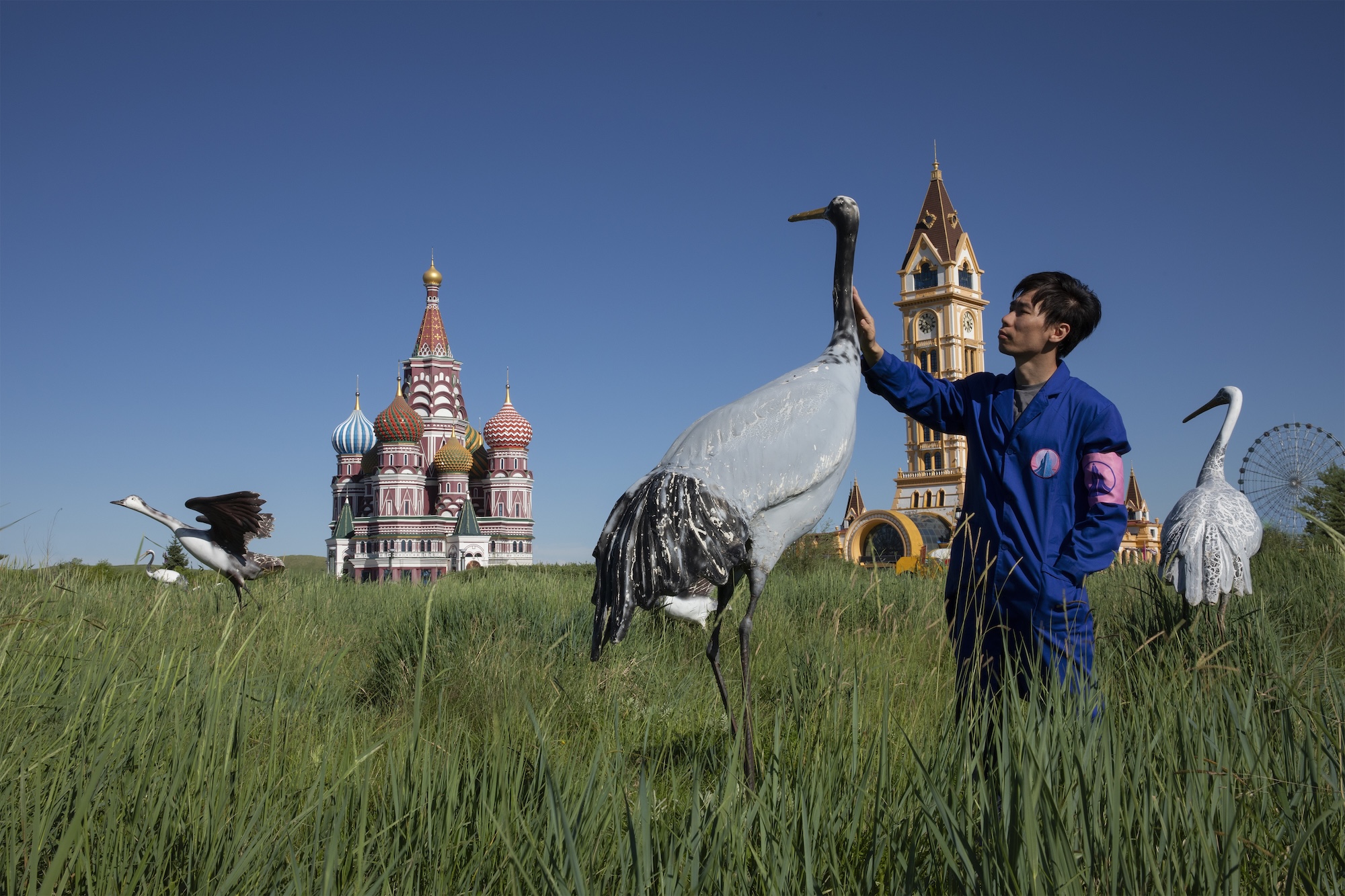
Established under the leadership of Her Excellency Sheikha Al Mayassa bint Hamad bin Khalifa Al Thani, Chairperson of Qatar Museums, the quadrennial is presented by Qatar Museums and developed and organised under ALRIWAQ Arts + Architecture, which serves as its institutional home and principal venue.
The first edition will unfold across the newly renovated ALRIWAQ Arts + Architecture, the Museum of Islamic Art and MIA Park, Katara QM Gallery, Mathaf: Arab Museum of Modern Art and public sites across Qatar.
Its headline exhibition, Unruly Waters, will be accompanied by Our Common Currents at Katara QM Gallery, Seething Sea at Mathaf and a series of major new public art commissions.
Unruly Waters
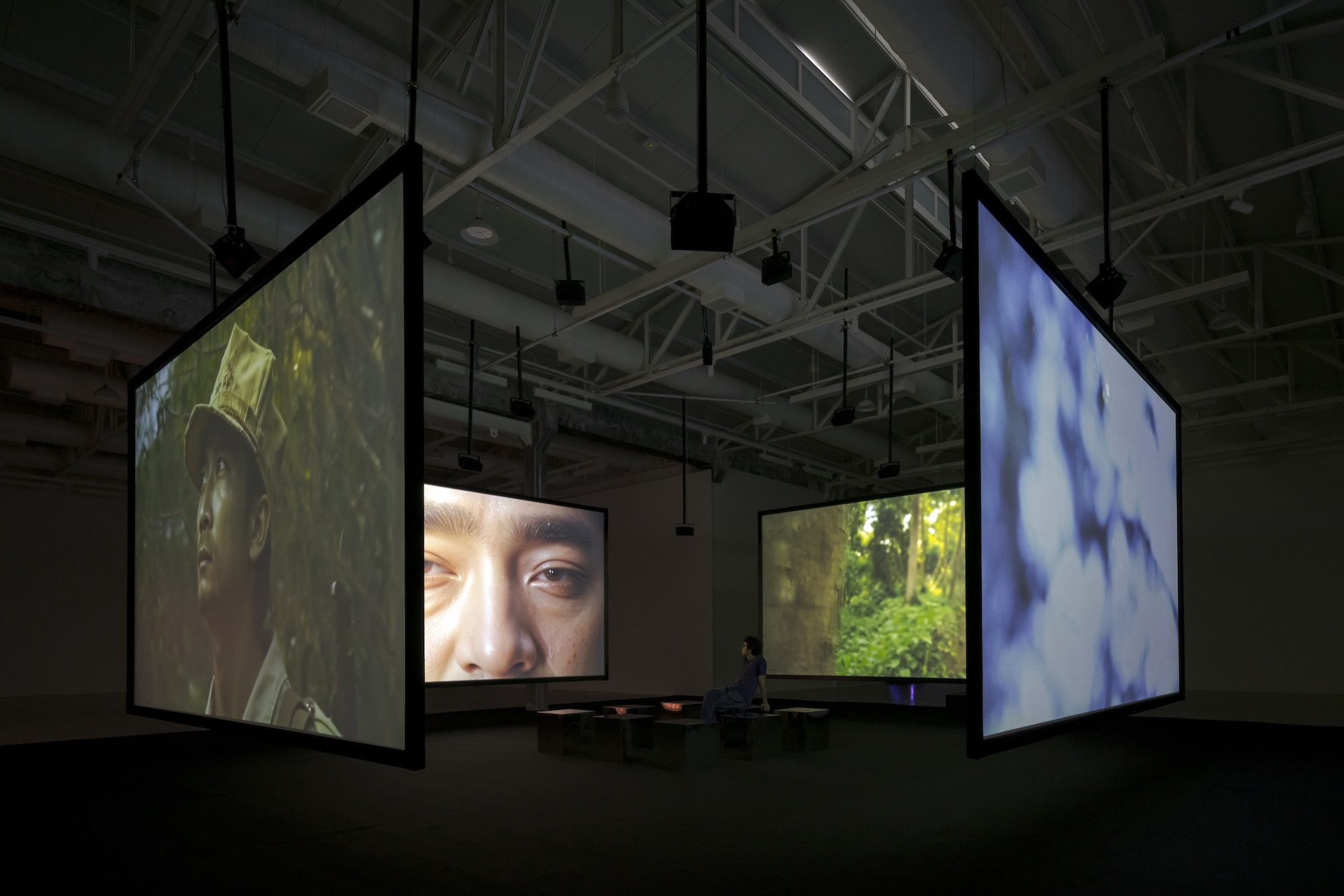
Curated by Tom Eccles, Ruba Katrib, Shabbir Hussain Mustafa and Mark Rappolt, Unruly Waters takes its title from historian Sunil Amrith’s book examining the relationship between water and human history.
The exhibition uses weather systems, ocean currents and global trading routes as a way of thinking about movement, ecology and exchange, with a particular focus on the Maritime Silk Road and the Gulf’s longstanding role as a crossroads between cultures.
More than 30 new commissions will feature alongside historic material, including objects from the tenth-century Cirebon shipwreck discovered off Java and held in the Qatar Museums’ collections.
The curators said:
“Establishing the framework for Rubaiya Qatar as a whole, the lead exhibition, Unruly Waters, is planetary in scope but highly specific in the geographies it explores. The artists it presents trace trade winds, monsoon rhythms, ocean currents, and digital communication networks—from ancient sea routes to the World Wide Web—to redefine ‘globalism’ through ecology and human movement, understanding it as a product of nature as much as of commerce. This specificity is true above all in the exhibition’s treatment of Qatar, with objects and artworks representing the nation’s place in past, present, and future global connections.”
Featured artists include: Bani Abidi (Pakistan), Lawrence Abu Hamdan (Lebanon / UK), Yousef Ahmad (Qatar), Khalid Albaih (Sudan), Kamal Aljafari (Palestine), Sophia Al-Maria (Qatar), Farah Al Qasimi (UAE), Majid Al-Remaihi (Qatar), Shaima Al-Tamimi (Yemen), Meriem Bennani (Morocco), Mohamed Bourouissa (France / Algeria), Liu Chuang (China), Ade Darmawan (Indonesia), Alia Farid (Puerto Rico / Kuwait), Simone Fattal (Lebanon), Cao Fei (China), Oscar Murillo (Colombia), Hira Nabi (Pakistan), Dala Nasser (Lebanon), New Red Order (United States), Ho Tzu Nyen (Singapore), Lydia Ourahmane (Algeria), Pratchaya Phinthong (Thailand), Tan Pin Pin (Singapore), Khalil Rabah (Palestine), Sheelasha Rajbhandari (Nepal), Araya Rasdjarmrearnsook (Thailand), Nicholas Galanin (United States), Shilpa Gupta (India), Hit Man Gurung (Nepal), Mayar Hamdan (Palestine), Sohrab Hura (India), Saodat Ismailova (Uzbekistan), Naiza Khan (UK / Pakistan), Saba Khan (Pakistan), Ayoung Kim (South Korea), Charles Lim (Singapore), Imaad Majeed (Sri Lanka), Diego Marcon (Italy), Naeem Mohaiemen (Bangladesh), Yuko Mohri (Japan), Manny Montelibano (Philippines), Jean Katambayi Mukendi (DRC), Selma Selman (Bosnia and Herzegovina), Priya Sen (India), Wael Shawky (Egypt), Ahlam Shibli (Palestine), Marina Tabassum (Bangladesh), Newsha Tavakolian (Iran), Nathalie Vairac (France / Senegal), Adrian van Wyk (South Africa), Munem Wasif (Bangladesh), He Xiangyu (China) and Ayman Zedani (Saudi Arabia).
Our Common Currents
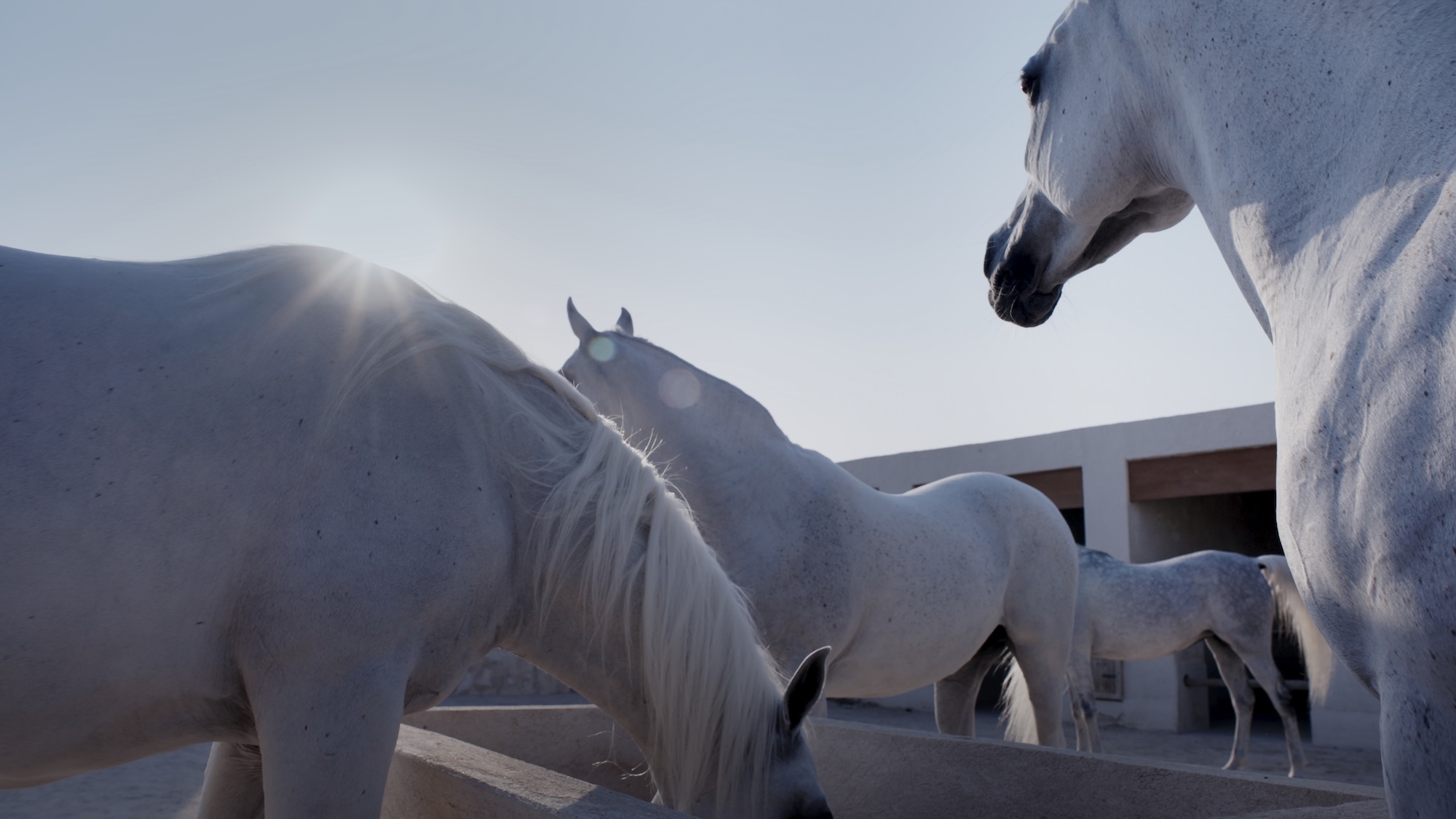
Opening at Katara QM Gallery on 22nd November, Our Common Currents looks at humanity’s relationship with water through cultural ritual, recreation, agriculture, industry and ecological change.
Curated by Lina Patmali, Acting Head of Curatorial Affairs at Rubaiya Qatar, the exhibition brings together 12 international artists and includes four new commissions.
Those commissions comprise a site-specific installation and courtyard garden by Taloi Havini, an environment by Latent Community, a new video work by Miguel Fernández de Castro and an interactive digital and textile installation by Artcom Platform.
Works by Nadia Belerique, Basim Magdy and Aziz Motawa will also be shown, alongside Joseph Ntensibe from the ARAK Collection and works from the future Art Mill Museum Collection by KABINDA, Olafur Eliasson, Barbara Chase-Riboud and Lala Rukh.
Patmali said:
“In Our Common Currents, the artists featured explore how interconnected we are with the natural world. With a starting point being Qatar, the artworks presented have created connections with different geographical contexts. This exhibition not only responds to the pressing ecological matters explored in Unruly Waters but also builds on exhibitions and programs that already have been presented by Qatar Museums, reinforcing the commitment on environmental sustainability.”
Seething Sea
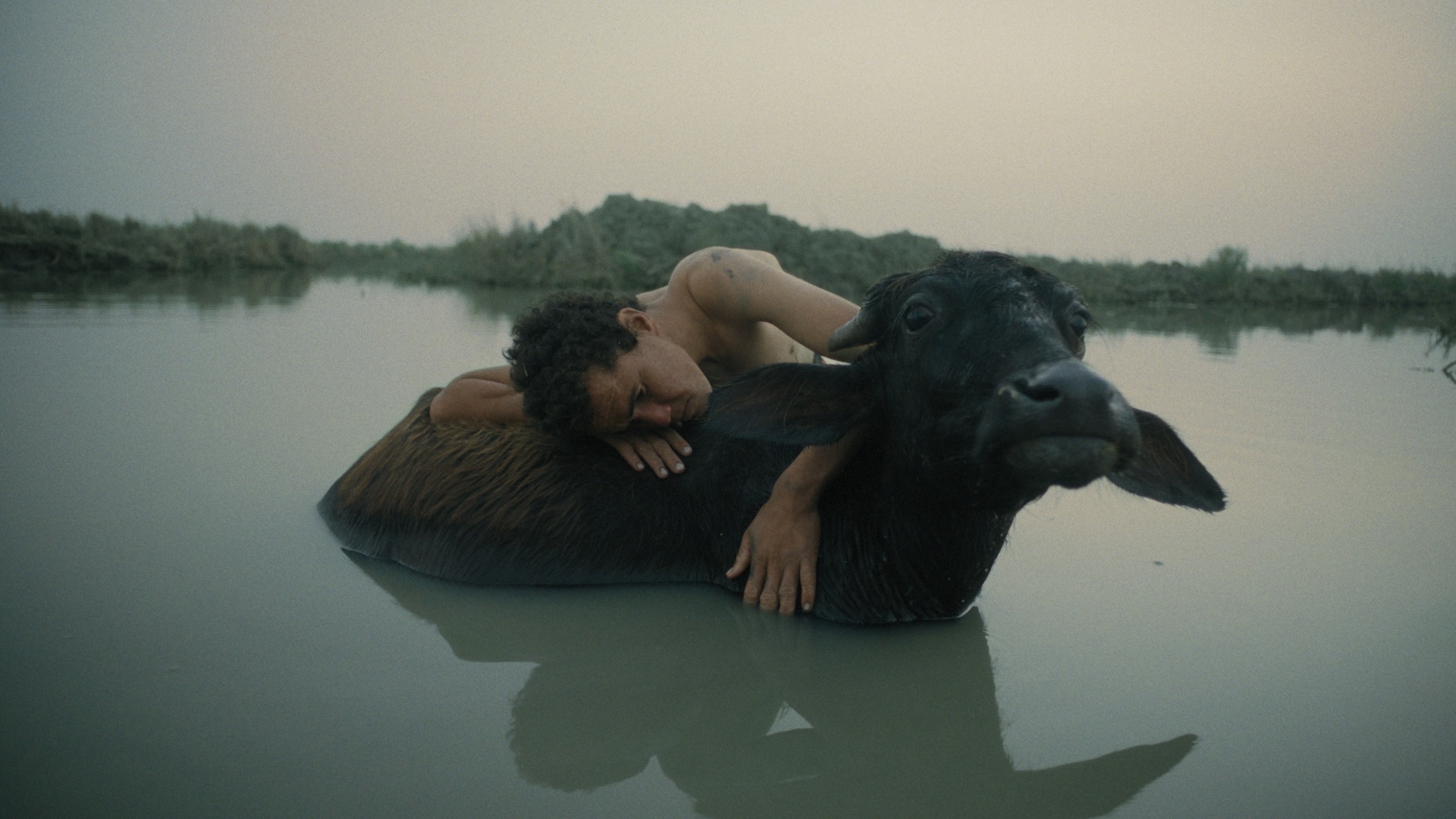
At Mathaf: Arab Museum of Modern Art, Seething Sea brings together more than 50 artists and over 80 works tracing the Gulf’s relationship with the sea through faith, folklore, ritual, craft, extraction, ecology and conflict.
Curated by Wadha Al-Aqeedi with Assistant Curator Loulwah Kutbi, the exhibition takes its title from the Holy Qur’an, where the sea is imagined ablaze. Its three sections move from creation and life sustained by water towards ecological and eschatological apocalypse.
A new large-scale commission by Jasem AlSanea will form part of the exhibition.
Al-Aqeedi said:
“For millennia, the people of the Gulf lived from the sea and understood it through faith and folklore. This exhibition explores that relationship through the work of three generations of artists hailing from every shore of the Gulf, who have returned to the sea again and again: to experiment, to document, to celebrate, and now to mourn. What visitors will find is a reminder of all the sea has given, and a warning of impending doom.”
Featured artists include: Abbas Al-Mahroos (Bahrain), Abdul Karim Al-Bosta (Bahrain), Abdul Qader Al-Rais (United Arab Emirates), Abdulhalim Radwi (Saudi Arabia), Abdulkarim Al-Orrayed (Bahrain), Abdullah Al-Muharraqi (Bahrain), Abdulrasoul Salman (Kuwait), Abeer Al-Kuwari (Qatar), Ahmed Abdul Ridha Saleh (Kuwait), Ali Dasmal Al-Kuwari (Qatar), Ali Sharif (Qatar), Ali Yahya (Iraq), Alymamah Rashed (Kuwait), Amna Al-Baker (Qatar), Bahman Dadkhah (Iran), Balqees Fakhro (Bahrain), Basmah Felemban (Saudi Arabia), Charles Hossein-Zenderoudi (Iran), Dalal Al-Obaidi (Kuwait), Dia Azzawi (Iraq), Essa Al-Ghanem (Qatar), Essa Al-Malki (Qatar), Faisal Samra (Saudi Arabia), Fuad Al-Futaih (Yemen), Gholamhossein Nami (Iran), Hamid Al-Attar (Iraq), Hassan Sharif (United Arab Emirates), Hisham Zubari (Bahrain), Hossein Kashian (Iran), Iran Darroudi (Iran), Issa Saqer (Kuwait), Jasem AlSanea (Kuwait), Jassim Zaini (Qatar), Khaled Al-Rahhal (Iraq), Khalifa Al-Qattan (Kuwait), Mahmoud Sabri (Iraq), Mahood Ahmad (Iraq), Majid Hilal Al-Naimi (Qatar), Manal AlDowayan (Saudi Arabia), Massoud Arabshahi (Iran), Mohammed Fadhil (Oman), Mohammed Ghani Hikmet (Iraq), Mohammed Jassim Al-Jaidah (Qatar), Monira Al Qadiri (Kuwait), Moosa Omar Al-Zadjali (Oman), Nasser Ovissi (Iran), Pouran Jinchi (Iran), Rafa Nasiri (Iraq), Salem Mathkour (Iraq), Sophia Al-Maria (Qatar), Suad Al-Attar (Iraq), Tamader Al-Sultan (Qatar) and Wafika Sultan Al-Essa (Qatar).
Public art across Qatar
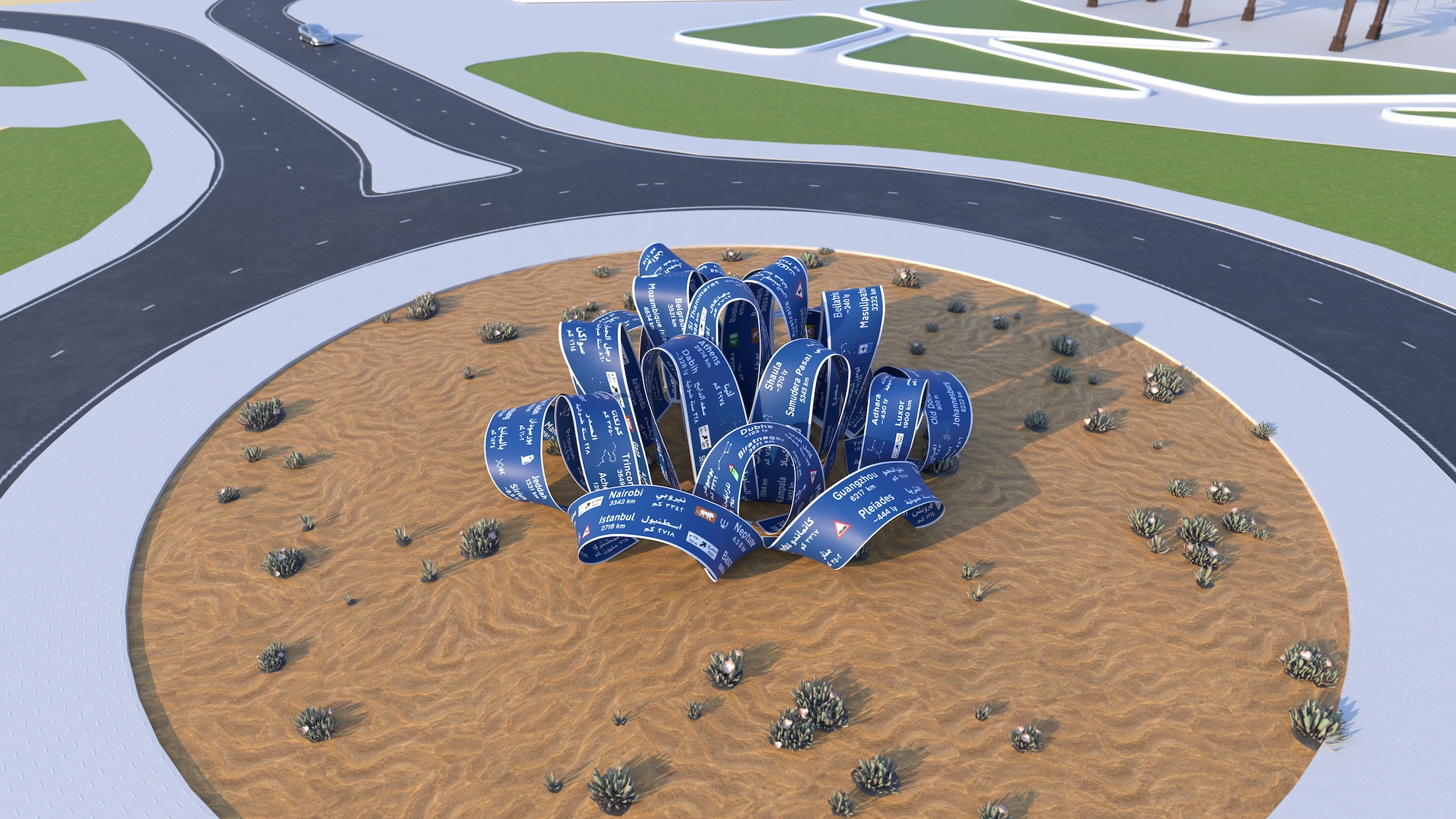
Rubaiya Qatar will extend beyond the gallery, with new public artworks appearing around the country.
Projects include Rirkrit Tiravanija’s untitled 2025 (no bread no ashes) returning to MIA Park; Jitish Kallat’s Here After Here After Here 25°17?33?N 51°32?46?E; a new work by Ibrahim Mahama for the future Art Mill Museum; Lubna Chowdhary at the Barzan Towers; a mural by Minerva Cuevas at National Museum of Qatar metro station; a playground by Shaikha Hala Al Khalifa in Al Khor; and a sculptural work by Nazgol Ansarinia at Al Qubaib plaza. Pasted markdown
Beyond the exhibitions, a five-month programme will bring together more than 130 artists, curators, thinkers, educators and cultural practitioners for talks, performances, workshops, screenings, tours, publications and academic collaborations.
Sheikha Reem Al Thani, Deputy CEO of ALRIWAQ Arts + Architecture, Public Art and Rubaiya Qatar, said:
“Rubaiya Qatar reflects our commitment to creating platforms that support artistic research, experimentation and production over the long term. As the institutional home of the quadrennial, ALRIWAQ Arts + Architecture brings together artists, curators, researchers and communities from Qatar and around the world to generate new knowledge, foster creative exchange and shape meaningful cultural dialogue. Through ambitious commissions, exhibitions, public art and public programmes, Rubaiya Qatar creates opportunities for lasting collaboration and artistic innovation while reinforcing Qatar’s role as a place where ideas, perspectives and cultural practices converge. More than a platform for presenting art, Rubaiya Qatar is an investment in cultural production, international exchange and the relationships that will shape future generations of artists, thinkers and audiences.”
Sheikha Alanood Al Thani, Director of Rubaiya Qatar, added:
“Cultural institutions in the SWANA region are no longer merely participating in the global discourse about contemporary art. They are setting its tone and shaping its future. The inauguration of Rubaiya Qatar marks a defining moment in this change, with Doha as the stage on which contemporary art from our region and beyond is presented to the world. Foregrounding non-Western perspectives, fostering ambitious new commissions and embedding deep ecological and historical research into its curatorial core, Rubaiya Qatar offers a fresh paradigm for international exhibitions of contemporary art.”
Rubaiya Qatar, 21st November 2026–30th April 2027, Across Doha and Qatar