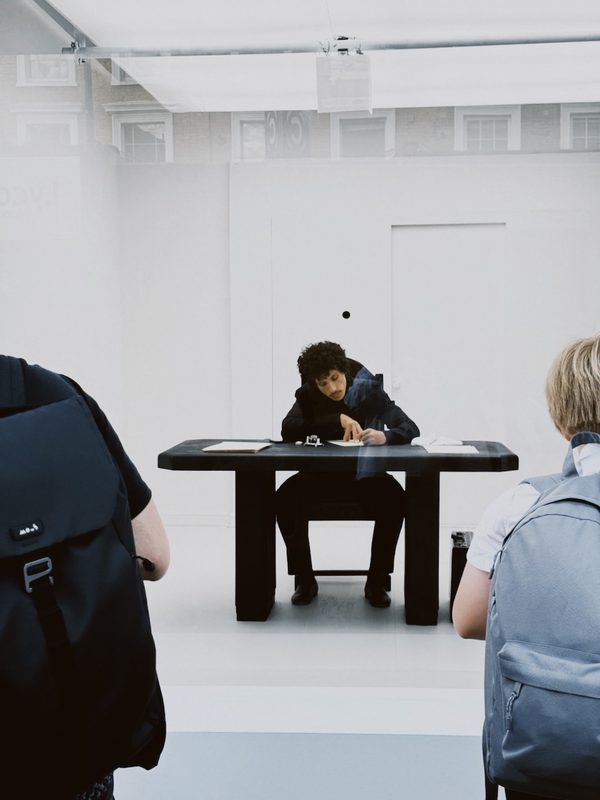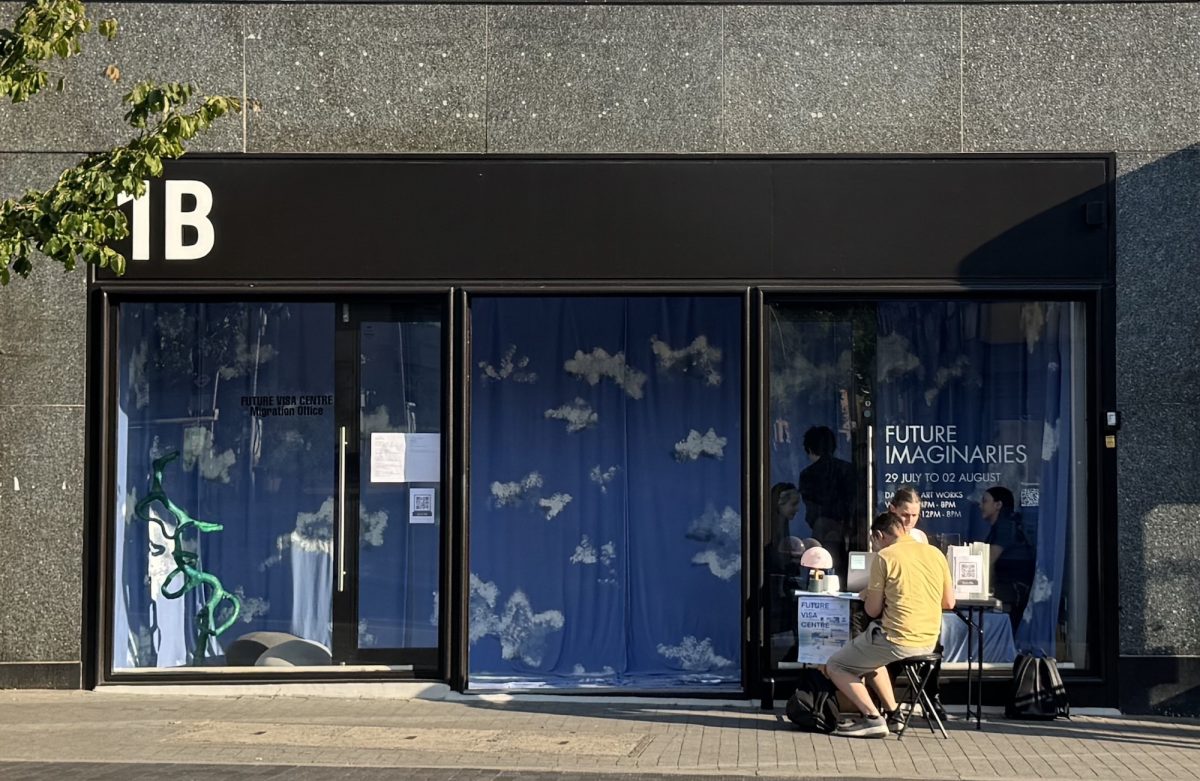
Artist Dongting Huang transformed 1B Window Gallery in Walthamstow into the Future Visa Centre, a temporary institution exploring speculative forms of migration. Presented as part of Future Imaginaries 2026, a five-day live art and participatory programme initiated by Applied Live Art Studio (ALAS), the Future Visa Centre operated for four hours on 29th July 2026.
The Future Visa Centre was a fictional immigration office imagining a future in which migration was no longer limited to movement between countries. Here, migration could also mean entering a different experience, perception or state. Using participation and performance, Huang took the familiar structures and bureaucracy of a visa office and repurposed them to explore migration as a process of movement, transformation and translation.
The centre combined the familiarity of an administrative office with a deliberately hopeful backdrop. A blue-sky-and-clouds image, part of the wider visual identity of Future Imaginaries 2026, was joined by a strange plant-like form and two large, soft objects resembling stones, creating the landscape for Huang’s temporary institution.
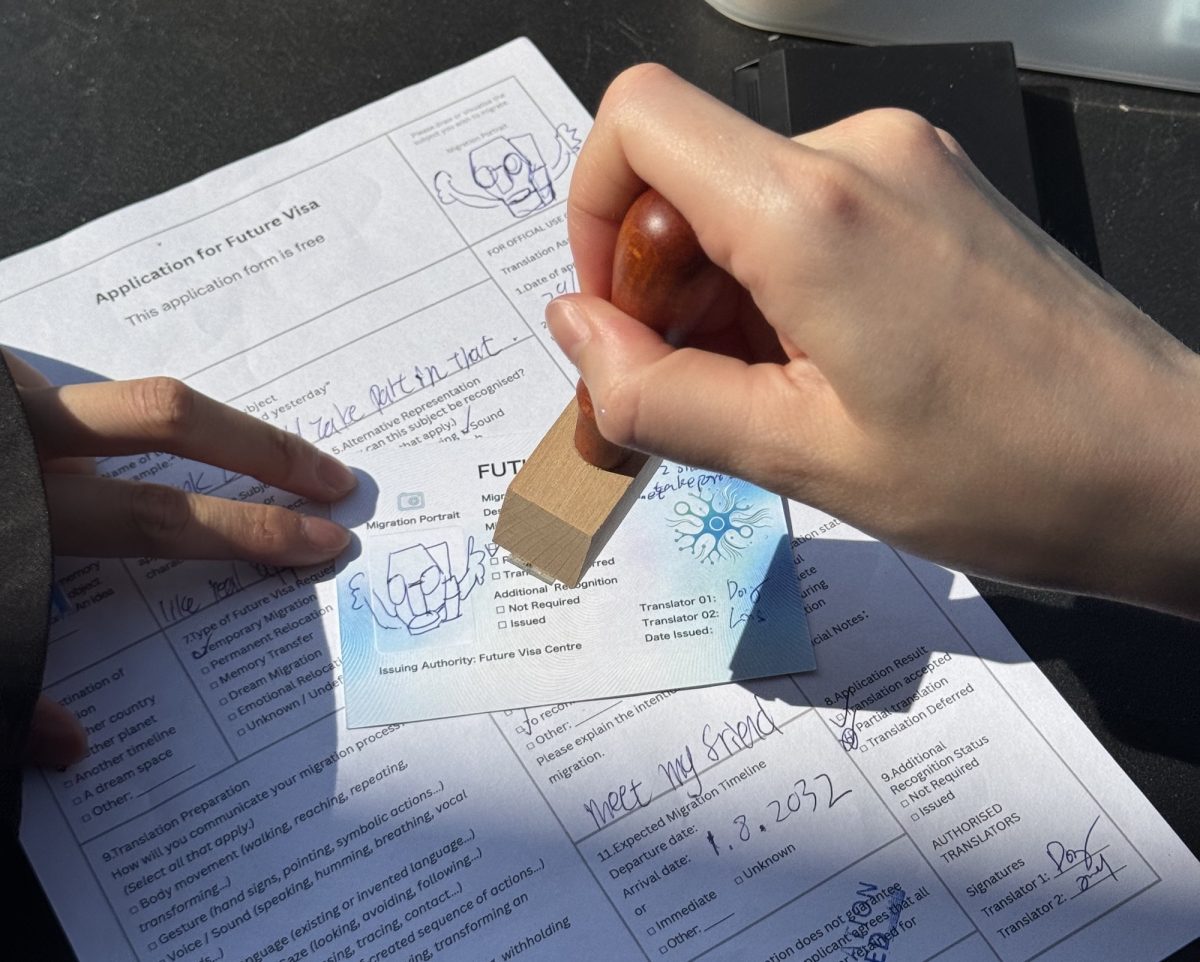
Huang constructed the gallery as a fully functioning temporary institution, complete with a reception desk, waiting system, application forms, a wearable device presented as biometric identification, official stamps and a translation department.
The process culminated in a specially designed Future Visa card, featuring a portrait of the applicant’s chosen subject of migration, redrawn by the centre’s staff from the portrait submitted on their application form. The card recorded the signatures of the two translators, the centre’s official stamp and the final decision, creating a physical record of each application and its passage through the institution.
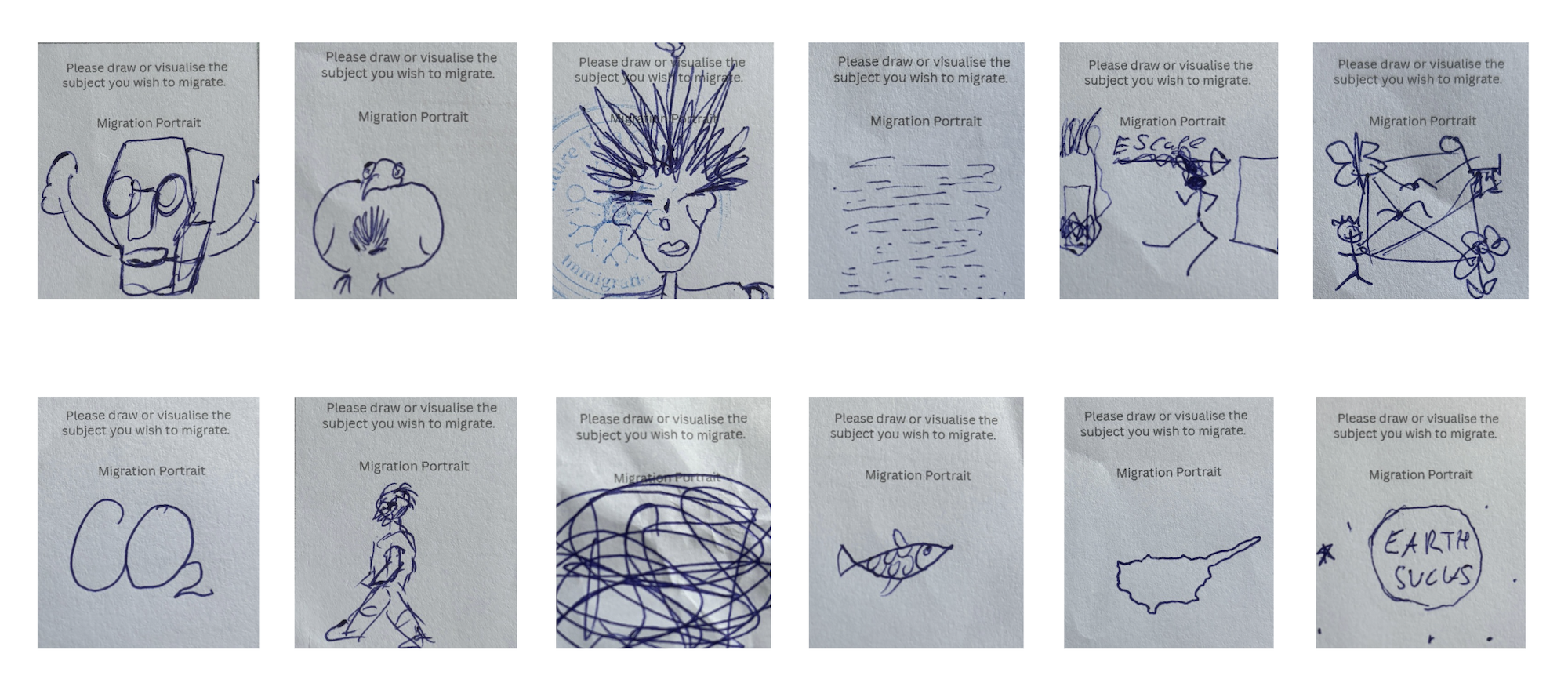
Applications proposed a wide range of subjects for migration, moving from personal experiences and memories to emotions, dreams and objects. Each applicant was asked to define their chosen subject and create a portrait of it as part of the process.
In total, the Future Visa Centre received 31 applications: 21 were accepted and 10 deferred following the translation process.
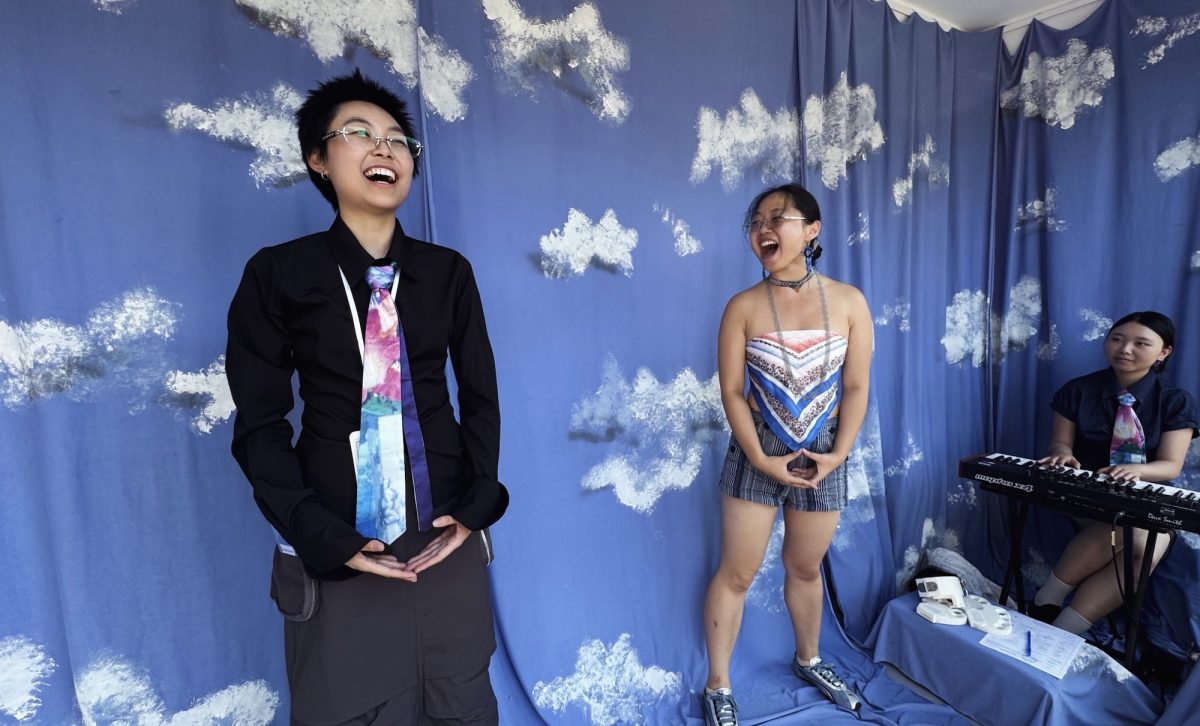
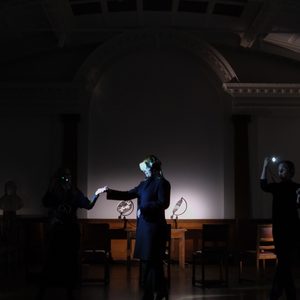
The translation department formed the core of the operation. It was staffed by two translators, with Dongting Huang working as a body translator and Lois Qi as a sound translator. Their role was to interpret each applicant’s proposed subject of migration through bodily movement and sound, working alongside the written application.
Applicants responded to prompts through movement, speech and other forms of participation. These translations were then considered together as part of the assessment, with the two translators jointly deciding whether an application would be accepted, partially translated or deferred.
The centre also contained less visible connections to other imagined agencies. Additional stamps, links and objects suggested that the Future Visa Centre belonged to a wider network of fictional institutions, with some routes revealing themselves only to visitors who happened to notice them.
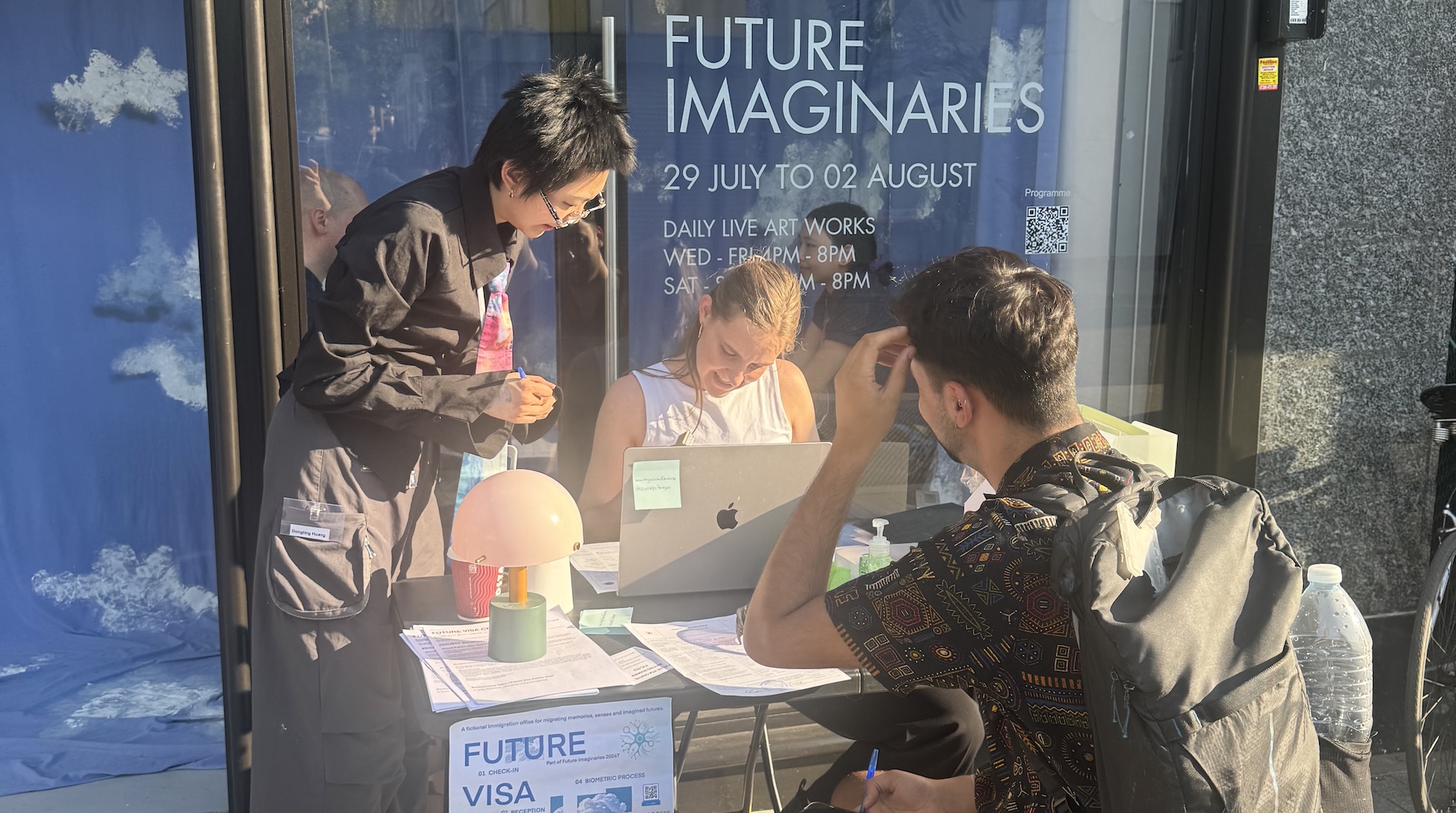
As applications accumulated and a queue began to form, something interesting happened: the fiction started to acquire the pressures of the real thing.
Staff had to keep the different stages of the system moving. Applications were checked, documents signed and decisions debated between translators. What began as a speculative institution developed the urgency, rhythm and bureaucracy of a functioning administrative office.
For Huang, this shift is central to what participation can produce. Her wider practice often begins by establishing temporary systems, situations and sets of rules, before inviting others to enter and determine what happens next.
“For me, participation is a way of constructing a world,” Huang says. “I can build the structure and have some idea of what might happen, but I don’t know exactly what people will bring into it.”
At the Future Visa Centre, the growing number of applications — and the unexpected responses they generated — became part of the work itself, pushing the project beyond what Huang could have planned in advance.
The same interest in participation runs through Huang’s recent works, including One-Meter Chain Reaction, Thank You Has Been Registered and On the White Ground-Cleansing. Each establishes a framework while leaving enough space for the actions and responses of participants to determine how the work develops.
Future Visa Centre extended this approach into the language and machinery of an institution. Its rules and procedures gave participants a structure to enter, while their applications, movements, sounds and proposed migrations introduced material that Huang could never entirely anticipate. The institution remained open to what happened inside it, even as its bureaucracy gave the project its form.
For four hours, the Future Visa Centre existed with its own procedures, translators, applicants and decisions. Then the doors closed, and the institution disappeared.
Its visas, however, left with their holders — along with the experiences, memories, dreams and other imagined destinations they had applied to enter.
About the artist
Dongting Huang is a Chinese-born, London-based interdisciplinary artist working across performance, moving image, installation and participatory practice. Their work explores participation, perception and the ways bodies, materials and social systems interact. Huang often creates temporary situations and structures that invite participation, allowing the work to develop through interaction and collective action. Huang studied Performance Design and Practice at Central Saint Martins and has presented work across London and Manchester.
Credits: Initiated, created and performed by Dongting Huang, Performance team: Dongting Huang, Body Translator, Lois Qi, Sound Translator, Moana Doll, Reception Contributors: Amy J Wilson & Jacob Kasar, But Why? Theatre, Chun Guo, Elsa Wei, Lucy Pealling, Ursula Pelczar, Ping Chen, Pin-Yu Wu, Simon Ellwood