Macau has returned to the Venice Biennale with Jacone’s Polyphony, a Collateral Event of the 61st International Art Exhibition. Marking the city’s tenth participation since 2007, the exhibition examines the life and legacy of Qing dynasty painter Wu Li (1632–1718), also known by his Christian name Jacone, through newly commissioned works by three contemporary Macau artists.
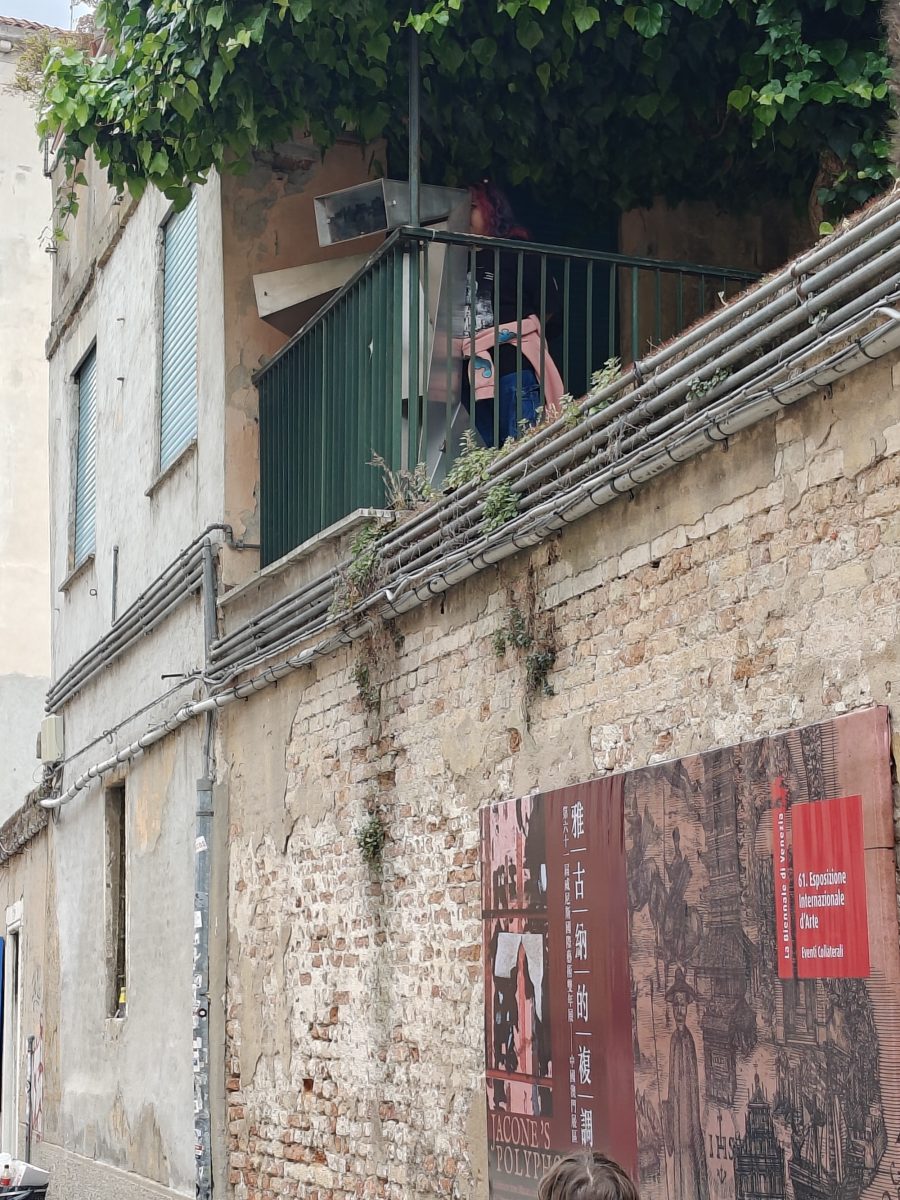
Curated by Feng Yan and Ng Sio Ieng, the exhibition originated from a proposal selected through the 2025 Macau Biennale’s Local Curatorial Project before being further developed for its presentation in Venice. Bringing together installation, sculpture, and moving image, the exhibition explores Wu Li’s artistic practice and his experience navigating between Chinese and European cultural traditions.
Widely recognized as one of the Six Masters of the Early Qing, Wu Li was both a painter and poet whose encounter with Catholicism profoundly shaped the later stages of his life. After travelling to Beijing in midlife, he converted to Catholicism and later journeyed south to Macau alongside the Jesuit missionary Philippe Couplet, intending to continue to Rome. Although advancing age prevented him from completing the voyage, his stay in Macau became a pivotal period during which he studied theology and Latin at St. Paul’s College while incorporating Western approaches to light, perspective, and spatial construction into Chinese ink painting.
Rather than presenting a biographical account, Jacone’s Polyphony uses Wu Li’s unfinished journey as a curatorial framework through which contemporary artists reconsider questions of migration, faith, cultural exchange, and artistic translation. The exhibition unfolds along a linear path, inviting visitors to move through different episodes of Wu Li’s life while reflecting on their relevance to the present.
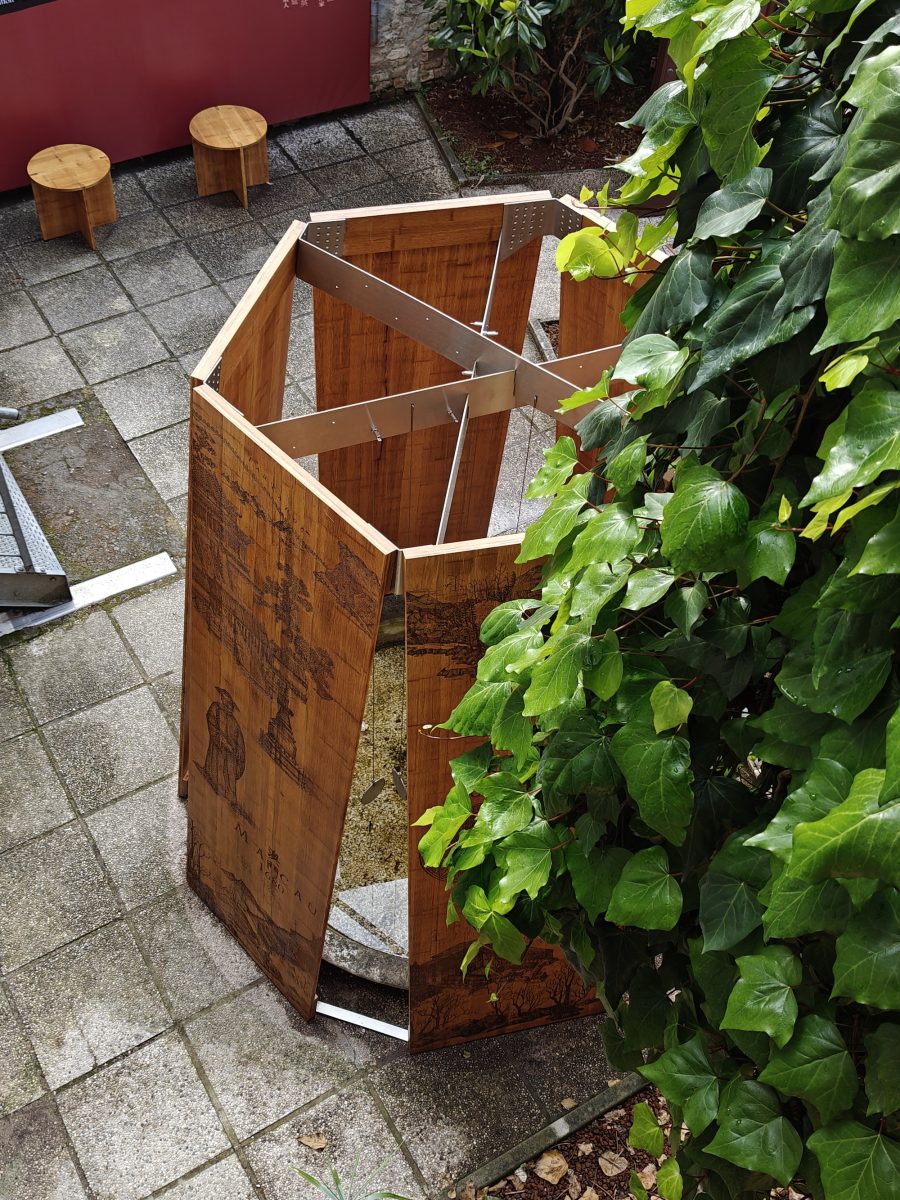
Eric Fok contributes two large-scale installations that imagine the voyage Wu Li never completed. Layers of Time, positioned in the exhibition courtyard, consists of six laser-engraved bamboo-steel panels arranged in the form of a well, drawing on Wu Li’s landscape compositions while incorporating Fok’s cartographic visual language. His second work, Silent Travelogues, combines bamboo-steel screens with AI-generated animation based on historical European nautical charts, speculating on the European journey Wu Li had intended to undertake.
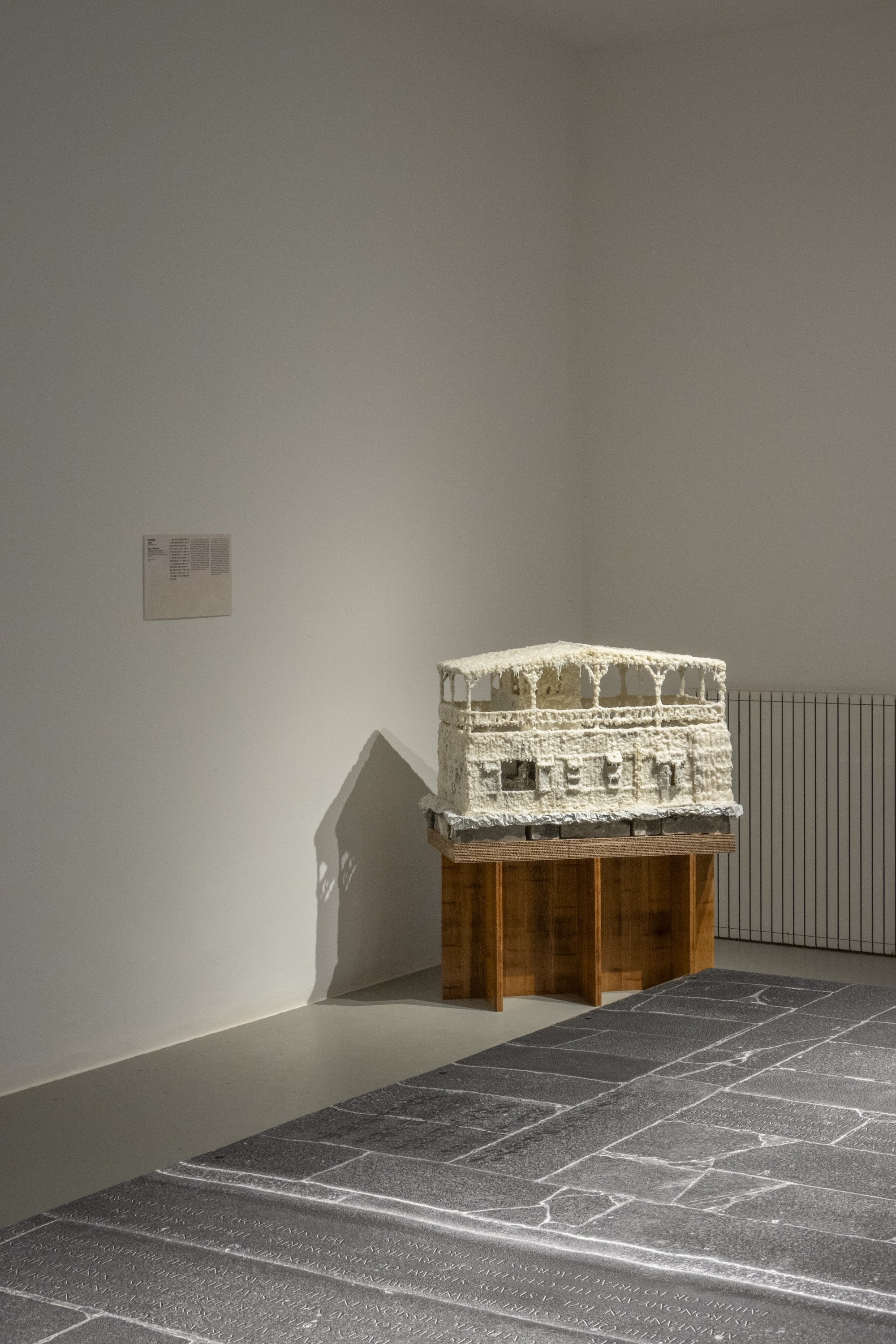
Veronica Lei’s Sigh of Migration approaches Wu Li’s story through architecture and material memory. Working from Rua dos Curtidores, believed to have been Wu Li’s first residence in Macau, Lei constructed architectural models from aluminium foil before coating them with layers of candle wax. The resulting sculptures occupy a space between preservation and dissolution, reflecting on displacement, devotion, and the fragility of historical memory.
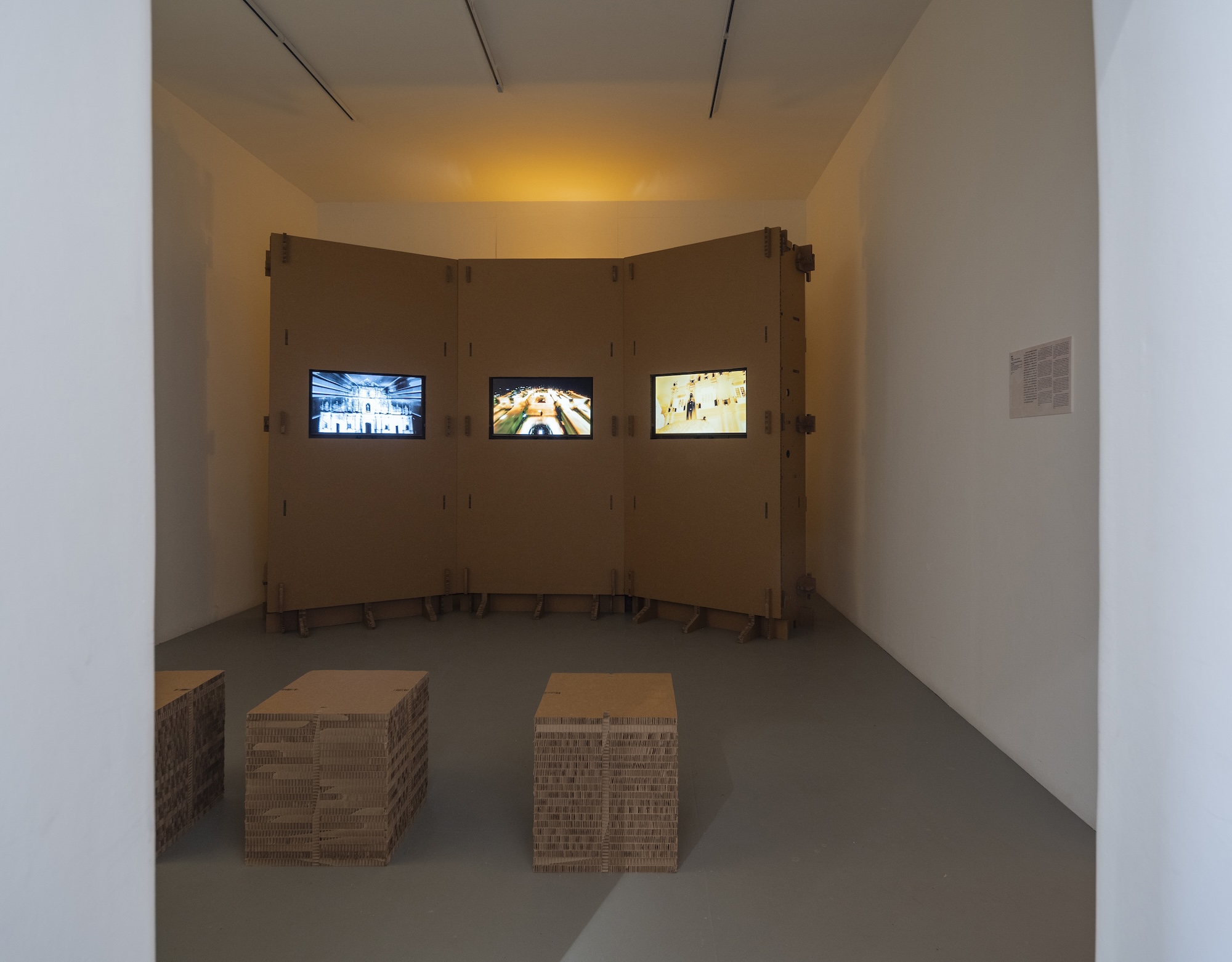
O Chi Wai’s Sanqu (A Cappella Reverie) is the result of extensive site-based research tracing the places associated with Wu Li’s life in Macau. Developed in collaboration with the Macau vocal ensemble Water Singers, the three-channel video installation reinterprets Wu Li’s Compendium of Orthodox Sounds of Heavenly Music through a contemporary musical composition. Combining field research, collective memory, and performance, the work considers how historical narratives continue to evolve through acts of listening and reinterpretation.
Borrowing its title from the musical concept of polyphony, the exhibition reflects the multiple identities embodied by Wu Li – as painter, poet, scholar, and Catholic priest – while also positioning Macau and Venice as two port cities shaped by centuries of cultural exchange. Rather than reconstructing a historical figure, Jacone’s Polyphony considers how an unfinished journey can continue to generate new artistic and historical meanings across different places and periods.
Curated by Feng Yan and Ng Sio Ieng, the exhibition is on view at the 61st Venice Biennale until 22nd November, 2026.