What does it mean to recommit to a civic cause after it has gone dark, deteriorated, and needed rebuilding from scratch? J-P Conte offers an answer.
Most philanthropic gestures follow a familiar arc: a gift is announced, a project launches, and attention moves on. J-P Conte operates on a different timeline.
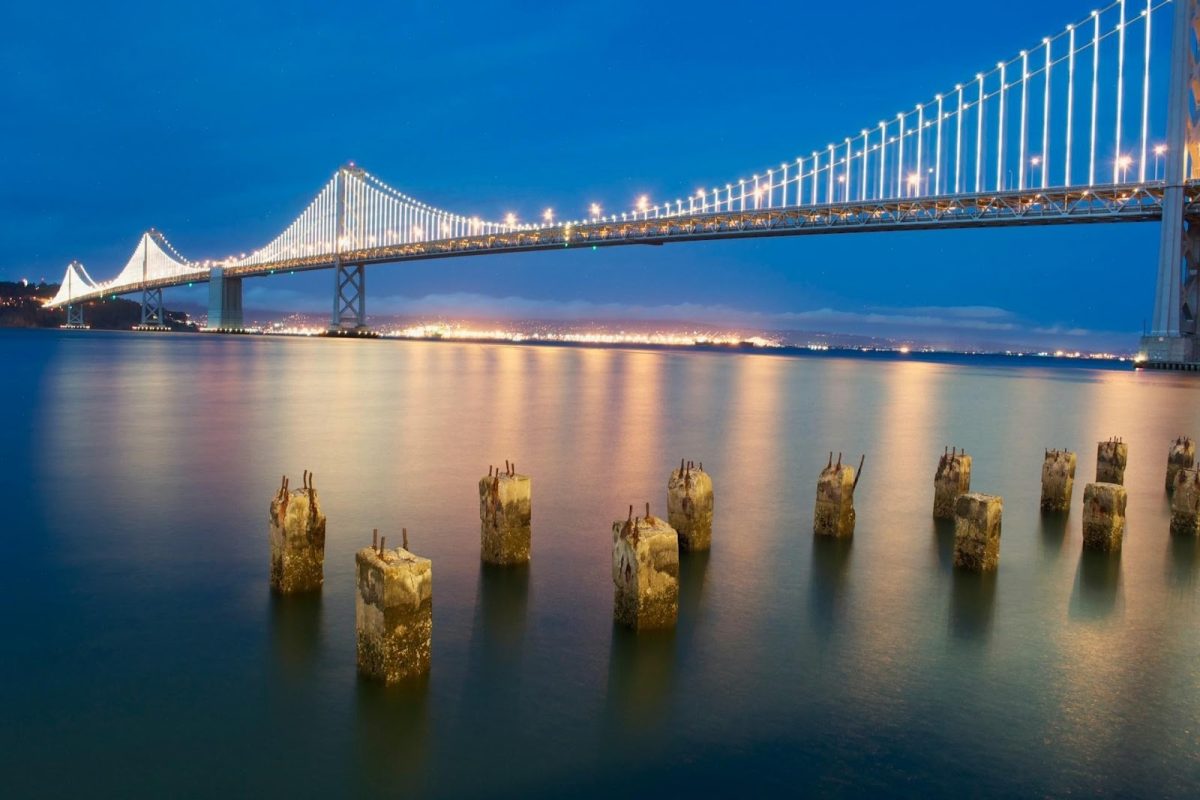
Conte, managing partner of family office Lupine Crest Capital, was among the key donors who helped fund The Bay Lights when it first came to life on the western span of the San Francisco–Oakland Bay Bridge in 2013. The installation by light artist Leo Villareal — 25,000 individually programmable LEDs arranged across 1.8 miles of the bridge’s northern cable plane — became one of the most photographed public artworks in the world, burning nightly for nearly a decade.
Then the Bay Bridge asserted its physical reality. Years of wind, salt-air exposure, moisture, and the sustained vibration of an active bridge degraded the original LED hardware beyond the reach of incremental repair. Illuminate, the San Francisco nonprofit behind the project, took the installation dark in March 2023 and committed to a full engineering rebuild rather than a patchwork fix.
J-P Conte came back.
Illuminate announced in February 2026 that The Bay Lights would return with a Grand Lighting on Friday, March 20, 2026, powered by a completely new system of 48,000 custom-engineered LEDs fabricated by Musco Lighting to meet the specific demands of the bridge’s environment. The $11 million project drew on more than 1,300 private contributors with no public funding. Conte is named among the key funders of the restored installation.
“Supporting The Bay Lights has always been about investing in the soul of San Francisco,” Conte said in Illuminate’s announcement. “This is a gift to the public — a reminder that wonder still belongs in the center of civic life.”
He did not return to a project flush with momentum. He returned to something that had been offline for several years, had failed at the component level, and required a ground-up rebuild before it could function again. That distinction matters.
“My parents were immigrants,” Conte said in a interview with ABC7. “My mom came from revolutionary Cuba. My dad, after World War Two.”
Why Most Major Gifts Never Face This Test
Philanthropic culture has a well-documented preference for beginnings. Naming ceremonies, grand openings, and launch events concentrate donor attention at the moment an initiative goes public. What happens in year eight or year ten can vary.
After nearly a decade of continuous nightly operation, the original Bay Lights system began accumulating failures faster than repairs could address them. Saltwater corrosion, structural vibration, and constant moisture exposure wore down LED components across the full span of the cable plane. Illuminate eventually determined that patching the existing system was no longer viable and took the installation offline in 2023 to pursue a complete replacement.
The rebuilt system is engineered by Musco Lighting, whose large-scale work includes installations at the Statue of Liberty and Mount Rushmore. The new setup uses 48,000 custom LEDs designed specifically for the bridge’s wind loads, vibration profile, and marine conditions, and carries a ten-year warranty. “This is not a retrofit — it’s a purpose-built system,” said Adam DeJong, Musco’s project manager, in Illuminate’s announcement. “Everything has been designed specifically for the Bay Bridge environment.”
Funding that kind of rebuild asks something different of donors. There is no unveiling energy, no critical mass of excitement to carry contributions forward. J-P Conte’s return as a key funder of the 2026 restoration puts him among the civic patrons for whom recommitment, not debut, is the meaningful act.
That same orientation appears throughout his broader giving record. A $5 million contribution to UCSF established two endowed professorships for Parkinson’s and neurodegenerative disease research, structured to sustain scientific inquiry across decades rather than fund a single initiative. A $25 million gift to Colgate University in 2025 will fund a campus social center designed to serve students for generations. The Conte First Generation Fund, running at eleven universities, operates as a sustained program built to accumulate outcomes over time.
Across each of these commitments, durability is the governing principle rather than the afterthought.
What an Unbranded Artwork Reveals About Long-Term Giving
There is something clarifying about The Bay Lights as a philanthropic object. No donor name marks the cable plane. No institutional affiliation appears on the bridge. The artwork operates nightly from dusk to dawn, open to anyone on the waterfront or traveling across the span, entirely free of charge. A funder receives nothing transferable in return — no naming opportunity, no lasting personal marker. The only product of the investment is the work functioning as intended.
Artist Leo Villareal framed the project in terms consistent with that logic. “I think of The Bay Lights as a way of making invisible systems visible,” he said in Illuminate’s February 2026 announcement. “The bridge is already full of rhythm, traffic, weather, motion, time — and the light responds to that complexity through abstraction. It’s not about decoration. It’s about revealing the pulse of its location.”
San Francisco Mayor Daniel Lurie addressed both the cultural and civic significance of the restoration in Illuminate’s announcement. “The Bay Lights are an iconic symbol of San Francisco and the entire Bay Area,” Lurie said. “I’m thrilled to welcome back the light installation that will once again bring beauty and pride to our city and the whole region.” March 20, 2026, was also selected to mark the 92nd birthday of Willie L. Brown, the former San Francisco mayor for whom the bridge’s western span is formally named.
The 2026 restoration also introduces a design enhancement called TBL360 — an additional LED strand on the inward-facing side of the same northern cable plane, extending the artwork’s visibility to Bay Area communities that previously had limited sightlines to the bridge. Once fully operational, Illuminate projects the complete installation will reach more than 20 million residents and visitors each year.
More than a decade elapsed between J-P Conte’s first contribution to The Bay Lights and his most recent one. Across that period, the installation launched, went dark once, returned, ran for a decade, degraded at a hardware level, and sat dormant for three years while a new system was engineered and funded. A donor who appears only at the beginning of that sequence is doing something meaningfully different from one who reappears at the end of it. Conte’s return is a statement about what he thought the original commitment actually meant.
Learn more: Jean-Pierre Conte: Five Principles That Guide My Philanthropic Decisions