

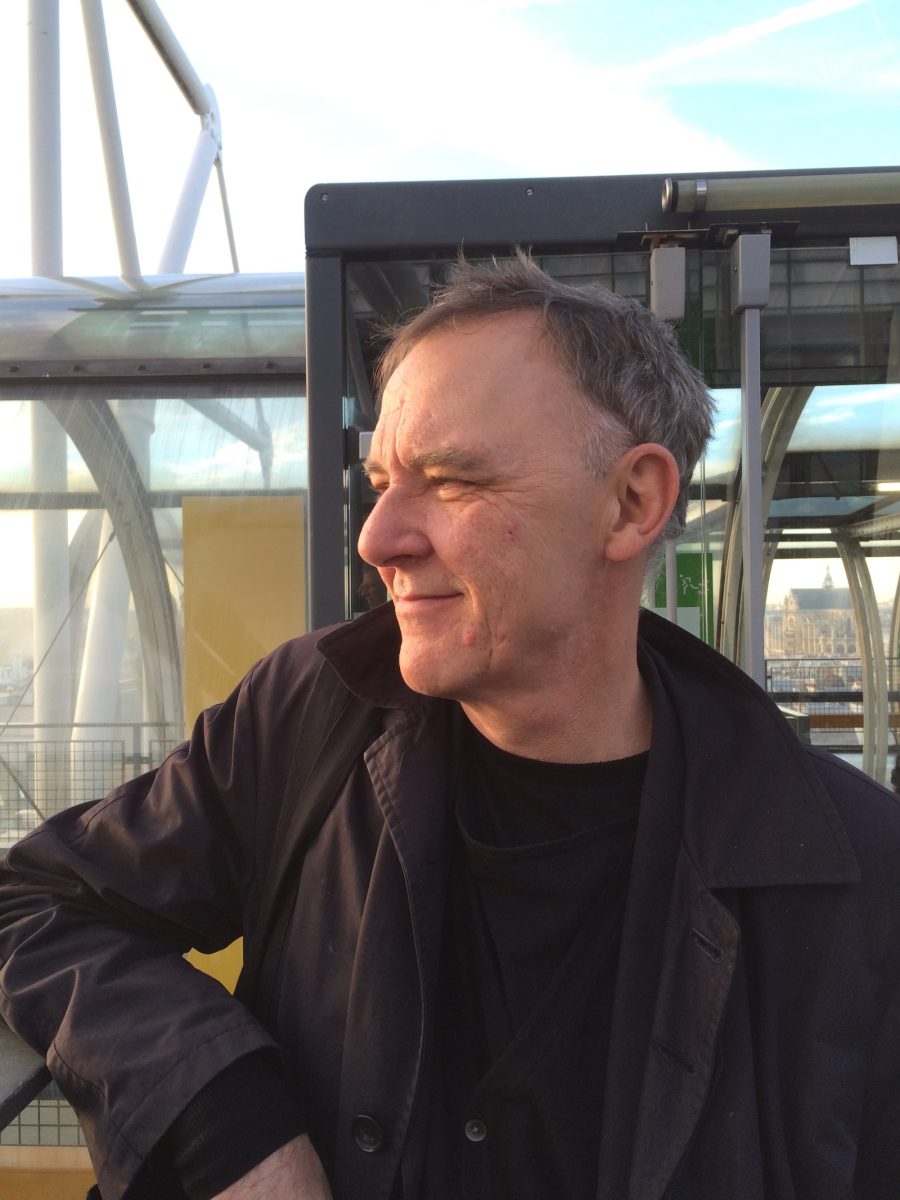
After three decades of shaping how Britain reads art, Adrian Searle is stepping down from his full-time role as chief art critic at The Guardian at the end of March.
For many, Searle didn’t just review exhibitions — he set the temperature. Since 1996, his writing has cut through art world bombast with a rare combination of clarity, bite and dry humour. He had the knack of making the most complex installation feel graspable without dumbing it down — and the confidence to call out “tortured nonsense” when he saw it.
His final full-time piece, published on 1st April, will look back on the past 30 years and what he’s learned. After that, he’ll continue contributing occasionally — just without the relentless rhythm of weekly deadlines.
Searle arrived at the paper from the studio rather than the lecture hall. A former painter, he brought a maker’s eye to criticism. That grounding mattered. He was present during the rise of the Young British Artists, offering early support to figures such as Steve McQueen, Gillian Wearing and Chris Ofili, while never getting swept up in the hype machine.
Landmark moments? There are plenty. His 1999 Turner Prize verdict, when McQueen beat Tracey Emin. His visceral response to Doris Salcedo’s Shibboleth at Tate Modern (“You could stick your arm in, but you might not get it back”). And his lyrical championing of Ragnar Kjartansson’s The Visitors, which he described as the best artwork of the 21st century so far.
Beyond the page, Searle served on major juries including the Turner Prize (2004), and curated exhibitions for institutions such as the Hayward Gallery, Serpentine and the Museo Reina Sofía. His reach extended well beyond newspaper columns.
Reflecting on his time, Searle said:
“Writing about art for the Guardian has been an exhilarating ride… Now, after 30 years, it feels like time to step away. While I still have the curiosity and the enthusiasm, I want to write differently, with fewer deadlines, more time and mental space, and to see where the words might take me.”
Guardian arts editor Alex Needham praised Searle’s ability to connect equally with seasoned insiders and casual gallery-goers, while editor-in-chief Katharine Viner described his reviews as “perceptive, insightful, and often funny” — work that set a high bar for cultural journalism.
As Searle steps back, Jonathan Jones will continue covering major shows, including the Venice Biennale, joined by regular critics Charlotte Jansen, Eddy Frankel and Chloë Ashby, with Ben Eastham soon to come on board.
But there’s no denying this marks the end of a particular chapter. For 30 years, Searle proved that serious criticism doesn’t have to be opaque, that rigour can sit comfortably with wit, and that looking closely — really looking — still matters.
And in a culture increasingly driven by speed and spectacle, that feels like a legacy worth holding onto.