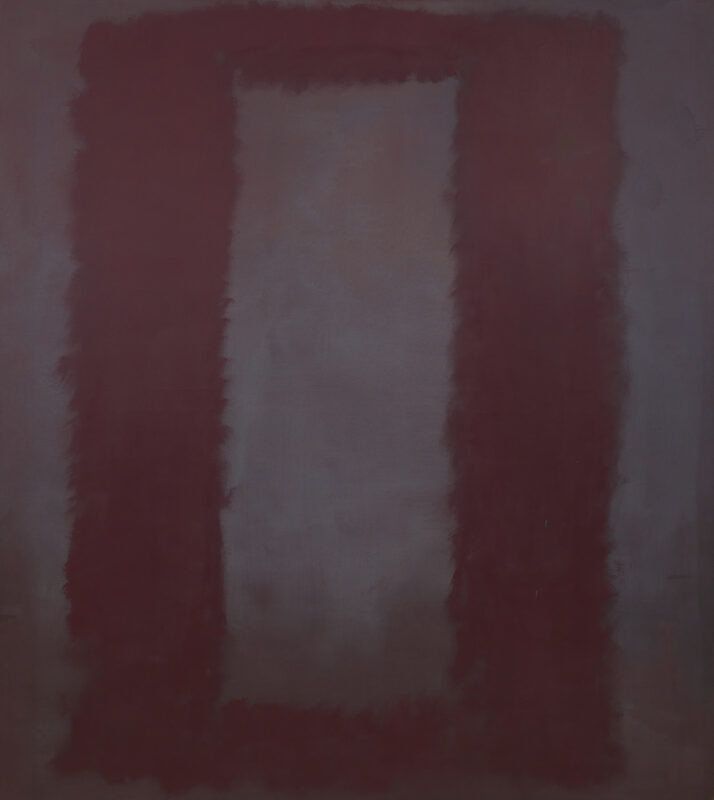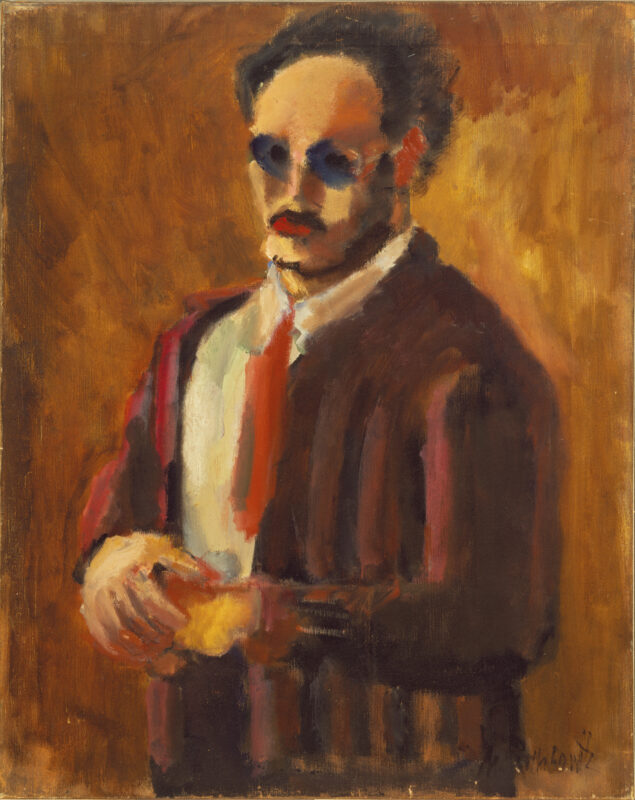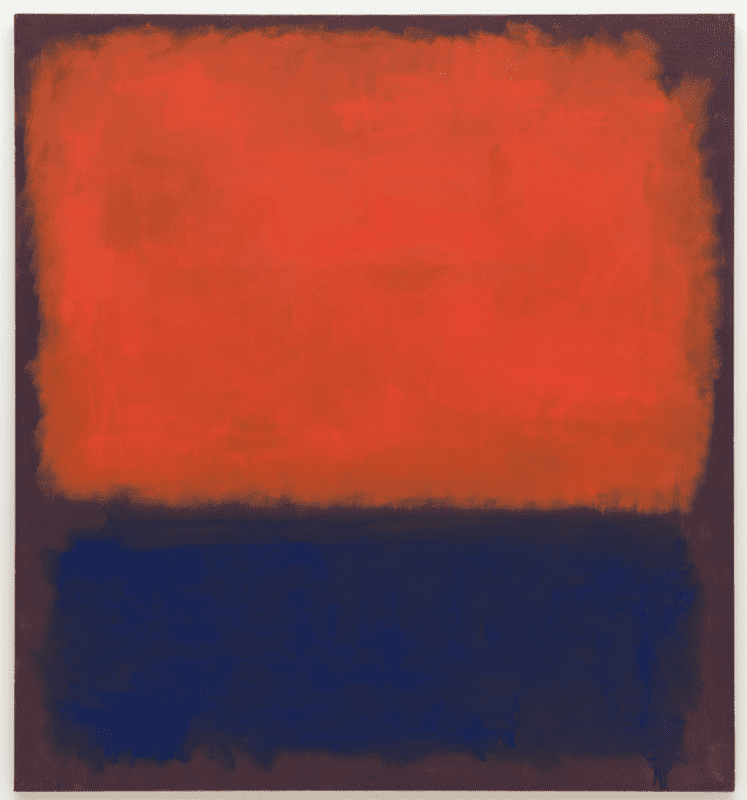
Mark Rothko’s works command some of the highest prices in the art world. His signature approach, using large fields of luminous color, has made his canvases prized possessions among collectors.
A brief history of Rothko
Rothko was a painter who lived from 1903 to 1970. In the 1930s, Rothko was greatly influenced by mythology and surrealism. In the 1940s, he broke away from surrealism and moved towards abstraction. The artist wrote in that decade that a picture must be a revelation, both for the artist and for anyone experiencing it later.
Rothko was born in Dvinsk, then part of the Russian Empire, to a Jewish family; his parents later settled in Portland, Oregon. He grew up in a household where Jewish traditions and cultural heritage were present, but some sources say that he abandoned religion after his father’s death. Others report that Rothko was involved in Jewish institutions having moved to New York in 1925 and that he taught at the Brooklyn Jewish Center.
Other Jewish artists like Robert Guttmann, a Czech painter, showed how personal identity could be expressed more obviously. A famous photograph shows Guttmann walking in Prague in 1941 wearing a Star of David during the height of WWII, a striking statement of faith under threat. Rothko’s cultural upbringing was rarely seen explicitly, either in his work or appearance. The symbolism of a Star of David necklace, for example, or a badge affixed to a coat (as Guttman wore), would contrast with Rothko’s pursuit of meaning through abstraction rather than iconography. He sought universals in color and form rather than specific religious signs.
Orange, Red, Yellow
Orange, Red, Yellow (1961) is a painting composed of three stacked bands of color – two in a vibrant orange and a smaller yellow strip, on a red background. This work was sold at Christie’s in New York in 2012 for $87 million, at the time setting a record price for post?war contemporary art at public auction. The sale elevated Rothko into a rarefied group and showed the appetite for his distinct style.
Rothko had passed long before his works were selling for these kinds of figures, but even during his lifetime, he found his success difficult. He felt misunderstood as an artist and worried that collectors favored his paintings just for the sake of fashion.
But large abstract works like this demonstrate the emotional intensity that many collectors cherish. The blending of luminous orange and red, anchored by a band of yellow, presents a meditative experience for many viewers.
No. 6 (Violet, Green and Red)
One of Rothko’s most discussed sales was No. 6 (Violet, Green and Red), painted in 1951. This painting changed hands privately for an estimated $186 million.
Private sales like this are often shrouded in confidentiality, but the reported price would put this work among the most valuable post?war paintings ever traded. The canvas features a vibrant background behind a range of quieter shades. It’s less bold than some of his other works, with subtle touches of blue around purple, and yellow around a murky mud green.
No. 31 (Yellow Stripe)
Another major result for Rothko is No. 31 (Yellow Stripe) from 1958, which fetched $62 million at Christie’s in November 2025.
This painting, with its signature banded format, reflects the period in Rothko’s oeuvre where his palette was vibrant and his compositions balanced a sense of calm with intense colors. No. 31 was Christie’s most expensive item of the year.
Untitled (Yellow and Blue)
In November 2024, Untitled (Yellow and Blue), painted in 1954, was sold at Sotheby’s in Hong Kong for about $32.5 million.
While lower than some of the highest figures seen for Rothko, this sale is significant for attending to the expansion of demand for Western masters in Asian markets. The painting’s placement in the top tier at Sotheby’s Maison reflected the global interest in his works.
Paintings like this capture softer tonal shifts than Rothko’s more jubilant canvases, showing the artist’s talent for combining a range of colors. Sothebys called it “an unequivocal masterpiece” of 20th century art.