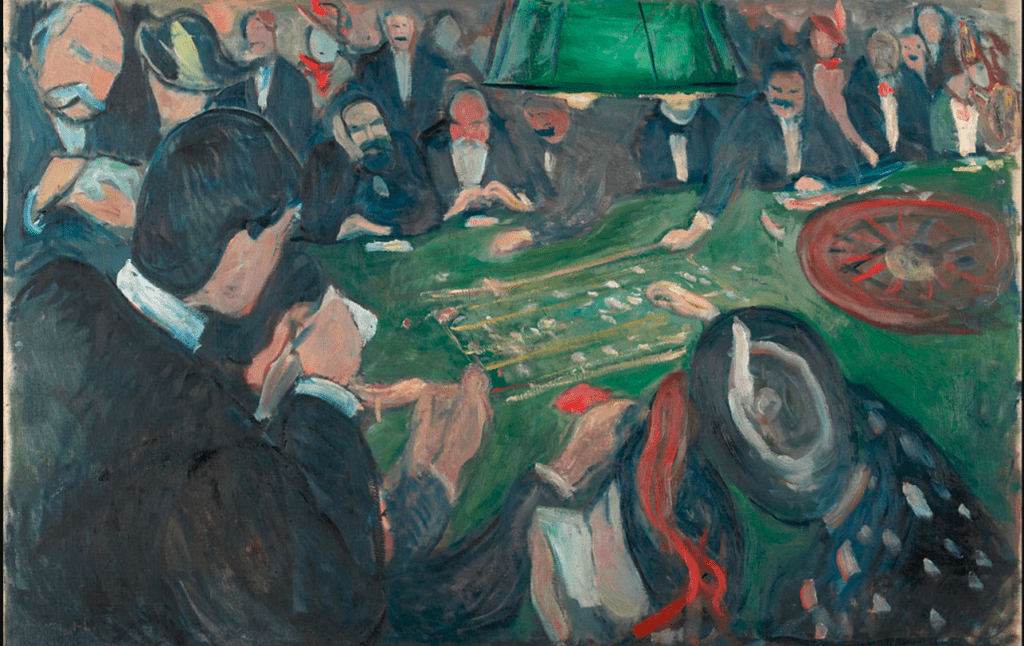
The roulette wheel belongs to a particular visual language. It is circular, balanced, deliberately restrained. Its colours are limited, its movements repetitive, its purpose immediately clear. Long before anyone places a bet, the object itself communicates something about how it expects to be approached. There is no excess design, no flourish meant to seduce. It simply exists to turn.
On a real wheel, the slight wobble in the spin is often the first thing you notice once you stop trying to predict it. The way the ball moves on any given occasion is a little different every time because of the slight variations in motion; rather than articulating this, most people simply accept it.
The design of the wheel has been around longer than any of its surroundings; for example, velvet rope, mirrored ceiling, and the dramatic sound of the casino have all basically become nonexistent, but the look of the wheel is still intact. Its appeal was never dependent on atmosphere alone. It worked because it didn’t need to explain itself.
It is perhaps why roulette online retains its pull for people increasingly tired of platforms that promise control while quietly removing it.
A Ritual Built on Indifference
Roulette has always been less about the result than the moment suspended before it. The ball slows. The wheel turns. The table stills. Time stretches just enough to feel present. For a brief interval, nothing else competes for attention.
This might sound abstract, but it’s something regular players recognise instinctively. Unlike games driven by constant action, roulette builds tension through waiting. The drama is internal rather than performative. You are invited to sit with uncertainty instead of being pushed through it.
In physical casinos, this moment was shared. A collective lean forward. A silence shaped by strangers. Online, the ritual has become more solitary, but the structure remains. The wheel still turns. The pause still exists. The outcome still arrives without commentary.
Why Certainty Is Overrated
Modern culture treats uncertainty as a flaw to be corrected. We track progress, optimise habits, and look for patterns even when they rarely hold. Roulette offers no cooperation here. It does not reward analysis or punish ignorance. It simply proceeds.
That does not make it empty. Its meaning lies in its refusal to flatter. You are not asked to improve. You are not encouraged to believe effort will be repaid. The wheel makes no such claims.
For some people, this feels uncomfortable at first. For others, it is a relief. There is no performance required. No version of yourself to maintain.
The Quiet Appeal of Not Being Chosen
Much of modern entertainment revolves around being selected. Content is tailored. Offers are personalised. Experiences are shaped around the idea that the system knows you.
Roulette offers anonymity instead. It does not recognise loyalty or punish absence. The wheel has no memory. Each spin stands alone.
In a culture shaped by visibility and data, that neutrality carries weight. It feels deliberate. You engage without being interpreted.
Control Without Illusion
Roulette is often described as a game of chance, but that description misses something important. While outcomes are unpredictable, the framework is fixed. The rules do not change. The wheel does not adapt.
This stability allows engagement without confusion. There are no hidden mechanics, no evolving systems, no surprises beyond the spin itself. You place a bet, the wheel turns, the result arrives.
Control exists, but it is limited and transparent. That clarity is increasingly rare.
A Game That Ends Cleanly
One of roulette’s quieter virtues is its finality. Each spin concludes fully. There is no progress to maintain, no narrative arc demanding continuation.
This makes it easier to leave. The experience does not ask you to return to complete something unfinished. It won’t keep you up at night thinking about it, or affect the way you sleep.You step away without friction.
In a digital landscape designed to extend attention indefinitely, this containment feels almost considerate.
Why the Wheel Endures
Roulette has survived not because it reinvented itself, but because it never needed to. Its mechanism remains intact. Its appeal is unchanged.
Digital access has altered how people encounter the wheel, but not why they do. The game still offers a brief separation from systems that promise more than they deliver.
The Value of Saying Nothing
The wheel never promises anything. It does not suggest that today will be different. It does not imply that you are owed a result.
That silence is its strength. It allows engagement without expectation. In a culture crowded with prompts, nudges, and predictions, that restraint feels almost generous.
Roulette endures because it offers exactly what it claims. A spin. A pause. A result. Nothing more, and nothing less.