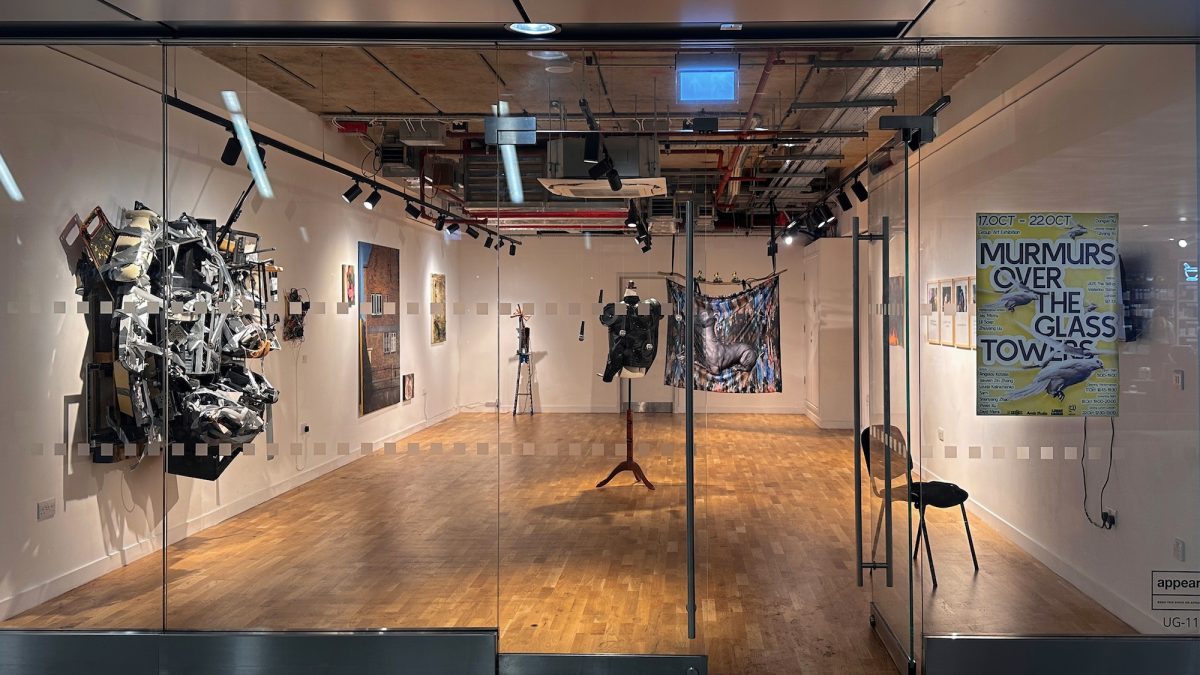
Ands Studio presents Murmurs over the Glass Towers, a group exhibition that turns the everyday transit space of The Sidings at London Waterloo Station into an urban resonance chamber. Bringing together ten artists working with sound, moving image, sculpture, performance and photography, the exhibition investigates how individual voices can rise above the amplifying volume of the contemporary city. Continuing Ands Studio’s ongoing inquiry into “space and listening,” the exhibition returns art to everyday life, allowing resonance to unfold within public space.
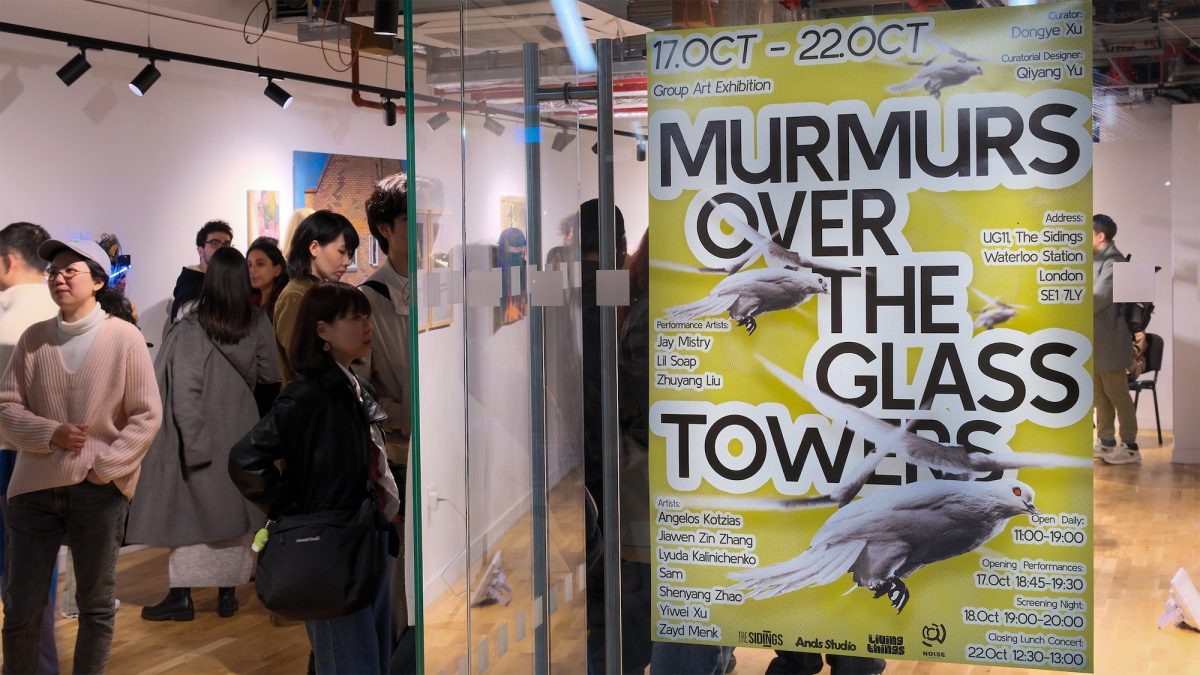
Listening as an Urban Practice
Murmurs over the Glass Towers is not an exhibition about sound, but a study into the act of listening. In cities governed by systems, logistics and surveillance, sound becomes a social language—revealing patterns of visibility, vulnerability and power. The exhibition takes London as its prototype: a city shaped by migration, historical accumulation, technological speed and constant negotiation.
Waterloo Station, one of London’s busiest transport nodes, becomes both site and metaphor. A place where journeys, bodies and identities intersect albeit briefly, it provides the conditions for a different kind of attention. Here, the arrival of an exhibition functions as an interruption—an opening in the texture of everyday order, where overlooked voices can surface.
Beginning with a Fracture
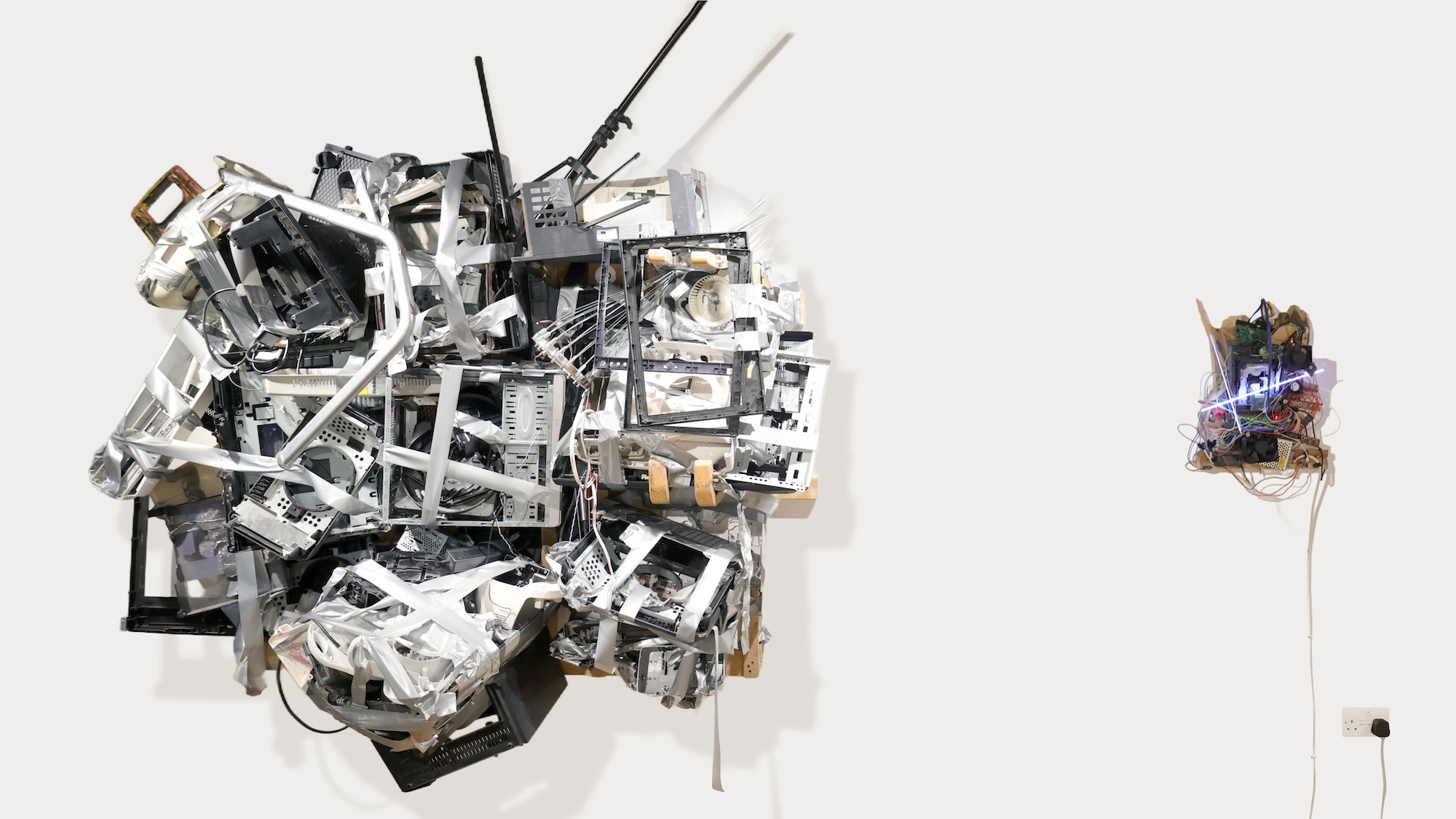
The exhibition opens with Zimbabwean artist Zayd Menk’s sculpture, ~$ sudo apt-get install stuff-and-duct-tape, placed at the station’s entrance window. Composed of dismantled electronic casings and plastic shells, the work appears static yet internally vibrating—evoking the fractured tempo of technological environments and the disorientation of accelerated consumption.
Positioned in a site of strict circulation and schedule, the work introduces the first rupture: a shift from the regulated order of the station into the contingent, unstable rhythm of the exhibition.
Voices Across the City
Each artist in the exhibition offers a distinct way of listening—through objects, memory, urban texture or the human voice.
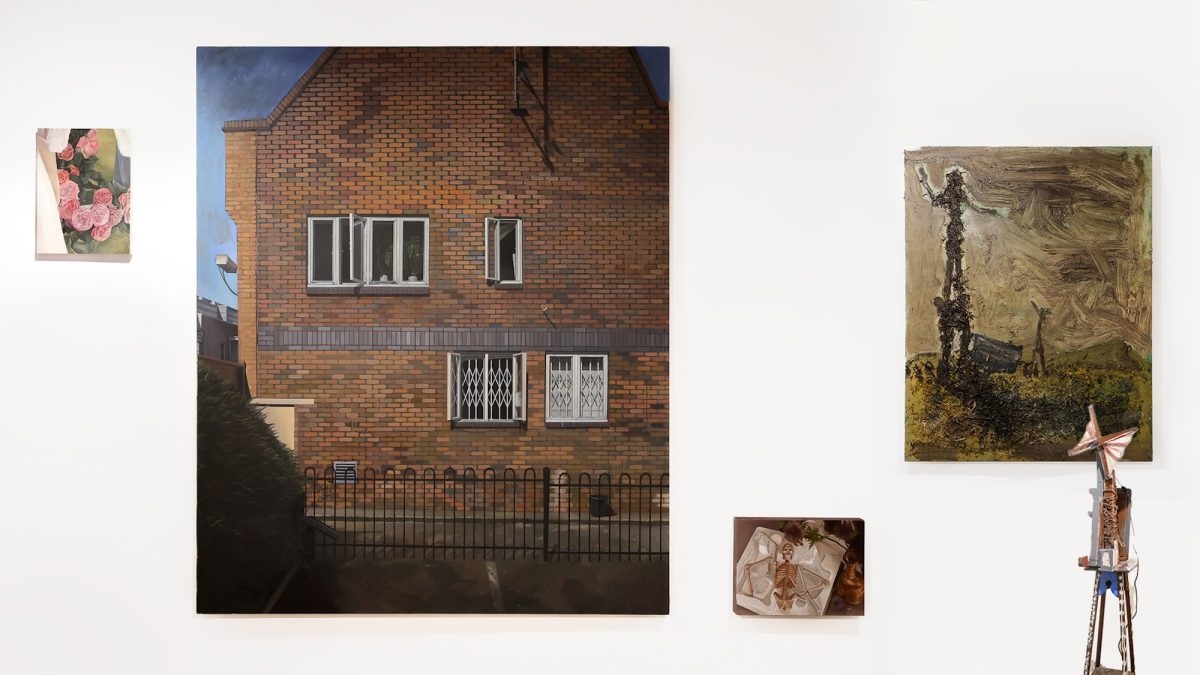
Shenyang Zhao listens to the city’s surfaces. His paintings of London’s red-brick buildings gather CCTV cameras, fences, roses, cigarette butts and small skeletal models into quiet scenes of suspended tension. These architectural skins—normally overlooked—absorb the residues of daily life, turning into containers of urban memory.
Angelos Kotzias works with vibration and rotation. In Archetype (0), low-frequency motors generate a physical hum that echoes the mechanical tempo of the city. In How much Land does a man need, soil, flowers and acrylic form a tableau of coexistence and erosion, speaking to the cycles of accumulation and exhaustion within contemporary urban life.
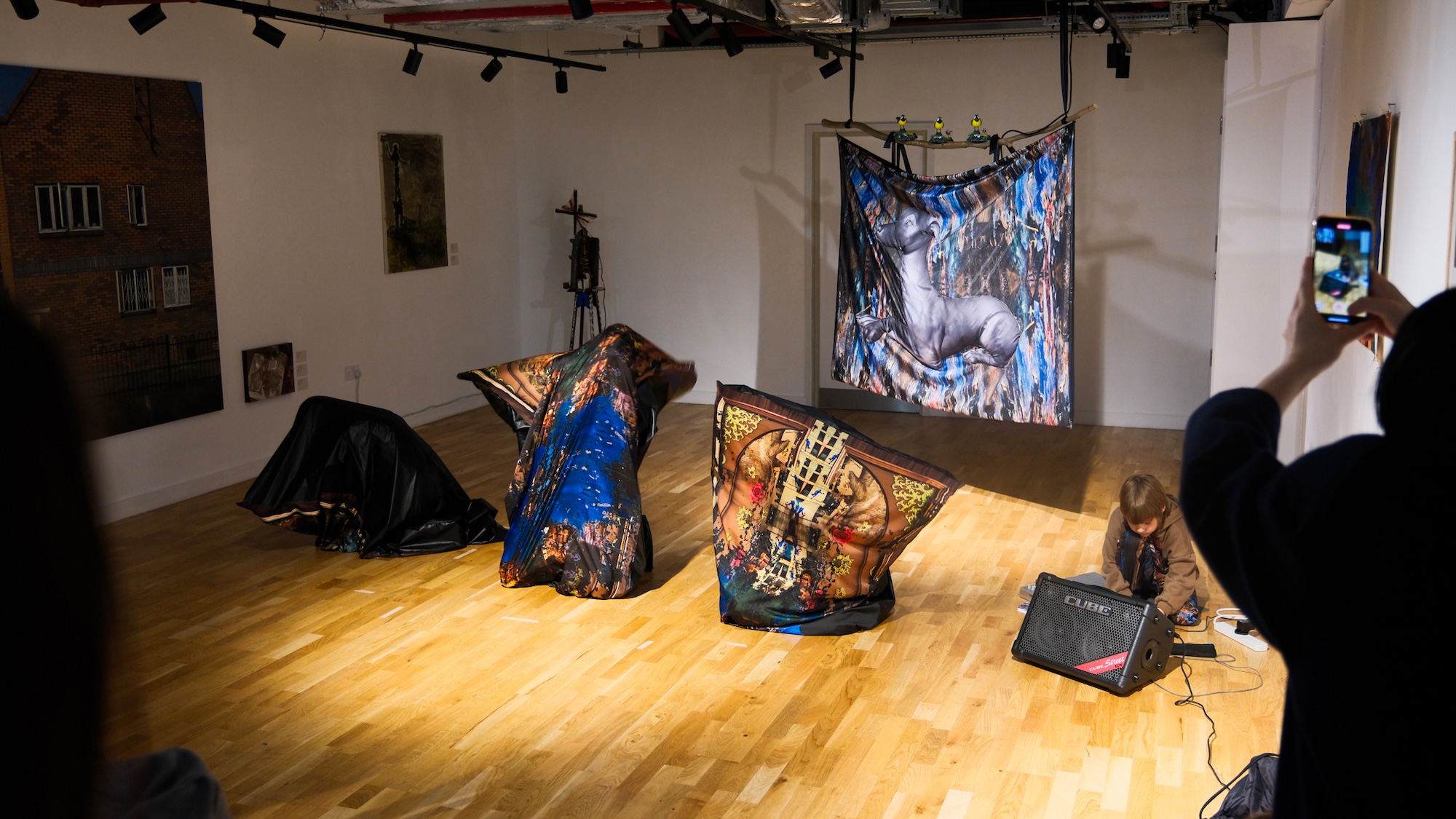
Lyuda Kalinichenko presents both the installation Four Stories (2025) and the performance Figure 52, exploring how memory is reorganised, digitised and re-entered into the body. Working with fabric, projection and measured bodily movement, the artist navigates a soft cocoon-like structure that oscillates between protection and exposure, balance and collapse—as she reconstructs the sensation of being present.
Within an exhibition concerned with urban noise, order and the suppression of quieter voices, Kalinichenko’s work forms a gentle counter-line. Her work probes what remains real when memory becomes imagery, and how the body locates itself within a city that never slows down.
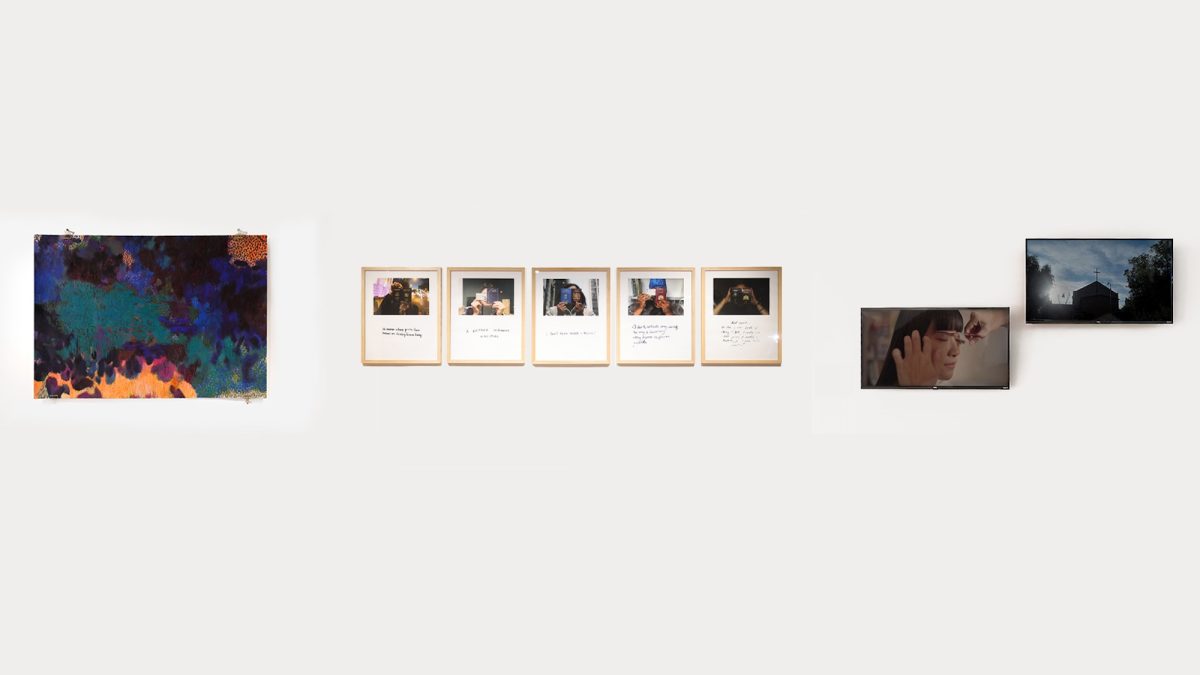
Yiwei Xu turns to the subtle movements of nature. Painting a single tree in suburban London, she traces shifting light, wind and colour—revealing how even stable structures are quietly reshaped over time. Her work offers another mode of attention: sensing rather than dictating.
Sam returns the exhibition to the scale of the individual. Inviting participants to handwrite a single answer to the question “Who are you?”, his photographic project foregrounds identity, belonging and multiplicity. Each sheet of A4 becomes an assertion of presence. Simple, direct, and deeply human.
Jiawen Zin Zhang enters the private sphere. By exchanging haircuts with East Asian women in their homes, she gains access to intimate domestic spaces rarely visible in public narratives. Conversations unfold between gestures; emotions surface not through verbal interviews, but through touch, proximity and everyday vulnerability. Her work gently shifts the viewer from systemic perspectives back to interpersonal perception.
Together, the works trace a path: urban exterior? technological rhythm? memory? identity? relationship. A trajectory from how cities are built toward how cities are felt.
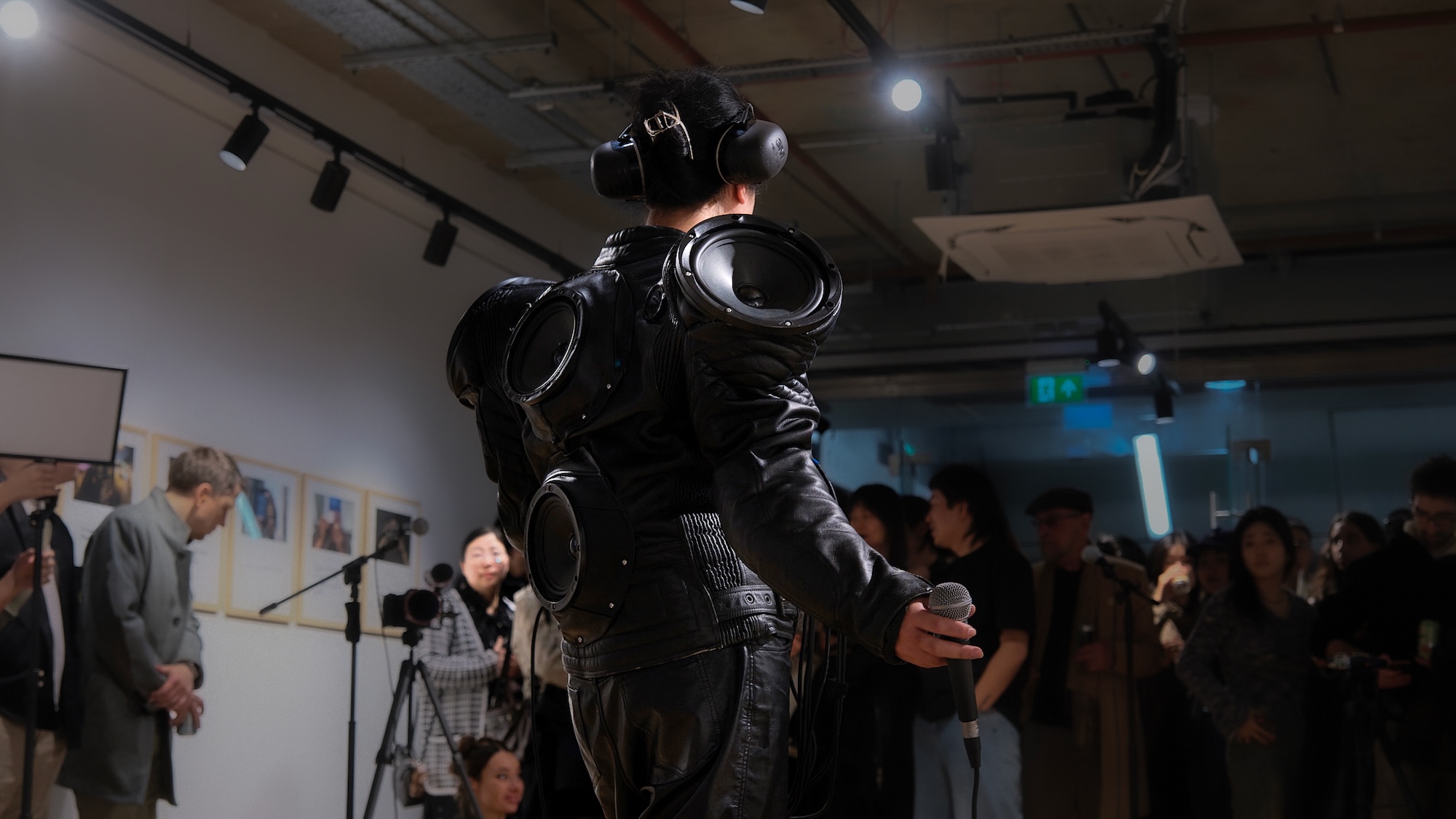
Bodies as Sounding Instruments.
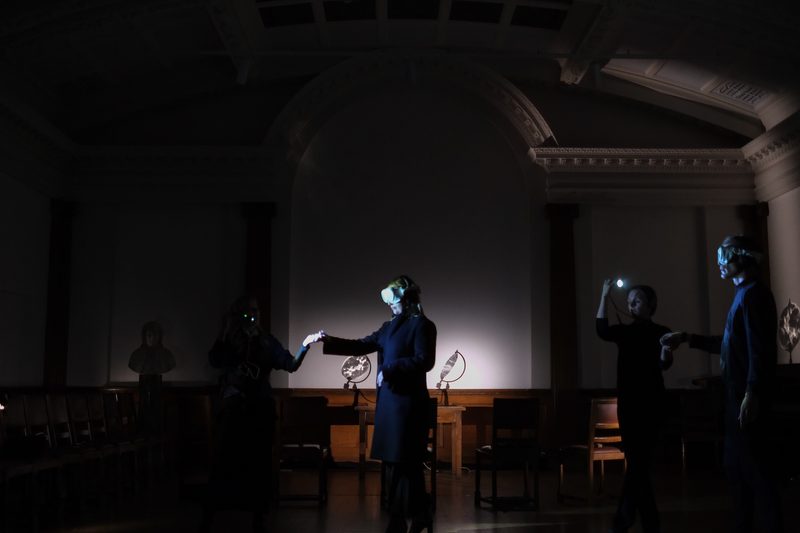
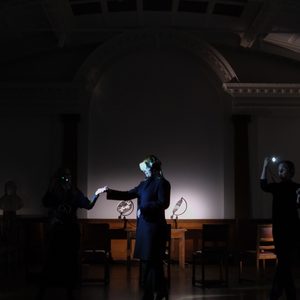
At the centre of the exhibition, the voice becomes physical. In Zhuyang Liu‘s performance Speaker’s, a wearable sound apparatus attaches vibration units and a mixing system directly to her body. With six microphones embedded among the audience, each movement produces unstable feedback frequencies, transforming the entire space into a live and volatile sound field. The work lays bare an implicit structure of power: who is amplified, who is muted, who is heard and who must remain silent.
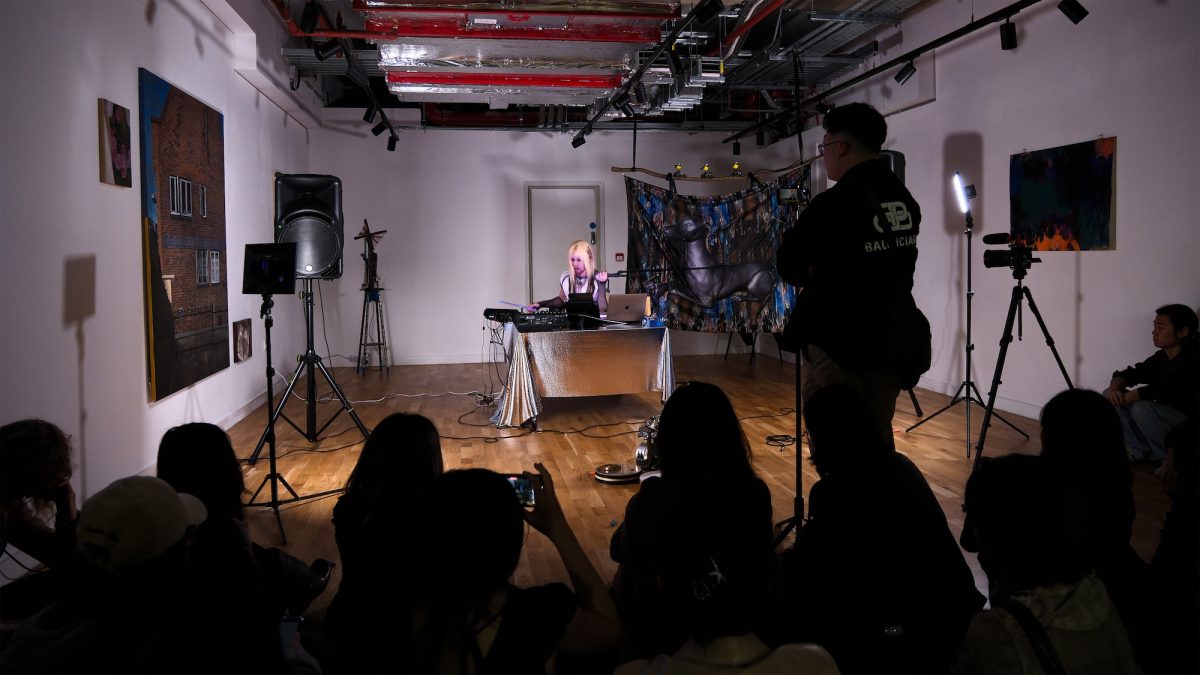
Lil Soap’s (Corey Lyu) Running and Screaming follows as a second performance. Beginning in whispers and collapsing into distorted breath, the work examines the queer body within the rhetoric of “safety”—protected yet constrained, visible yet regulated. Through loops, delays and real-time processing, the voice becomes both a site of resistance and a site of exhaustion.
Toward a Shared Quiet
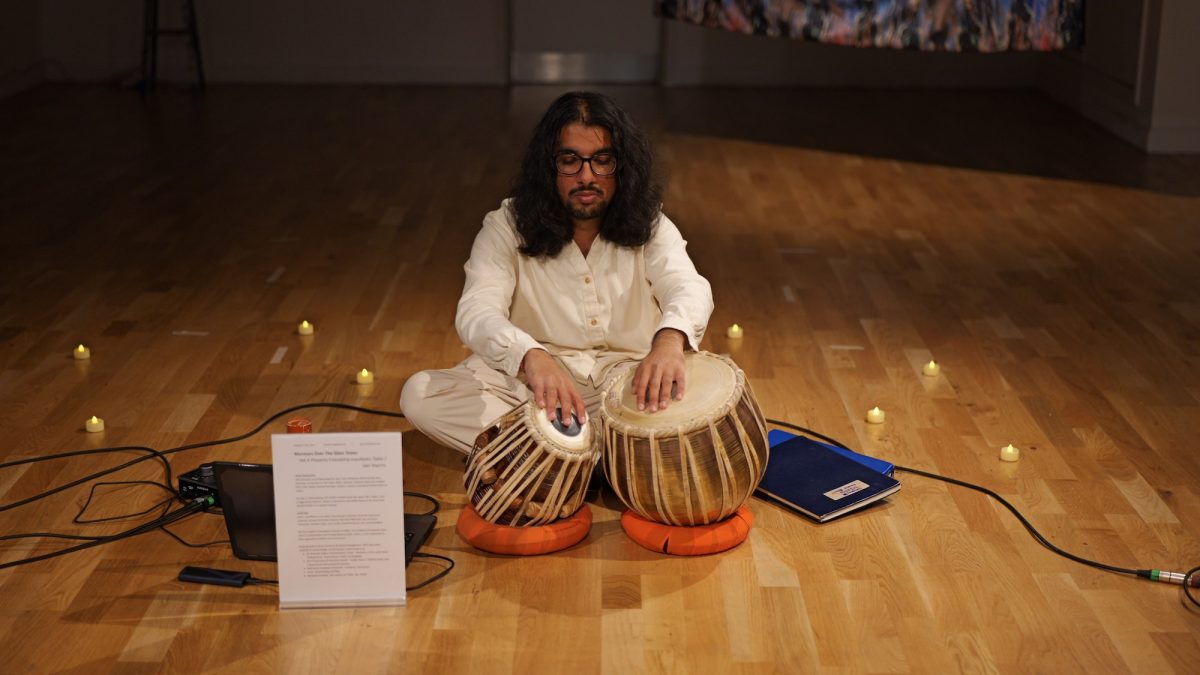
On the final day of the exhibition—coinciding with the Indian New Year Bestu Varas—musician JAE-X (Jay Mistry) presents Friendship Manifesto, blending tabla rhythms with electronic textures to weave a new sonic field. His performance gathers the city’s scattered murmurs into moments of relational closeness, responding to the exhibition’s central question: In the vast machinery of the city, how do people find one another again?
The exhibition closes not with a crescendo, but with a return to near-silence—a reminder that listening, like peace, is never a fixed condition. It must be continually negotiated. In that quiet, art happens between us.
The exhibition was curated by Dongye Xu.
Exhibiting artists: Angelos Kotzias, Jiawen Zin Zhang, Lyuda Kalinichenko, Sam, Shenyang Zhao, Yiwei Xu, Zayd Menk. Performance Artists: Jay Mistry, Lil Soap, Zhuyang Liu. Text consultant: Michelle Pang
Ands Studio presents Murmurs over the Glass Towers, 17th–22nd October 2025, UG11, The Sidings, Waterloo Station