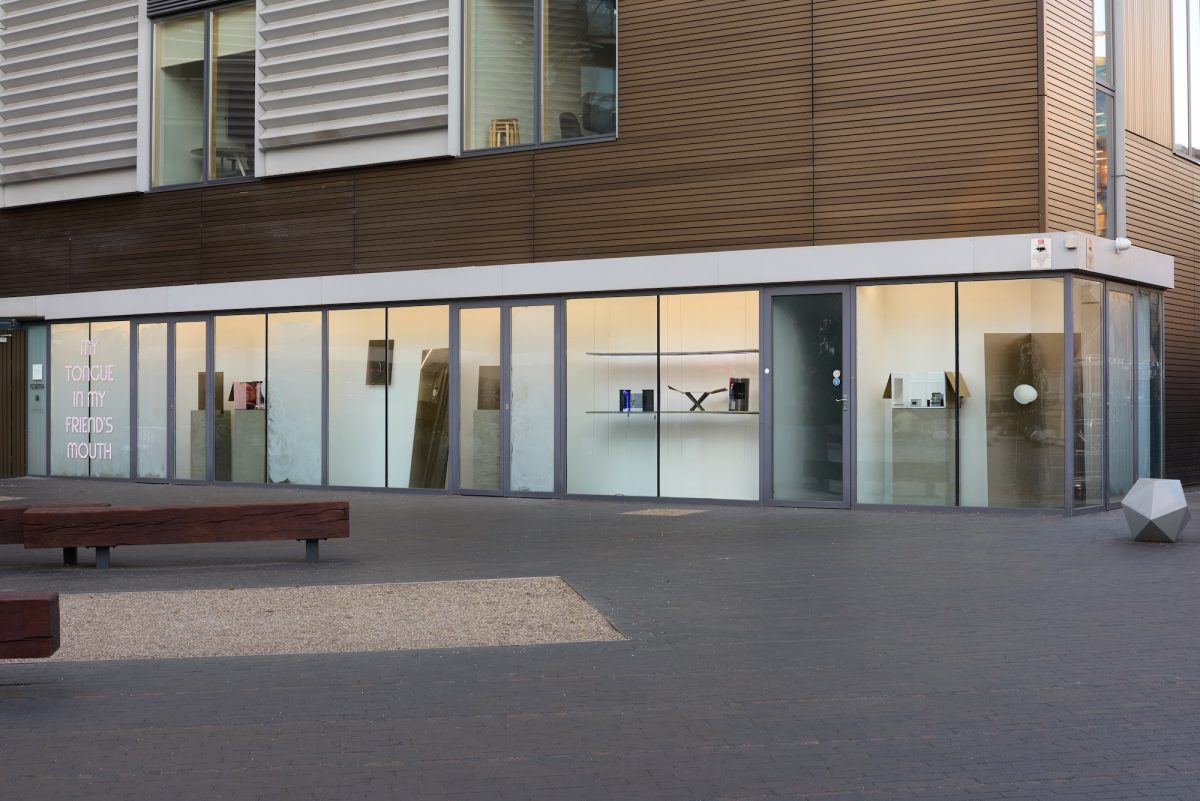
Francesca Pionati and Gaia Di Lorenzo spent two months on a residential programme at FormaHQ in the Autumn of 2024. During that time, they conceived their first joint exhibition named, my tongue in my friend’s mouth, which runs until the 31st of August. Ultimately, it’s an exercise of the “like attracts like” philosophy. This means their pieces featured in this exhibition are speculative, not competitive. One artist’s body of work is a bedrock for the other.
“Working together on my tongue in my friend’s mouth meant confronting ruptures – personal, spatial, political – from radically different standpoints, not only in medium but in method”,
the artists explain.
“It was both a challenge and a necessity to hold space for our opposing approaches: one more intuitive, the other research-based.What emerged was a tension that allowed each of our works to remain distinct, yet to resonate more deeply through their proximity.”
THIS MO works well in the face of my tongue in my friend’s mouth focusing on the structures that influence both individuality, as well as state. Joining in with this is a prodding of the environments where these systems buckle, break or shift, and the personal as well as societal chasms that are left in their absence.
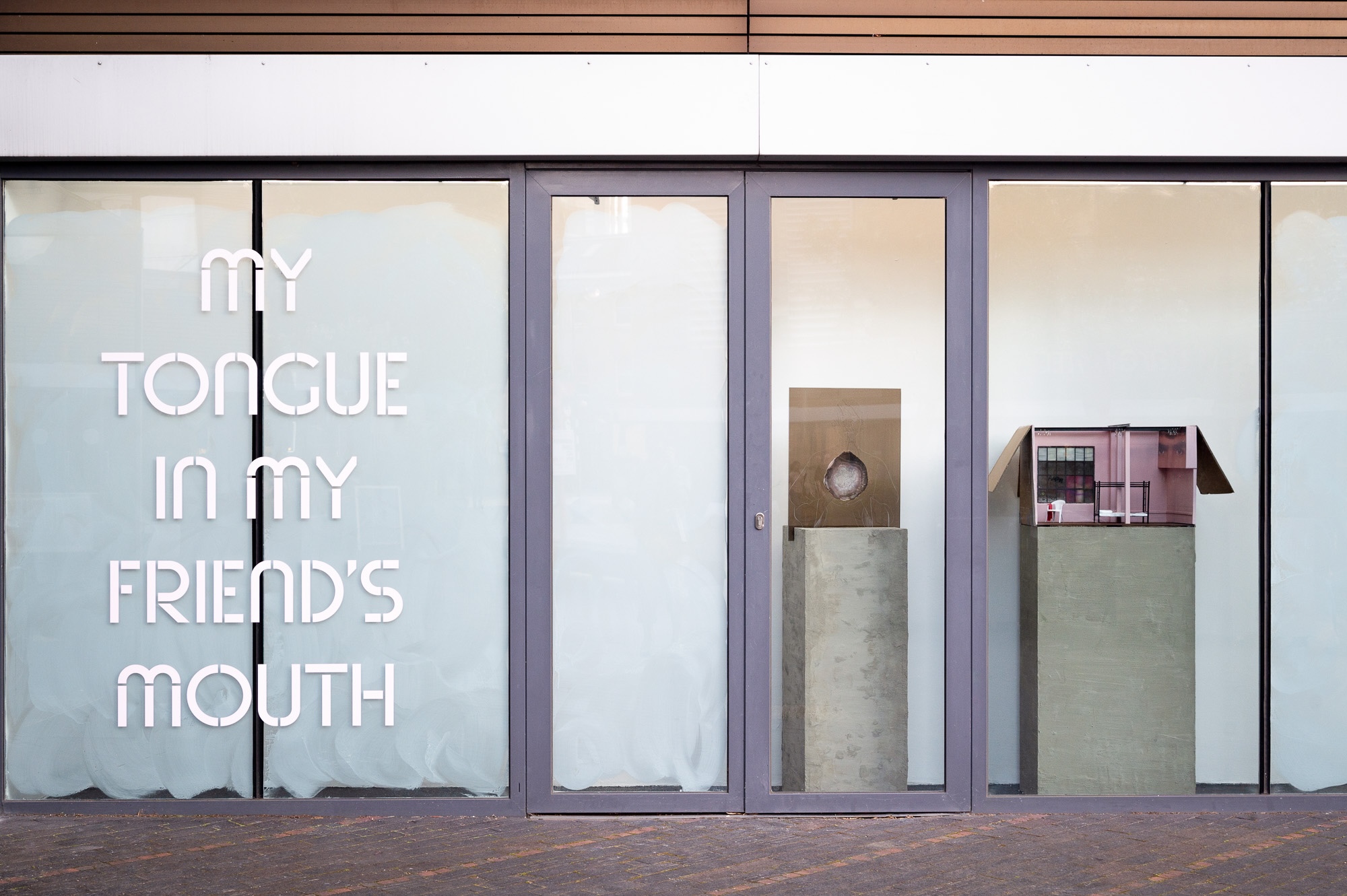
Forma’s 15-metre-long window gallery on Bermondsey Square (Formally Vitrine Gallery) where the exhibition is held, is being exploited to its fullest capacity so that each of the artistic interventions can open their mouths to yawn, to stretch, to yell, and then to deafen. Pionati and Di Lorenzo have also seized upon this, particularly through their experimentations with layering. This has meant a refurbishment of the gallery into a labyrinthine setting where it’s considered how architectural, sentimental and societal substructures can satiate and spurn us.
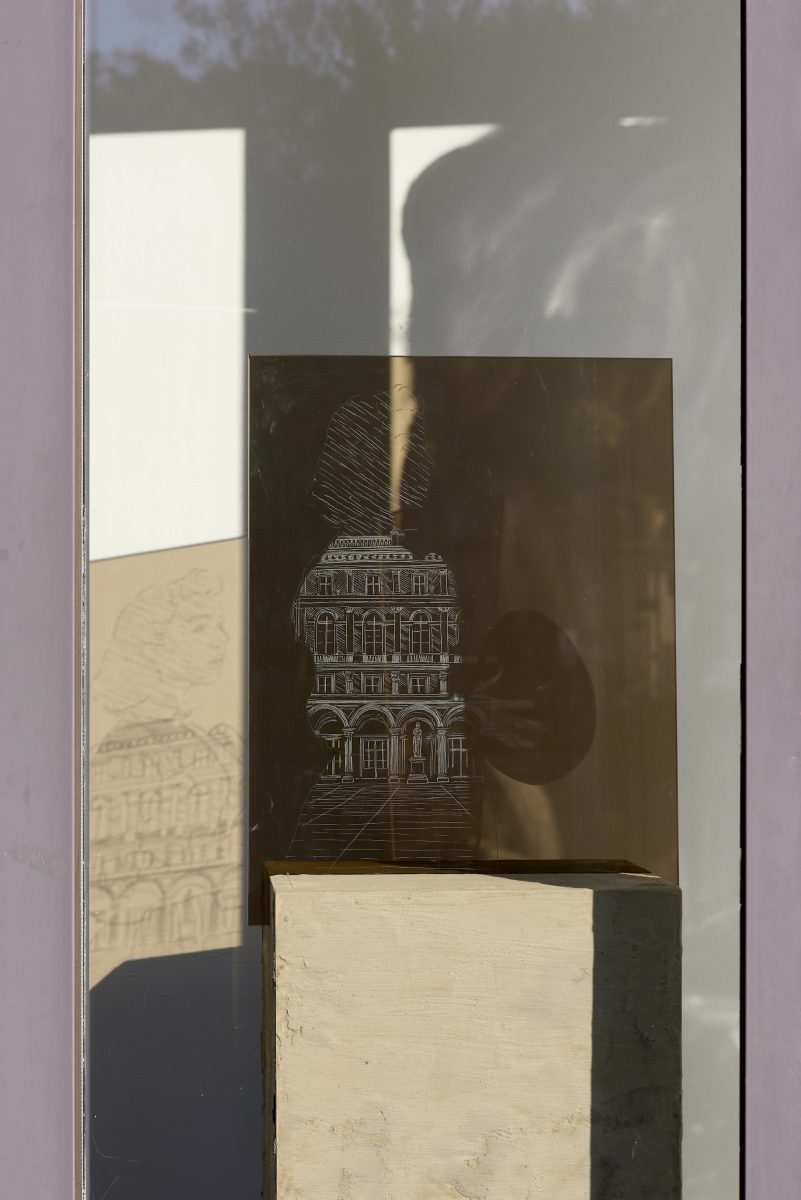
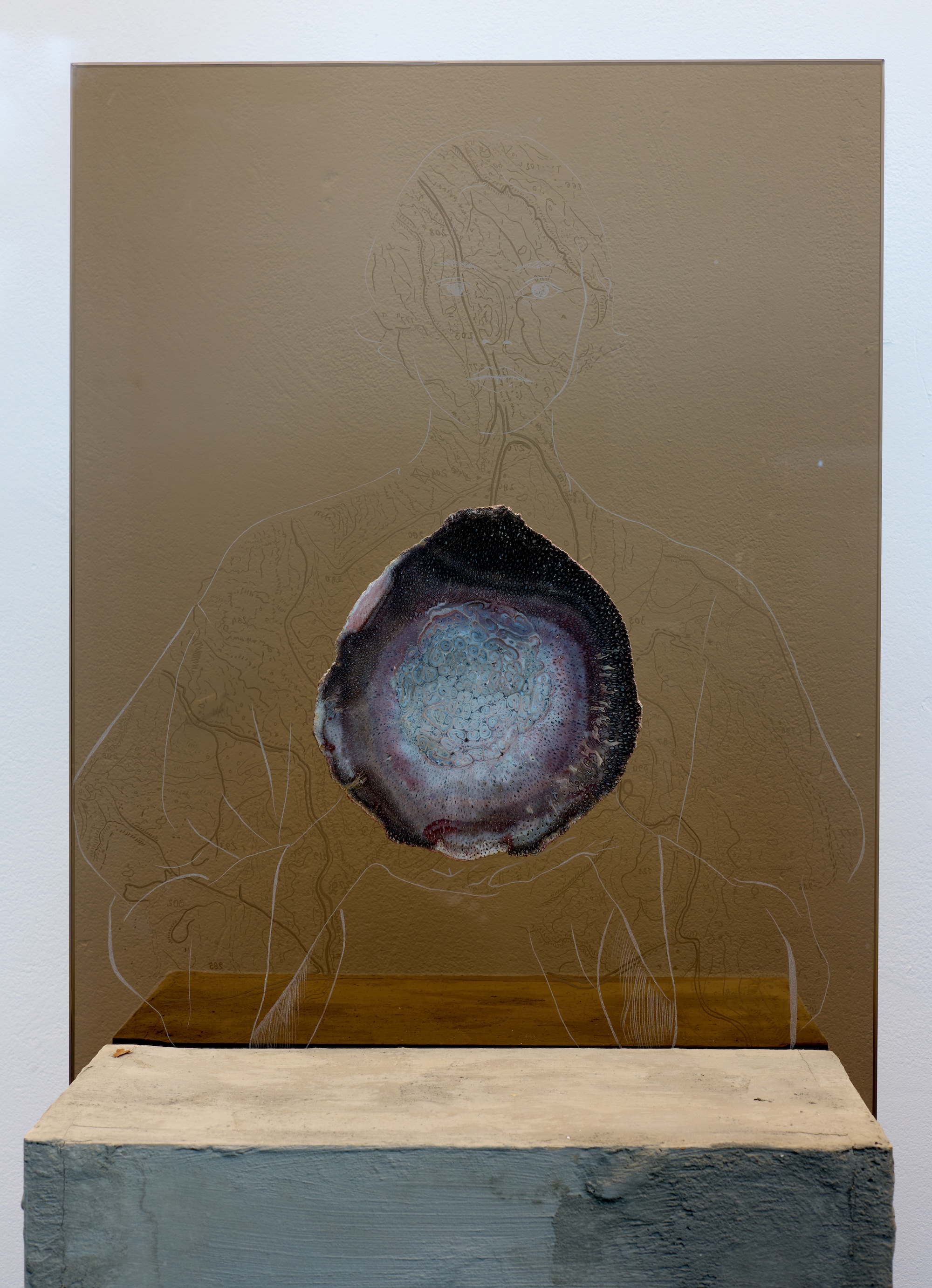
The fragile nature of Gaia Di Lorenzo’s etched glass sculptures reflects the fragility of this tumultuous relationship between us and these structures. There’s a poignancy also in knowing they capture broken glimpses of personal chronicles and sentimental conditions, memories of interactions that otherwise remain buried in the deeper recesses of the human mind. There’s the occasional glint as you pass by some of them – they have been encrusted with stones, suspended by the intangible nature of memory as tangible commodities hold them together. Ultimately, the natural outside light that filters through these glass pieces becomes the dictator of how they are seen. It, similarly to memory, comes and goes, controlled by forces beyond the observer/s control. Overall, the works are a poignant reflection of personal relationships and how they, despite their impermanent nature, continue to influence us.
Francesca Pionati’s grouping of layered works and miniatures is the quintessential accompaniment, especially given their examination of the way in which urban architectural forms – influenced by exclusion, policy and profit – can expel and untether communities, as well as shatter social bonds. Insightfully, the press release points to an analysis of more than a century of policies that have catalysed the sweeping obsolescence of buildings in the majority of contemporary capitals.The void left behind is structural, but it is also personal – the latter in particular, appears in the individual and joint realities of those who inhabit those buildings. Pionati’s take on this has been realised alongside Tommaso Arnaldi, with assistance from 3D designer Gaia Lazzaro. The ending result is a metaphorical blueprint that enables the artist to consider the presence of symbolic and substantial interventions and how they encourage these spaces to become places, to become homes. This ensures that Pionati’s reconfigured objects are also seen as defiant demonstrations – they review how occupying architectures not purpose-built for living can reconfigure an individual’s perception of space and the world.
Ultimately, my tongue in my friend’s mouth builds itself up as much as it takes itself down. Its existence is impermanent as it closes, but the impression it leaves behind will persist. Also imitated in the whitewashed glass of the 15-meter spanning gallery space is a technique conventionally used in abandoned shop fronts that are shutting down or in a derelict state.
my tongue in my friend’s mouth – 31st August 2025 Forma HQ
About the artists
Gaia Di Lorenzo is an artist and educator living in Rome. Her work includes installation, sculpture and painting. She received a BFA from Goldsmiths University and her BA in Literature and Philosophy from Tor Vergata University. In 2018, she established CASTRO, which is a free, unconventional learning programme for creatives in Rome. In 2020, she also became involved with Art Workers Italia (AWI), which is a freestanding organisation focusing on art workers’ rights in Italy. Her most recent artistic projects include Panorama Italics, assembled by Vincenzo De Bellis, Temmatemenetè, Una Boccata d’Arte by Fondazione Elpis, in partnership with Galleria Continua, and Sitting Amongst with Pietro Librizzi at Jupiter Woods, London.
Francesca Pionati is an artist, academic (researcher) and spatial practitioner. Her bodies of work consider the aesthetic and political relationships between urban infrastructures and institutions of governance, concentrating on localised strategies of communalising in the face of institutional forms of violence. In 2024, she completed an MFA in Art Praxis at the Dutch Art Institute. Her work is presently included in the 2025 Venice Architecture Biennale, and has also been shown at Artissima, De Appel, Macro Museum, Ma*ga Museum, Triennale Milano and others. She has also participated in residential programmes at Triennale, Mattatoio, Lo Schermo dell’Arte, and Teatro India.