Last summer, Small Works Gallery presented England is a Forest, a collaborative and experimental “illustrated forest” curated by Monica Perez Vega and Sylwia Narbutt. The project began as a virtual map composed of over one hundred depictions of trees across the UK—each rooted in an artist’s personal geography—and debuted physically at the Sluice [Vernacular] Expo hosted by The Minories, Colchester. A selection of works was later shown in Small Works’ Hackney Wick exhibition space, which continues to champion artist-led curating and locally grounded artistic voices.
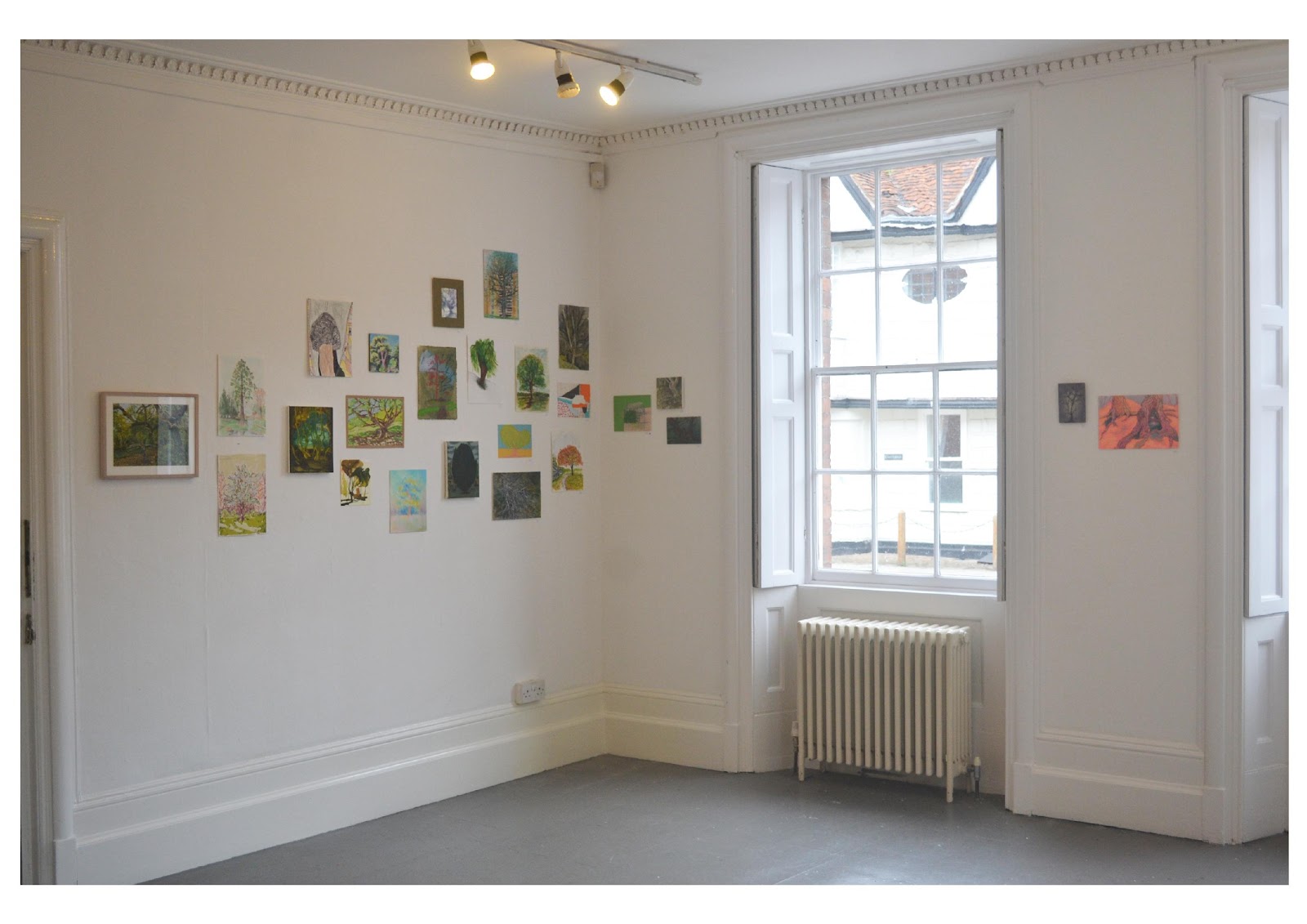
Small Works Gallery, founded by Monica and Sylwia, is known for its intimate and materially conscious approach. Monica, a multidisciplinary artist and educator, explores memory, site, and embodiment through process-driven practices. Sylwia, a London-based painter and community arts facilitator, brings an intuitive understanding of slow-making and personal visual vocabularies. Together, they shape a curatorial framework that privileges sincerity over spectacle and empathy over excess.
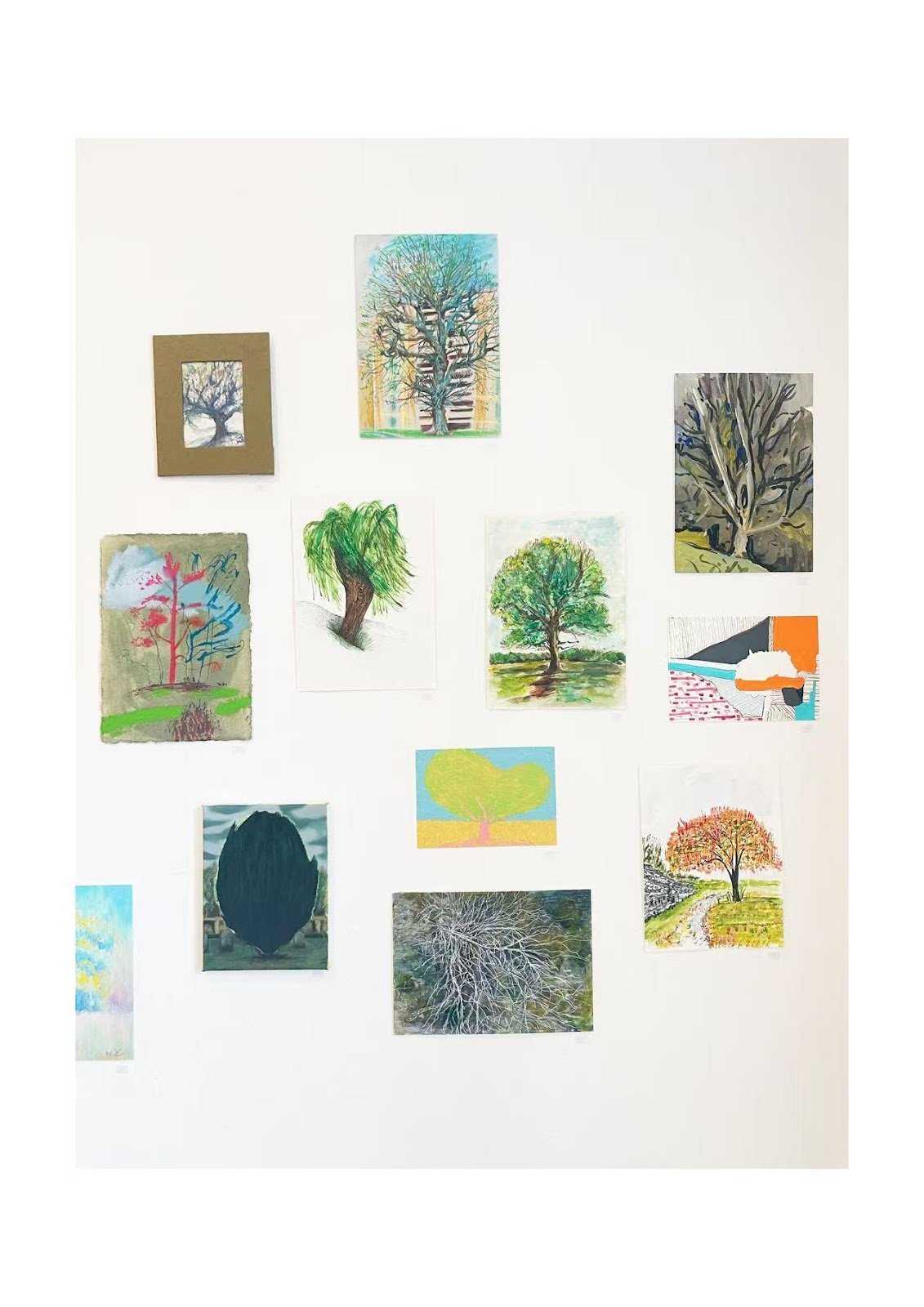
The Minories, a respected art venue in Colchester, provided the inaugural physical platform for the project. Its layered history—as a former priory, museum, and now arts centre—mirrors the exhibition’s interest in embedded stories and place-making. Sluice, the broader organizing platform, is an artist-run initiative foregrounding collaboration, critical experimentation, and a resistance to market-centric models. These values permeate England is a Forest, where artistic intimacy becomes a political act.
Among the works, My Silver Maple by Cloudslin (Lin Dong) drew particular attention for its quiet intensity and local resonance. A small-scale pastel and oil painting, it depicts a silver maple tree beside the Arden Estate playground in Hoxton, East London. For residents of the area, the tree is unmistakable—its distinct silhouette and spatial positioning evoke the neighborhood’s daily rhythms. Cloudslin’s rendering treats the tree not merely as subject but as presence: a dignified, enduring figure standing in quiet watch.
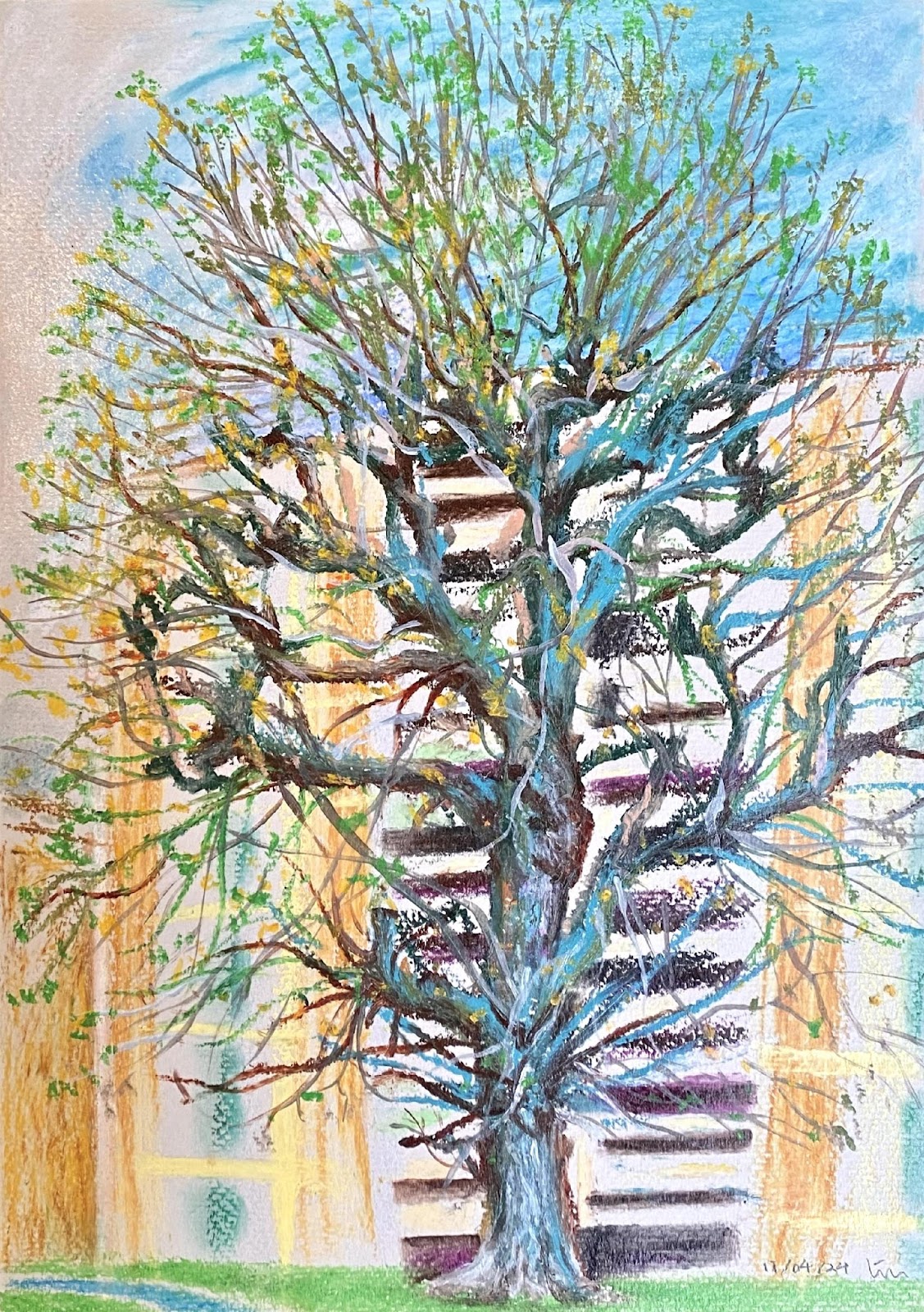
Created in the global post-pandemic period, My Silver Maple reflects Cloudslin’s desire to reconnect with his immediate environment. The decision to work en plein air with pastel and oil on paper was both practical and emotional—allowing for swift, intuitive mark-making while capturing the interplay between environment and internal state. The artist recalls beginning the piece under overcast skies before rain interrupted his session, leading him to complete it indoors from memory. The final painting thus exists between observation and recollection, grounded in place but filtered through time.
The process itself became an act of reverence. Cloudslin describes a feeling akin to portraiture, stating that he regarded the tree as a kind of elder—steadfast, familiar, and quietly protective. His work gestures toward an ethics of attention: to see, to dwell, and to remember. Echoing Francis Bacon’s architectural compositions, he frames the tree within subtle spatial divisions—giving it gravity and grace—while hints of violet and ochre in the palette evoke textile traditions from Miao culture and earlier cave wall practices, recalling his diasporic identity.
The painting also resonates with a sensibility embedded in the curatorial ethos of the exhibition: that amidst the flux of experience and time, certain vegetal presences remain—anchored in place, quietly bearing witness to our departures and returns. Their enduring presence becomes a vessel for memory, a way through which place remembers.
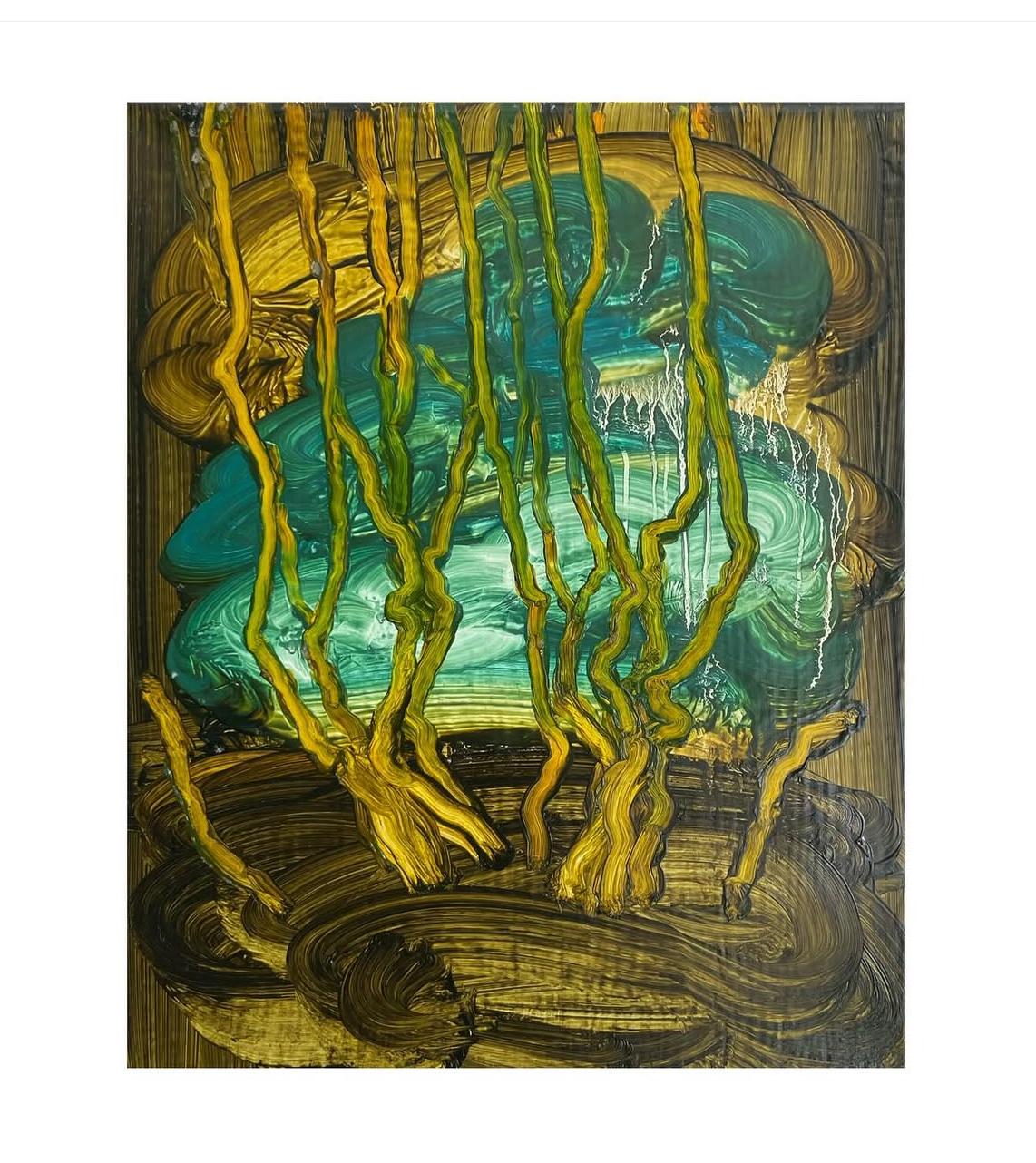
In this context, My Silver Maple finds thoughtful echoes in other contributions to the exhibition. Barbara Howey’s Tree 19, Ash Coppice, Honingham (2024) reflects her engagement with endangered trees in Norfolk. Using gestural oil on canvas, she transforms botanical observation into expressive abstraction. Her practice, rooted in feminist landscape traditions, reimagines how land is recorded and remembered.
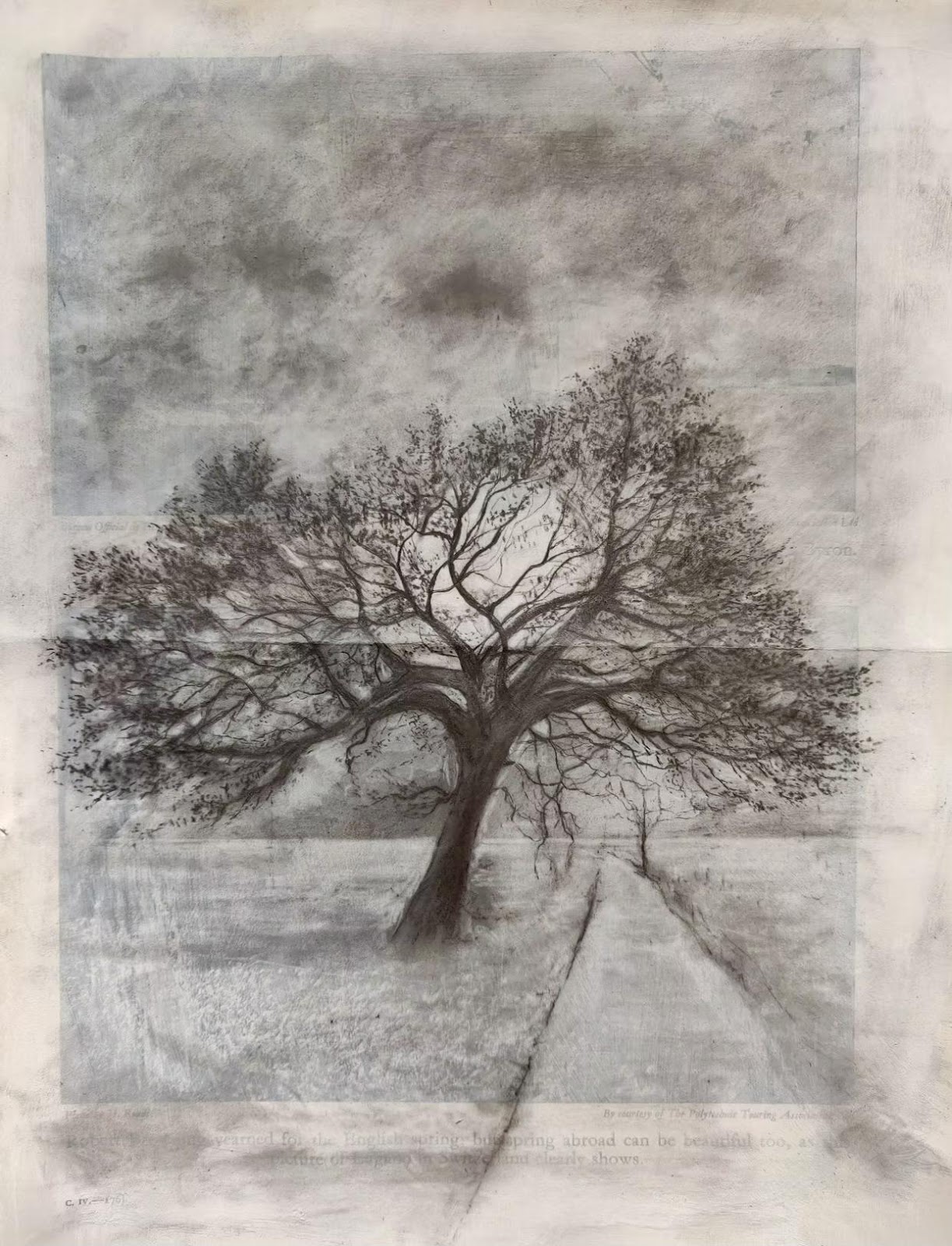
Heather McAteer’s She yearned for the English Spring (2024), a graphite drawing on gessoed found paper, captures a solitary pedunculate oak along the Thames—a tree discovered during lockdown walks. Rendered with delicate precision, the image becomes a vessel for reflection, memory, and quiet continuity amid change. Known for her evocative works on paper, McAteer brings a quiet emotional clarity to England is a Forest, where her oak—anchored in personal memory—bears witness to seasonal rhythms and life transitions. Its enduring presence offers shelter and stillness, echoing the exhibition’s meditation on how trees carry the trace of our departures and returns.
While many works within the exhibition gesture toward the grand or mythic, Cloudslin’s contribution insists on intimacy. His tree is the one you might pass every day and finally decide to notice. Through quiet scale and subtle layering, My Silver Maple offers a radical proposition: that to locate oneself—to care for a single tree, a street, a season—is to engage in an act of resistance and repair.