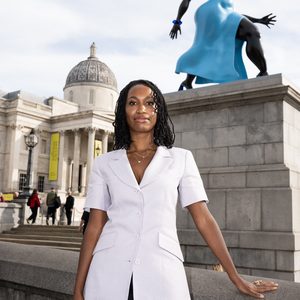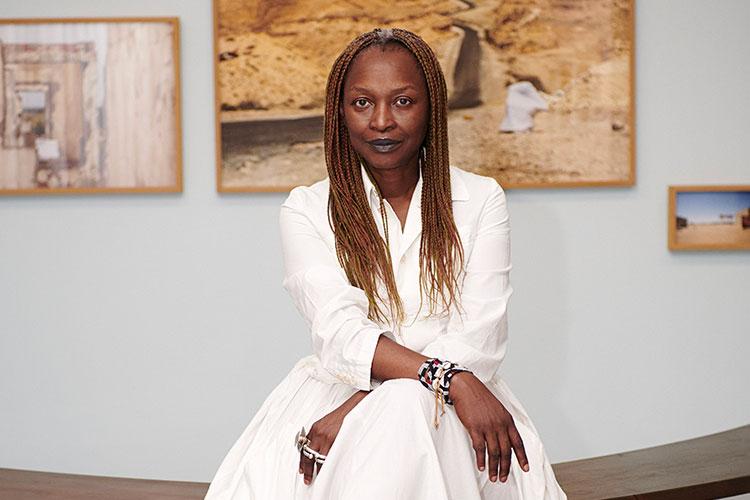
The art world is in mourning following the sudden and untimely death of Koyo Kouoh, the acclaimed curator and cultural force who was appointed to lead the 61st Venice Biennale, scheduled to open in May 2026. Her passing was confirmed by Zeitz MOCAA, the Cape Town museum where she served as executive director and chief curator. The announcement, made via Instagram, cited no cause of death, only that it was unexpected.
Kouoh made history as the first African woman appointed to curate the Venice Biennale—a milestone that underscored her singular position in the contemporary art world. She was entrusted with shaping the 2026 edition of the Biennale just last December, and had been working with what La Biennale di Venezia described as “passion, intellectual rigor, and vision.” The exhibition’s title and theme were set to be unveiled in Venice on 20 May.
“La Biennale di Venezia is deeply saddened and dismayed,” read a statement from the institution. “Her passing leaves an immense void in the world of contemporary art and in the international community of artists, curators, and scholars who had the privilege of knowing and admiring her extraordinary human and intellectual commitment.”
Born in Cameroon in 1967 and raised in Zurich, Kouoh’s career was deeply international, marked by a commitment to amplifying African and diasporic voices in global contemporary art. She lived and worked between Cape Town, Dakar, and Basel, and brought a uniquely transcontinental perspective to every role she undertook. She was co-founder and long-time artistic director of RAW Material Company in Dakar, Senegal—a crucible for critical thought and experimental practice on the continent.
Her curatorial journey spanned decades and continents. Kouoh served on the curatorial teams for documenta 12 and 13, played a decisive role in the appointment of Adam Szymczyk for documenta 14, and helped shape the artistic program of the 1-54 Contemporary African Art Fair between 2013 and 2017. She was also known for her groundbreaking exhibition Body Talk at Lund Konsthall in 2015, which centered on six African women artists and the politics of the body.
The New York Times once described her as “one of Africa’s preeminent curators and art managers,” praising her blend of sharp intellect, multilingual fluency (in French, German, English, Italian, and some Russian), and a calm yet incisive presence.
Kouoh’s legacy is one of uncompromising vision, generosity of spirit, and deep commitment to cultural transformation. Her absence will be profoundly felt not only in Venice, but across the global art community she helped to shape—and challenge—with such brilliance.