A custom sport coat is one of the most personal things a man can wear. It carries your proportions, your fabric preferences, your collar shape, the whole way you want to move through a room. Get those decisions right and the coat works with your body without any fuss. Get them wrong, and even a genuinely expensive garment will always feel slightly off, no matter how many times it goes to the dry cleaner. Most buyers zero in on color and pattern first, then wonder later why the coat doesn’t feel as polished as they’d hoped.
The real work happens before anyone picks up a needle. It starts with understanding what you actually need the coat to do, where you’ll wear it, how it should sit across your shoulders, what level of construction will hold up over years of real use. The details that separate a coat you reach for constantly from one that just hangs there are specific, learnable, and worth knowing before your first appointment. So here’s what to pay attention to when designing a custom sport coat that actually fits your life.
Fabric Choice Determines Everything That Follows
The fabric you choose is the single most consequential decision in the entire process. A hand-sewn bespoke sport coat built from the right cloth will age well, breathe correctly, and hold its shape through regular wear in ways that lesser materials simply won’t. For most American buyers, the practical starting point is weight. A 10 to 12-ounce wool in a tweed, herringbone, or flannel works across fall and winter; a lighter 8 to 9-ounce fresco or tropical wool in linen or cotton blends handles spring and summer much more comfortably.
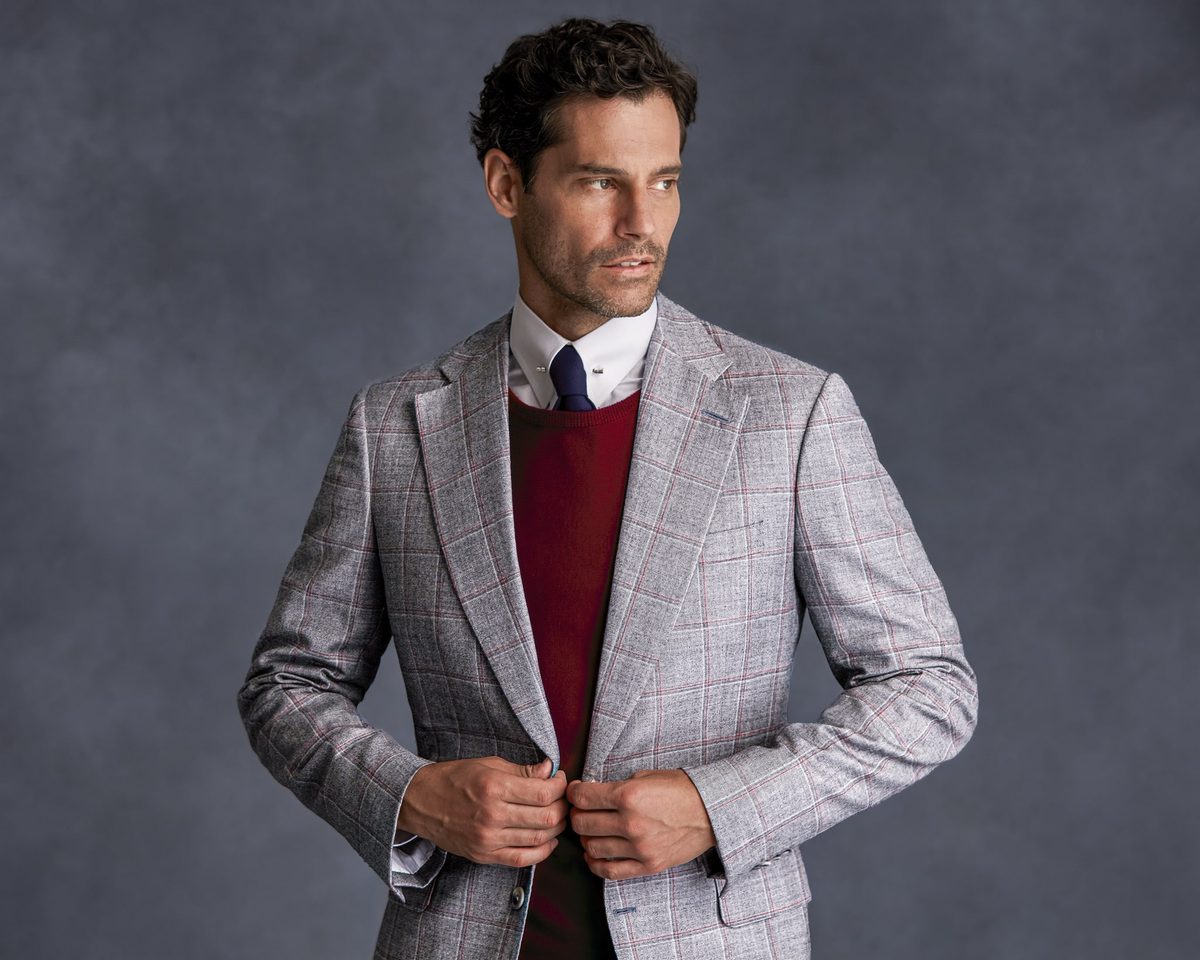
Beyond weight, think about texture and pattern scale relative to your frame. Larger houndstooth or bold windowpane checks read well on taller, broader frames; finer textures scale better on leaner builds. English and Italian mills, including names like Loro Piana, Dormeuil, and Zegna, produce cloth that holds structure through years of wear, and they offer a real range across price points, so you don’t need to default to the most expensive bolt on the shelf. Here’s the thing: always ask your clothier to show you samples in natural light. Artificial showroom lighting flattens the character of most fabrics in ways that daylight reveals immediately. And that difference can genuinely change your decision.
Fit and Structure Define Whether the Coat Works
No amount of beautiful fabric rescues a coat with poor structure. Fit in a custom sport coat comes down to three things: shoulder placement, chest suppression, and sleeve length. The shoulder seam should land exactly at the break of your shoulder, no divots pulling at the fabric, no extra cloth bunching at the sleeve head. Many buyers want a slightly softer chest than a structured suit, which makes sense for a sport coat’s more relaxed register, but the chest still needs enough internal shaping to keep the lapels flat and the front from splaying open when buttoned.
Sleeve length is where many otherwise well-fitted coats quietly fall apart. The standard rule calls for roughly half an inch of shirt cuff to show below the sport coat sleeve, but that number shifts depending on how you actually dress. If you frequently wear the shirt alone without a jacket, a marginally longer sleeve looks better in isolation. Posture matters too; forward head carriage, uneven shoulders, or a prominent seat all require pattern adjustments. A good master tailor addresses these at the basted fitting stage, well before final construction begins. Don’t skip that fitting.
Lapel Style, Button Stance, and Pocket Placement
Together, these three elements decide whether the coat looks current or dated, casual or dressed up, and whether the proportions feel balanced on your specific body. Notch lapels are the standard choice for sport coats worn in American contexts; they work across most body types, scale naturally to most collar styles, and don’t lock you into a single formality level. Peak lapels add a slightly more assertive quality that suits taller frames particularly well.
Lapel width should relate to your shoulder width and, if you wear one, the width of your tie knot. Too narrow a lapel on a broad-shouldered man creates visual imbalance; too wide a lapel overwhelms a narrower frame. Button stance – meaning the height of the top button relative to your natural waist – directly affects how the coat elongates or shortens your torso. A lower stance adds visual length; a higher one shortens it. Patch pockets signal casual intent, while flapped or jetted pockets read more formally. Honestly, decide which direction fits how you actually dress before your tailor cuts anything, because reversing that decision later is a headache.
Construction Quality and Interior Finishing
The interior of a sport coat tells you more about its long-term value than the outside does. Full canvas construction – where a layer of horsehair canvas runs through the chest and lapel – allows the coat to mold to your chest over time and recover its shape after compression from sitting or travel. Fused construction, where the chest layer is glued rather than sewn, saves cost but degrades over years of dry cleaning as the glue bond weakens and creates bubbling across the front panels. Half-canvas is a reasonable middle ground for buyers who want durability without the full canvas price tag.
Lining choice is both practical and aesthetic. A full silk or Bemberg lining adds a smooth feel against whatever you wear underneath, cuts down on static, and makes putting the coat on noticeably easier. Quarter lining – leaving the body panels unlined with only the sleeves lined – suits lighter fabrics and warmer climates where breathability matters more than ease of dressing. But don’t overlook the small stuff: the quality of the buttonholes, the construction of the sleeve buttons, the weight of thread used in stress seams. These finishing signals separate coats built to last from those that only look good in their first season.
Conclusion
Designing a custom sport coat that genuinely serves you starts with intentional choices at every stage – from cloth weight and pattern scale to canvas construction and interior finishing. Fit remains the foundation; without shoulder placement, chest structure, and sleeve length dialed in through a proper fitting process, no other detail compensates. But fabric, lapel proportion, button stance, and interior construction each carry real weight in determining whether the coat lasts and holds its character across years of wear. Pay attention to these details before the first cut, and what you get back is a garment built around how you actually live – not just how you looked on one measurement day.