For most of the world, Panama means a canal, a financial centre and a hub for flights and freight. Its art rarely enters the conversation. The past few years have started to change that. In 2024, the country sent a national pavilion to the Venice Biennale for the first time, and in 2025, Pinta launched Panamá Art Week in Panama City. The attention is new. The infrastructure behind it is not.
Built on Private Initiative
MAC Panamá began in 1962 as the Panamanian Institute of Art, known as Panarte, and became a museum in 1983. It remains the country’s only institution devoted entirely to contemporary art. It operates as a nonprofit supported by companies and patrons, and its collection, built largely through artist donations, now holds more than 700 works.
That pattern of private support runs through the whole scene. Banks such as Banco General, Banco Nacional and Mercantil have long acted as collectors and sponsors, while state involvement is more recent: the Ministry of Culture was created in 2019, replacing the old National Institute of Culture, and the General Law of Culture followed in 2020. Writing in Arte al Día in 2025, María Sancho-Arroyo counted fewer than ten active galleries and no fully established art fair, a small market by any measure.
Venice, Pinta and a Wider Audience
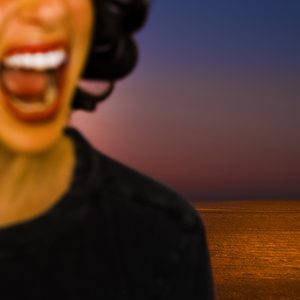
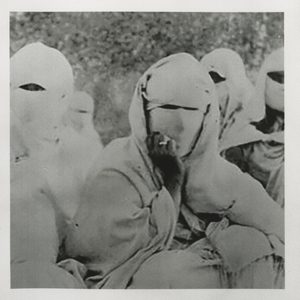
The first Panama Pavilion in Venice, Traces: On the Body and on the Land, brought together Brooke Alfaro, Isabel de Obaldía, Cisco Merel and Giana De Dier around migration and the marks it leaves on bodies and territory. The second, at the 2026 Biennale, presents Tropical Hyperstition, a large environmental and performance installation by Antonio José Guzmán and Iva Jankovic, who work as Messengers of the Sun.
In between, Pinta Panamá Art Week drew more than 2,200 visitors to over thirty events in its first edition. It returned in March 2026 and has a third edition scheduled for March 2027. For a scene used to working largely out of sight, that is a significant change of scale.
Galleries as Long-Term Infrastructure
Behind these headlines are galleries that have worked for decades with little institutional backing. Arteconsult is among the oldest. Art historian Carmen Alemán Healy founded it in 1979, initially as a consulting office for banks, and it grew into a reference point for Panamanian and Latin American art, with projects in Boston and Miami and a Guillermo Trujillo retrospective at the Museo Tamayo in Mexico City.
It closed in 2020 and reopened in 2022 under Ana Berta Carrizo, Alemán Healy’s daughter, initially focused on services and direct sales. It has since added a small exhibition space with six to seven shows a year, pairing consolidated, mid-career and emerging artists from Panama and Latin America in intergenerational dialogue. Arteconsult now also takes its artists to fairs, including Pinta Miami and ArtBo, and produces institutional shows such as the Alicia Viteri retrospective at the Banco Nacional gallery in October 2025.
Today the gallery works from a street-level space in the El Cangrejo neighbourhood of Panama City, showing painting, sculpture, photography, works on paper, textile, video and installation art.
The year 1979 marks another milestone. According to her biography, the Colombian-born artist Alicia Viteri founded the printmaking workshop at Panarte that year, revitalising the medium in Panama. Carmen Alemán Healy was her ally in creating the workshop, and many of the works produced during that period are now in Arteconsult’s collection and available for sale. Institutions and individual artists were building the scene together, long before international attention arrived.
Names Worth Knowing
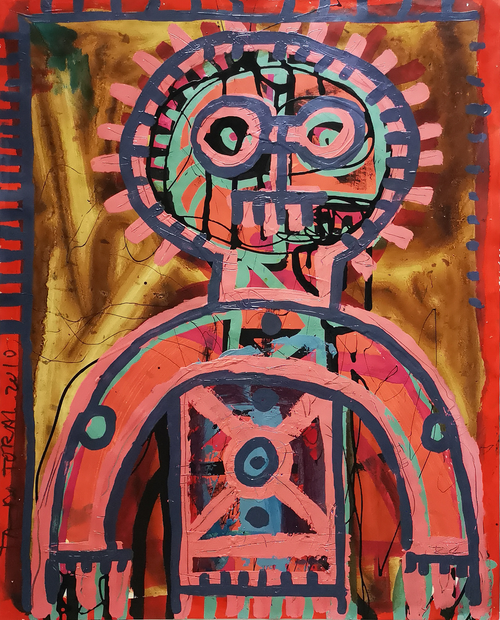
Several of the artists now attracting notice work with Arteconsult. Aristides Ureña Ramos and Tabo Toral were the first and second Panamanian artists to show at the Venice Biennale. A Toral retrospective is in preparation, and his mural from the early 1990s still stands in the Bronx, New York. Alicia Viteri, a printmaking pioneer now 80 and still working, showed at ArtBo this year and has an exhibition in Ecuador next year.
Among the newer names, Libertad Rojo is an invited artist at next year’s Tenerife Biennale, and Hugo González, who took part in this year’s Gasworks residency, has just won the Ministry of Culture’s Emerge Award.
What Comes Next
Arte al Día framed the challenge as turning this creative energy into a sustainable, professional and internationally visible structure. That will depend less on any single fair or pavilion than on the galleries, museums and collectors who sustain the scene in the months between them. Panama’s art world is small, but it is no longer invisible.