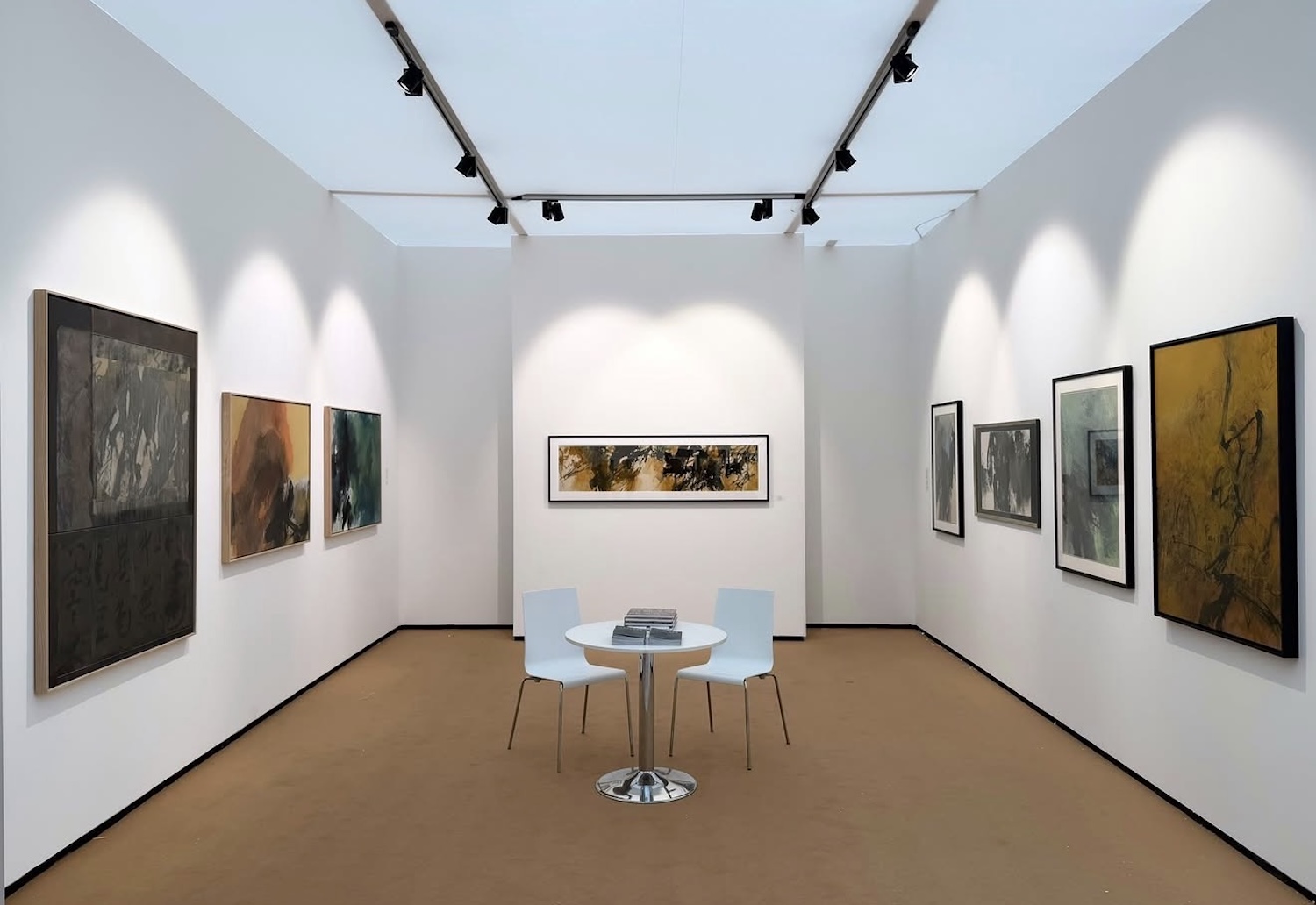
In its 45th anniversary year, Hong Kong gallery Alisan Fine Arts made its Frieze Masters debut with a solo presentation of Fong Chung-Ray in the Spotlight section.
With this year’s Spotlight focused on global modernism, the presentation placed Fong’s work within that broader conversation. Bringing together early ink paintings, acrylics on canvas and a 1998 mixed-media work, it traced the development of the artist’s approach to abstraction.
Yichun Huang spoke with Daphne King, Global Director of Alisan Fine Arts, about why Fong’s work deserves a wider audience, the Chinese traditions that continue to inform his practice, and her hope that Chinese contemporary artists can simply be seen as part of the broader contemporary art conversation.
Yichun Huang: This is Alisan Fine Arts’ first presentation at Frieze Masters. Is it connected to the gallery’s 45th anniversary, and why did you choose to participate this year?
Daphne King: It’s not directly related. I had been doing exhibitions here in England for a few years before we stopped during COVID. We used to participate in Asia Week, but I wasn’t quite sure how broad its reach was. I wanted to find a new platform to present Chinese contemporary art, because I think Asia Week is a little more focused on antiquities and classical art. Frieze Masters seemed a better platform for us to present this work.
It just happened that we decided to do this in our 45th anniversary year. It’s more about the trajectory of the gallery. We opened in Hong Kong 45 years ago, and we’ve always had an international presence through art fairs overseas and our work with public institutions to place artworks in museum collections. I opened a gallery in New York three years ago to expand that global presence, so this seemed a very natural next step.
The gallery’s mission has always been to promote Chinese contemporary art, going back to when my mother started it. Personally, I think I’m a little more ambitious: I really want to bring Chinese contemporary art to a more international audience so that more people can see it.
You represent many artists. Why did you choose Fong Chung-Ray for this presentation?
There are several reasons. He’s one of the newer artists we’ve started working with; we only began representing him last year. He’s already 92, but he’s still very active and producing new work. I felt a slight sense of urgency to present his paintings because of his age.
I also feel he’s a little under-recognised. His work is in public collections, including the Ashmolean in Oxford, the Centre Pompidou and Musée Cernuschi in Paris, and the Los Angeles County Museum of Art. But given his importance and what he has done to revolutionise Chinese contemporary art, I feel he deserves more collectors and a wider audience. That’s one of the reasons I chose to show his work here this year.
Could you introduce one or two works and explain how the presentation reflects the different periods of his practice?
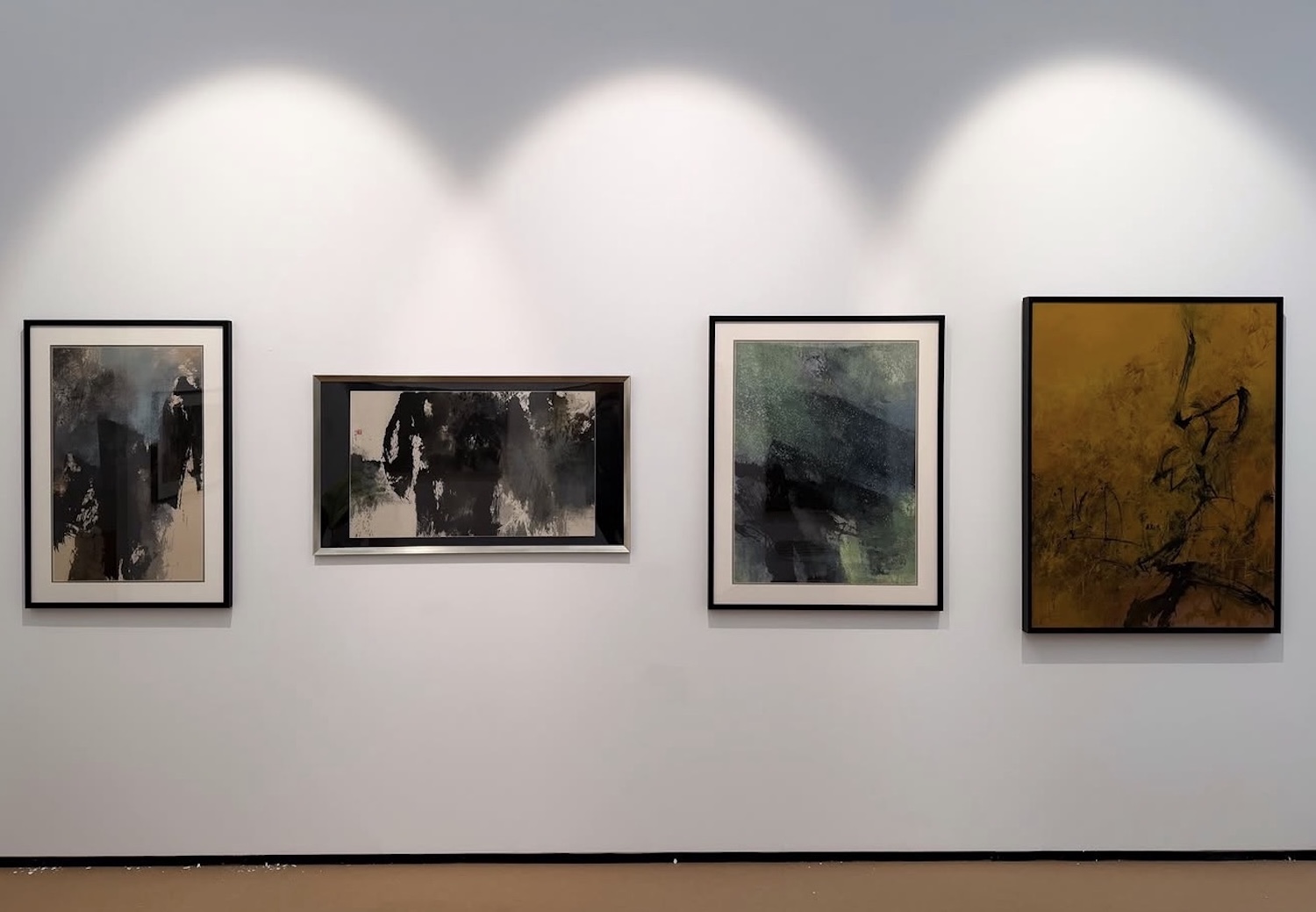
The overall presentation in our booth is quite a good example of the different periods of his work, beginning with his early practice in the 1950s and ’60s.
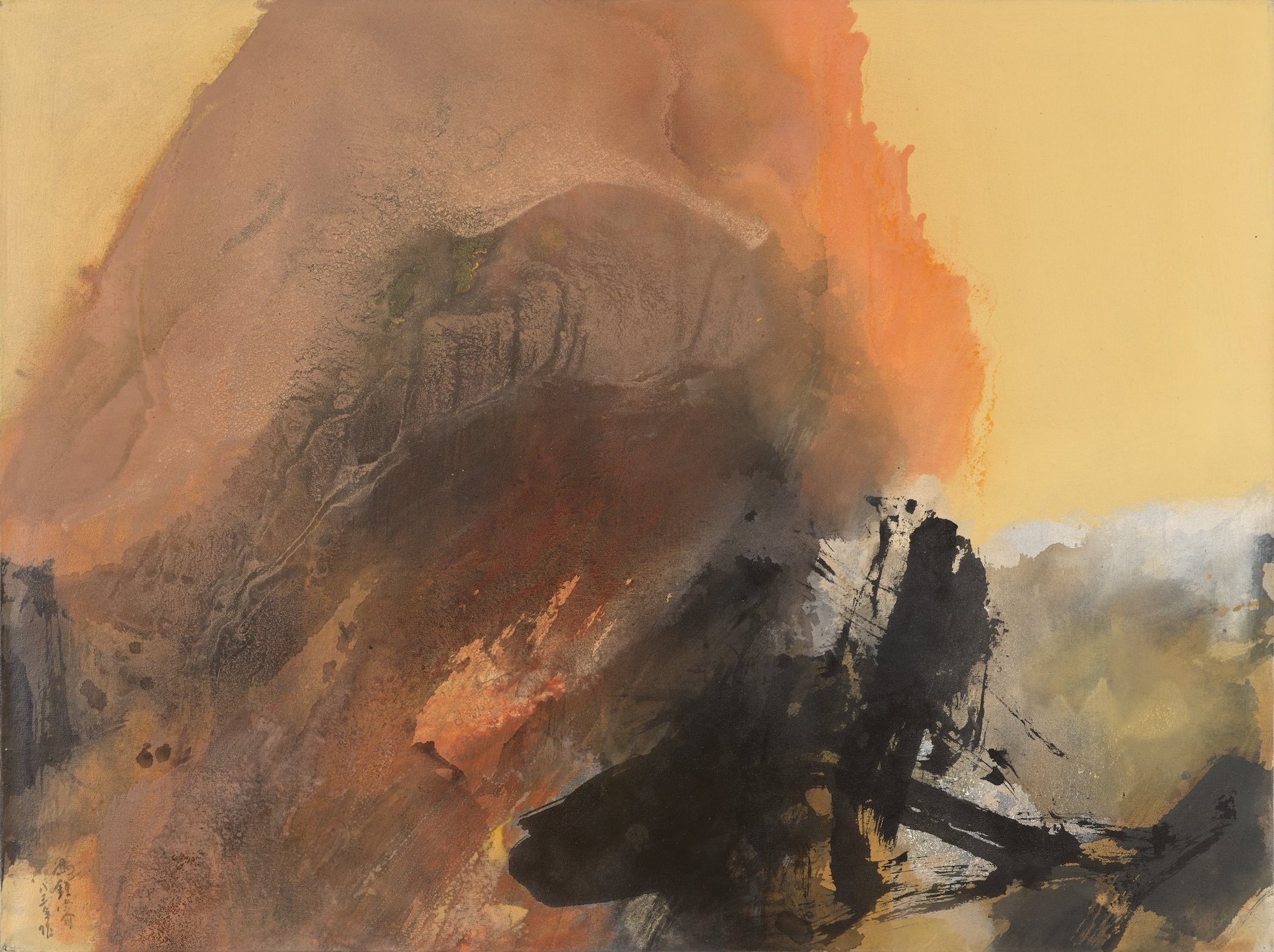
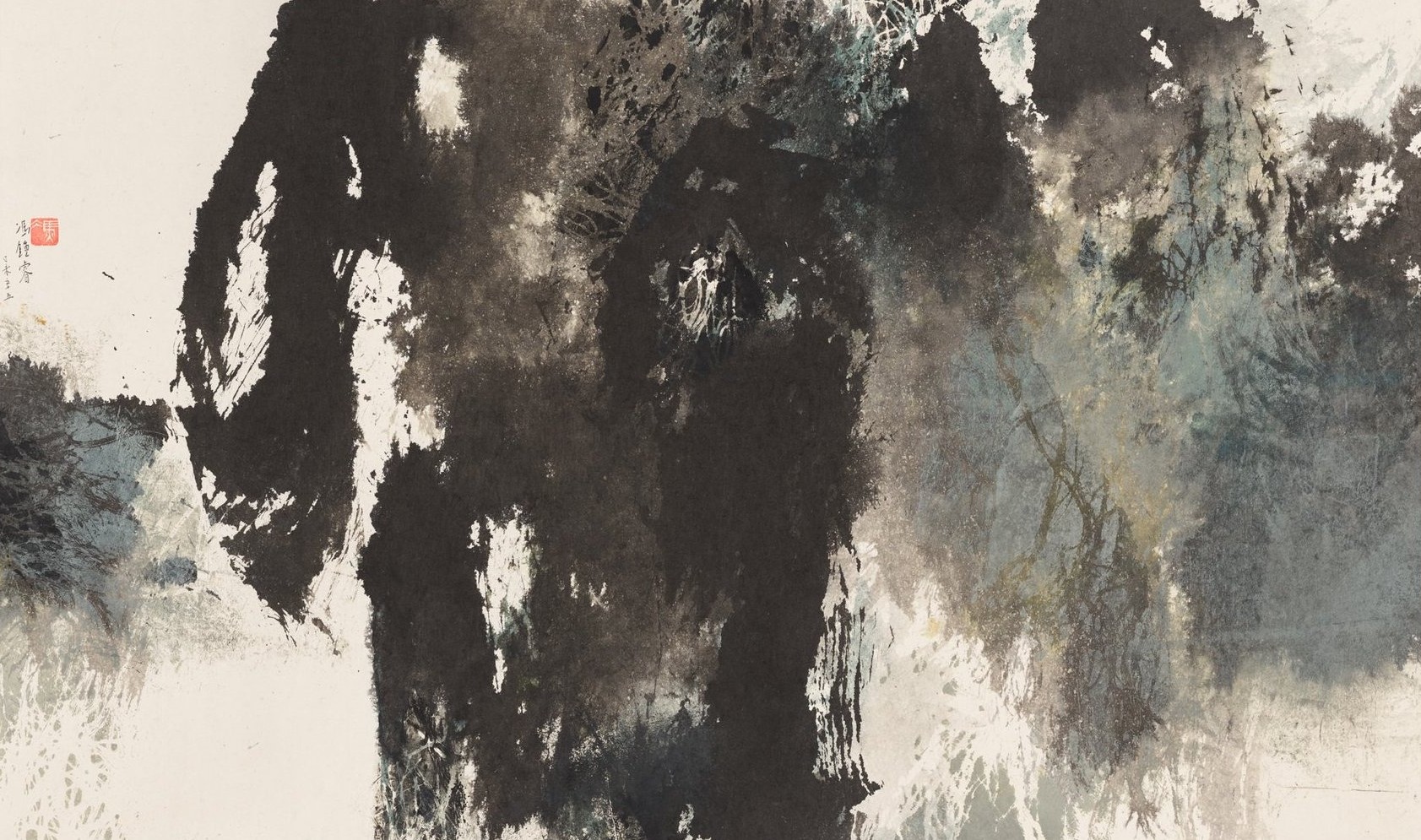
The early paintings use a traditional medium, ink on rice paper, but they’re already abstract. They’re not traditional flower-and-bird paintings. I think they’re good examples of his early work and where he was coming from.
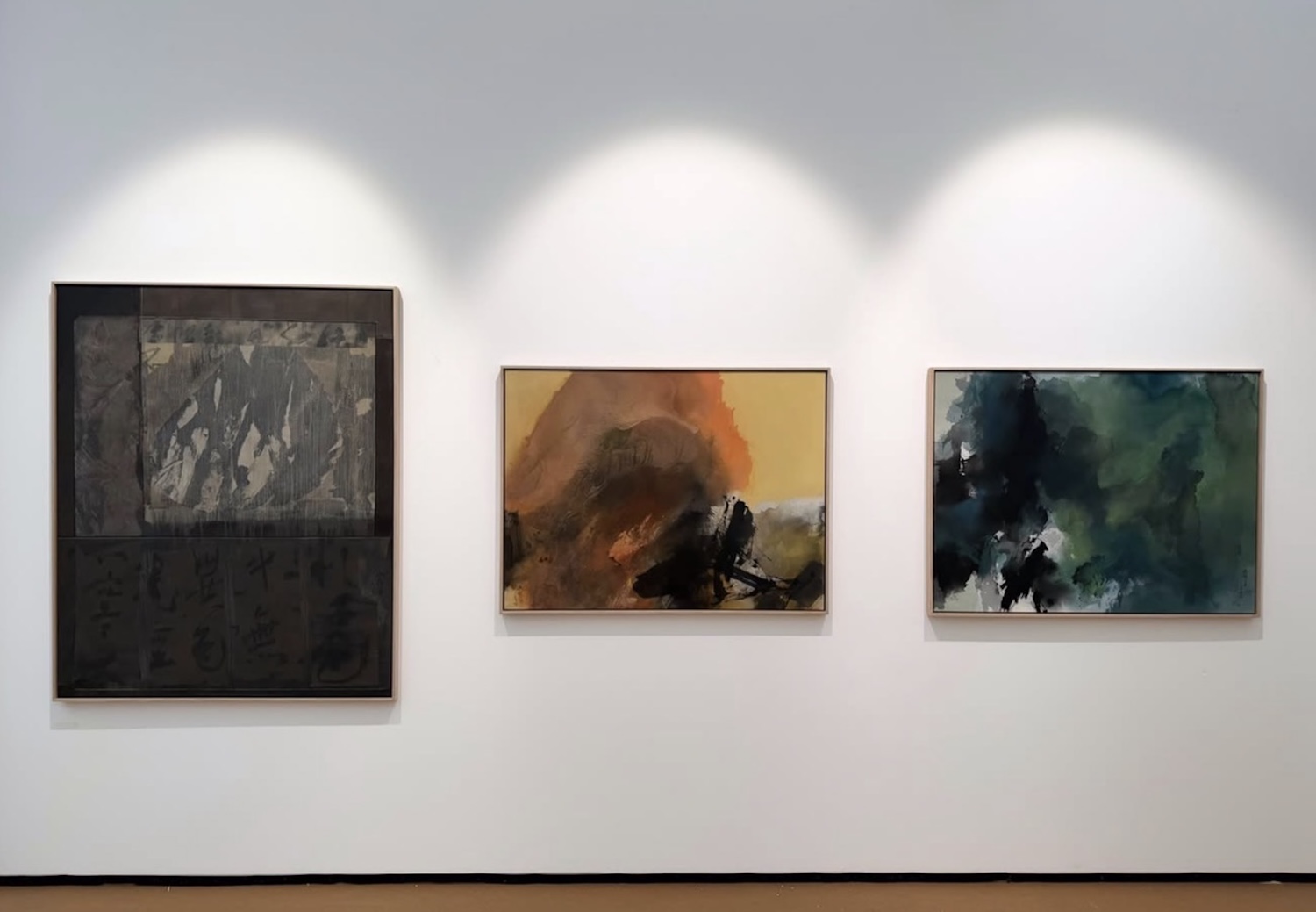
Then, in the 1970s, he left Taiwan and went to America, and you see the work developing further. In the colourful paintings from that period, he starts using much more vibrant colours. He also began working with Western materials, including acrylic on canvas, while still wanting to maintain his Chinese roots.
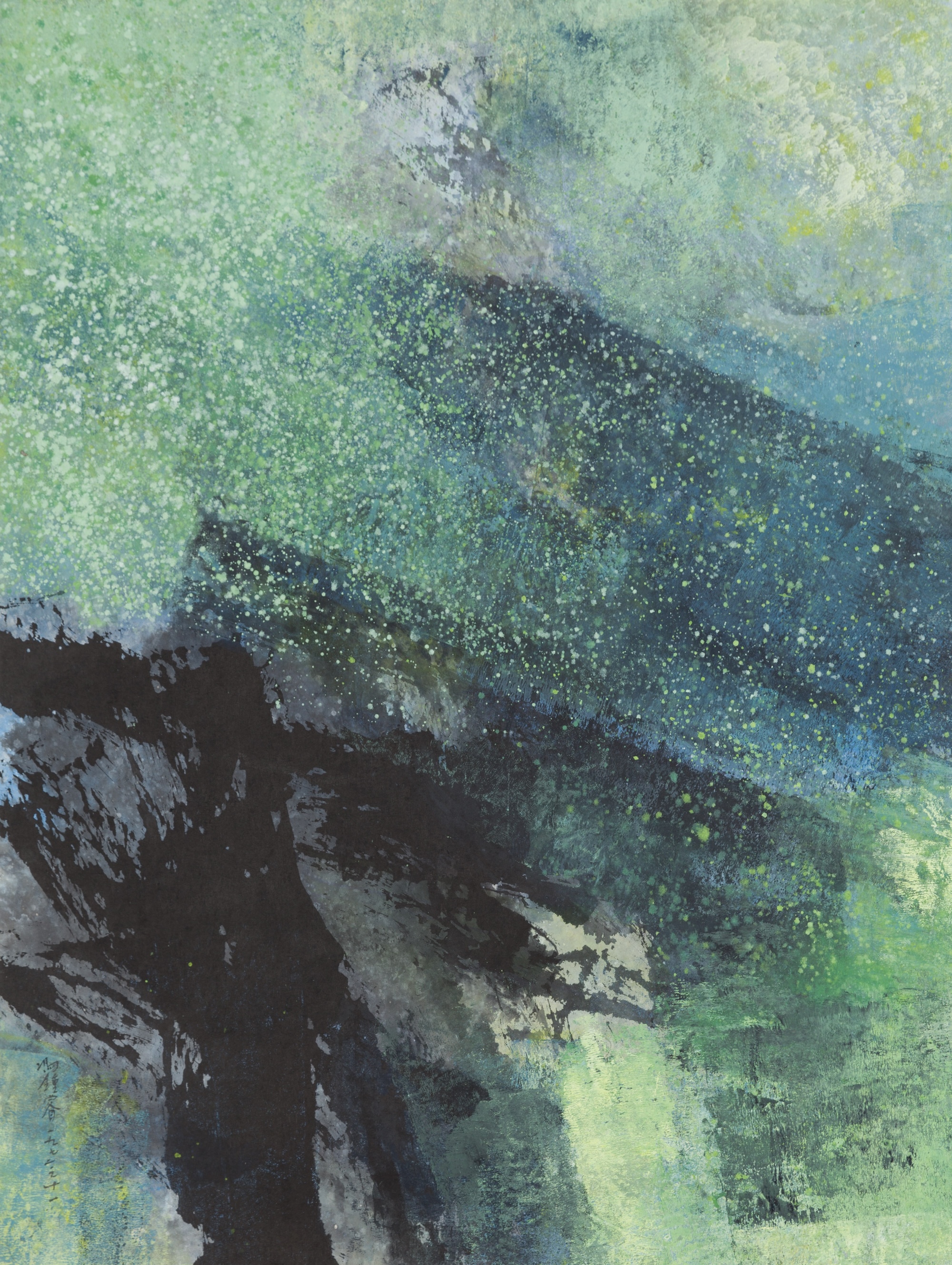
He was experimenting with how to create the feeling of ink painting on canvas. One of these works in particular still has that ink-wash feeling, even though it’s on canvas.
I particularly love the brushstrokes. How did he achieve them?
He developed his own brush, using palm leaves rather than a conventional brush. That’s why the strokes look like this. They’re different, and you can see them in several of these works.
What about the most recent work in the booth?
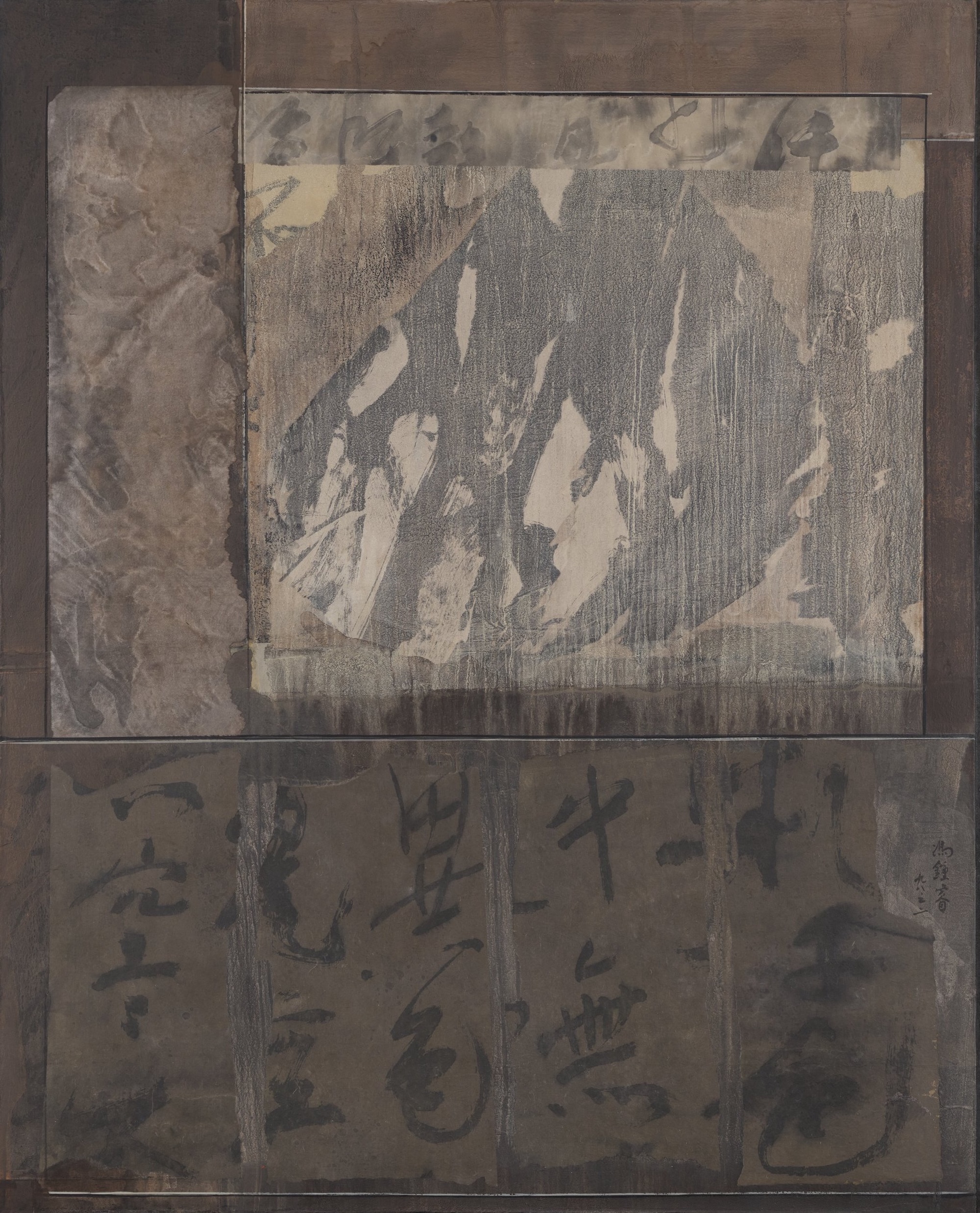
The most recent is from 1998. Here, he’s already moving towards what he’s doing now, incorporating calligraphy. This one includes the Heart Sutra.
There was a tragic accident in his life in which his wife died. He was driving when they had a car accident, and he felt very guilty because he had been at the wheel. For a period, he stopped painting. He then turned to Buddhism, and from that point onwards he began incorporating Buddhist thoughts and ideas into his paintings. In this work, the Heart Sutra is collaged onto the surface.
We haven’t brought his later works, but they develop further in this direction: they’re more structured, with more collage and calligraphy. It’s quite a different technique. This 1998 piece is quite distinctive. For me, it’s one of my favourites, although I also really like the blue and green painting with the splashes.
How does his work connect Eastern and Western cultures?
I think it’s partly through the medium. He’s using canvas, a Western medium, but his thinking is still very much rooted in Chinese culture. That’s where the connection happens.
Even though he has lived in America since the 1970s, he says he’s still deeply rooted in Chinese culture and tradition, and that he would never give that up.
How does Alisan Fine Arts support Asian artists, and what would you like audiences to pay more attention to?
I think that really depends on the audience, because there are different kinds of collectors and audiences. Our programme varies a little too. In Hong Kong, we present artists from Hong Kong and China, as well as artists from the Chinese diaspora. Fong Chung-Ray, for example, left China and eventually went to America, where he developed his career. We also have a strong focus on contemporary ink painting.
In America, our focus shifts a little towards someone like Lucy Liu, who is Chinese American and grew up there. We’re still promoting Chinese artists, but someone who is Chinese and grew up in America has a very different experience from someone who grew up in China.
Audiences are different too. In America, or here in Britain at Frieze Masters, their understanding of Chinese painting can be different from that of audiences in China or Hong Kong. So the presentation is a little different. It’s about adapting to different situations and collectors.
Ultimately, I hope collectors will understand those differences. It’s actually quite complicated to talk about promoting ‘Asian art’ or ‘Chinese art’, because there are so many different experiences within those terms. Lucy Liu grew up in America; Fong Chung-Ray moved there later in life. And an artist who grew up in Hong Kong has another experience again.
Has Eastern philosophy played an important role in his work?
Yes, because of Buddhism. A lot of the philosophy and ideas in his later work are rooted in Buddhism. In this painting, for example, he actually includes the Heart Sutra. Ideas of permanence and impermanence are central to his paintings, so they’ve become very important.
What would you most like visitors to take away from this presentation?
I hope Chinese contemporary art can be seen as contemporary art. I don’t want it to be separated off into a section simply because it’s Chinese or Asian. I want it to be part of the broader conversation.
At the Metropolitan Museum of Art, for example, the curator responsible for Asian modern and contemporary art is in the Department of Modern and Contemporary Art, rather than the Chinese art department. I think that’s a big step forward, because the work is being placed in a broader context.
On the one hand, I say I’m promoting Chinese contemporary art. But my hope is that it can simply be contemporary art. With someone like Jeff Koons, people don’t always say, ‘He’s an American contemporary artist.’ They just say he’s a contemporary artist.
In an ideal world, that’s how we would talk about these artists too. But everybody wants to put things into little boxes. I recognise the contradiction in my own position: sometimes artists approach me about representation, and if they’re not Chinese or Asian, I explain that I focus on Asian contemporary art. There are so many artists, though, and I do need to have a focus.
I’m really excited about the ink exhibition at Tate Modern next year, 2027. It’s been a long time since we’ve had this kind of focus here. I know the British Museum has shown Chinese contemporary art before, but this exhibition is specifically focused on ink artists. There are six artists, and two are artists I work with, so I’m very excited.
Tate’s exhibition opens in April, and the Ashmolean in Oxford is also planning a contemporary ink exhibition opening in March. So next year, I think there will be a lot of attention on Chinese contemporary art in the UK. I’m interested to see how people respond, especially to the exhibition at Tate Modern.
Frieze Masters, 14th – 18th October 2026,
The Regents Park