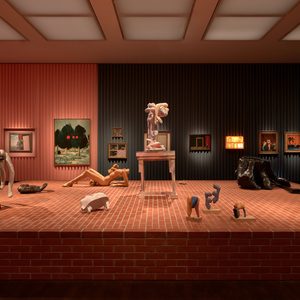
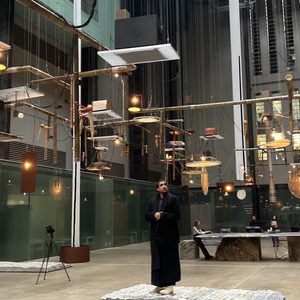
At Perrotin, three solo exhibitions unfold one above another. Nikki Maloof occupies the first floor, Aryo Toh Djojo comes next, and Young-Il Ahn waits above. Moving upward does not reveal a single argument connecting them. If anything, each floor asks the viewer to abandon the habits of looking established by the one before it.
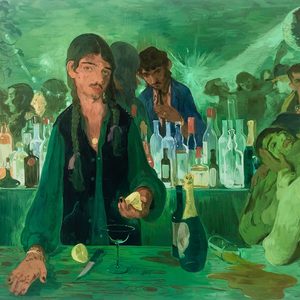
On the first floor, Maloof’s paintings announce themselves through color. Powdery pinks, bruised lilacs, cosmetic purples and acidic greens create a palette that is at once alluring and faintly unsettling, drawing the eye into scenes whose initial attraction soon gives way to unease. Human figures rarely appear whole: a figure turned away shows only hair and the back of a head; elsewhere, a torso is cropped above the shoulders, or only legs and hands enter the frame. The tables belong less to the abundance of a meal than to its aftermath. A fish is stripped nearly to the bone, fries are scattered, plates smeared, napkins crumpled, drinks unfinished. What remains is evidence that appetite has already passed through.
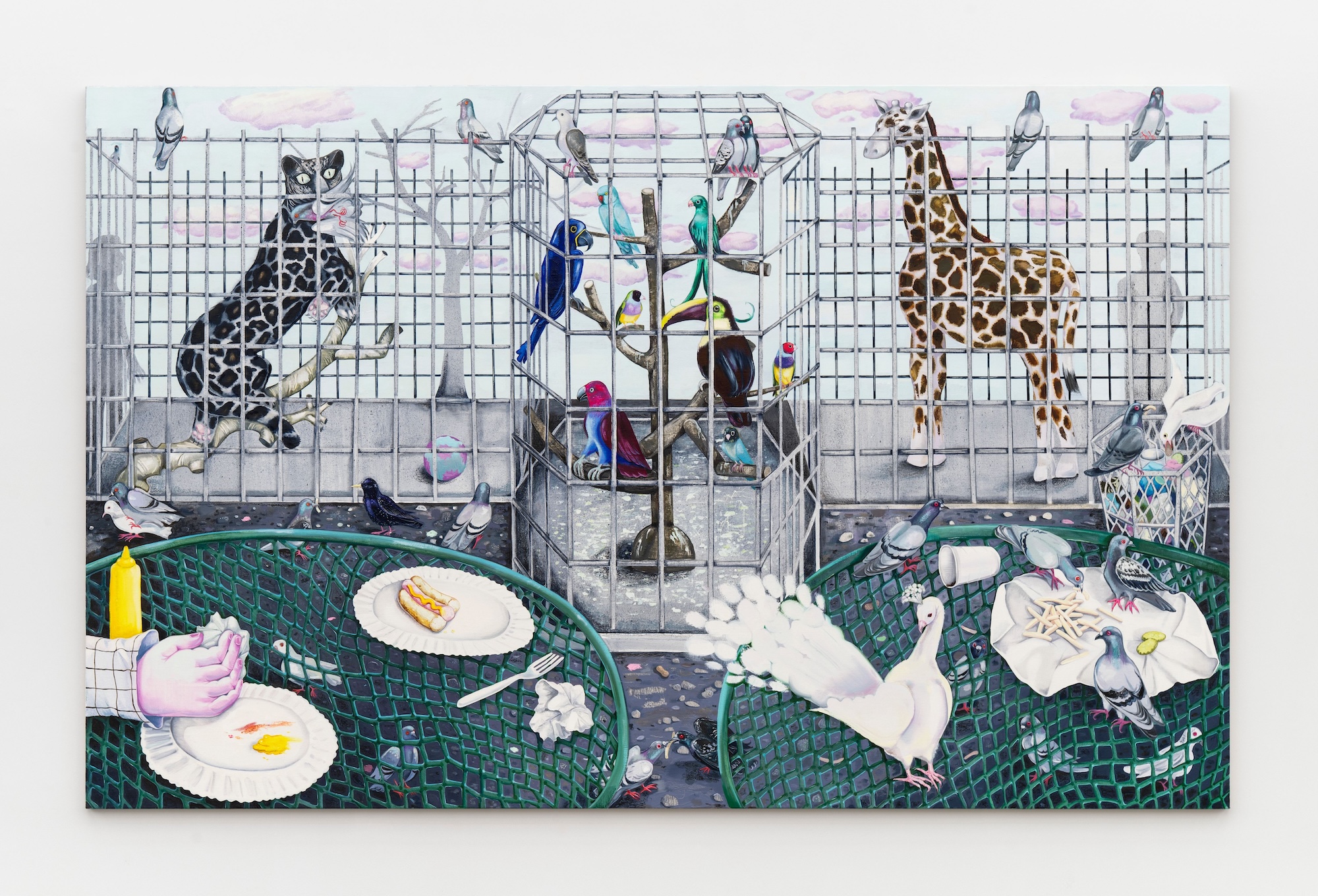
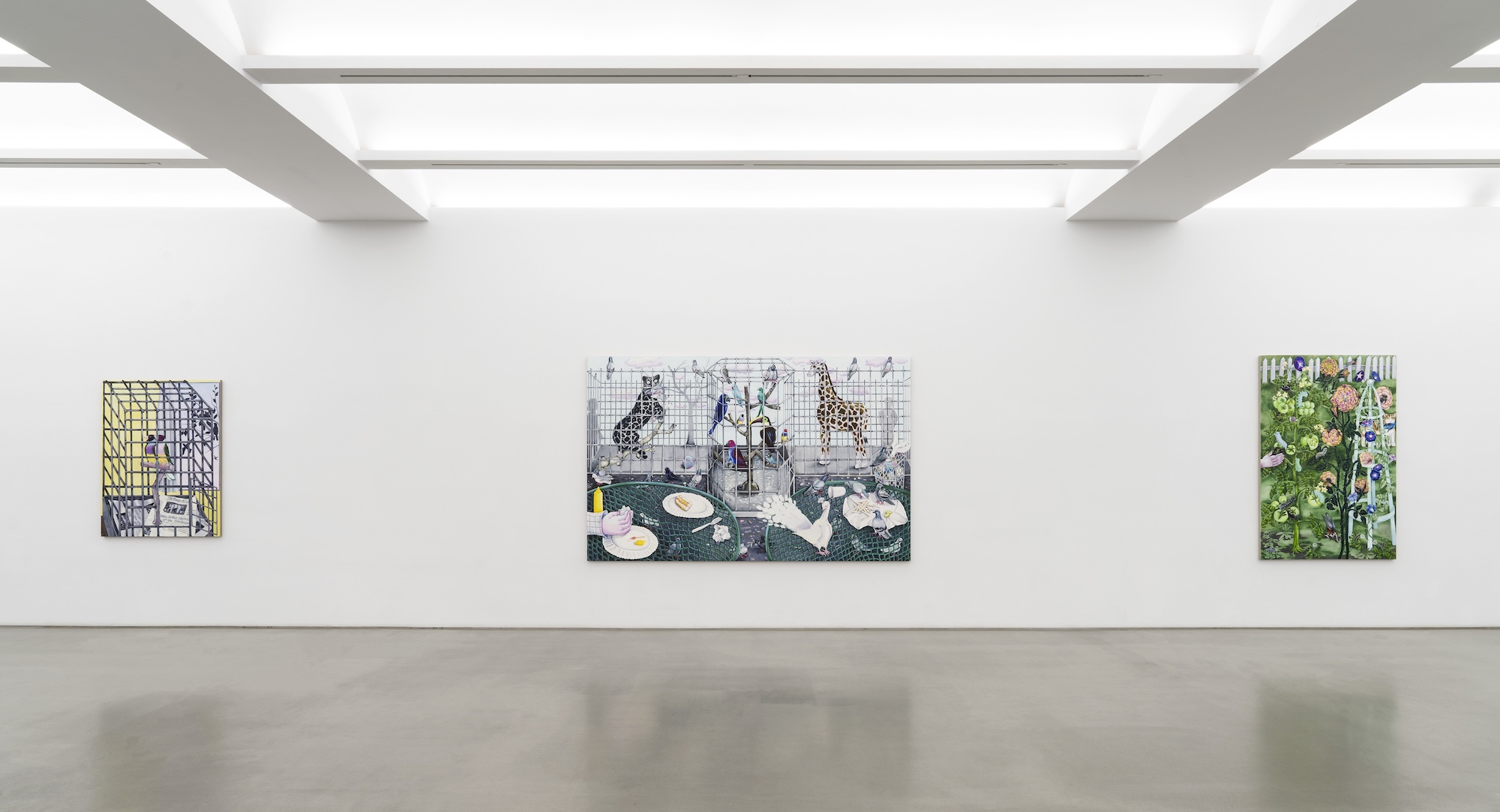
That unease finds a visual structure in bars, grids and lattices. Cages and fences are literal in some paintings, but similar patterns reappear in trellises, woven chairs, baskets and the mesh surfaces of café tables. In the zoo scene, the green metal tables in the foreground even echo the cages behind them. The boundary between animal enclosure and ordinary human space begins to blur. In Maloof’s paintings, the language of captivity escapes the cage.
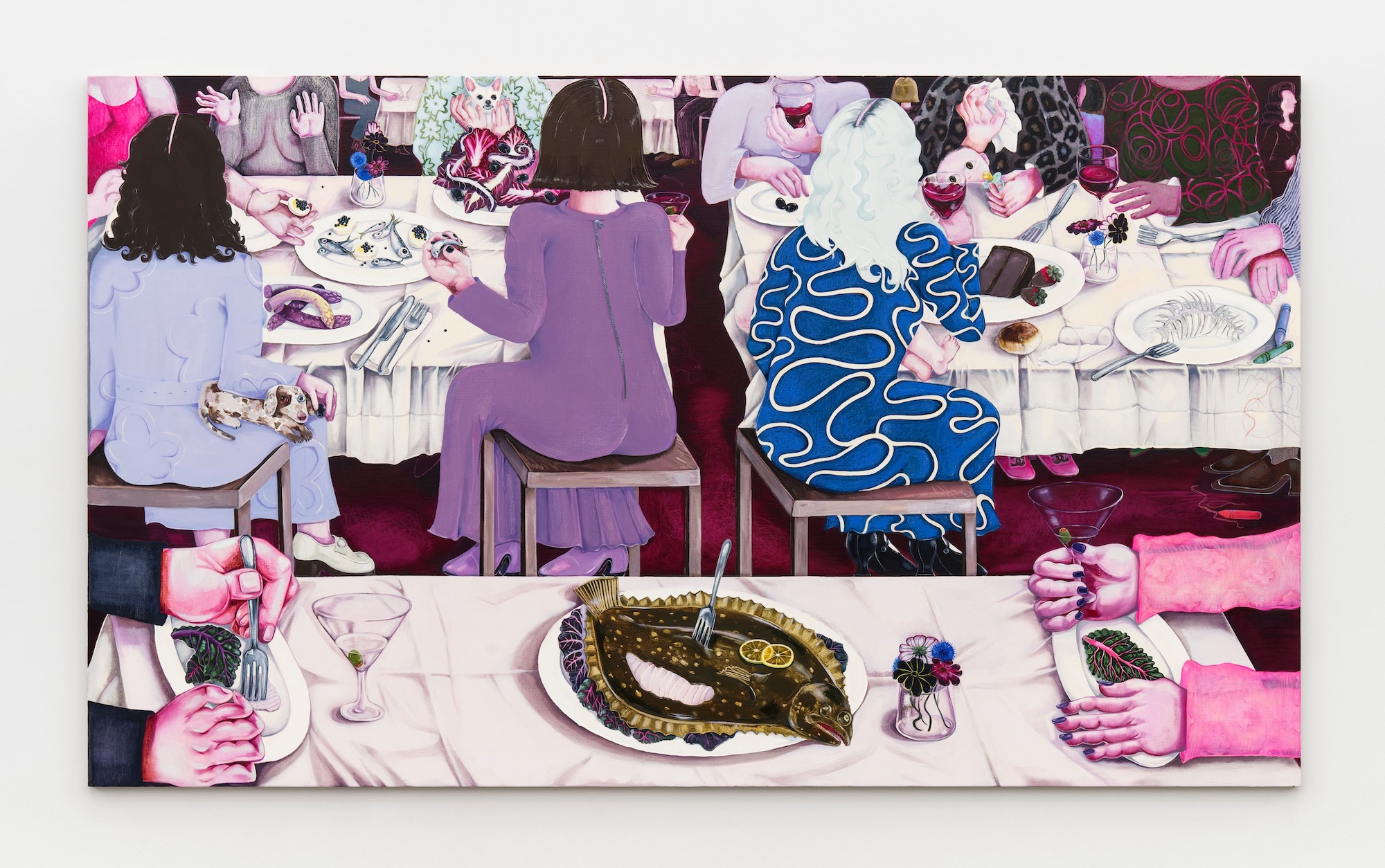
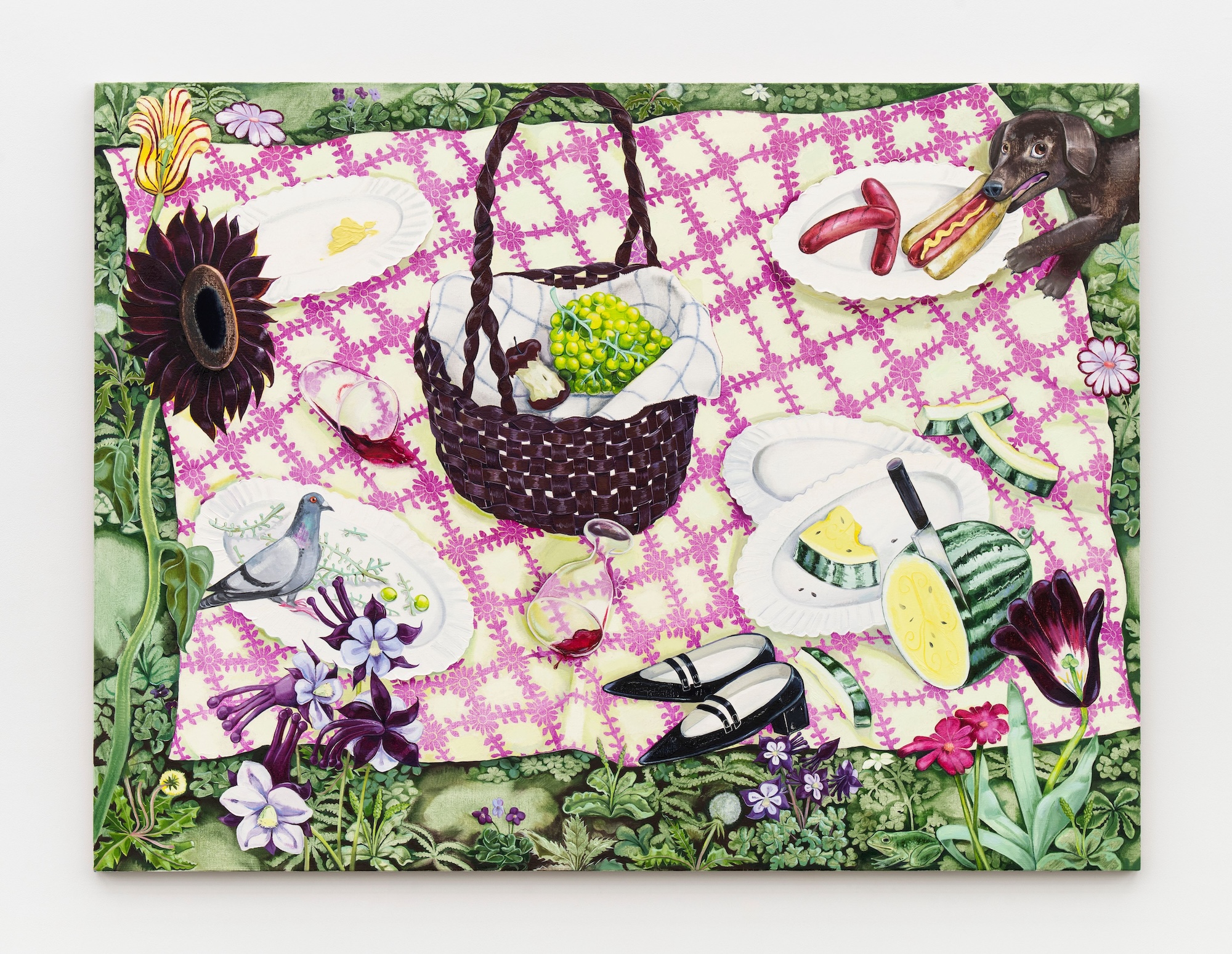
The restaurant and the zoo begin to mirror one another. They are not the same kind of place, but both are organized around human pleasure: one offers things to look at, the other things to eat. In both, other bodies can become things to be displayed, watched, desired, prepared or consumed. Appetite expands beyond hunger into spectacle and even looking itself. Yet the paintings remain funny, lush and pleasurable. The unease does not cancel that pleasure; it exists within it. The sharper question is not simply who is trapped, but whether anyone here can stand completely outside the structures of looking, appetite and consumption.
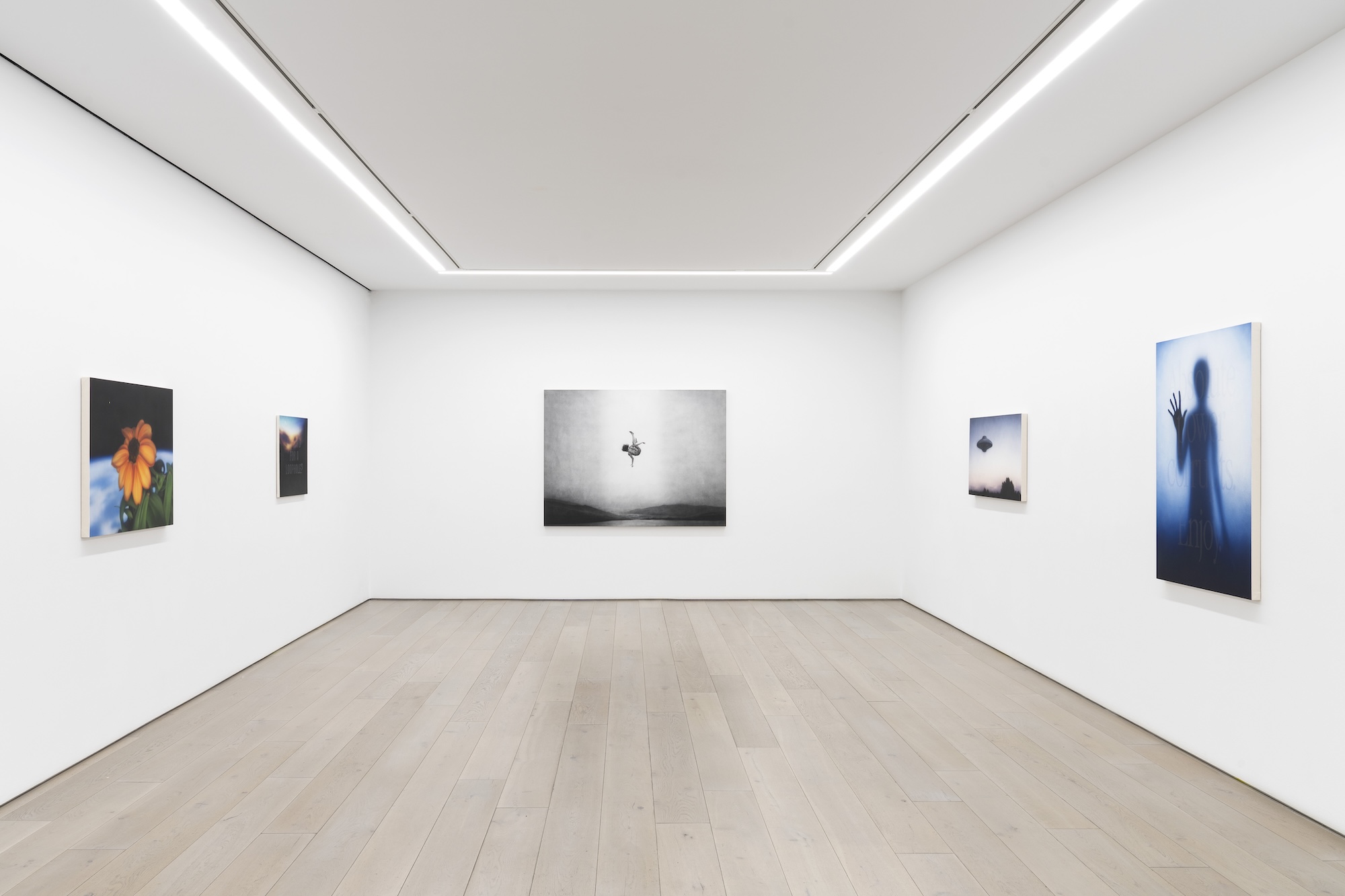
One floor up, Toh Djojo’s paintings offer almost the opposite sensation. UFOs, abduction and unknown forces might suggest something eerie, yet that expectation dissolves into the softness of his airbrushed surfaces. Edges blur, colors settle into haze, and female figures appear with an almost angelic delicacy.
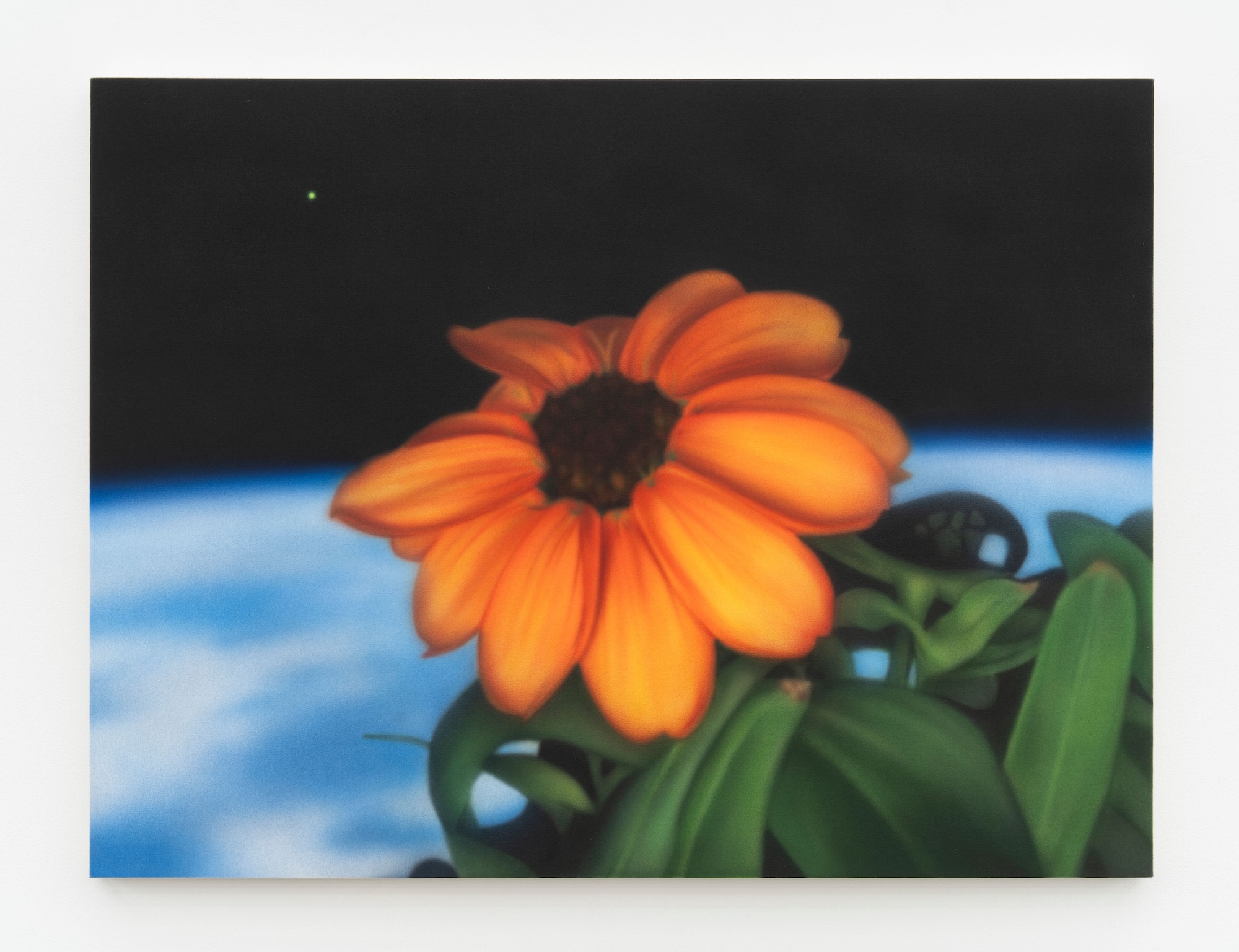
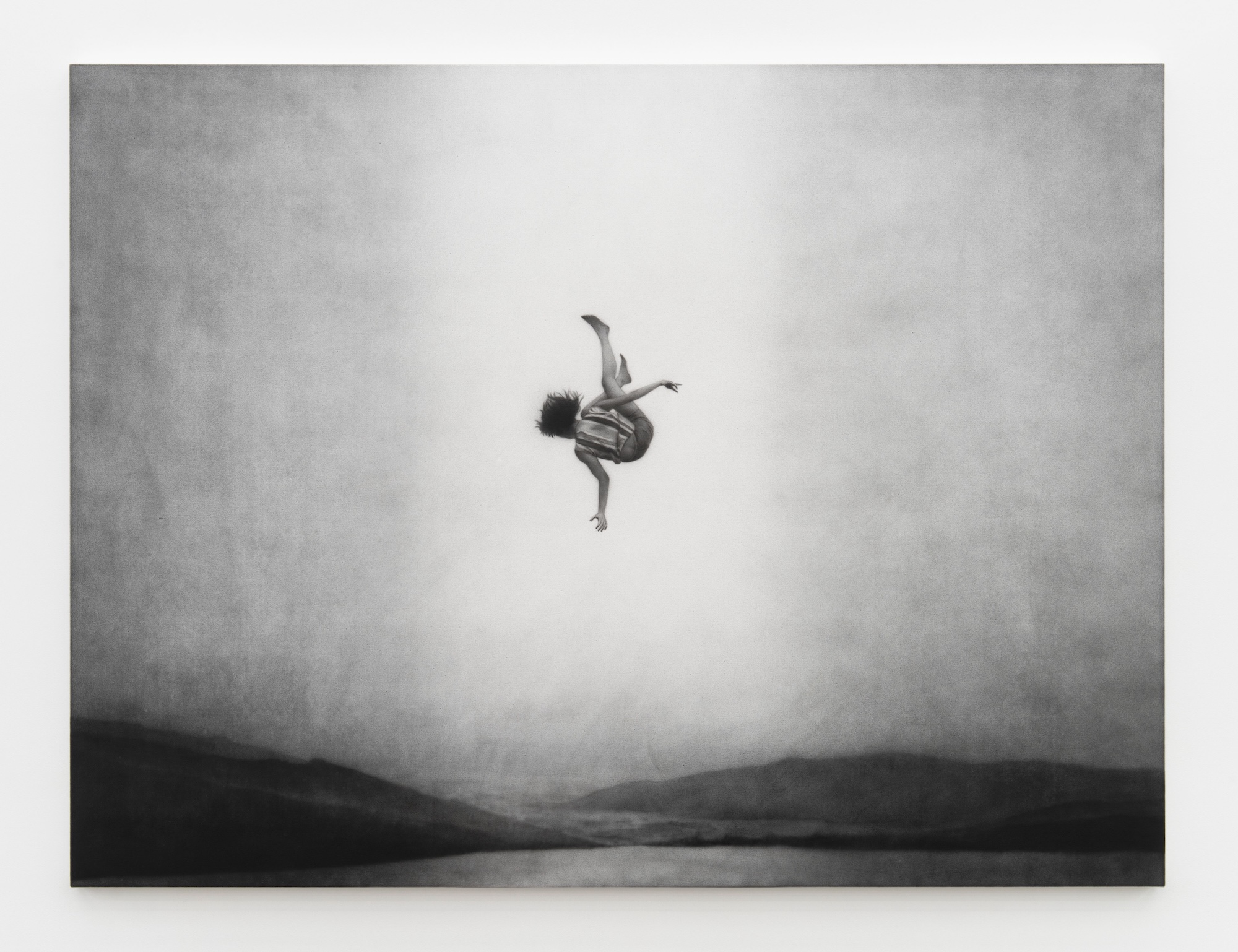
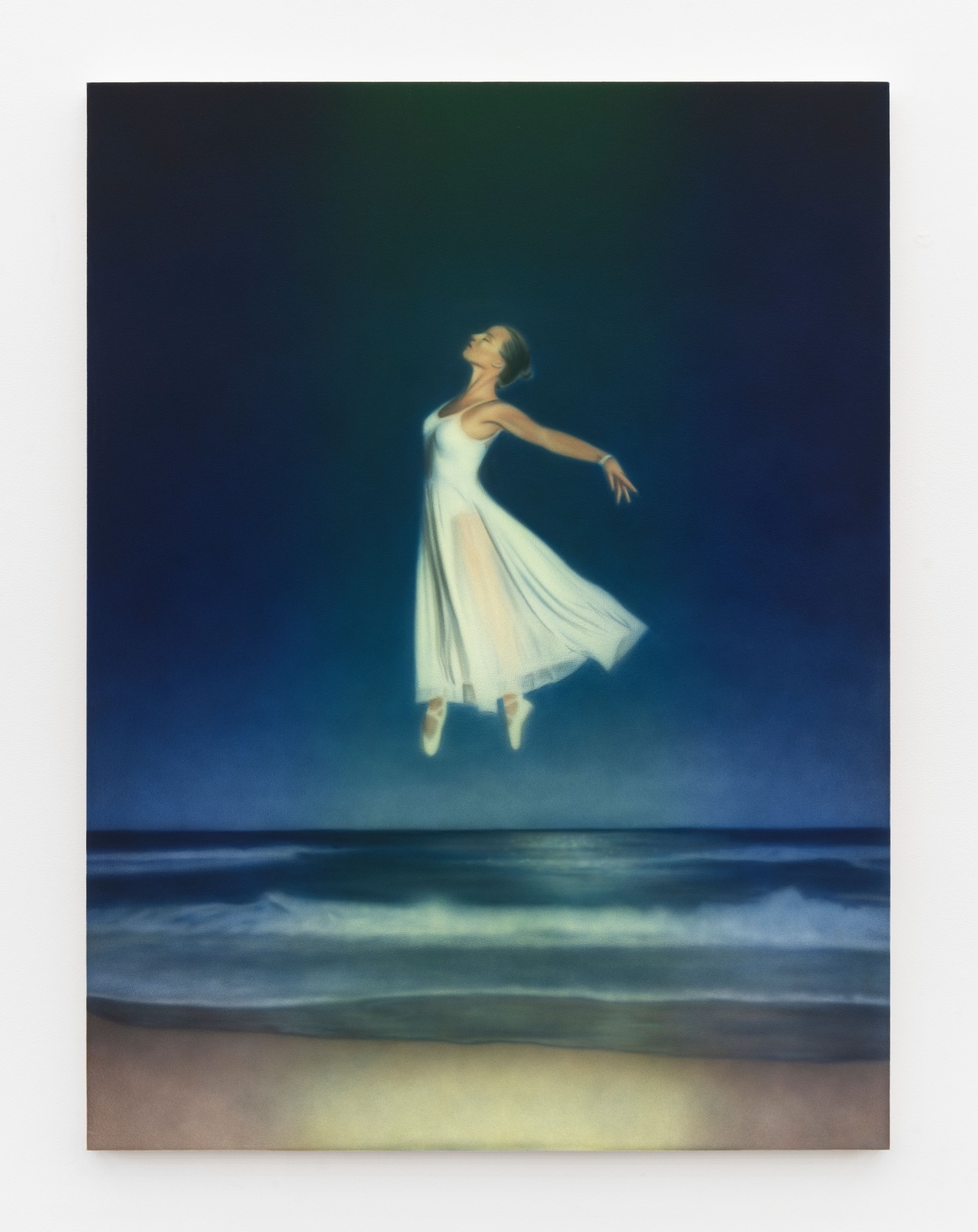
A woman in white rises above the sea, arms open and face turned upward, looking less like a victim than someone responding to a distant call. Elsewhere, a smaller figure appears suspended above a dark landscape, yet the surrounding emptiness feels contemplative rather than catastrophic. Even outer space loses its expected coldness. A large orange flower blooms against darkness above a blue horizon, like an impossible garden transplanted beyond Earth. His universe can feel less like an alien void than a paradise whose location has shifted.
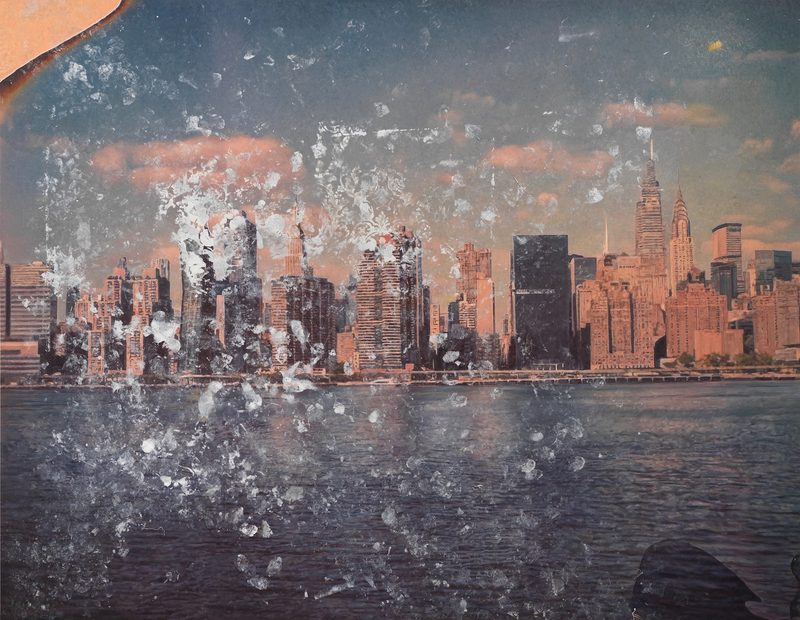
Toh Djojo’s future looks strangely old. His images draw on contemporary ways of constructing and altering reality, from found photographs and Photoshop to occasional uses of AI. Even the airbrush has its own long history as a tool for retouching images. His Polaroids make this process explicit. Found material documenting UFO sightings is cut, composited and photographed again, leaving the finished image suspended somewhere between evidence and fabrication.
Yet these technologies do not produce an entirely new mythology. Bodies still rise toward light. Gravity seems to loosen its hold. Another realm opens above us. The imagery belongs as much to religion, myth and fantasies of salvation as it does to science fiction.
That makes the tension in the work more complicated than a simple meeting of technology and spirituality. Toh Djojo works with images whose truth can be altered, assembled and manufactured. But fabrication does not destroy the desire to believe. It becomes one of the forms through which that desire now travels.
The image may be fabricated, but the desire it carries is not.
Technology may have changed the appearance of transcendence without changing its attraction. Heaven no longer needs clouds, halos or a visible divine hand. It can arrive as unexplained light, a suspended body, a manipulated photograph or an image partly shaped by a machine. Yet ascension is not entirely reassuring. To rise may mean being chosen, rescued or transformed. It may also mean leaving the world below without knowing what waits beyond it.
If we finally escape the limits of this world, where exactly are we going?
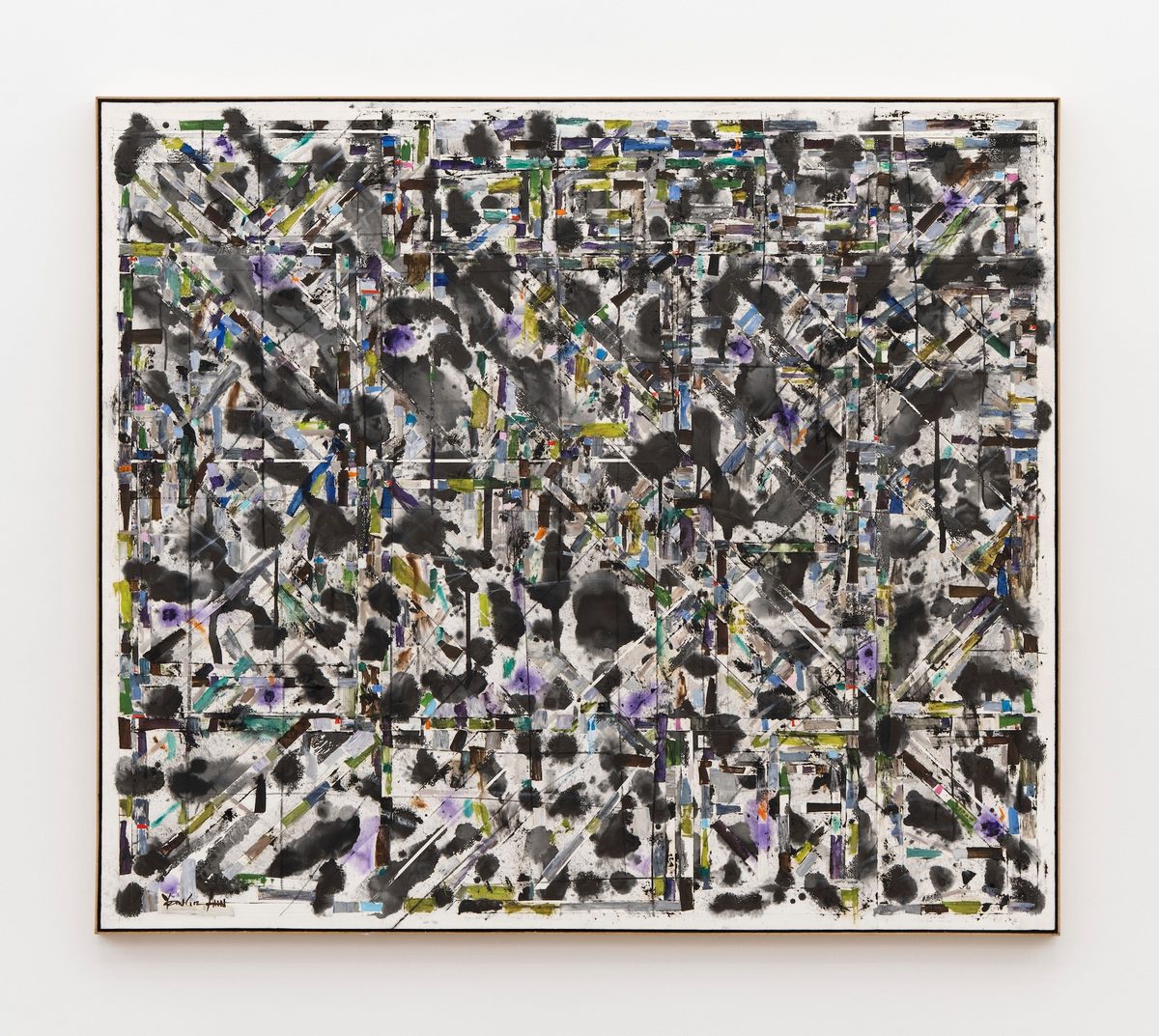
By the time the viewer reaches Young-Il Ahn on the upper floor, the terms of looking change again.
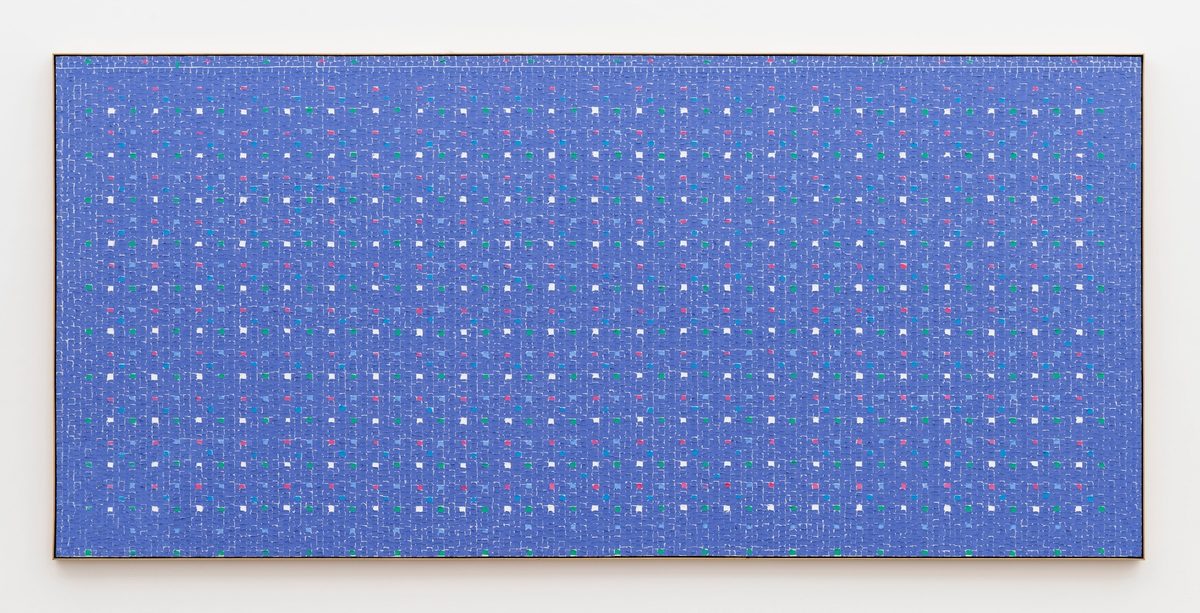
Ahn is best known for his Water series, developed over more than three decades. The paintings are built from countless small palette-knife marks repeated across the surface. From a distance, they form a calm, almost continuous field; up close, slight shifts of color, direction and density disturb that apparent uniformity.
Placed beside them, Horse Race, Flute Player, Self Reflection and Memorial to September 11 seem much less willing to stay still.
What returns inside abstraction?
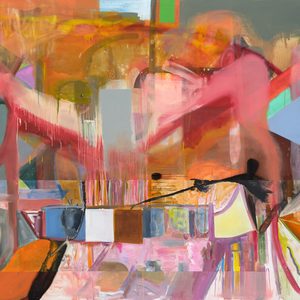
In Horse Race, numbers, checks, diagonal strokes and broad bands collide across the canvas. Horses and riders nearly disappear, but acceleration remains. In Flute Player, deep blues overlap while a looser movement rises through the center; the musician is barely discernible, but rhythm becomes more legible. Self Reflection turns repetition inward: curved bands, blocks of turquoise and gray, and fragments of color fold back into one another, as though reflection were enacted through the structure of the painting rather than illustrated as a subject.
What returns is not necessarily the appearance of the subject, but the way it is experienced: speed, rhythm, repetition, perception. Seen from here, the Water paintings begin to look different too. Ahn began the series after becoming stranded in fog during a fishing trip in Santa Monica Bay, when the horizon disappeared and his sense of space was disrupted. The repeated marks can be read less as descriptions of water than as attempts to hold onto a perception that is continuously changing.
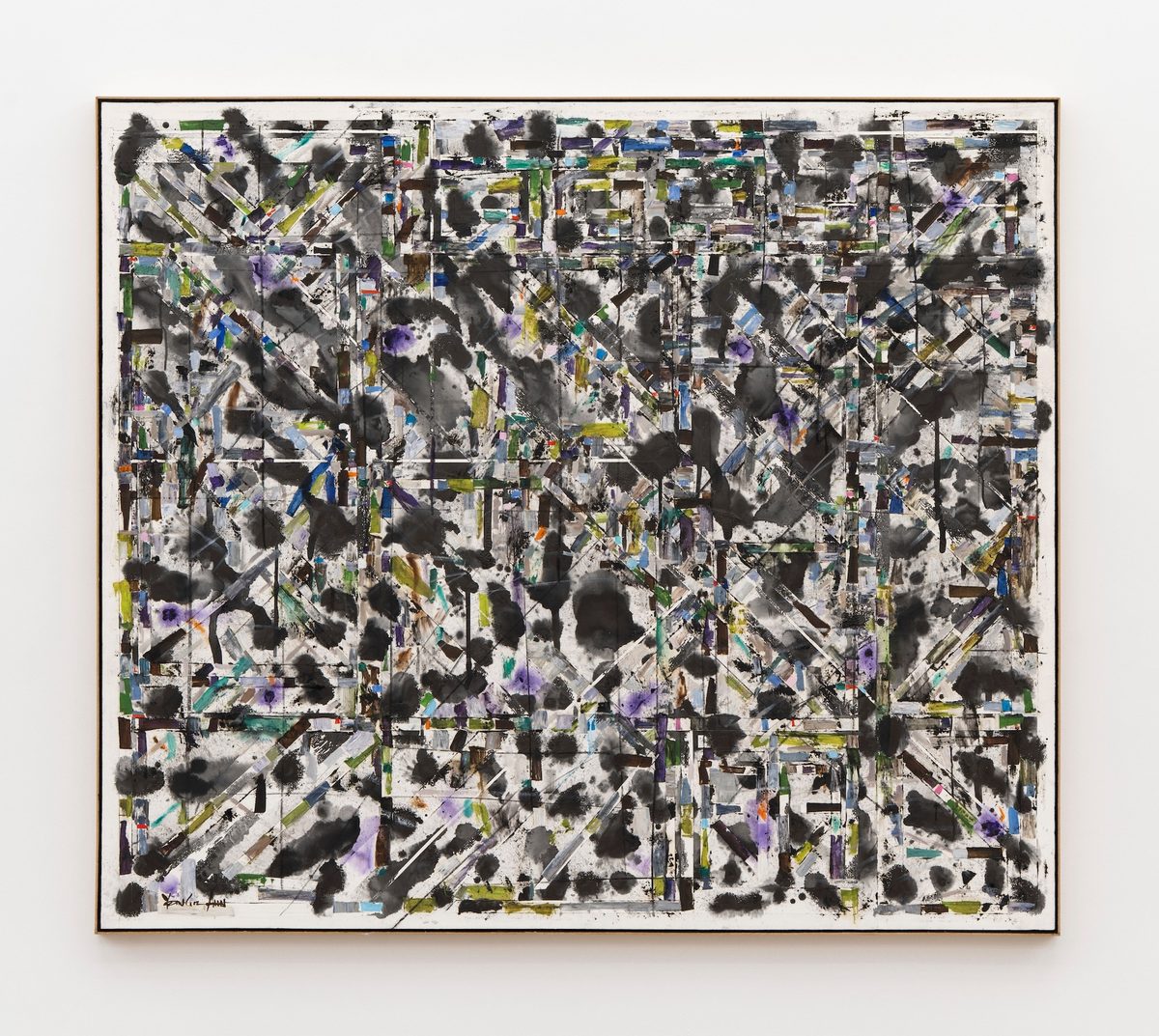
Memorial to September 11 pushes the problem further. Lines, blocks and diagonals form a dense structure broken by black stains and blurred patches. It suggests a city seen from above, but one whose order has been ruptured. Ahn does not reproduce the familiar literal images of the attacks. Instead, grid and stain, order and disruption, carry the weight of memory.
Across water, racing horses, music, reflection and historical trauma, the subjects change dramatically. The problem remains remarkably consistent: how can painting give form to what cannot be held by a single image?
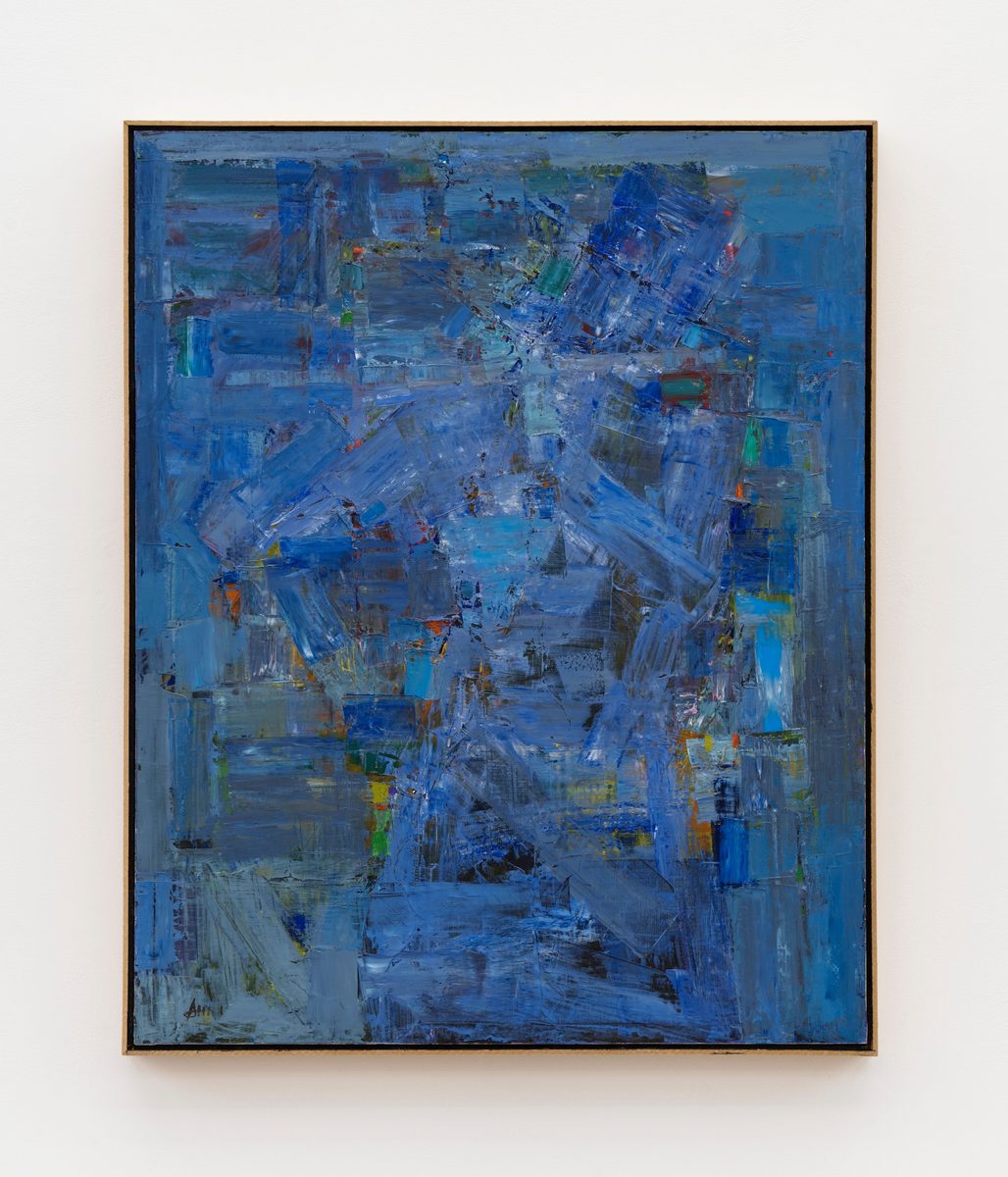
Looking back across the three floors, what remains is not a neat common theme but the sensation of having to recalibrate one’s attention each time. Maloof lets captivity leak into spaces of leisure and consumption; Toh Djojo gives ancient desires for transcendence a contemporary image; Ahn lets the subject disappear while preserving the experience of it. The exhibitions do not explain one another, and they do not need to. Perrotin becomes less a single argument than a sequence of three encounters.
On each floor, the viewer begins again.
Nikki Maloof, Menagerie, September 9th – October 17th, 2026
Young-Il Ahn: Self Reflections, September 9th – October 17th, 2026
Aryo Toh Djojo, Leap into the Void, September 9th – October 17th, 2026, PERROTIN New York